
Why Daylight Is Architecture’s Next Metric
Daylight Is No Longer Just a Mood
Architecture has spent decades treating daylight like a luxury finish: the poetic bonus that makes a room feel humane, a façade feel intelligent, or a rendering feel believable. That era is ending. Daylight is becoming legible as a performance metric, and once something can be measured, benchmarked, and compared, it stops being decorative. It becomes design policy.
The signal is not abstract. On UNESCO’s International Day of Light, the 2026 Daylight Award honored Atelier Bow-Wow’s Momoyo Kaijima and Yoshiharu Tsukamoto for showing how daylight shapes everyday life and shared space, alongside marine biologists researching the planetary implications of light in aquatic ecosystems. That pairing matters. It tells us daylight is no longer a niche architectural preference; it is part of a much larger field linking health, ecological systems, and design responsibility. The question is not whether architects should care. The question is whether they will accept daylight as something to be optimized with the same seriousness already granted to energy use and embodied carbon.
That shift changes the profession’s language. “Bright” is too vague. “Natural” is too sentimental. Increasingly, the relevant questions are measurable: how much daylight reaches a task area, how long it remains usable across seasons, how glare affects comfort, how access to sky correlates with circadian health, and how daylight strategies reduce dependence on artificial systems. In other words, daylight is being dragged from atmosphere into evidence.
From Aesthetic Ideal to Evidence-Based Standard

The built environment is already full of daylight metrics, even if many architects still treat them as back-office compliance tools. Daylight autonomy, annual sunlight exposure, spatial daylight autonomy, and useful daylight illuminance are not obscure technicalities anymore; they are the vocabulary of a profession trying to prove that light can be both beautiful and accountable. Once these metrics enter planning, daylight stops being a subjective impression and becomes part of the negotiation between client, consultant, code, and climate model.
This is not a purely bureaucratic turn. The health case is getting harder to ignore. Schools with poor daylighting can undermine attention and comfort. Hospitals with badly controlled glare can hinder recovery. Offices that depend on sealed artificial lighting flatten rhythm and increase fatigue. Daylight, when calibrated properly, supports circadian regulation, visual acuity, and psychological orientation. The architect who once claimed to “bring the outdoors in” now has to demonstrate what that actually means in hours, lux levels, and seasonal variation.
Designers have long understood this intuitively. Louis Kahn’s Salk Institute remains a masterclass in making daylight feel like a civic material. Peter Zumthor’s Kolumba museum turns filtered light into a form of slow attention. Tadao Ando’s Church of the Light weaponizes contrast to make illumination almost architectural in its own right. But the next phase is different. These are no longer just canonical atmospheres; they are precedents for a measurable standard that can be evaluated, replicated, and improved. The debate is moving from “Is it moving?” to “How well does it perform over time?”
That is also why projects focused on public life now matter in a new way. Can a Museum Entrance Be a Political Act? asks how architectural thresholds shape access, perception, and civic meaning—questions that daylight increasingly influences as much as circulation does. When light is part of the interface between institution and public, it becomes a matter of spatial ethics, not just atmosphere.
Atelier Bow-Wow and the Ethics of Everyday Light
Atelier Bow-Wow’s recognition is especially revealing because their work has never been about grand iconography. It has been about the lived scale of cities, the micro-economies of public life, and the ways ordinary spaces become meaningful through use. Their architecture often behaves like a social instrument: porous, compact, responsive, and intensely attuned to what people actually do rather than what a façade wants to say. Daylight in this context is not theatrical; it is civic.
That is a crucial distinction. Too much of contemporary architecture still treats daylight as a visual effect, optimized for image-making and social media friendliness. The result is frequently a tyranny of glare, an overdose of showy apertures, and interiors that look luminous in photographs but become exhausting in real life. Atelier Bow-Wow’s work points to the opposite ethic: daylight as a negotiator between density and comfort, between shared life and individual refuge, between openness and control.
Consider how their approach aligns with projects like community-oriented timber schools, compact urban houses, and mixed-use public interiors across Japan where daylight is filtered, distributed, and domesticated rather than simply maximized. This matters because the future of daylight design is not about flooding every room with direct sun. It is about calibrating access to daylight according to use, climate, and time of day. The best buildings of the next decade will likely behave less like sun traps and more like daylight instruments.
The same logic appears in other debates about domestic space, where light, privacy, and adaptability intersect. Do We Still Need a Universal Home? examines how homes are being reconsidered beyond one-size-fits-all assumptions, and daylight design is part of that reconsideration: different households need different luminous conditions, not just different floor plans.
The Ecological Argument Is Becoming Harder Than the Aesthetic One
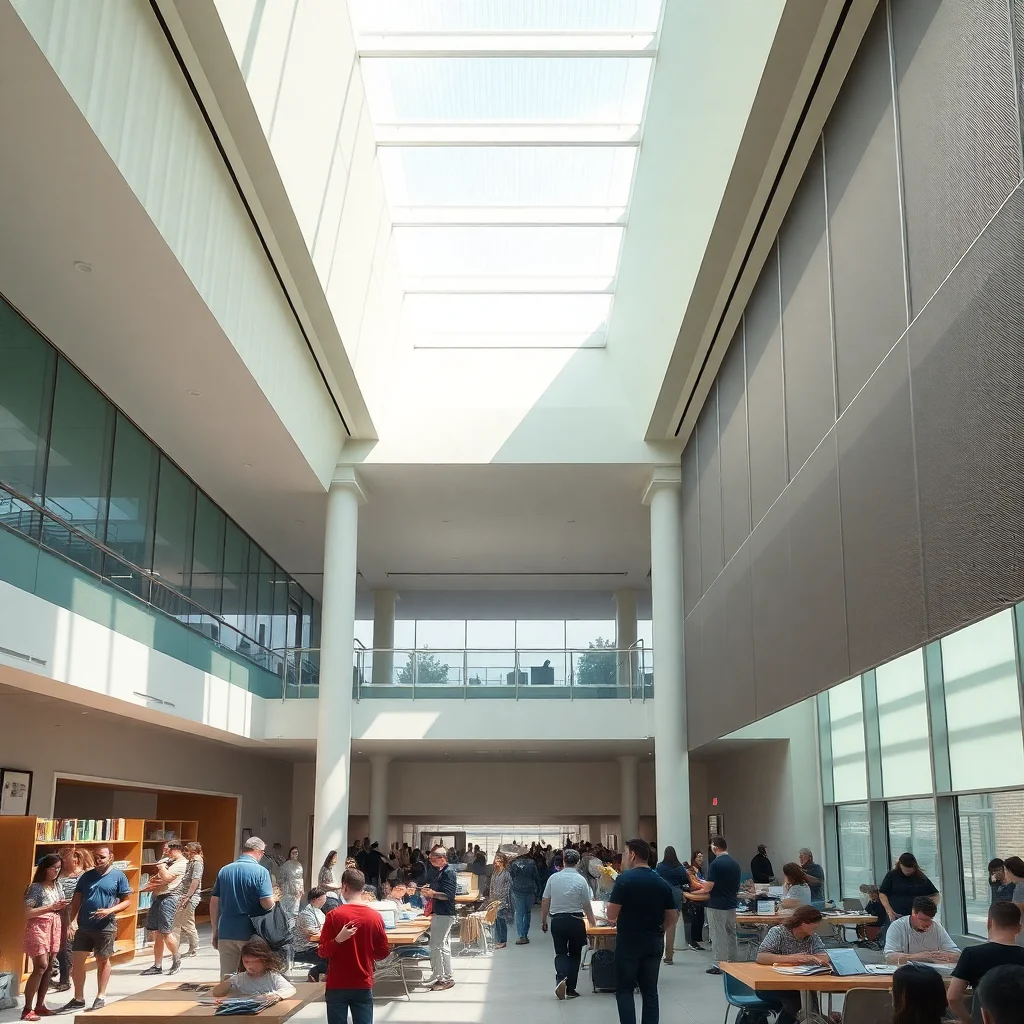
Daylight has always had an ecological dimension, but the profession has often reduced it to energy savings: fewer lights on, lower operational loads, better carbon performance. That is necessary, but it is no longer sufficient. In a climate crisis, daylight is also a resilience question. Can a building remain usable during grid stress? Can it maintain comfort during heat waves without resorting to excessive mechanical correction? Can it support human activity in a low-energy future where artificial illumination is not assumed to be infinite or cheap?
This is where daylight becomes inseparable from architecture’s broader ecological ethics. Properly managed, daylight reduces reliance on electrical systems and supports passive design. Poorly managed, it increases cooling loads, causes overheating, and creates conditions users try to counteract with blinds permanently drawn and lights permanently on. The profession likes to speak about “sustainability,” but daylight exposes whether that word has any operational depth. A building that performs beautifully on paper but remains dim, overglazed, or uncomfortable is not resilient; it is merely well marketed.
The ecological implications also extend beyond the building envelope. The 2026 Daylight Award’s inclusion of researchers studying aquatic microorganisms is a reminder that light is planetary, not just architectural. Artificial light and altered daylight regimes affect ecosystems, biodiversity, and the behavior of species far outside the architect’s usual field of view. That should unsettle the profession. If daylight can be measured as a health input for people and a survival condition for nonhuman systems, then it cannot remain a stylistic preference. It becomes an environmental duty.
This broader accountability is part of a larger architectural reckoning. When Architecture Stops Hiding Its Ecology explores how buildings can no longer treat environmental performance as background information. Daylight belongs in that same conversation because it reveals whether a project truly reconciles comfort, resource use, and ecological consequence.
The Coming Conflict: Beauty Versus Optimization Is a False Binary
The loudest objection to daylight metrics is predictable: won’t this reduce architecture to engineering? Won’t optimization flatten atmosphere, mystery, and delight? The answer is no, but only if architects refuse the false binary. Measured daylight is not the enemy of poetry; it is what keeps poetry from becoming self-indulgence. A room that dazzles for ten minutes but fails for ten hours is not humane architecture. It is a rendering in physical form.
That said, the risk of metric obsession is real. If design becomes obsessed with hitting target values, daylight can devolve into one more compliance checkbox, as lifeless as a spreadsheet and as narrow as a code minimum. But that danger is not an argument against measurement. It is an argument for better design intelligence. Great daylighting is never a single number. It is a relationship between orientation, section, surface reflectance, program, season, and human behavior. Metrics should guide judgment, not replace it.
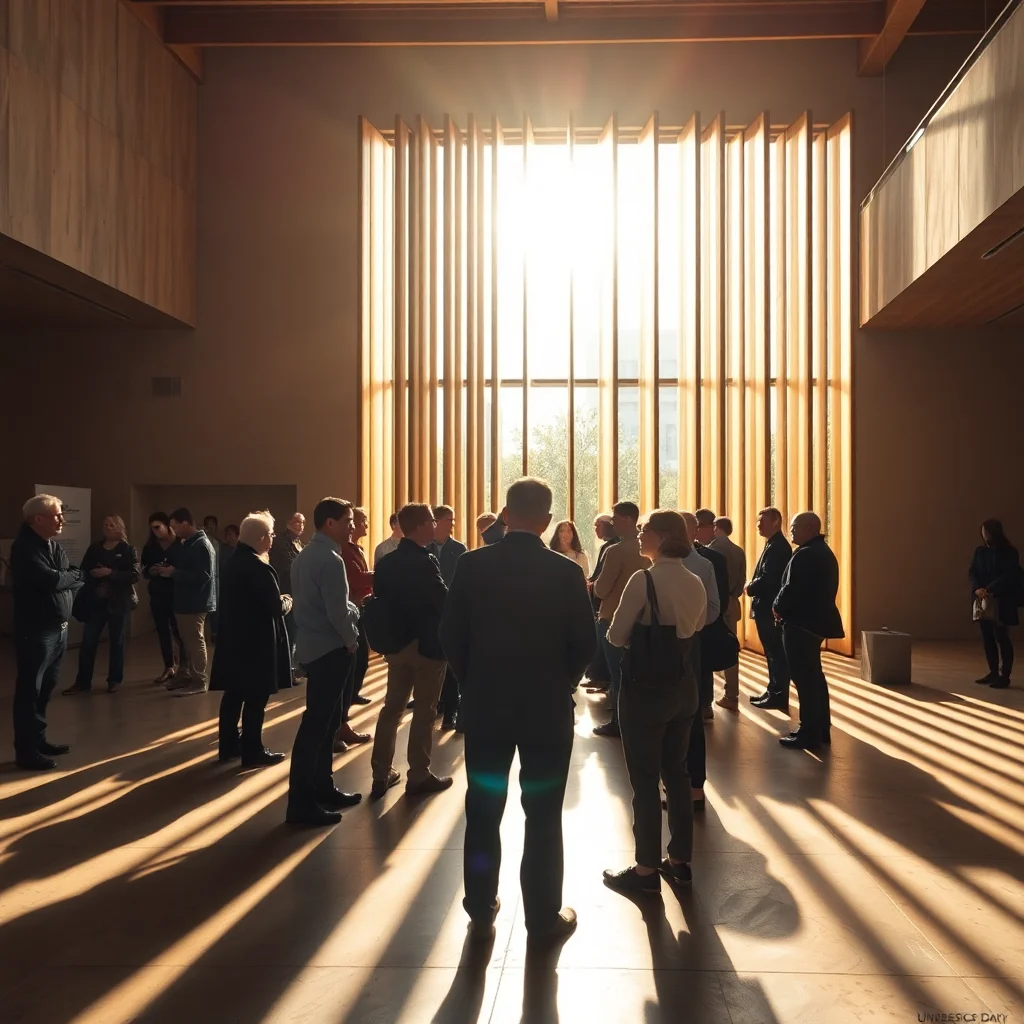
The strongest architects of the near future will be those who can move fluidly between scientific clarity and spatial imagination. They will know when to cut a deep reveal, when to diffuse, when to reflect, when to frame, and when to refuse the sun altogether. They will understand that the best luminous environments are often the most carefully controlled. In that sense, the discipline is entering a new phase: not less expressive, but more accountable.
What Architects Should Optimize Next
If carbon became the moral metric of the 2010s and operational energy the management metric of the 2000s, daylight may become the design metric of the 2020s and 2030s. Not because it is fashionable, but because it sits at the intersection of several urgent agendas at once: public health, ecological stewardship, thermal resilience, and spatial quality. That makes it harder to ignore than almost any other environmental parameter.
Architects should not surrender daylight to consultants and software. They should claim it as a core design ambition. That means designing sections as carefully as façades, thinking about morning and winter light rather than only noon and summer glare, and asking how daily life unfolds across changing luminous conditions. It means treating courtyards, atria, clerestories, light shelves, perforated screens, and reflective materials as strategic tools rather than aesthetic accessories.
Most provocatively, it means admitting that the profession may soon be judged not only by how little carbon it emits, but by how well its buildings support luminous wellbeing. In that future, a building that is energy-efficient but spiritually dim will no longer pass as a success. The standard will be higher. It should be.
Daylight is becoming architecture’s next performance metric because it already acts like one. The only remaining question is whether architects will embrace that fact early, or be forced to catch up after clients, regulators, and public health data make the decision for them.
Get the Mainifesto weekly — curated design debates, speculative ideas and the week's best articles every Saturday.
Editorial Perspectives
Questions and counterpoints developed by the Mainifesto editorial desk to extend the discussion.
Perspective 1
Daylight as a metric is not new; modernism spent decades pretending sun was a moral fact rather than a technical one. What is more interesting now is the return of a measured luminous ethics, though one suspects the profession will turn it into another dashboard before it becomes a genuine cultural criterion.
Perspective 2
Yes, luminous wellbeing should count, but only if we stop pretending every building can be optimized in the abstract. In adaptive reuse, the light you inherit is tied to structure, history, and the street; making that measurable is useful, but flattening it into a universal target would erase the very complexity we are supposed to preserve.
Perspective 3
I’m open to daylight as a formal target, but only if the metric is rigorous and doesn’t create perverse incentives. A well-lit plan is not automatically a healthy or resilient one, and in dense cities you have to balance daylight with overheating, privacy, and energy performance.