
When Architecture Stops Hiding Its Ecology
Architecture Has Stopped Pretending It Is Separate
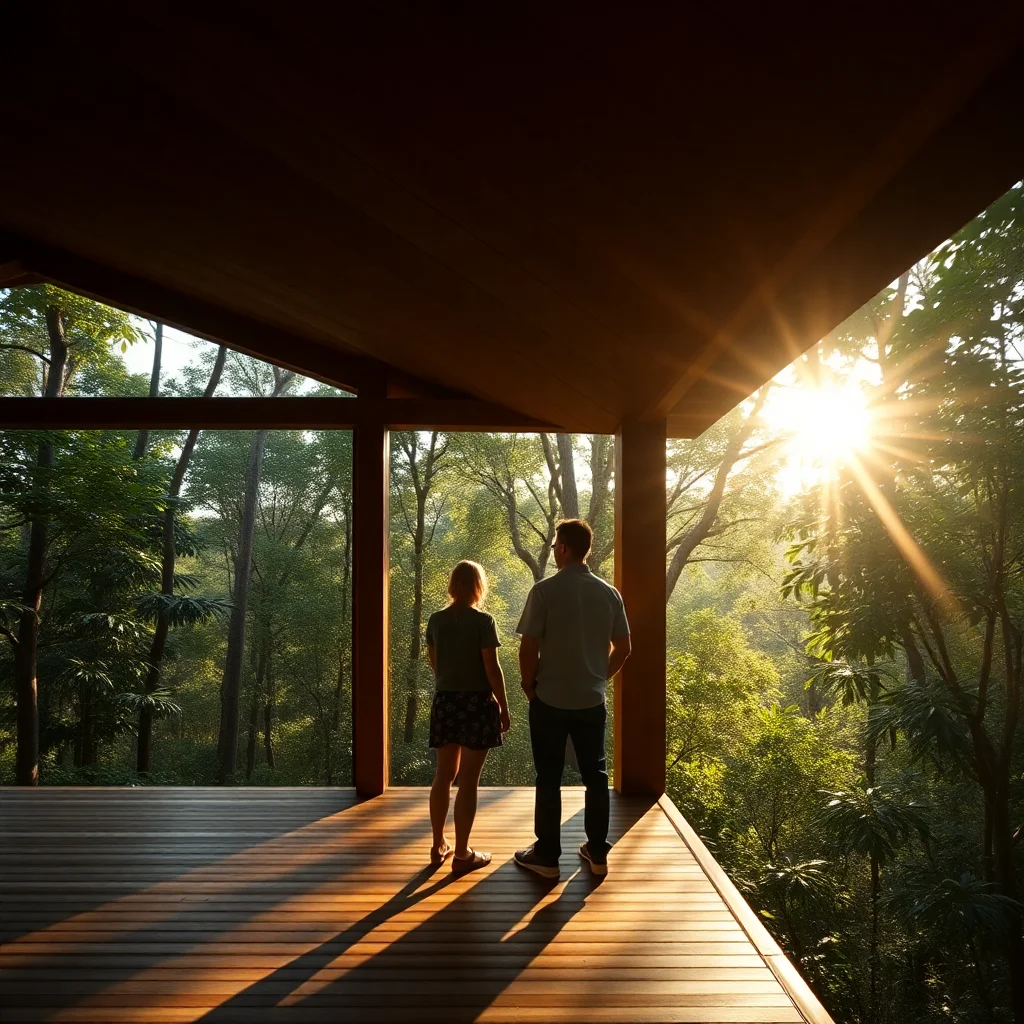
Casa Pinhal, by Cornetta Arquitetura, is not remarkable because it sits politely in a forested landscape and uses sustainable construction methods. That formula is now a baseline, the architectural equivalent of claiming to be weatherproof. What makes the project provocative is subtler: it treats ecology not as background compliance but as a designed condition of experience. The house does not merely occupy the site; it arranges how a body moves, pauses, looks, and senses the forest. In that shift, architecture stops hiding its ecology and begins performing it.
This matters because the language of sustainability has become too technical to be persuasive on its own. Operational carbon, embodied carbon, passive cooling, local sourcing—these are necessary metrics, but they rarely change how people live unless the building itself persuades them. Casa Pinhal suggests that the next frontier is atmospheric and behavioral. A building may be judged not only by how little it consumes, but by how effectively it turns its occupants into more attentive environmental subjects.
That is a bolder claim than it first appears. For decades, ecological design has often been forced into camouflage: a concealed technical agenda wrapped in neutral modernism. Even many “green” buildings still present themselves as if sustainability were an internal machine hidden behind a pristine façade. But the most interesting recent work—from Studio Gang’s urban biodiversity strategies to 3XN’s research into habit-forming spatial circulation, from Kengo Kuma’s porous materiality to the climatic choreography in Paulo Mendes da Rocha’s Brazilian modernism—points in another direction. Ecology becomes legible, even sensorially seductive. The building teaches through atmosphere.
From Efficiency to Choreography
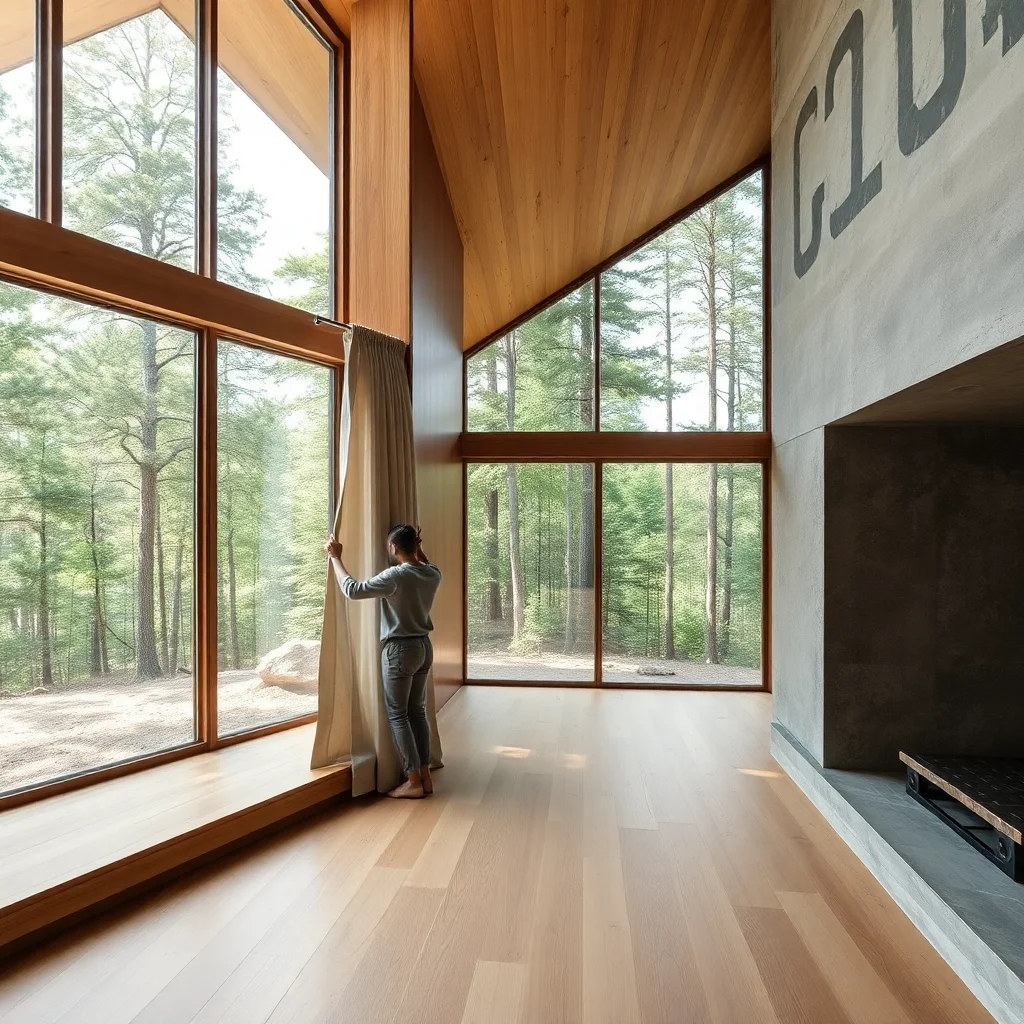
Casa Pinhal belongs to an emerging class of architecture that understands sustainability as sequence, not slogan. Instead of relying only on discreet technologies, it uses movement, thresholds, compression, and release to shape environmental awareness. A shaded approach alters the pace of arrival. A filtered edge to the forest tunes the eye to changing light. Cross-ventilation is no longer just a diagram in a report; it becomes the reason a room feels alive. In this sense, the project is closer to a cinematic device than a static object.
We should take that seriously. Architecture has always influenced behavior, but usually in the service of control: the corridor, the lobby, the plan, the monumental procession. What changes here is the ethical target. If a house can slow consumption by making comfort depend on opened thresholds rather than sealed air, or by encouraging occupants to read the day through temperature and shade rather than through mechanical consistency, then sustainability migrates from engineering to habit. This is not cosmetic environmentalism. It is environmental conditioning by design.
Consider how this differs from the rhetoric of high-performance minimalism. A sealed glass box can now be extremely efficient, but it still trains its users to distrust climate variability. By contrast, projects such as Anna Heringer’s earth construction work, Tatiana Bilbao’s site-sensitive housing concepts, or the work of Fernandes Arquitetos in Brazil often frame climate as something to inhabit, not suppress. The architecture becomes pedagogical: it teaches weather literacy. Casa Pinhal belongs to that lineage, where a building’s real ecological achievement may be that it changes what residents expect comfort to feel like.
That shift also raises broader questions about domestic ideology. If the house is no longer a neutral container but a responsive environmental instrument, it begins to resemble the arguments made in Do We Still Need a Universal Home?: that comfort is never purely universal, and that design choices quietly encode expectations about climate, family, and routine. Casa Pinhal suggests a more specific answer for the ecological era—one where the best home may be the one that helps its occupants notice difference rather than erase it.
The Radical Question: Should Buildings Change Us?
Here is the uncomfortable proposition: sustainable design may increasingly be judged by its ability to alter human behavior through atmosphere and sequence, not by technical performance alone. This sounds noble until you realize how normative it is. If a building nudges people to open windows, use less artificial cooling, walk more, or linger in communal shaded spaces rather than retreating into isolated climate-controlled rooms, then the architecture is no longer neutral. It is shaping conduct. That raises a question the profession often avoids: how much behavioral influence is appropriate, and who gets to decide what “better” behavior means?
Yet this is exactly where the most ambitious ecological architecture is headed. The frontier is not just efficient systems; it is experiential ethics. Projects like Olalekan Jeyifous’s speculative urban ecologies, or landscape-driven work by Piet Oudolf and the studio-led integration of planting in projects by Bas Smets, suggest that built form can recalibrate attention. In those environments, people do not simply pass through nature; they become aware of their participation in it. Casa Pinhal’s real significance is that it pushes the domestic sphere toward the same proposition. The house is not a retreat from ecology but a device for living inside it consciously.
That is also why atmosphere matters politically. A building that makes environmental cues perceivable can produce a different civic imagination than one that buries them. Think of the difference between a sealed tower and a courtyard, between a lobby with recycled materials and a porch where the wind enters, between a thermostat and a shaded veranda. One system externalizes climate; the other makes climate legible as shared reality. The more architecture reintroduces sequence, gradients, and sensory thresholds, the more it invites inhabitants to become co-authors of environmental performance.
This logic is visible well beyond houses. In institutions, too, environmental legibility can reshape public life: When Museums Become Climate Machines explores how circulation, enclosure, and thermal control can become part of a building’s meaning rather than its hidden infrastructure. The parallel is useful here because Casa Pinhal operates on a smaller domestic scale, but with the same ambition—to make climate something people experience as design, not background.
Against the Fantasy of Pure Performance
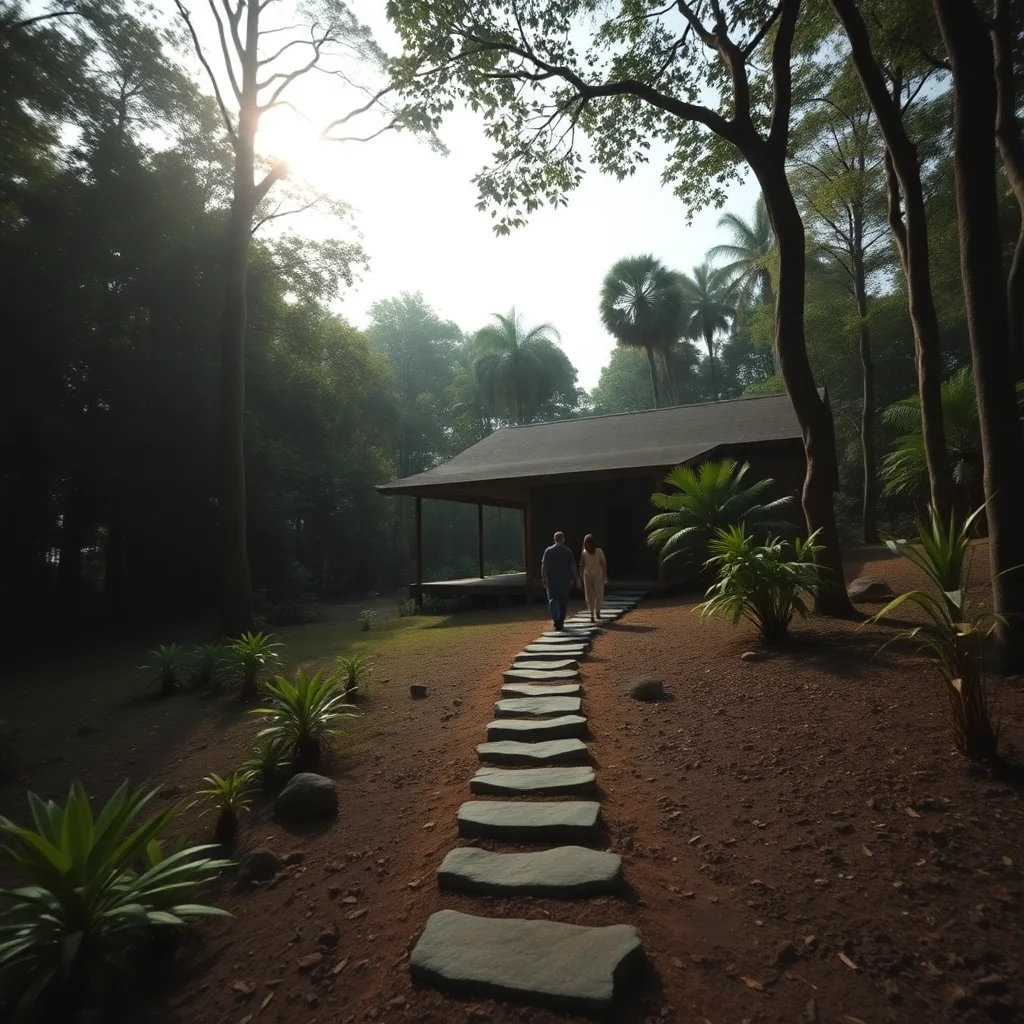
But there is a trap here. Celebrating atmospheric design too quickly can slide into aesthetics-as-virtue, where dappled light and timber finishes stand in for genuine ecological rigor. Architecture magazines are especially guilty of this: the greener the project, the more likely it is to be photographed as a tranquil composition, stripped of the politics of maintenance, access, labor, and cost. Casa Pinhal should not be read as a lifestyle image of the forest. It should be read as a test case for whether sustainable architecture can be felt without becoming merely picturesque.
Technical performance still matters, and it matters decisively. If an architecture of atmosphere increases energy use, relies on resource-intensive materials, or limits adaptability, it has failed, no matter how beautifully it choreographs a path through shade. That is the counterargument the field needs to hear. A building cannot redeem itself through phenomenology alone. The danger of the current moment is that designers will use ecological immersion as a moral alibi for weak metrics, when in fact the two must be mutually reinforcing.
The strongest precedent is not a single style but a discipline of alignment. Think of Lacaton & Vassal, whose transformations prove that generosity and low-carbon pragmatism can coexist without theatricality. Or the work of Mette Aamodt and the broader adaptive-reuse movement, where existing fabric is retained precisely because it already stores energy and memory. In these cases, atmosphere is not added as decoration; it emerges from structural intelligence. Casa Pinhal belongs in this conversation if, and only if, its sensory qualities are inseparable from its environmental logic.
That same tension appears in many projects that try to reconcile comfort with restraint. The appeal of quiet detailing and restrained material palettes, for example, can be read as part of The New Quiet Code of Luxury Hospitality, where atmosphere is used to signal care, calm, and precision. The lesson for ecological housing is similar: quietness is not enough unless it is anchored in real operational intelligence.
What Casa Pinhal Really Suggests
The deeper lesson of Casa Pinhal is that the ecological building of the future may be neither invisible nor loudly technological. It may instead be conspicuously attuned: a place where shade is a spatial event, where breeze is an architectural material, where the sequence of rooms changes the user’s sense of time and climate. That would be a major correction to the architecture of the last century, which often tried to master nature by separating occupants from it.
We are likely entering an era when the profession will have to prove that sustainable design is not just efficient, but instructive. Buildings will be expected to cultivate attentiveness, not just lower emissions. They will be judged on whether they help occupants notice weather, reduce friction between inside and outside, and behave as if ecology were not an external topic but a lived condition. This is a higher standard, and a riskier one. It asks architecture to become less like a shell and more like a script for environmental consciousness.
Casa Pinhal hints that this is no longer speculative excess. It is the emerging common sense of serious ecological architecture: buildings that do not hide their relationship to the forest, the climate, or the body. They choreograph it. They make it felt. They ask us to inhabit sustainability as an experience before it ever becomes a statistic.
That same ethic also connects to the broader question of adaptation. If buildings are increasingly expected to teach new habits, then reuse becomes more than a conservation strategy; it becomes a cultural one. Can Adaptive Reuse Save Cultural Buildings? is relevant here because it frames retention, memory, and low-carbon transformation as mutually reinforcing goals—another reminder that the best environmental architecture often works by keeping more of the world visible, legible, and usable.
Get the Mainifesto weekly — curated design debates, speculative ideas and the week's best articles every Saturday.
Editorial Perspectives
Questions and counterpoints developed by the Mainifesto editorial desk to extend the discussion.
Perspective 1
I like the idea that sustainability is not just an energy spreadsheet but a designed sequence of attention, movement, and pause. If a building can make ecological behavior feel intuitive through atmosphere, then that should count—but I’d still want a way to measure it without turning the experience into another checkbox.
Perspective 2
This is a familiar ambition dressed in contemporary ecological language: architecture as pedagogy, architecture as atmosphere, architecture as moral choreography. The real question is whether such scenography changes anything lasting, or merely gives us a more elegant way to feel responsible while the metrics remain elsewhere.