King Fahd Stadium and the Politics of Renovation
PRO: The silhouette is the asset
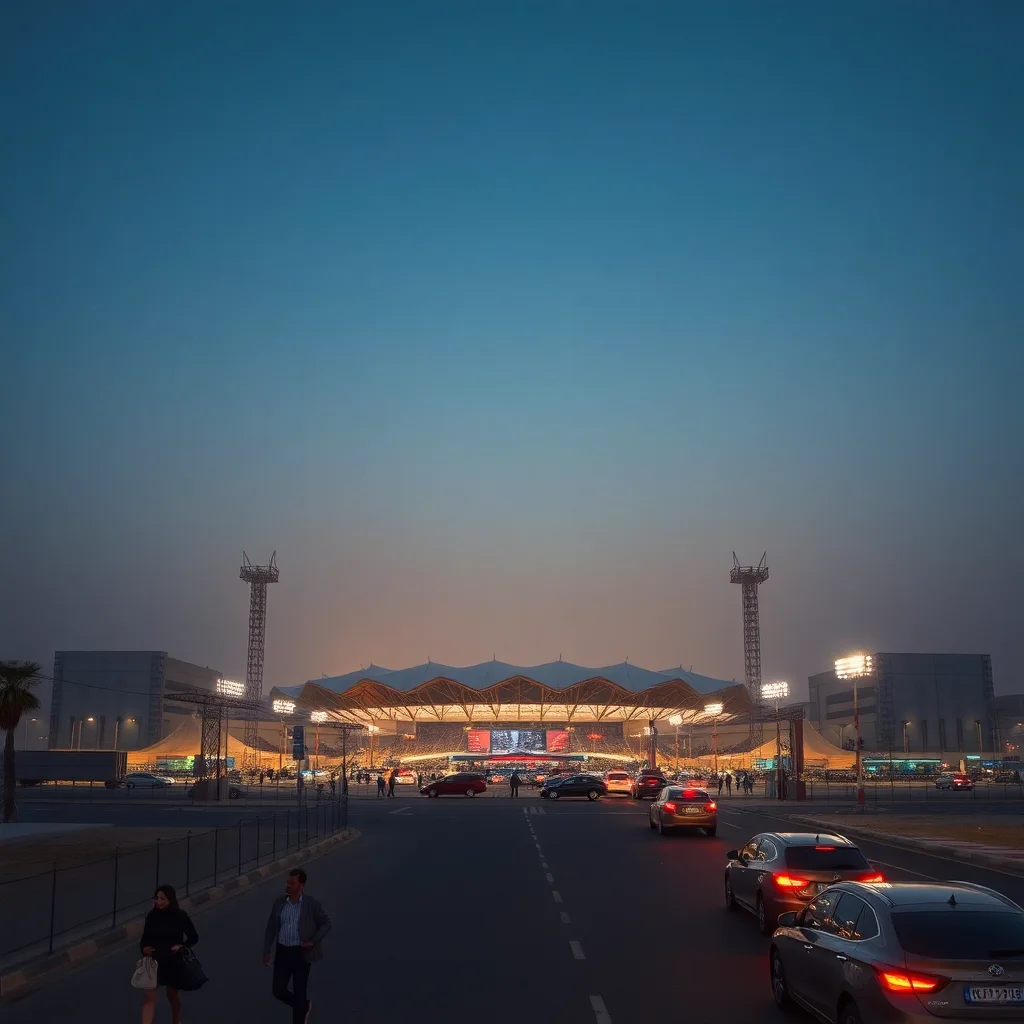
Riyadh’s King Fahd Sports City Stadium is not being treated as an old shell to be cleared away for a shinier replacement. That is the point. Populous’s plan to keep the stadium’s tent-like canopy while expanding capacity to 70,000 seats frames the most persuasive argument in contemporary stadium design: identity is infrastructure. In a landscape where mega-events increasingly demand architectural instant recognizability, the silhouette is not decoration; it is economic capital, cultural memory, and state branding rolled into one.
This is why the proposal matters beyond Saudi Arabia. The modern stadium is no longer a pure sports container. It is a screen, a logo, a tourism product, and a diplomatic object. The original King Fahd stadium, opened in 1987, already understood this logic through its dramatic roof form. Preserving that signature shape while updating the building for 2034 is not nostalgia. It is a strategic refusal to let the World Cup become an excuse for cultural amnesia. If the site is already famous, why flatten it into generic global contemporaneity?
There is precedent for this conservative aggressiveness. The best stadium renovations do not erase history; they weaponize it. London’s Wembley rebuilt its image around the arch, keeping a symbolic line of continuity while delivering a radically new interior. Munich’s Allianz Arena became an emblem of precision and atmosphere by treating external identity as a civic asset. In each case, the public reads the building before it enters it. Populous understands that for Riyadh, preserving the canopy is a way of saying: this is not a disposable event venue, but an enduring landmark with a future.
TRIGGER: The World Cup has changed the rules
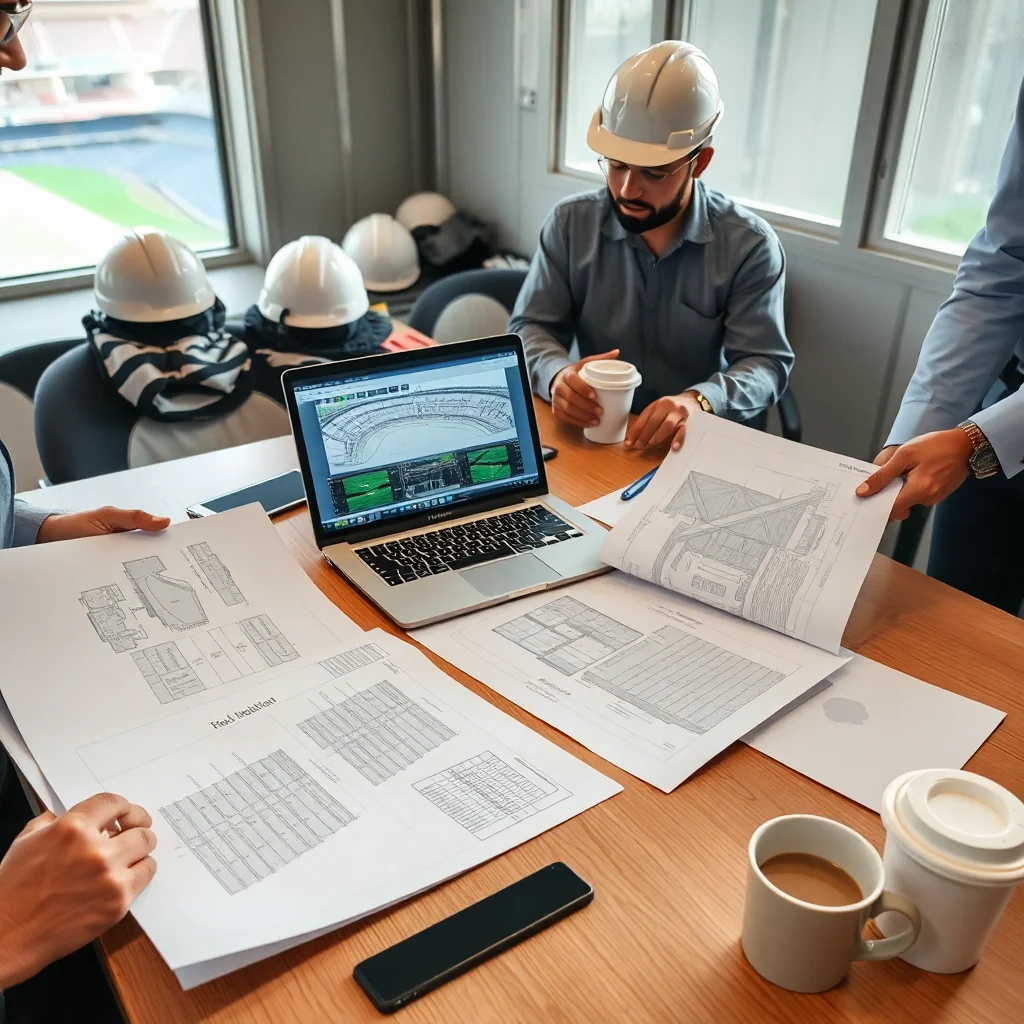
The 2034 FIFA World Cup is the trigger, but the real force is the new politics of mega-event delivery. Host cities are no longer judged only by how grandly they build; they are judged by how efficiently they can turn a stadium into a machine for repeated use. That means upgrades are expected to do everything at once: increase seating, improve climate response, optimize crowd flow, sharpen media performance, and keep post-tournament economics viable. The renovated King Fahd Stadium is therefore not just about football. It is about whether architecture can survive the demands of perpetual eventfulness.
This pressure is familiar. The 2014 World Cup in Brazil left a trail of oversized venues struggling to find a second life. Brasília’s stadium became a cautionary symbol of expenditure detached from local need. By contrast, the successful reworkings are those that treat legacy as a programmatic discipline rather than a sentimental bonus. The London Stadium’s post-Olympic transition remains contested, but it revealed the central issue: a venue built for one spectacular moment becomes politically unstable if its future use is vague. The World Cup, in other words, now punishes buildings that cannot justify themselves after the closing ceremony.
Riyadh’s project must therefore answer a brutal question: can a stadium remain iconic while becoming more flexible, more climate-aware, and more profitable? That is not a technical problem alone. It is a challenge to architectural authorship. Populous, a studio deeply embedded in the global sports industry, has shaped the contemporary stadium into a hybrid of engineering, branding, and urban choreography. Here, the revamp must reconcile an established form with a climate and commercial agenda that would happily erase it. The result will be read as a test case for how future host cities manage heritage under pressure.
PRO: Renovation as architectural intelligence
There is a strong case for preserving major stadium structures instead of replacing them wholesale. First, renovation is materially smarter. Reusing an existing building can reduce embodied carbon, avoid demolition waste, and retain the urban memory embedded in foundations, circulation systems, and landscape. In a decade when architecture is constantly asked to prove its environmental seriousness, the decision to keep the stadium’s iconic canopy reads as a responsible act rather than a weak compromise. A mega-event should not require architectural amnesia and ecological indulgence at the same time.
Second, renovation allows design to become more precise. A new seating bowl, better shade, improved concourses, upgraded hospitality zones, and stronger event logistics can be inserted without sacrificing recognizability. This is the logic that made the refurbishment of the Santiago Bernabéu so interesting: the building’s identity was not abandoned, but intensified into a more complex urban object. The best revamps do not simply add capacity; they recalibrate how a building behaves in the city, how it circulates bodies, and how it performs after dark. Riyadh’s stadium, if handled well, can become a more disciplined version of itself.
Third, preserving the silhouette protects symbolic continuity. Cities do not only need new icons; they need reliable landmarks that connect generations. The original King Fahd stadium is tied to Saudi football culture and to a specific visual memory of Riyadh’s late-20th-century ambitions. To discard that form would be to sever a public image that has already accumulated meaning. In a region where architectural scale can easily drift toward the generic mega-object, continuity becomes a form of urban sophistication. The decision to preserve can be bolder than the decision to invent. This same logic underpins adaptive reuse as civic infrastructure, where keeping a recognizable structure is treated as a public asset rather than a compromise.
CONTRA: Iconic form can become decorative alibi
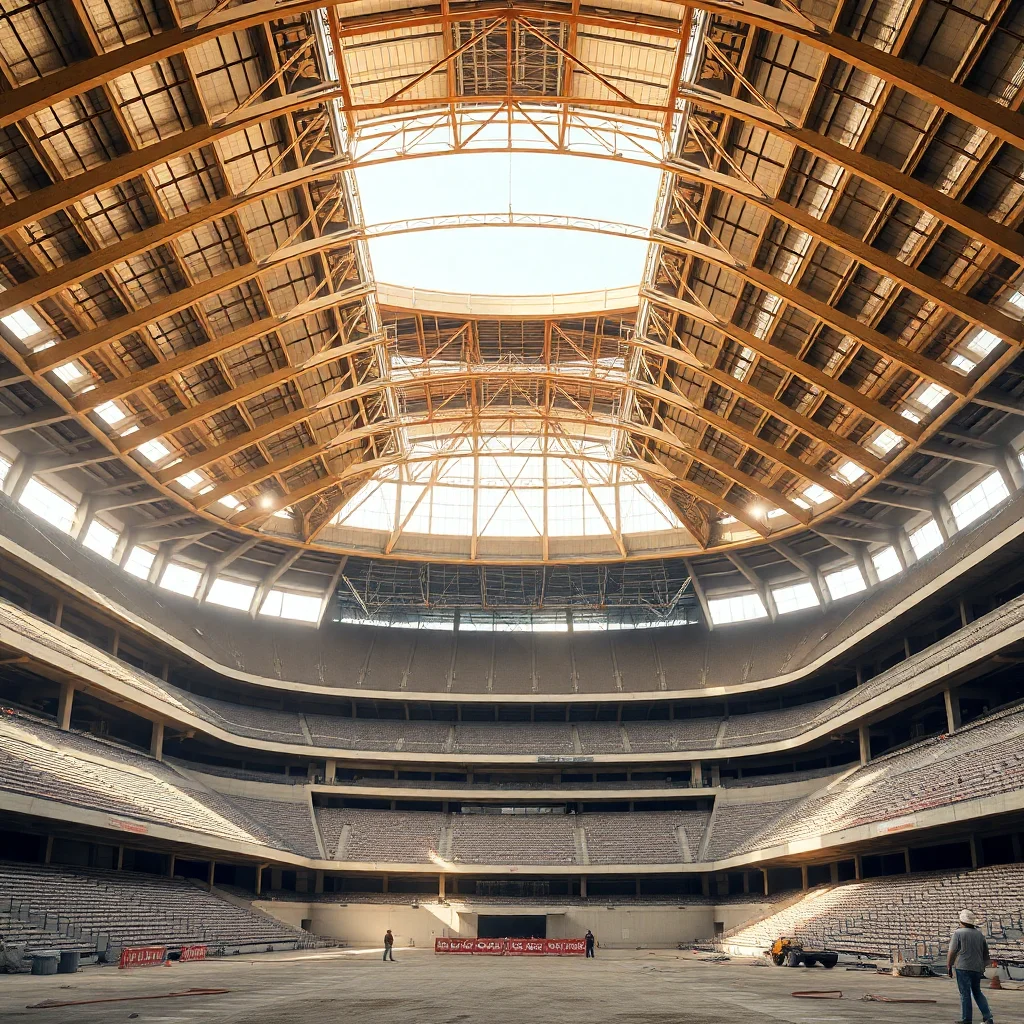
Yet the preservation argument has a darker side. Keeping the silhouette may sound culturally mature, but it can also function as a decorative alibi for a fundamentally instrumental project. The language of “iconic” often protects architectural forms from the very scrutiny their scale demands. In practice, this can mean maintaining a recognizable roof while silently transforming the interior into a more aggressive consumption engine: more premium seating, more VIP segregation, more hospitality monetization, more corporate capture. The silhouette remains for the cameras; the politics move inside.
This is the risk of all mega-event renovation. Conservation can become theater. A building that appears respectful of its past may in fact be being rewritten to serve a narrow economic model that prizes global broadcast legibility and high-yield spectatorship over civic openness. The stadium becomes less a public commons than a calibrated platform for revenue extraction. The question is not whether the canopy survives, but who benefits from its survival. If heritage only legitimizes intensified exclusivity, then what exactly has been preserved?
There is also a climate paradox. Stadiums in hot regions are often presented as technologically advanced because they promise shade, comfort, and controlled microclimates. But improved environmental response does not automatically equal sustainable urbanism. A more climate-responsive stadium can still lock cities into energy-intensive spectacle. It may reduce discomfort for spectators while increasing the operational burden of an arena designed to host periodic mass gatherings. The rhetoric of climate adaptation can therefore conceal a deeper dependency on high-consumption event culture. The architecture looks responsible; the model remains extractive. For a broader look at this tension, see when architecture becomes climate infrastructure.
PRO: The future of stadiums is adaptive identity
The more interesting position is not to choose between conservation and transformation, but to understand renovation as a new form of authorship. In the best scenario, the King Fahd revamp would demonstrate that identity can be adapted without being diluted. Architecture is not a fossil bed. A stadium should be allowed to age into new programs, new technologies, and new civic roles while retaining enough formal continuity to remain legible. That is how cities avoid the cycle of spectacular obsolescence followed by demolition and replacement.
Examples from outside football confirm the value of this approach. The adaptive reuse of industrial structures into cultural venues, from Tate Modern to Zeche Zollverein, proved that scale can be retained while meaning is rewritten. In sports, the more sophisticated projects are those that absorb new requirements without losing spatial force. The challenge for Riyadh is to treat the canopy as an active civic device rather than a relic. If the roof can mediate heat, organize identity, and anchor a broader event economy, then preservation becomes design intelligence, not conservation for its own sake.
What makes this especially consequential is the political symbolism of the 2034 World Cup. Saudi Arabia is not just hosting a tournament; it is staging a narrative of futurity. That means the built environment must perform two contradictory scripts simultaneously: rootedness and acceleration. The renovated King Fahd Stadium sits exactly at that fault line. If it succeeds, it will prove that mega-structures can be updated without becoming anonymous. If it fails, it will reveal that in the age of global events, “iconic” is merely the first word in a long sales pitch.
CONTRA: The mega-structure absorbs everything
But the megastructure has a way of consuming its own ideals. Once expansion, climate control, premium programming, and broadcast optimization enter the equation, the original architectural gesture can become little more than a branding device. The stadium may still read from a distance as the same object, but the lived experience can be entirely different: more security layers, more privatized zones, more sponsor surfaces, more controlled circulation. The public receives continuity as image while inhabiting a more fragmented reality.
This is the essential contradiction of the modern renovation economy. We are told that reuse is virtuous, but reuse under mega-event conditions often means intensification without democratization. Capacity rises to 70,000 seats, yet access may narrow in subtle ways through pricing, zoning, and spectacle management. Climate adaptation improves comfort, but the building still behaves like an energy-hungry machine calibrated for exceptional peaks rather than everyday life. The project becomes a monument to flexibility that is, in fact, highly scripted.
That tension is not a reason to reject the project. It is a reason to stop pretending stadium renovation is a neutral technical exercise. Every decision about preserving a silhouette, expanding a bowl, or reconfiguring a canopy is also a decision about which histories are protected and which futures are monetized. Riyadh’s King Fahd Stadium revamp is therefore not simply a design update. It is a referendum on whether architecture can serve public symbolism without surrendering to the economics of spectacle.
FAQ
Why is preserving the stadium’s silhouette so important?
Because silhouette is how a stadium becomes part of a city’s collective memory. In a project like King Fahd, the canopy is not just a roof; it is a visual identity that links the building to Riyadh’s architectural history and to the public recognition required by a World Cup host.
Does renovation always make more sense than rebuilding?
Not always, but in many cases it reduces waste and retains cultural continuity. The real test is whether the existing structure can support new performance standards, circulation requirements, and climate demands without becoming a cosmetic shell.
How do stadiums balance climate response and spectacle?
They often do it through shading systems, controlled ventilation, and upgraded enclosure design. The danger is that climate adaptation can be used to justify even more intensive event models, so comfort must be paired with honest questions about energy use and public benefit.
What is the biggest political issue in World Cup renovations?
Who the building is really for. A renovated stadium can promise civic value, but if the upgrade primarily serves premium ticketing, broadcast optics, and short-term event economics, then the project risks turning public symbolism into private gain.
The new politics of World Cup renovations is this: can a stadium remain a civic landmark while being reshaped into a revenue machine, or does one ambition inevitably corrupt the other?
Get the Mainifesto weekly — curated design debates, speculative ideas and the week's best articles every Saturday.
Editorial Perspectives
Questions and counterpoints developed by the Mainifesto editorial desk to extend the discussion.
Perspective 1
A stadium can absolutely stay a civic landmark if the renovation is disciplined about what matters: access, sightlines, circulation, and a clear operational model. The mistake is treating identity as a decorative shell; if the economics work, the building can stay public-facing and still earn its keep.
Perspective 2
I’m skeptical of the idea that you can expand a stadium for a mega-event and still preserve its civic role without trade-offs. In practice, the revenue logic usually wins, and what gets called “identity” is often just the retained facade and a few symbolic gestures.
Perspective 3
From a user-experience standpoint, the real test is whether the place still feels legible and welcoming on a normal Tuesday, not just during a World Cup. Revenue is fine, but if the renovation turns the stadium into a hard-to-navigate machine, you’ve lost the plot and the audience.
Perspective 4
The article gets at the uncomfortable truth: preservation is never neutral when money and spectacle are involved. A stadium can survive as a civic landmark, but only if renovation is treated as stewardship rather than rebranding the past into a more profitable product.