Adaptive Reuse as Civic Infrastructure
From leftover space to civic system
Adaptive reuse is no longer a niche preservation strategy or a sentimental gesture toward the industrial past. It is increasingly being asked to do the work of public policy: provide workspace, training, care, cultural visibility, and even environmental repair. In cities starved of capital investment, the vacant lot, the underused parking garage, and the abandoned bank vault have become something more ambitious than repurposed real estate. They are being recast as civic infrastructure.
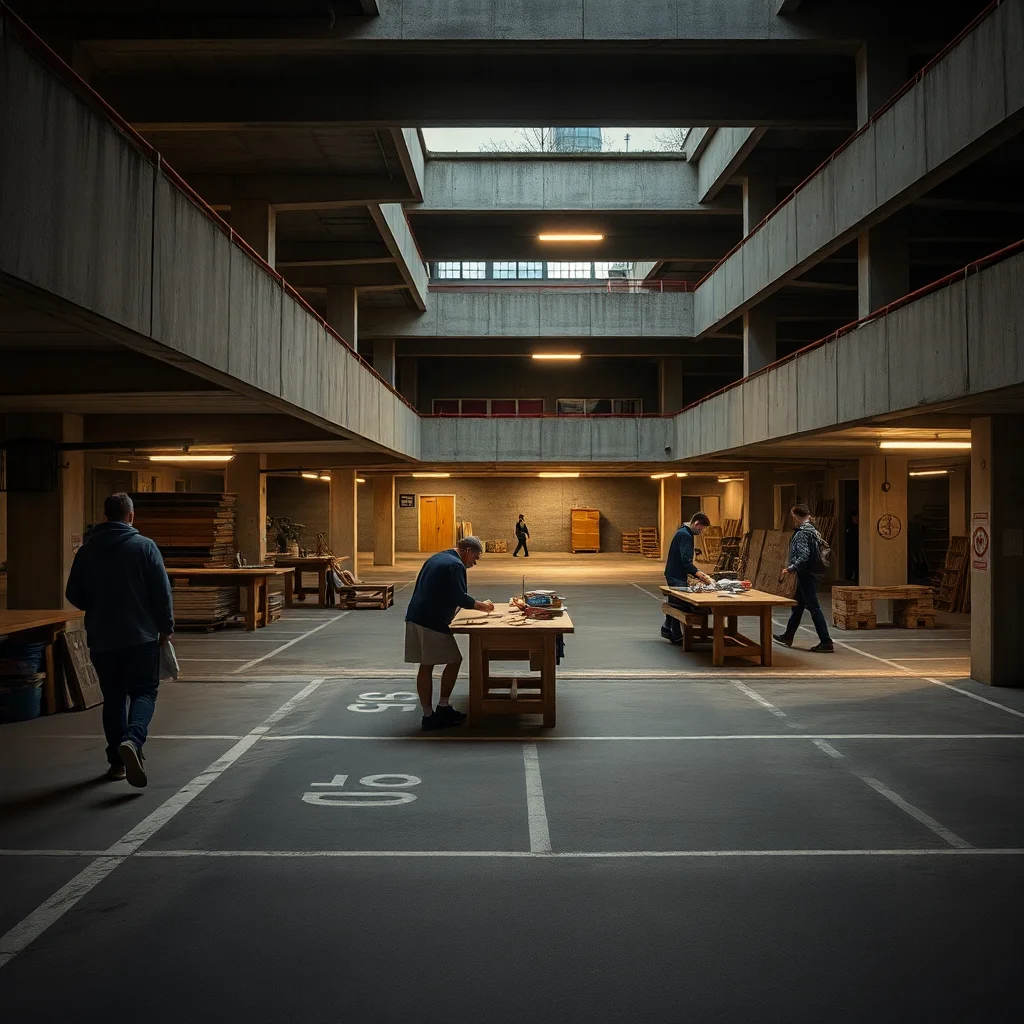
The clearest appeal is obvious. Reuse is fast, comparatively low-carbon, and often politically easier than new-build redevelopment. It can activate dead spaces without waiting for years of planning battles or speculative luxury schemes. The new wave of civic reuse is also deeply practical. In Birmingham, projects emerging from Birmingham City University’s School Shows include a community makers hub inserted into an unused car park, evidence that even the most banal urban leftovers can host workshops, fabrication, and social exchange. Elsewhere, proposals to turn old commercial shells into refugee support centres, repair kitchens, and neighborhood service hubs are multiplying, especially in cities where public budgets have been hollowed out.
Yet the real question is not whether these interventions are clever. It is whether they are structurally consequential. Are we building a new civic ecology, or simply dressing deprivation in the language of innovation?
PRO: reuse can manufacture public life where planning failed
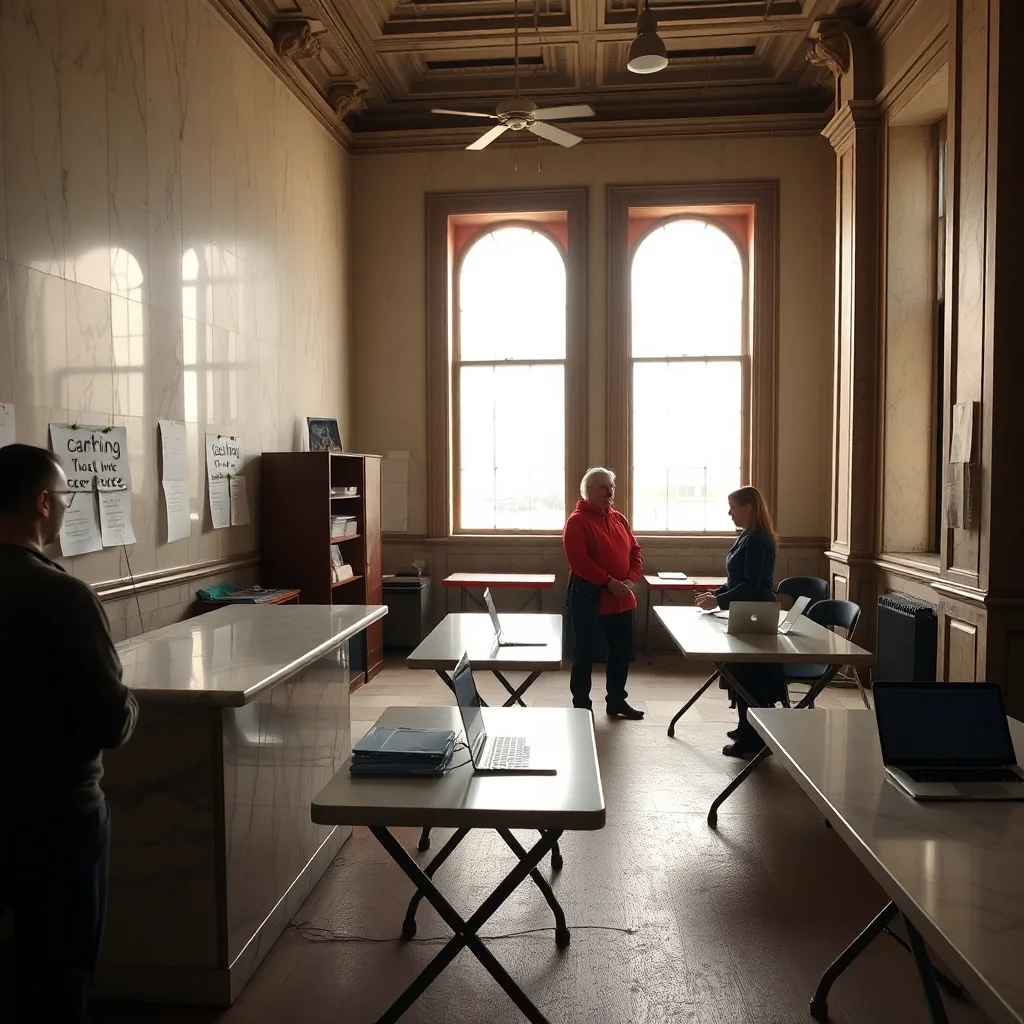
The strongest argument for adaptive reuse is that it can produce public value immediately, in places that the market has already abandoned. Vacant lots do not need to remain absences; parking garages do not need to remain monuments to car dependency; old banks do not need to sit as sealed relics of a financial order that extracted more than it gave. When designers, local authorities, universities, and community groups intervene, these spaces can become social engines.
At their best, such projects do more than host activity. They redistribute access. A makers hub inside an unused car park can lower the barrier to entry for residents who cannot afford conventional studio rents. A former bank can become a food pantry, a legal clinic, or a training space for migrants and refugees, placing services in central, visible, and dignified locations rather than on the city’s administrative margins. The point is not symbolism alone; it is proximity. Civic infrastructure works when it meets people where the city already is.
This is where the Birmingham context matters. The city has long been a laboratory of post-industrial adaptation, and the School Shows material makes the argument plainly: future urbanism may be less about grand gestures than about intelligent occupation of the spaces already overbuilt. The proposed zero-car city vision for Birmingham by 2050 pushes the logic further. If cities are to reduce reliance on private vehicles, then parking structures and car parks become not waste, but latent public territory. Reinventing car parks as mobility hubs is not a workaround; it is a spatial transition strategy.
Architecturally, this is the terrain that practices like Lacaton & Vassal have made legible: keep the structure, expand what life can happen inside it, and refuse the wasteful vanity of demolition. Similarly, reuse-led thinking in social architecture has been strengthened by projects such as Assemble’s Granby Workshop in Liverpool, where making, repair, and community economy are fused into a civic proposition. The design object is no longer isolated form; it is the institution of use.
CONTRA: the aesthetics of scarcity can become a moral alibi
But adaptive reuse has also become the most photogenic version of urban austerity. That is the uncomfortable truth. It allows cities to claim resilience while avoiding the harder, more expensive work of structural investment: housing systems, transit, schools, health services, and labor policy. A repurposed garage may look like civic repair, but if the neighborhood still lacks affordable homes, stable transit, and long-term funding, the intervention risks becoming a stage set for social conscience.
There is a growing genre of “good shortage architecture,” in which designers are praised for transforming absence into opportunity. This can be intellectually satisfying and politically convenient. It also flatters institutions that have little appetite for redistribution. A municipality can celebrate a community maker-space built in a former parking facility and still fail to fund public libraries or youth programs. A developer can donate an old commercial shell for social use and still profit from the broader land-value uplift the project helps catalyze. The reuse itself becomes a moral credential.
That problem is not new. In crisis-ridden cities, adaptive reuse has often been asked to absorb the consequences of disinvestment without challenging the structure of disinvestment. Temporary urbanism, meanwhile, can become an ideology of waiting: activate the gap site now, postpone deeper commitments later. The result is a kind of curated precarity. It produces atmosphere, not necessarily permanence.
Worse, reuse can be weaponized as urban branding. The old bank turned community hub looks progressive in renderings, especially when populated by diverse users and warm lighting. But if the city’s property regime remains unchanged, these projects can end up smoothing over the violent unevenness that produced vacancy in the first place. In other words, they can aestheticize scarcity. They turn lack into a style, and style into policy cover.
Who benefits when the city is repurposed?
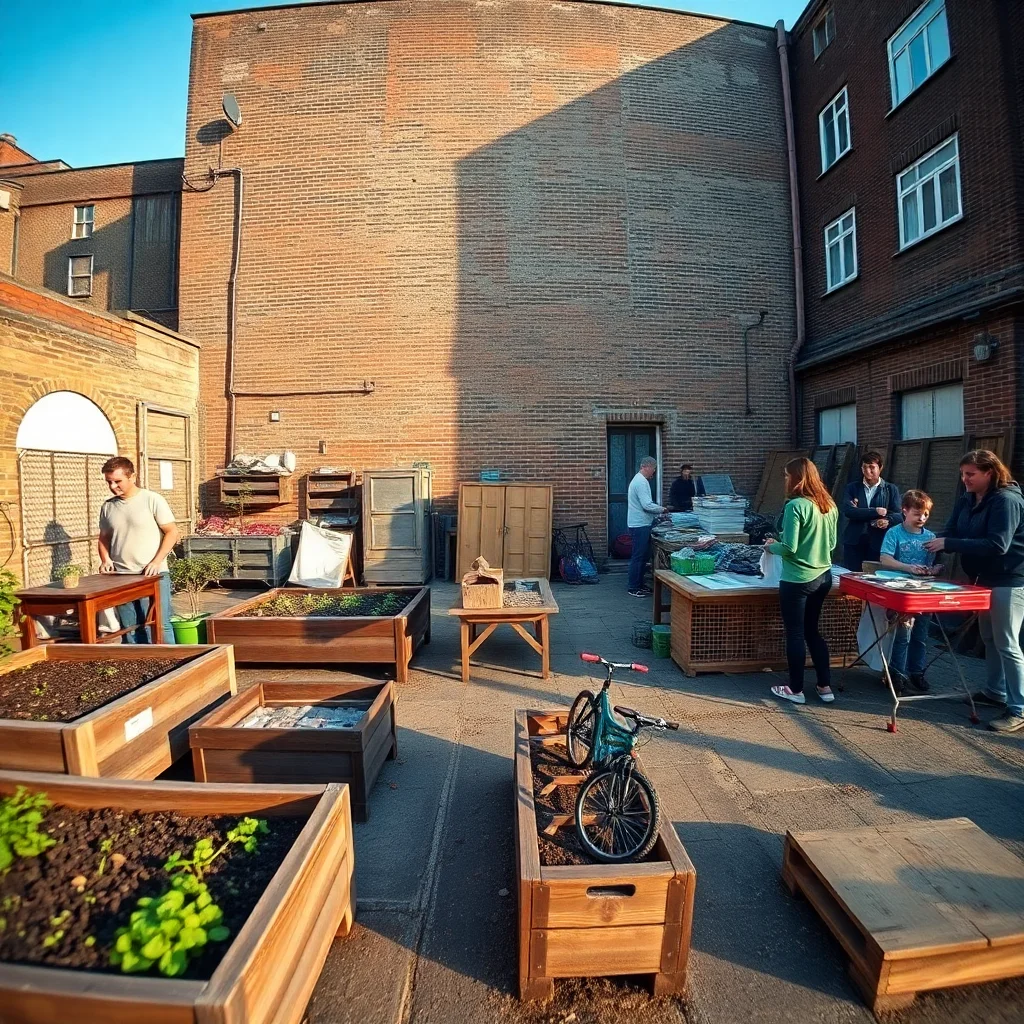
The moral divide in adaptive reuse is not between preservation and demolition. It is between shared governance and managed appearance. If the building is reused for a neighborhood organization that has ownership, operational control, and durable funding, the project can become an instrument of local power. If it is merely leased for an “activating” pilot, it may be little more than a temporary content machine for urban spectators and grant reports.
Designers and architects have a real role here, but not as saviors. Their task is to convert underused volume into civic capacity without reducing the community to visual material. That means asking who pays, who maintains, who decides, and who gets to stay. It means designing not only the fit-out, but the governance model. It also means resisting the temptation to treat every derelict structure as a romantic shell waiting for creative occupation.
The most credible examples tend to be those that tie spatial reuse to broader social systems: employment pipelines, repair economies, food distribution, skills training, climate adaptation, and public service delivery. That is why the Birmingham makers hub is important not because it is inside a car park, but because it connects underused space to opportunity. The same applies to proposals that link a zero-car future to new forms of public realm. Reuse becomes infrastructure when it helps a city reorganize how people live, move, learn, and care for each other.
Otherwise, the city risks mistaking improvisation for justice.
Toward a more demanding definition of civic repair
Adaptive reuse should now be judged by a harder metric than sustainability alone. Carbon savings matter, but they are not enough. The relevant question is whether a reused structure expands the city’s social contract. Does it produce access, durability, and collective capacity? Does it redistribute power, or simply repackage lack as urban vitality?
This is where the most exciting work sits today: in the overlap between architectural intelligence and civic obligation. The old bank as refugee services center. The vacant lot as a neighborhood kitchen. The parking garage as workshop, distribution node, or skills academy. These are not marginal gestures. They are tests of whether cities can convert surplus and abandonment into something shared. The new public utility aesthetic suggests that the best civic projects are not just useful, but legible as shared civic assets.
But the stakes should be kept visible. If adaptive reuse is to become the new civic infrastructure, it cannot be allowed to function as an alibi for underinvestment. It must be paired with public spending, land reform, and durable stewardship. Otherwise, cities will continue to applaud ingenuity in places where they should have been demanding rights.
FAQ
What is adaptive reuse in architecture? Adaptive reuse is the transformation of an existing building or space for a new use, often with minimal demolition. It is commonly applied to obsolete offices, warehouses, garages, and banks that can be converted into housing, cultural, social, or civic programs.
Why is adaptive reuse being called civic infrastructure? Because many reused buildings now do the work once expected of public systems: hosting workshops, care services, training, community organization, and local production. In cities facing budget cuts and vacancy, these spaces can operate as everyday social infrastructure.
What is the main criticism of adaptive reuse? The main criticism is that it can aestheticize scarcity. A reused building may look progressive while masking the deeper problems of housing shortages, underfunded services, and unequal land ownership that created vacancy in the first place.
How can adaptive reuse avoid becoming tokenistic? It needs long-term governance, stable funding, and community control. Projects are most credible when they are embedded in broader public investment, not used as standalone symbols of urban creativity.
Get the Mainifesto weekly — curated design debates, speculative ideas and the week's best articles every Saturday.
Editorial Perspectives
Questions and counterpoints developed by the Mainifesto editorial desk to extend the discussion.
Perspective 1
Adaptive reuse only works as civic infrastructure if it is governed like infrastructure: public interest first, not leftover private advantage. In cities under pressure, surplus spaces should stay collectively legible—owned, leased, or regulated in ways that prevent the usual capture by developers, elites, or short-term branding.
Perspective 2
If a project turns an empty garage into a useful place, fine—but I’m not buying the language of civic repair unless it actually serves people at scale. Ownership should sit with whoever can keep it running, safe, and commercially viable; otherwise it becomes a nice story wrapped around expensive underuse.
Perspective 3
What counts as repair is not just a design question, it’s a metric question: who benefits, for how long, and at what ecological and social cost. I’d want adaptive reuse to be measured against displacement, access, and long-term adaptability, because otherwise we’re only optimizing vacancy into a prettier form.