
When Museums Become Climate Machines
From container to atmospheric device
The museum is being rewritten in public, and not politely. For more than a century it was treated as a vault: a place to store objects, protect knowledge, and regulate behavior through silence, labels, and sequence. Today that model looks exhausted. If artificial intelligence can answer the question before the visitor has even crossed the threshold, then the museum’s advantage is no longer information delivery. Its power lies elsewhere: in producing spatial suspense, in choreographing bodies, in making climate, light, and circulation into pedagogical tools.
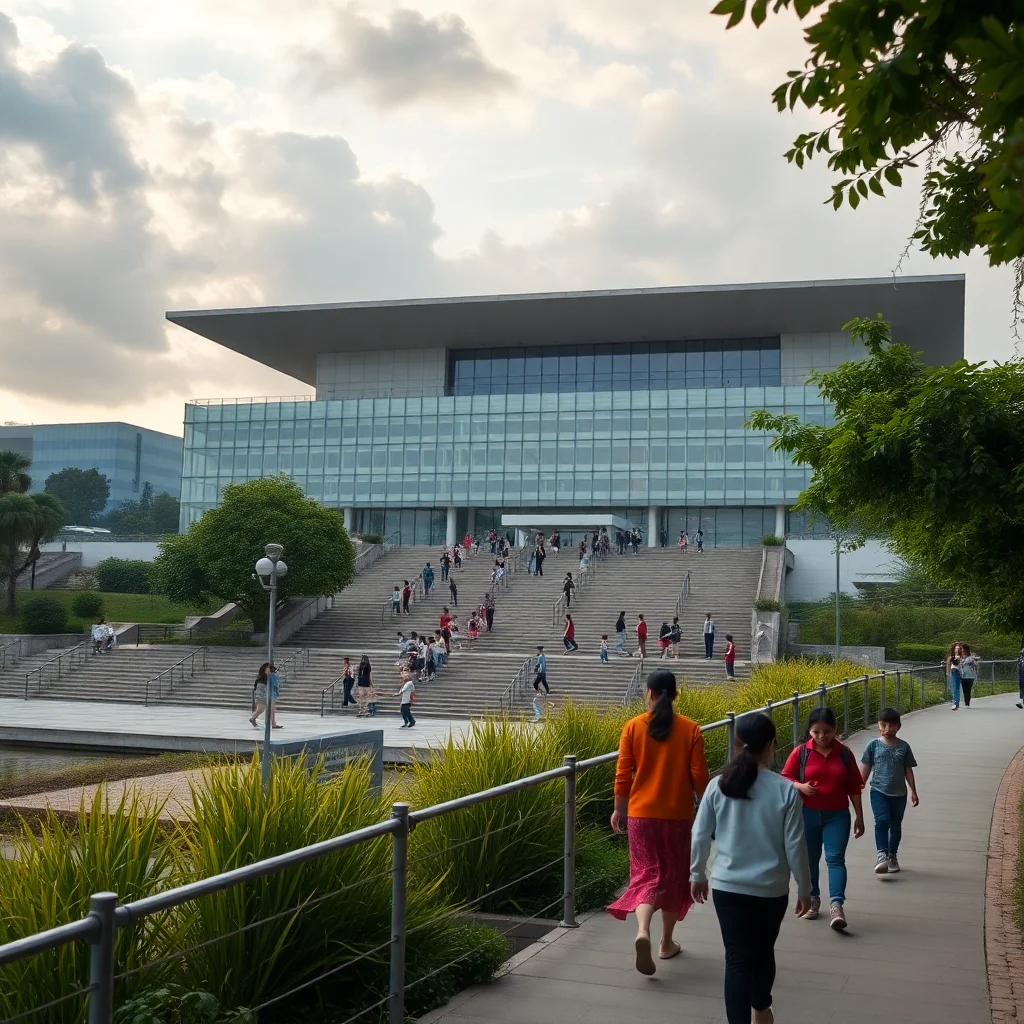
That is why the Hainan Science Museum in Haikou matters as more than a new cultural building on the edge of Wuyuan River National Wetland Park. Designed by Ma Yansong and MAD, it performs a larger shift happening across science institutions: from didactic display to atmospheric experience. Ma’s own description of the project as an experiment in “flow and chaos” is not a poetic aside; it is the operating system. Space, function, and knowledge are no longer arranged as discrete categories. They bleed into one another, and that blur is precisely the point.
Science museums once taught by sorting the world into neat exhibits. The new museum teaches by refusing that neatness. It asks visitors to orient themselves, to move, to compare, to get lost and then reassemble meaning. In a climate-ridden century, that is not a decorative gesture. It is an architectural argument: cognition now depends on atmosphere.
Hainan as a test case for the post-didactic museum
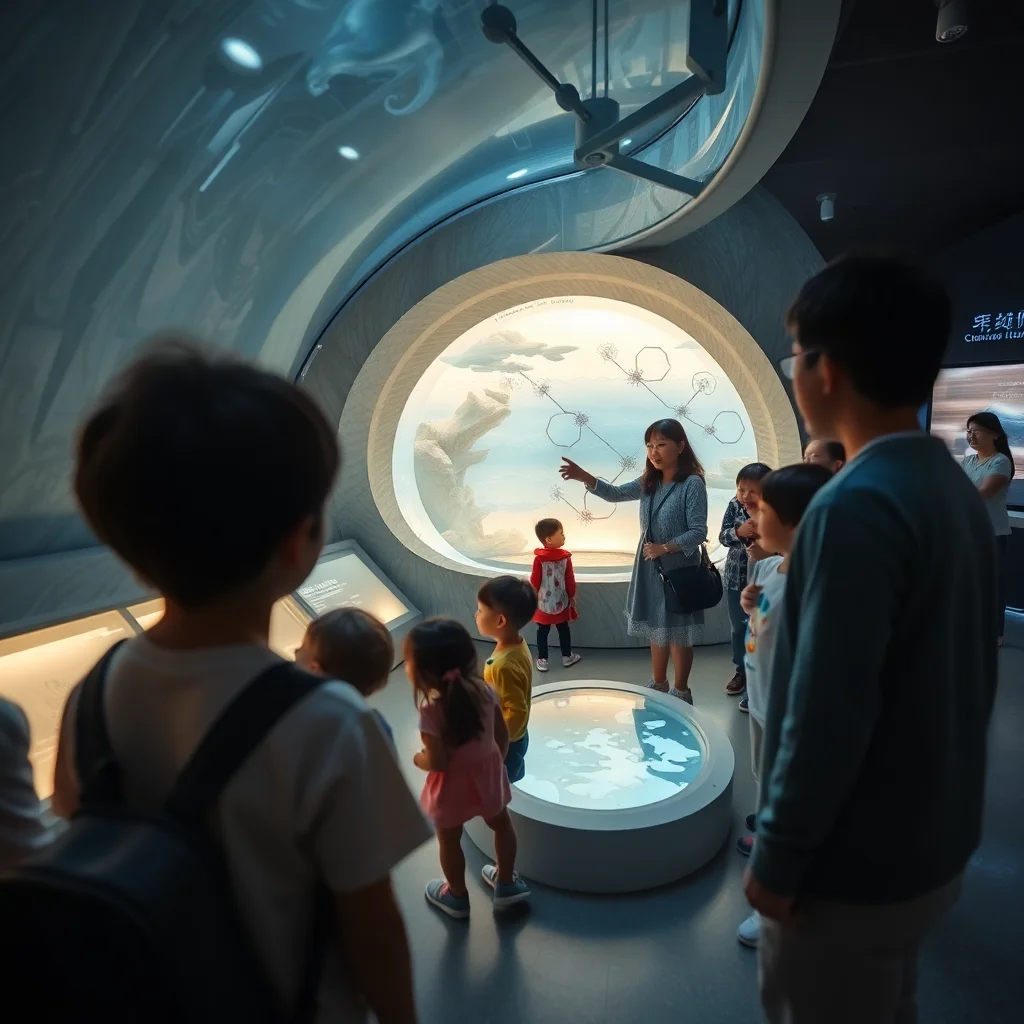
The Hainan Science Museum opened into immediate public appetite, reportedly drawing more than 350,000 visitors in four months during its trial period, with peak days exceeding 5,800 people. That matters because popularity here is not just an attendance statistic; it is evidence that people are hungry for institutions that feel alive. The museum’s location at the edge of a wetland park is also critical. It is not isolated as an object on a plinth. It sits in dialogue with landscape, humidity, wind, seasonal change, and civic movement.
MAD’s architecture has long resisted the dead neutrality of conventional institutional space. Think of the firm’s work on the Lucas Museum of Narrative Art in Los Angeles, where the building is conceived less as a box than as a hovering terrain, or earlier proposals that treated architecture as a continuation of topography rather than an interruption of it. In Hainan, that attitude becomes especially relevant because a science museum must now behave like a public instrument. It must invite children, families, tourists, and local residents into a shared field of curiosity. It cannot afford the social stiffness of a mausoleum for facts.
This is where the museum becomes a climate machine. Not in the literal mechanical sense alone, though environmental systems are obviously present. It becomes a machine for calibrating moods: shade against glare, compression against release, density against openness. The building teaches climate by letting visitors feel it. That is more powerful than a screen explaining weather patterns. It gives the body an index of the world.
Knowledge after the fact: why sequence is no longer enough
For decades, the dominant museum script was linear: enter, orient, read, advance, exit. That sequence promised mastery. It assumed that knowledge could be packaged as a controlled progression from ignorance to understanding. But science itself has become less linear, more interdisciplinary, more networked, and more uncertain. Biology overlaps with computation; ecology overlaps with policy; material science overlaps with ethics. In that context, a rigid gallery sequence begins to look like an anachronism.
Ma Yansong’s remark that “different subjects should connect, overlap, and stay open” is the crucial sentence. The strongest contemporary science museums no longer present knowledge as a set of sealed compartments. They stage collision. They let visitors wander between scales and disciplines. In that sense, the museum becomes closer to a city than a textbook: heterogeneous, legible in fragments, and always in negotiation with movement.
There are precedents. The Centre Pompidou transformed museum circulation into spectacle by exposing services and motion. The Kunsthaus Graz made architecture itself into an alien bodily presence. Science institutions have followed their own trail: the Exploratorium in San Francisco embedded learning in hands-on experimentation, while the Museum of the Future in Dubai turned technological imagination into an immersive civic message. Hainan stands in that lineage, but it shifts the emphasis further. It is not only interactive; it is atmospheric. It understands that curiosity is not triggered only by objects, but by spatial conditions that suspend certainty.
That logic echoes other recent debates about the built environment, from buildings that operate between land and water to projects that treat circulation itself as a form of public pedagogy. The question is no longer whether architecture can frame an experience, but whether it can make that experience useful as a way of understanding place.
The museum as civic landmark, not educational box
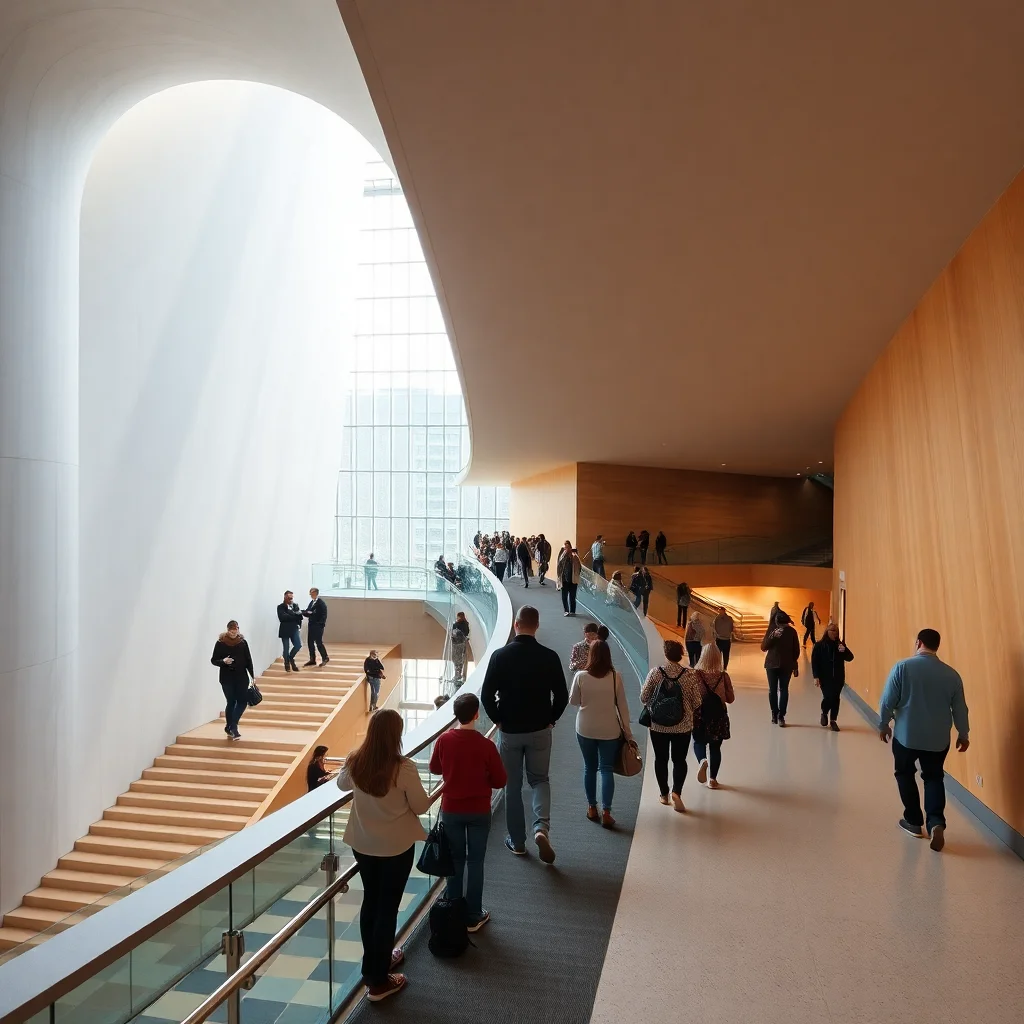
There is a reason civic leaders keep asking museums to do more. In an era of fragmented attention and urban sameness, the museum is expected to be legible from afar and memorable from within. It must operate as an anchor, a destination, and a shared public interior. In fast-growing regions especially, it becomes a symbol of seriousness: evidence that the city is investing in knowledge, not just consumption.
Hainan Science Museum embraces that role without apology. It is part cultural institution, part urban signal, part environmental interface. This is the architecture of the contemporary landmark: it must be photogenic, yes, but also socially useful and experientially thick. A science museum can no longer rely on the prestige of content alone. It has to earn its place in the city by producing collective experience. That means people are not simply viewers; they are participants in the building’s unfolding atmosphere.
The risk, of course, is that civic landmark status becomes a style exercise. Too many institutions mistake iconic form for public meaning. But the more interesting question is whether an iconic museum can also be porous, educational, and responsive. Hainan suggests it can. By making circulation expressive and knowledge spatial rather than merely textual, it implies a future in which architecture is itself a form of public pedagogy.
That public role also places the museum in conversation with other civic interiors, including the mall. In some cities, retail complexes have become unexpected stages for collective memory and everyday encounter, proving that public meaning often depends less on program than on how space organizes arrival, movement, and lingering.
Against neutrality: the case for persuasive architecture
Let’s be blunt: the myth of the neutral museum has become a liability. Neutrality often masks hierarchy. A supposedly objective white cube can be just as ideological as a dramatic sculpture-like building; it simply hides its ambitions better. Science institutions, in particular, cannot pretend to be passive containers anymore. They are charged with interpreting a planet in crisis, with making environmental complexity emotionally intelligible, and with competing against infinite digital explanation.
This is why “persuasive architecture” is not a dirty phrase. The museum should persuade visitors that science matters, that uncertainty is productive, that climate is not an abstract dataset but a lived condition. Hainan’s value lies in its refusal to separate learning from sensation. It understands that a child remembers the curve of a ramp, the compression of a corridor, the shift from shade to glare, the encounter with a crowd, long after labels blur.
That said, persuasive architecture can tip into spectacle if it forgets the content it serves. The strongest science museum is not the one that looks most futuristic; it is the one that turns the visitor into an active investigator. The building should not consume the exhibit. It should amplify inquiry. Hainan is compelling precisely because it appears to accept this burden: not to explain everything, but to create the conditions under which explanation becomes desirable.
The same tension appears in domestic and historical settings, where atmosphere can either enrich meaning or overwhelm it. Recent discussions of retro-futurist heritage interiors and material choices in renovation show how carefully designed environments can shape interpretation without flattening complexity.
What this shift demands from architects
The museum-as-climate-machine forces architects to think beyond façade and floor plan. It demands attention to gradients, thresholds, acoustics, humidity, density, and social tempo. It also demands a less obedient relationship to program. When function is assumed to be fixed, architecture becomes administrative. When function is allowed to overlap, architecture becomes interpretive.
This is where designers like MAD are important. Their work often argues that buildings should not only house life but intensify perception of life. In the best cases, that produces spatial experiences that feel uncannily contemporary: unstable, fluid, and aware of planetary conditions. In a wetland-edge site like Hainan, the architectural task is not to dominate climate but to stage encounter with it. That could mean framing views of sky and water, creating sheltered circulation that still registers the outside, or making the transition between exterior and interior feel like a slow education in atmosphere.
Science museums of the future may be judged less by the number of exhibits they contain than by the intelligence of the environments they create. Do they make visitors notice how bodies move through shared space? Do they support collaboration rather than passive consumption? Do they build civic literacy through experience? If so, they are no longer just museums. They are atmospheric machines for a more uncertain age.
This wider architectural turn is also visible in projects that reframe landscape itself as a structural device, from courtyard strategies for climate control to discussions of lower-carbon material choices that make performance, comfort, and identity part of the same design conversation.
FAQ
What does “museum as climate machine” mean? It means the museum is understood as an architecture that shapes atmosphere, movement, and perception, not merely as a container for exhibits. In this model, climate is both environmental and experiential.
Why is Hainan Science Museum relevant to this discussion? Because it combines a science mission with a fluid spatial concept, and because its location near Wuyuan River National Wetland Park makes climate, landscape, and circulation part of the visitor experience.
How does this differ from traditional museum design? Traditional museums often privilege sequence, labels, and visual display. The new model treats learning as embodied and nonlinear, using space itself to provoke curiosity and connection across disciplines.
Is this approach only about iconic architecture? No. Iconicity is secondary. The more important shift is toward persuasive, atmospheric environments that help visitors feel science, climate, and civic life as interconnected realities.
What is the danger of this trend? If pushed too far, atmosphere can become spectacle and overwhelm content. The challenge is to make architecture amplify inquiry rather than replace it.
Could this model apply beyond science museums? Absolutely. Libraries, civic centers, and even schools are beginning to operate this way: as spatial systems that teach through circulation, encounter, and environmental awareness.
What kind of visitor does this museum produce? A less passive one. Ideally, a visitor who does not simply consume facts but learns how to ask better questions.
So the real issue is not whether museums should become climate machines. It is whether any institution that claims to teach the future can still afford to feel like a neutral box. What happens when architecture stops delivering answers and starts manufacturing the conditions for inquiry?
Get the Mainifesto weekly — curated design debates, speculative ideas and the week's best articles every Saturday.
Editorial Perspectives
Questions and counterpoints developed by the Mainifesto editorial desk to extend the discussion.
Perspective 1
What interests me here is not the spectacle, but whether the building actually improves learning outcomes or just stages them. Atmosphere can guide attention, yes, but if the information isn’t legible without the architectural choreography, we risk replacing clarity with theater.
Perspective 2
This is bigger than museums: institutions everywhere are becoming behavioral systems, using circulation, climate, and light to shape how people move and think. The uncomfortable part is that architecture can persuade without being accountable in the way text or data is, so the power shifts to whoever controls the environment.
Perspective 3
We should be careful not to confuse pedagogy with ambiance. From the museum as temple to the museum as instrument, architecture has always claimed authority over meaning; now it simply does so with better air-conditioning and a more flattering rhetoric.
Perspective 4
I buy the idea that museums can teach through experience, but only if it doesn’t become an expensive gimmick. If the architecture is doing all the work, I’d want to know what it costs to build, run, and maintain, because atmosphere is easy to sell and hard to justify when budgets tighten.