
Should Heritage Buildings Grow Taller?
PRO: Height can be a form of survival, not betrayal
There is a seductive lie in heritage discourse: that preserving a building means freezing it at the exact moment the public learned to love it. In reality, many of architecture’s most beloved monuments were never static. They were accretions, arguments, and long negotiations between old authority and new ambition. The Sagrada Familia has spent generations proving that continuity can be radical precisely because it is unfinished. When its latest tower rises, it does not read as vandalism; it reads as completion of a civic myth that has always depended on escalation.
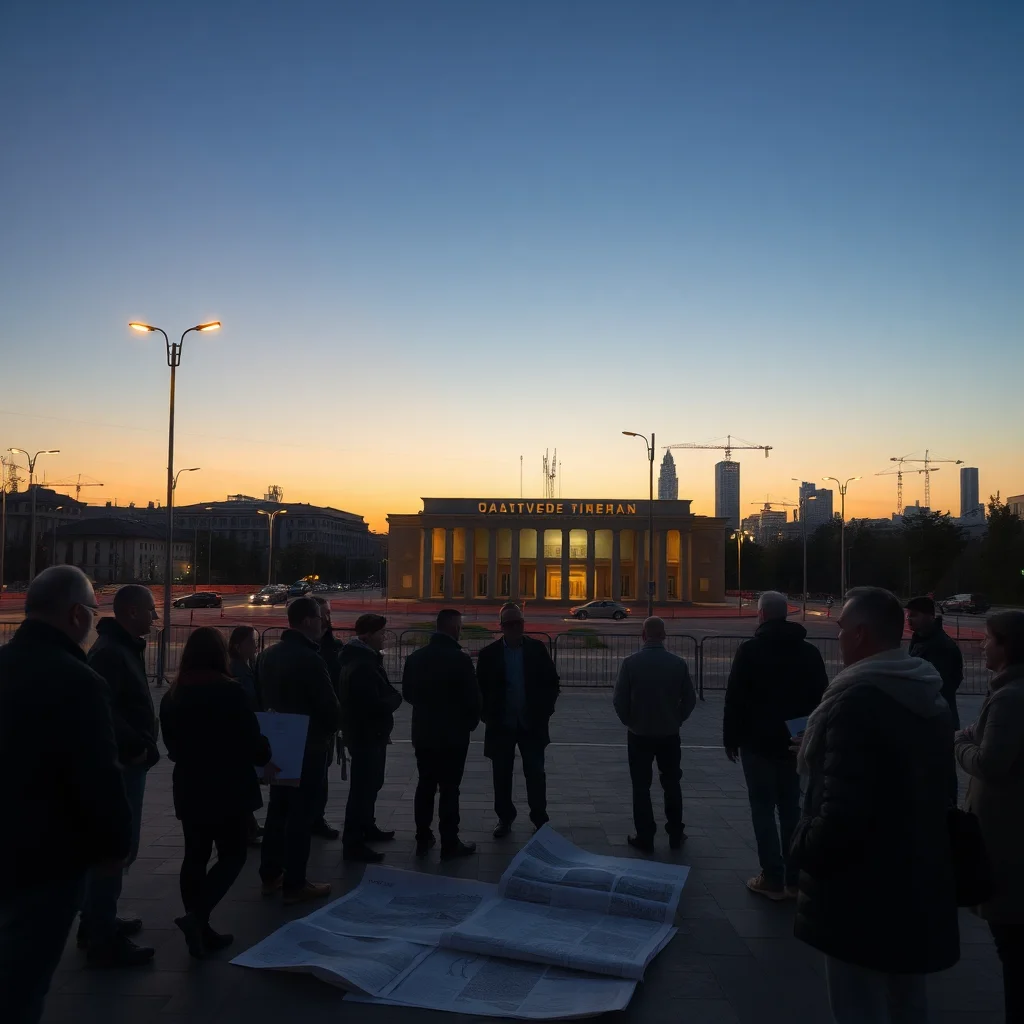
The same logic drives Herzog & de Meuron’s plan for Tirana’s Palace of Congresses, where a 40-year-old communist-era venue would be renewed with a 260-metre mixed-use skyscraper and public plaza. On paper, this is a typical contemporary move: keep the heritage shell, add commercial density, monetize the site, and call it revitalization. But to dismiss it outright is to ignore a hard urban truth. Cities are not museums; they are financial organisms. If a major cultural building is left to decline because preservationists refuse any meaningful reinvestment, what looks like moral purity can become decay by neglect.
History is full of examples where height was the mechanism that saved, financed, or redefined a landmark. London’s St Pancras International survived through adaptive insertion and a vast program of commercial reuse. The Reichstag in Berlin was not preserved by polite restraint but by Norman Foster’s audacious glass crown, which transformed a damaged political relic into a statement about transparency and public life. Even the Louvre, under I. M. Pei, accepted a disruptive contemporary gesture because the museum needed both symbolic renewal and operational reinvention. In these cases, addition was not a wound. It was the price of relevance.
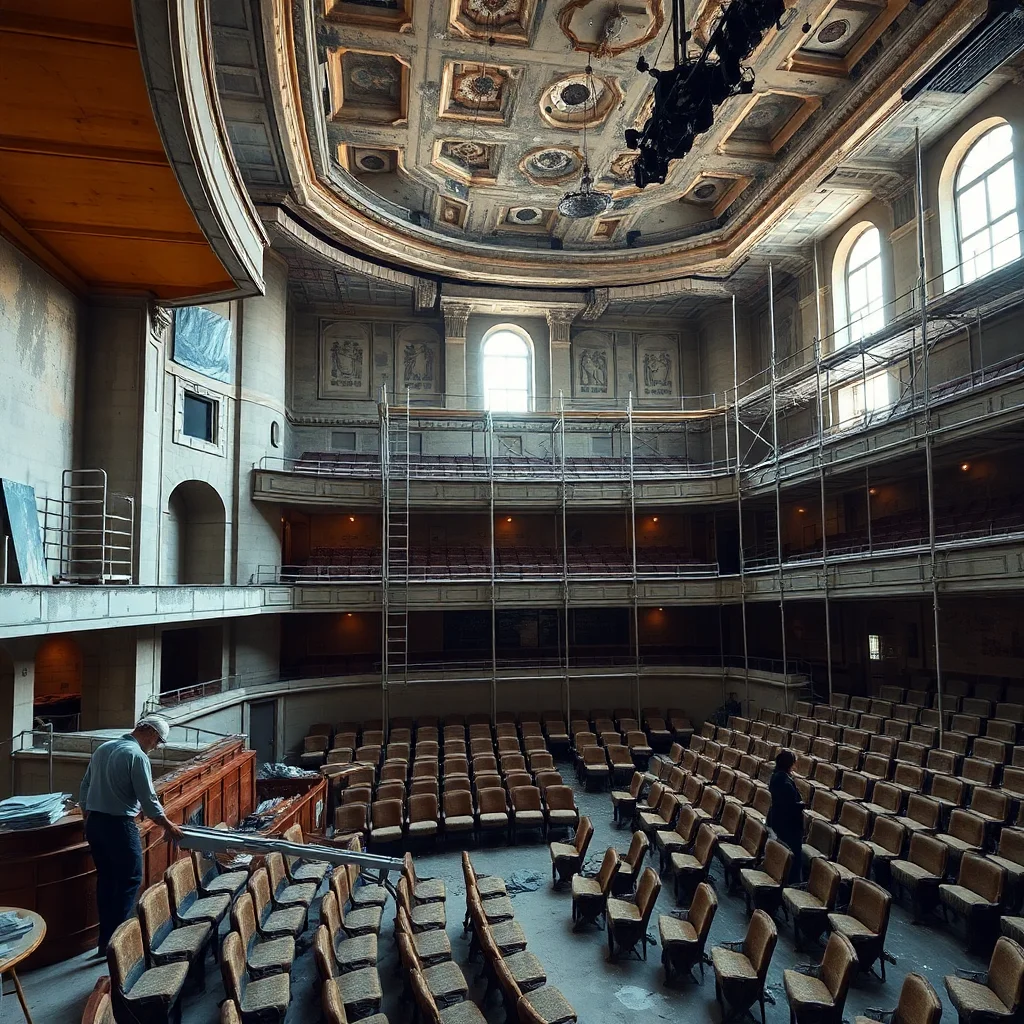
And relevance matters. A heritage building that cannot support modern programming, accessibility, maintenance, or mixed use often becomes a beautifully ossified liability. The architecture world likes to praise “faithful conservation,” but buildings require budgets, and budgets require intensification. A tower above a cultural venue can subsidize performance spaces, public realm, and structural upgrades. That is not inherently cynical. Sometimes the most serious way to protect a legacy is to force it to earn its keep in the present. As adaptive reuse as civic infrastructure suggests, the right intervention can turn old fabric into a working civic system rather than a static relic.
The real question is who benefits from “revitalization”
Yet the pro case is strongest when it is honest about its motives. A tower added to a heritage site is rarely only about architectural continuity. It is about land value, image, and the conversion of memory into a premium asset. In post-socialist capitals especially, where iconic public buildings often occupy central plots with enormous redevelopment pressure, “revitalization” can become a euphemism for capture. Tirana is a textbook example of a city where spectacle and speculation have repeatedly arrived in the same suit.
That does not mean every bold intervention is corrupt. But it does mean we should stop pretending that all upward growth is a neutral design decision. When the official story of preservation is paired with a tower that adds offices, luxury, or hotel functions, the heritage building may survive physically while its civic meaning is quietly diluted. The question is not whether the old structure is still visible. The question is whether the building still belongs to the public that inherited it.
This is where the Sagrada Familia becomes instructive rather than comforting. Its towers are not just architectural additions; they are the visible output of an unusually legible, devotional, and slow-moving project with a singular authorship and a century-long public contract. Most heritage retrofits are not that innocent. They are far more likely to be driven by developer finance wrapped in the language of continuity. The tower becomes a moral alibi. “We preserved the venue,” the argument goes, “so the new skyline is a gift.” But gifts to the city often arrive with rent schedules attached.
That tension appears in other kinds of civic projects too, where renewal can easily become a change in who gets to define public value. The debate is not limited to towers or monuments; it reaches into every large-scale intervention that claims to improve a city while also reorganizing its social and financial logic, much like the questions raised in Europe’s architecture culture war over repair and replacement.
CONTRA: Monumental additions can erase the meaning they claim to save
Preservation is not merely about keeping a façade or retaining a footprint. It is about respecting the cultural scale of an artifact: its proportion, its place in the skyline, its relationship to power. A heritage building that acquires a skyscraper sibling risks being reduced to a decorative base, a brand asset, a heritage skin on a much more profitable body. At that point, the building is not being extended. It is being instrumentalized.
The danger is especially acute when the original structure carries political history. Communist-era civic architecture, including venues like Tirana’s Palace of Congresses, was often designed as a collective symbol, not a real-estate platform. To wrap such a building in a tower of global capital can feel less like evolution than ideological overwrite. The old form remains on site, but its original message is crowded out by an urban vocabulary of prestige, verticality, and mixed-use monetization. Heritage becomes set dressing for a new regime of extraction.
We have seen this pattern repeatedly. In many cities, stadiums, theaters, and railway halls are preserved only long enough to anchor a profitable new district. The shell survives because it markets authenticity; the infill rises because it maximizes return. This is precisely why many conservationists distrust “façadism” and its taller cousin, “heritage branding.” The old building no longer anchors the development. It legitimizes it. That is a profound difference.
Architecturally, the argument that tall additions can remain subordinate is often unconvincing. Skyscrapers dominate not only by height but by economic logic and visual hierarchy. They reorient circulation, views, and value. Even when carefully set back, they announce which part of the site matters most. If the historic hall becomes a lobby, a podium, or a symbolic base for a tower, its civic autonomy is gone. The building may appear intact while functioning as a preface to something else.
When heritage becomes a platform, the skyline becomes ideology
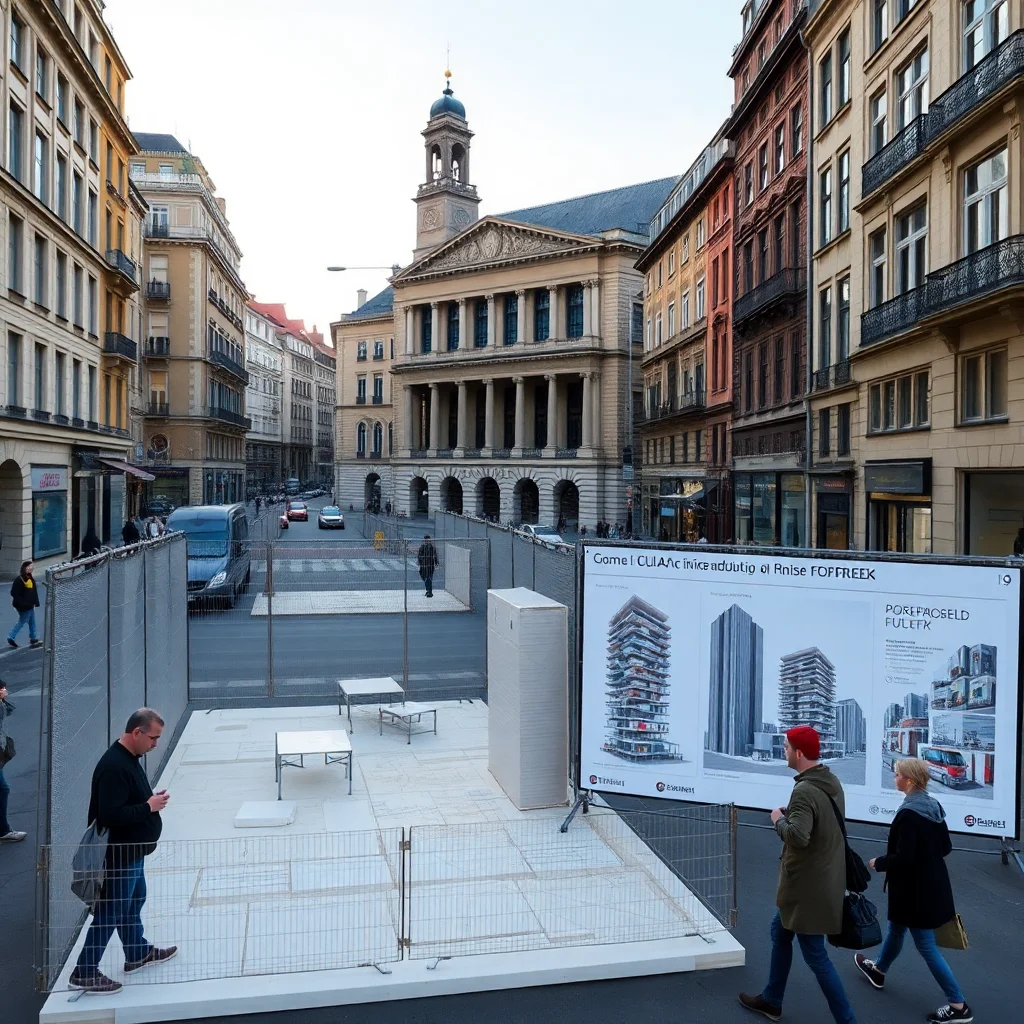
The contemporary obsession with “layering” has made many architects suspiciously comfortable with vertical grafting. But not every layer is constructive. The best preservation projects respect friction, even incompletion. David Chipperfield’s work on historical contexts often demonstrates restraint by making contemporary intervention legible without turning the old into a promotional tool. Peter Zumthor’s approach to atmosphere and material memory likewise insists that the past should not be outshouted by the present. These are not anti-modern positions; they are anti-domination positions.
That distinction matters because a tower can solve a financial problem while creating a cultural one. A city may gain floor area, tax revenue, and a more “iconic” silhouette, but lose the ability to read its own history at human scale. Once every important building is expected to carry a vertical payload, architecture becomes less about stewardship and more about asset optimization. The skyline turns into a ledger.
And there is a deeper irony. Buildings like the Sagrada Familia are often invoked as proof that monuments can keep growing forever. But that example should make us wary, not permissive. It is one thing for a singular, centuries-spanning religious work to evolve according to its own symbolic logic. It is another for a civic building to be used as the anchor for speculative density. The first is a testament to patience. The second is a business model dressed as cultural care.
The real challenge is not deciding whether heritage may change. It obviously must. The challenge is deciding whether change serves continuity or consumes it. If an intervention strengthens public access, funds care, and deepens the building’s civic role, height may be justified. If it primarily converts a historic site into a higher-yield machine, then the project is not revitalization. It is overdevelopment in a heritage costume. That is why debates over landmarks often spill into broader arguments about the role of civic monuments in contemporary cities, including the quieter ways new civic monuments are rewriting public architecture.
Preservation should be faithful continuity, not endless monetization
To defend a building is not to idolize its original form at all costs. It is to defend the values that gave the form meaning in the first place: publicness, proportion, memory, and the right of citizens to encounter architecture without being immediately asked to monetize it. Some additions do this beautifully. Many do not. The difference lies in whether the project treats heritage as a living responsibility or a profitable inconvenience.
That is why the debate around Tirana is bigger than one tower, and why the Sagrada Familia remains so potent as a comparison. Both cases reveal the same temptation: to imagine that if an icon can keep growing, it can keep justifying itself. But growth is not virtue. A building can be completed and still be betrayed; it can be expanded and still be honored. Architecture is obliged to make that distinction in public, not behind the language of renewal.
Heritage buildings do not have to remain small to remain sacred. But once height becomes a default cure for every preservation challenge, we have crossed from stewardship into opportunism. Cities deserve better than the idea that their most valued memories must be leveraged upward to survive.
- Heritage is not a frozen style. The strongest preservation projects accept change, but only when change deepens public meaning instead of replacing it with market value.
- Height is never neutral. A tower alters power, visibility, and land value, so it should be treated as a cultural decision, not just a design flourish.
- Adaptive reuse can be civic, or predatory. The difference lies in whether revenue supports the building’s original public role or exploits it.
- Iconic projects are dangerous templates. The Sagrada Familia may justify growth for a singular monument, but it should not become a blanket excuse for vertical add-ons.
- Political context changes everything. In cities with fragile public institutions, heritage redevelopment can easily become a vehicle for privatization.
- Preservation should protect meaning, not only materials. If the skyline improves while the building’s civic identity disappears, the project has failed.
Get the Mainifesto weekly — curated design debates, speculative ideas and the week's best articles every Saturday.
Editorial Perspectives
Questions and counterpoints developed by the Mainifesto editorial desk to extend the discussion.
Perspective 1
If a heritage building grows taller, the real question is who controls the added value. In places like Tirana or Barcelona, height is never just a design move; it’s a land strategy, a political signal, and usually a way to monetize memory.
Perspective 2
I find this obsession with verticality almost comical. A heritage building is not a real estate product with a new crown; once you start adding height to “save” it, you’re already in the realm of compromise masquerading as care.
Perspective 3
What interests me is whether the added volume is legible as a new layer or just camouflage for development pressure. If the intervention can preserve structural integrity, public access, and historical reading, then maybe growth is not betrayal, but the thresholds need to be very clear.
Perspective 4
Heritage can absolutely absorb change, but only when the project starts from the building’s own logic, not from a speculative floor count. The danger isn’t height itself; it’s when “adaptive reuse” becomes a polite cover for displacement and image laundering.