
When Cameras Become Cultural Objects
When a camera stops being a camera
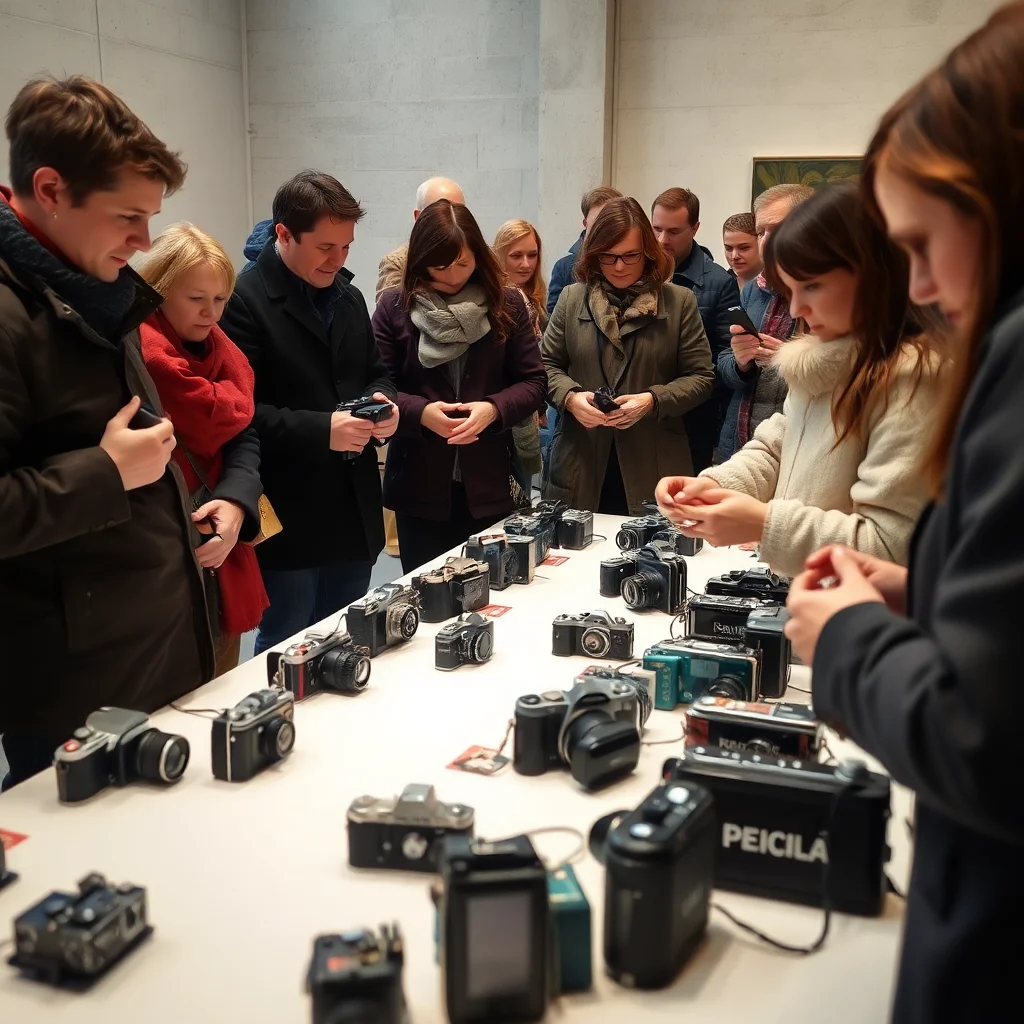
Belfast Photo Festival has done something that design culture rarely has the courage to do: it has refused the fantasy of neutrality. In its provocative exhibition around obsolete manual cameras, visitors are not simply asked to look. They are asked to decide. Smash it. Save it. Handle it. That triad is not a gimmick; it is a declaration that photographic tools are never merely technical devices. They are cultural objects loaded with labour, memory, class, craft, and ideology.
The gesture matters because photography has spent decades hiding behind the rhetoric of transparent capture. Cameras were sold as if they were neutral machines that merely delivered reality. But every camera encodes a worldview: who gets to see, who gets to be seen, who can afford the device, and what kind of image-making counts as serious. Once the smartphone collapsed the camera into the phone, the old manual body became doubly strange: obsolete, yes, but also newly legible as an artifact of a vanished way of working.
Belfast’s invitation forces a choice between preservation, destruction, and use. That choice mirrors bigger arguments across design culture. Should outdated objects be conserved as heritage, even when their original function has been surpassed? Should they be broken to expose the violence of technological nostalgia? Or should they be kept in circulation as working tools, stubbornly alive against the churn of planned obsolescence?
Heritage or dead weight?
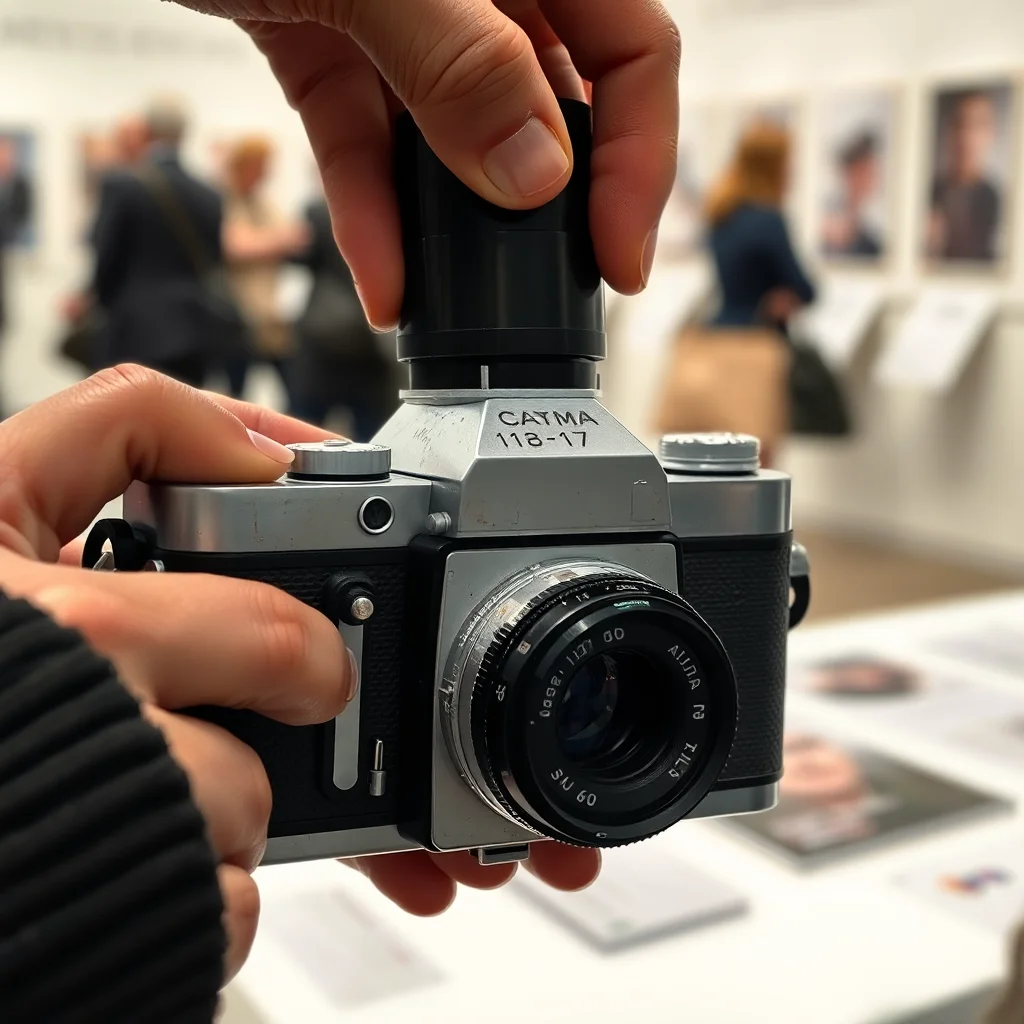
The case for saving manual cameras is strong, but it is not sentimental. A Nikon F, a Canon AE-1, a Pentax K1000, a Hasselblad 500 series body: these are not just attractive shells. They are precision-made objects from a period when photography was an embodied practice. Loading film, measuring light, winding a lever, hearing the shutter: these actions trained patience and attention. To preserve such objects is to preserve a mode of making in which error, delay, and material cost shaped the image itself.
That is why museum logic matters here. Design museums have long treated certain devices as milestones in industrial culture, not because they are perfect but because they reveal a social history of making. Think of the Museum of Modern Art’s design collection approach to products that changed everyday life, or the way camera archives in institutions like the George Eastman Museum treat apparatus as evidence, not nostalgia. A manual camera in a vitrine can be read like a chair by Eames or a lamp by Arne Jacobsen: an artifact that condensed engineering, ergonomics, and desire.
Yet heritage also has a trap. The moment an object is preserved, it risks becoming morally untouchable. The camera becomes a relic of “better craftsmanship,” a fetish for analogue authenticity detached from contemporary access. That is the conservative fantasy Belfast Photo Festival punctures. Preservation should not mean embalming. If the camera is only ever displayed, it becomes a dead instrument whose social life has been reduced to reverence.
Smashing as critique, not vandalism
The most politically charged option in the exhibition is destruction. Smashing a camera can be read as anti-heritage theatre, but in a culture built on device worship, it can also be a sharp critique of technological mythology. To break an object publicly is to reveal how much power we grant to things that claim to be neutral. It punctures the idea that a tool is innocent simply because it is well engineered.
There is precedent for this tactic across art and design. From Auto-Destructive Art in the work of Gustav Metzger to contemporary practices that expose the fragility of consumer electronics, destruction has often served as a form of analysis. It says: look at what this object hides. Look at the labor chain behind it, the extraction, the waste, the fetish of innovation. When applied to obsolete cameras, smashing becomes especially pointed because these devices already occupy a liminal state between commodity and relic.
But destruction must be more than spectacle. If visitors smash a camera only to produce a satisfying image of rupture, the critique is diluted. The better question is what the act destroys symbolically. Is it the myth of photographic purity? The fetish of vintage gear as luxury consumption? The idea that objects deserve protection simply because they once mattered? Belfast’s exhibition gains force because it turns the audience into co-authors of that answer. Destruction here is not anti-object. It is anti-complacency.
Why keeping cameras alive still matters
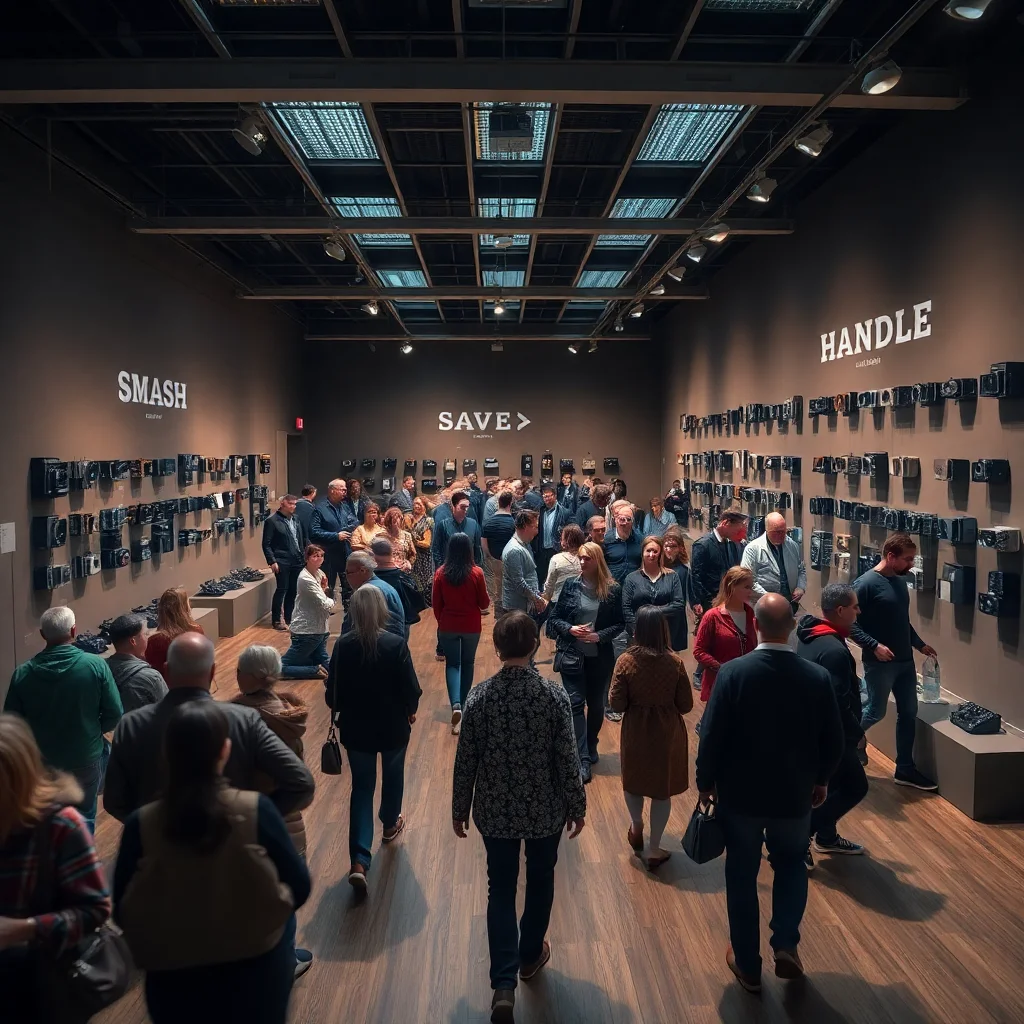
The third option, to handle manual cameras rather than smash or save them, may be the most radical of all. Keeping obsolete devices alive as creative instruments resists both nostalgia and disposal. It insists that the value of a camera is not exhausted by the market or the museum. A manual body still has agency when it is used by photographers, artists, students, and experimental practitioners who want friction in the image-making process.
Contemporary art is full of this logic. Artists who work with outdated media do not do so because they cannot access newer tools; they do so because limitation is productive. Film photography has returned in fashion studios, zine culture, and fine-art practice precisely because its constraints resist the endless velocity of digital editing. The tactile world of manual controls also links to broader design conversations about repair, maintenance, and “slow tech.” As with the renewed attention to repair cafés, modular electronics, and circular design thinking, using old cameras says that durability can still be a form of innovation.
In this sense, the manual camera is not a failed predecessor of the digital age. It is a counter-model. It demands skill, patience, and a willingness to accept uncertainty. It produces an image economy in which every frame is a commitment rather than an infinite option. For artists working against the glut of frictionless content, that matters. The obsolete camera becomes a creative instrument not because it is old, but because it forces decisions.
Photography gear is never just gear
The deeper argument of Belfast Photo Festival is that photographic equipment belongs in the same conceptual territory as furniture, architecture, and industrial design: it shapes behaviour. A camera dictates how a body holds itself, how a scene is framed, how time is measured. The viewfinder creates discipline. The shutter creates threshold. The lens makes ideology visible by deciding what enters the image and what is excluded.
That is why calling a camera “neutral” is so misleading. Neutrality is often the language used to hide power. In practice, cameras have always been entangled with surveillance, classification, journalism, tourism, family memory, and artistic authorship. Even the material aesthetics of manual cameras—the brushed metal, the leatherette, the satisfying mechanical click—participate in a design language of seriousness and trust. They ask to be believed.
Belfast’s exhibition challenges that trust. By placing the camera under public scrutiny, it treats the object not as a silent servant but as a contested artifact. This is a healthier position for design culture than fetishising either the pristine object or the broken remnant. It recognises that obsolete gear can be heritage, critique, and tool at once. The tension is the point.
And that tension is timely. In an era of AI-generated imagery, computational photography, and invisible automation, the manual camera offers visible mechanics and readable limits. It reminds us that all images come from systems, and systems are never innocent. Perhaps that is why the exhibition feels less like a side event and more like a manifesto. It asks whether we want our objects to vanish quietly, persist reverently, or provoke us into better arguments. This same pressure to rethink tools and meanings is also explored in The Design Industry’s Great Recalibration, where shifting expectations are forcing designers to reconsider what durability, value, and relevance actually look like.
Ultimately, Belfast Photo Festival is not asking what a camera used to be. It is asking what we want objects to mean after their supposed usefulness has expired.
FAQ
Why is Belfast Photo Festival focusing on obsolete cameras?
Because obsolete cameras are a perfect test case for wider questions about heritage, waste, and creative reuse. They are familiar enough to be nostalgic, but outdated enough to provoke a clear decision about what to do with discarded technology.
Is smashing a camera an anti-design gesture?
Not necessarily. In this context, destruction can function as critique, exposing the myths of neutrality, permanence, and innocent consumption that often surround design objects. The meaning depends on whether the act creates thought or merely spectacle.
Why preserve manual cameras instead of using only digital ones?
Manual cameras slow down image-making and make the process more tactile, deliberate, and material. For many artists and designers, that friction is not a limitation but a creative advantage. That argument also resonates with debates in Can Illustration Survive the Age of AI?, where older modes of making are tested against faster, more automated systems.
What does this debate say about design culture more broadly?
It shows that objects are never just functional. They carry values, histories, and power structures, and when their utility fades, the question becomes whether we conserve, critique, or repurpose those meanings. Exhibition spaces are increasingly being used to stage such questions as lived experiences, a trend examined in Immersion Beyond Pixels in Exhibition Design.
So what should happen to obsolete cameras?
Should we treat them as heritage objects deserving care, as symbols of a past technology culture worth preserving? Should we smash them to puncture the mythology of photographic purity and consumer reverence? Or should we keep them in circulation as stubbornly useful tools that continue to shape how artists see, make, and resist the acceleration of image culture?
Get the Mainifesto weekly — curated design debates, speculative ideas and the week's best articles every Saturday.
Editorial Perspectives
Questions and counterpoints developed by the Mainifesto editorial desk to extend the discussion.
Perspective 1
An object doesn’t stop being useful just because industry moved on; it changes its meaning, and that matters more than novelty. I like the tension in the article because a manual camera can still teach the hand, the eye, and patience — things viral culture keeps trying to flatten.
Perspective 2
If it still works, keep using it. From a user-experience point of view, a manual camera that slows people down and makes them think is doing a better job than a lot of newer tools that promise convenience and deliver noise.
Perspective 3
I’m into the idea of turning obsolete cameras into cultural objects, but only if we resist the lazy myth that old tech is automatically better. The real question is whether we’re preserving a dead interface or keeping a stubborn, human-scale tool alive long enough to challenge the slickness of progress.
Perspective 4
I’d argue for reuse, not as nostalgia but as a design strategy. When an object is kept in circulation, even awkwardly, it exposes its structure, its limits, and the values built into it — that’s more instructive than sealing it away as a relic.
Perspective 5
Destroying every obsolete object is wasteful, but preserving everything is just another form of hoarding. The useful move is to keep the ones that still teach people how to make, repair, and adapt — because that’s how cities and cultures stay resilient when systems fail.