
Can Illustration Survive the Age of AI?
A new institution, and a new fight
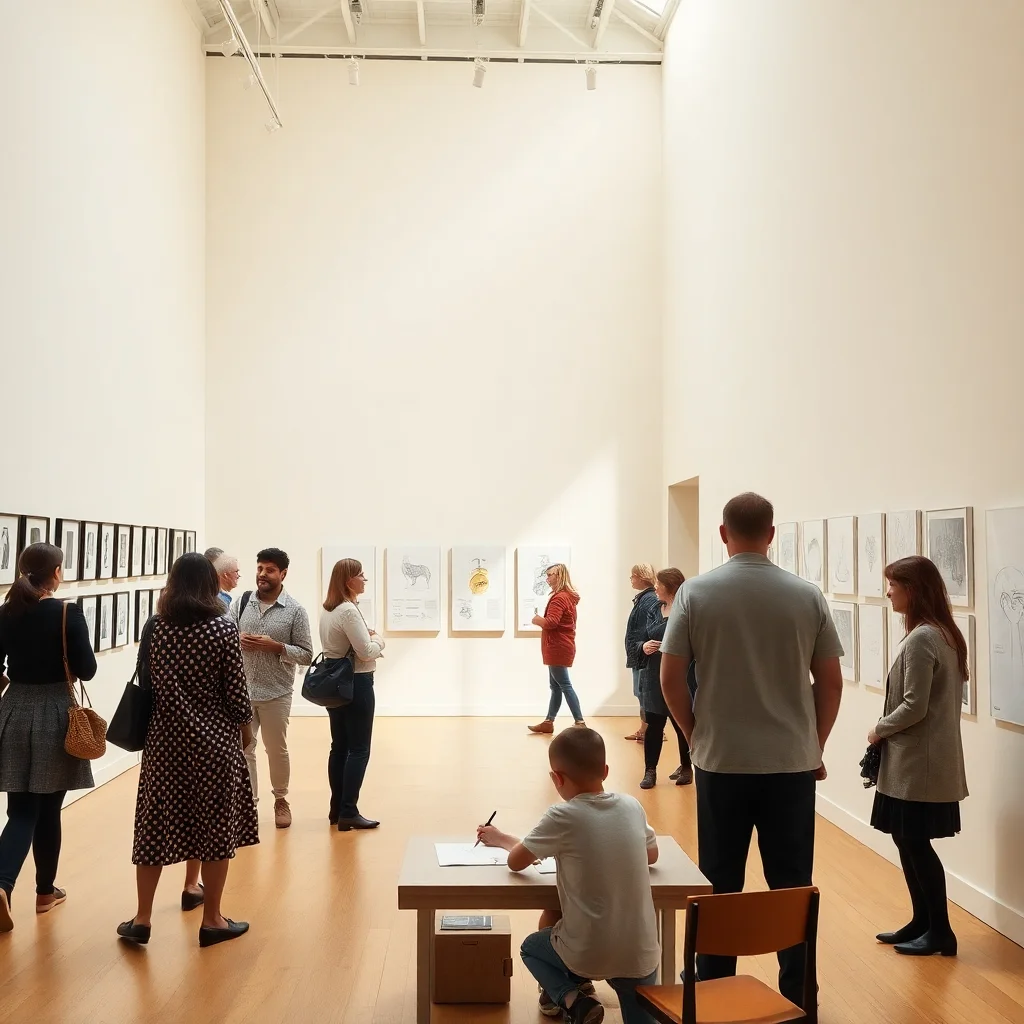
The Quentin Blake Centre for Illustration has opened in London with a promise that sounds almost defensive: protect an art form. But protection is not the real story. The real story is that illustration has suddenly entered a brutal cultural audition, and the examiner is artificial intelligence. When image tools can generate a convincing poster, editorial sketch, fantasy scene or branded character in seconds, illustration is no longer being judged only by style or sentiment. It is being asked to justify why a human hand, a human eye and a human point of view still matter.
That is why this opening matters far beyond the ceremonial ribbon-cutting of a new cultural venue. The centre is the world’s largest space dedicated to illustration, and scale is the point. A field often treated as secondary — decorative, commercial, nostalgic, a cousin to “serious” art — now has an institution large enough to argue back. Quentin Blake, whose line remains a model of wit, generosity and speed, has spent decades proving that illustration is not an accessory to culture but one of its most agile languages. The new centre turns that conviction into infrastructure.
And infrastructure is what the age of AI threatens most. Generative tools do not merely imitate surfaces; they flood the market with visual adequacy. They are designed to make the acceptable image cheaper, faster and more abundant than ever. Illustration, if it remains defined as a client service that produces appealing images on demand, risks being crushed between automation and indifference. If, however, it becomes a civic medium — one that teaches, persuades, protests, narrates and convenes — then the age of AI may force it into a stronger public role rather than a weaker one.
Why illustration has always been more than decoration
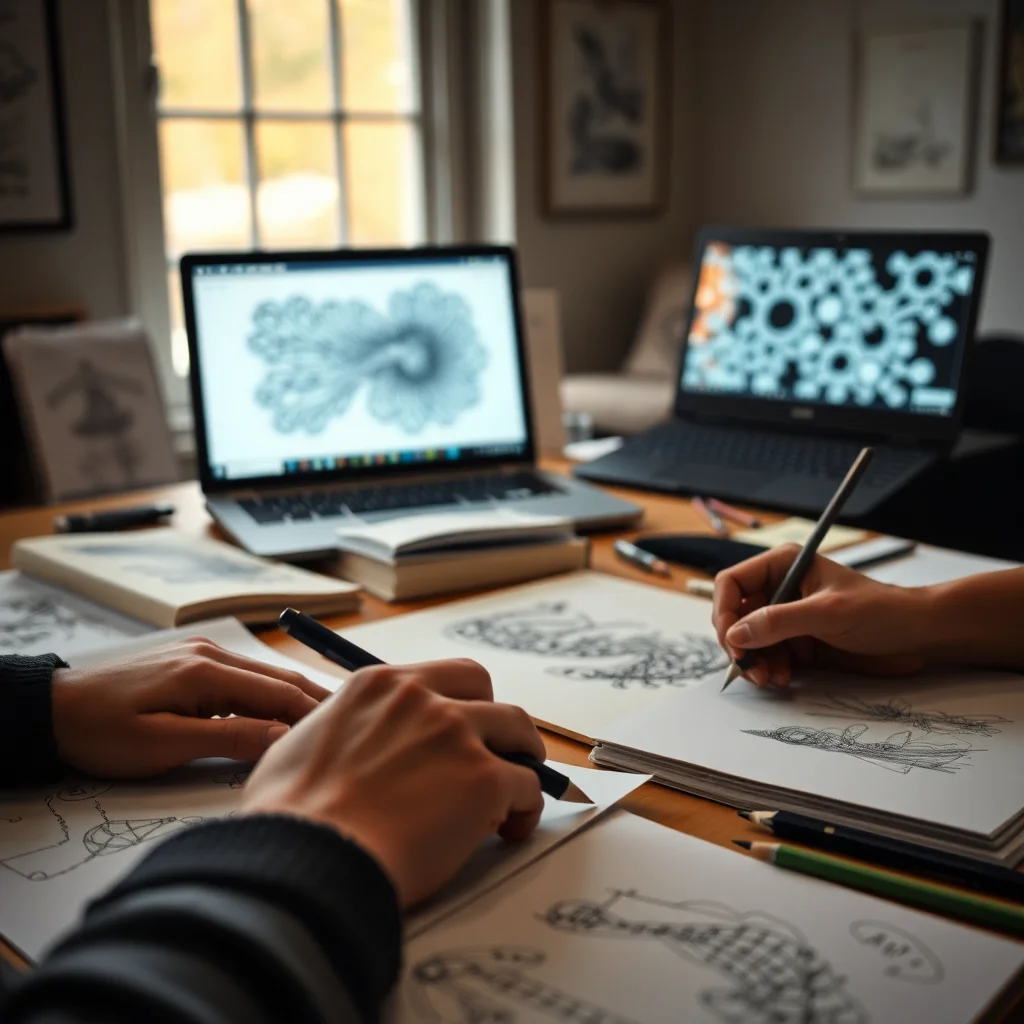
The mistake is to think illustration was ever just “nice pictures”. From political cartoons to children’s books, from newspaper graphics to scientific drawing, illustration has historically been a tool of interpretation. It compresses arguments into images. It can explain a railway map, skewer a minister, make a monster lovable or turn a complex idea into something a reader can feel before they can define it. That is not a minor cultural function. It is public meaning-making.
Quentin Blake’s own work demonstrates the point. His drawings for Roald Dahl are not merely whimsical companions to text; they are a parallel narrative system, charged with timing, aggression and release. Similarly, the lineage of artists such as Ronald Searle, Edward Bawden, Raymond Briggs and Posy Simmonds shows illustration’s real power: not polish, but perception. It is a medium that thrives where speed, judgement and wit matter. Those are precisely the qualities most endangered by homogenised AI output.
The new centre has a chance to recover that history from the margins. In a culture obsessed with the image as commodity, it can insist that illustration is also pedagogy, criticism and memory. The institution does not need to pretend that every hand-drawn line is morally superior to a synthetic one. That would be sentimental and weak. It needs to argue something stronger: illustration is valuable because it contains evidence of decision, and decisions are civic acts.
This argument also echoes broader anxieties across creative fields. As the design industry recalibrates around automation and authorship, illustration is being pulled into the same debate over what human-made work is actually for. The issue is not whether tools change; it is whether institutions still reward judgment over speed.
What AI actually threatens: authorship, labour and taste
The panic around generative image tools is often framed as a technical issue, but the deeper crisis is political economy. AI destabilises authorship by ingesting vast visual archives without consent, labour or credit. It destabilises illustration markets by making low-cost approximation look efficient. And it destabilises taste by encouraging clients to ask for the “look” of illustration without investing in the thinking, revision and collaboration that illustration requires.
That matters because many illustration commissions are not simply pictures; they are negotiations. A book jacket, a newspaper commission, a museum identity, a public campaign graphic: each is a process in which image, text and audience are balanced. AI can simulate output, but it cannot be held accountable in the same way a human illustrator can. It has no biography to read, no intention to contest, no responsibility to answer when a story is misrepresented or a stereotype repeated.
The danger is not only replacement, but flattening. If institutions, publishers and brands become habituated to infinite generative options, they may stop asking for distinctive visual thought. The result will be an aesthetic climate of average intelligence: competent, interchangeable, forgettable. Illustration’s challenge is to prove it offers something more stubborn than imagery. It offers voice. It offers stance. It offers a recognisable encounter with a mind.
That is one reason exhibition spaces matter so much: they can make audiences feel the difference between passive display and authored intent. As recent thinking on immersion beyond pixels in exhibition design suggests, presence is not a matter of spectacle alone, but of meaningful encounter. Illustration needs that same kind of encounter to survive the era of synthetic images.
The Quentin Blake Centre as a civic test
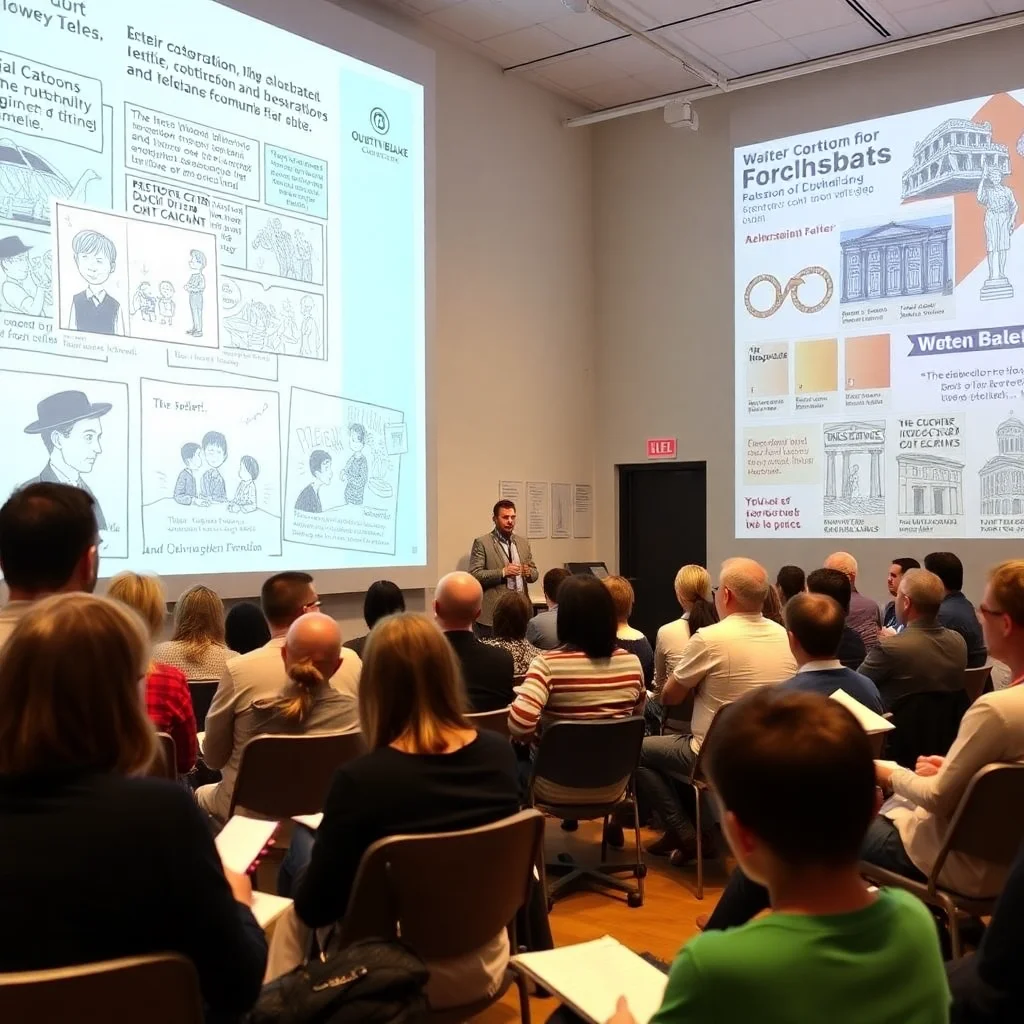
That is where the Quentin Blake Centre matters most. Museums and centres dedicated to a medium can easily become mausoleums, preserving a golden age while the present escapes them. But this opening has the potential to avoid nostalgia by treating illustration as a live public service. The question is not whether the centre can display beloved originals; it can. The question is whether it can use its scale to make illustration legible to people who do not already think of themselves as illustration enthusiasts.
Public programming is essential. Workshops, debates, live drawing sessions, school partnerships, artist residencies, zine-making, political cartoon exhibitions, data visualisation labs, children’s book events and digital literacy talks could all be part of a serious civic programme. Imagine an exhibition that pairs hand-drawn reportage with contemporary visual journalism. Or one that places a 19th-century scientific plate beside a modern climate graphic and asks what different forms of evidence look like. Or a programme where illustrators collaborate with urban planners, educators and campaigners rather than only publishers.
This would be a radical redefinition of the field’s social purpose. Illustration would no longer be treated as a decorative afterthought to literature, design or journalism. It would become a public language for institutions that need to explain themselves. In an era of collapsing trust, that is not a luxury. It is infrastructure for understanding.
Against nostalgia: the centre must be more than a shrine
Yet the greatest risk is that even a magnificent institution can fossilise the medium it celebrates. Illustration is beloved precisely because it is associated with intimacy, childhood and craft. Those associations are not false, but they are incomplete. If the centre leans too heavily on sentiment, it will confirm the worst stereotype about illustration: that it is charming, humane and safely on the side of the past.
That would be a mistake. The field’s most compelling work has often been unruly, sharp, satirical and contemporary. Consider how illustrated editorial work still shapes political discourse, or how graphic novels have expanded narrative form, or how independent illustrators use social media to build direct audiences and bypass old gatekeepers. Illustration is already a networked, adaptive and entrepreneurial field. The centre should amplify that present tense, not varnish it with nostalgia.
It should also be willing to address the AI question directly, rather than treating it as an awkward externality. An exhibition on training data, style extraction and labour would be more honest — and more useful — than another safe celebration of “timeless” drawing. Visitors do not need reassurance that hand drawing exists. They need to understand what is at stake when institutions, platforms and clients decide that image-making is just a prompt away.
That frankness would also place the centre within a wider cultural conversation about how public institutions can shape behaviour, not just preserve artefacts. The question is not unlike whether culture can become a public health strategy: in both cases, the argument is that creative environments can actively improve how people understand and navigate the world.
A future built on authorship, not sentiment
The strongest defence of illustration in the age of AI is not that humans are warmer or more authentic in some vague moral sense. It is that illustration is a site of authored thought. It translates, interprets, edits and condenses. It can be playful, severe, humane, radical or absurd. It can address children without condescension and adults without cynicism. It can move between commerce, culture and critique with unusual ease.
If the Quentin Blake Centre succeeds, it will do more than preserve a medium. It will help define a new contract between illustration and society. That contract would rest on three ideas. First, illustration is a form of public reasoning, not merely image production. Second, the work of illustrators deserves institutional backing because labour and authorship are not optional extras. Third, audiences should be taught to read images critically, especially now that machine-generated pictures can mimic sincerity at scale.
This is where the centre’s importance becomes political. A society that cannot distinguish between an image made to think and an image made to fill space is vulnerable not just to bad design but to bad democracy. Illustration can help repair that literacy. But only if it is ambitious enough to stop asking for permission to matter.
In related visual culture debates, identity systems and public-facing graphics are also under pressure to stay legible while constantly adapting. That is why discussions like what happens when an Olympic identity keeps changing feel newly relevant: they show how design must still carry meaning even as formats, audiences and technologies shift.
What the opening really asks of us
The Quentin Blake Centre for Illustration has arrived at exactly the right historical moment because it exposes the art form’s choice. Illustration can retreat into heritage, becoming a fondly remembered craft from a pre-digital world. Or it can expand into a public-facing discipline that helps people interpret information, identity and power in a culture saturated by synthetic images.
AI did not create this choice; it merely made it impossible to ignore. The centre’s real test is whether it can convince the public that illustration is not a sentimental refuge from technological change, but a better way to think visually inside it. That would be a far more convincing victory than preservation alone.
In other words, the question is not whether illustration can survive the age of AI. The question is whether it can become so institutionally, culturally and politically necessary that AI cannot replace its value — only pressure it to become clearer about what that value is.
- What makes illustration distinct from AI-generated imagery? Illustration is authored interpretation. It carries decisions, timing, bias, humour and responsibility in a way synthetic output cannot genuinely replicate.
- Why does the Quentin Blake Centre matter now? Because it gives illustration institutional scale, public visibility and a platform to argue for the medium’s civic role beyond nostalgia or children’s publishing.
- Can AI be used productively by illustrators? Yes, but only if it remains a tool under human authorship rather than a substitute for thinking, style and accountability.
- What should museums do to support illustration? They should commission live work, host debates about authorship and labour, and teach audiences to read images critically in a synthetic-media age.
Get the Mainifesto weekly — curated design debates, speculative ideas and the week's best articles every Saturday.
Editorial Perspectives
Questions and counterpoints developed by the Mainifesto editorial desk to extend the discussion.
Perspective 1
If illustration needs to become an institution to survive AI, then it has to prove it can do more than signal taste. The real test is whether it can still be embedded in products, systems, and public life in a way that generative tools can’t just flatten into infinite content.
Perspective 2
I don’t think AI automatically flattens illustration; it just exposes how much of the field has been protected by scarcity and authorship myths. If institutions give illustration civic power, that’s useful — but only if they also leave room for disruption, mischief, and work that doesn’t behave like a brand asset.
Perspective 3
What matters to me is whether illustration can stay attached to making, not just to image distribution. Once it becomes fully institutionalised, there’s a real risk it gets polished into something safe and decorative, which is exactly the opposite of why drawn work still feels alive.
Perspective 4
Illustration has always worked best when it changes the mood of a room or a street, not when it explains itself too neatly. If institutionalisation gives it a civic role, fine — but the roughness, the hesitation, the hand are what keep it from becoming just another neutral visual layer.