
Retro-Futurist Heritage Interiors Redefined
Heritage is no longer a museum category
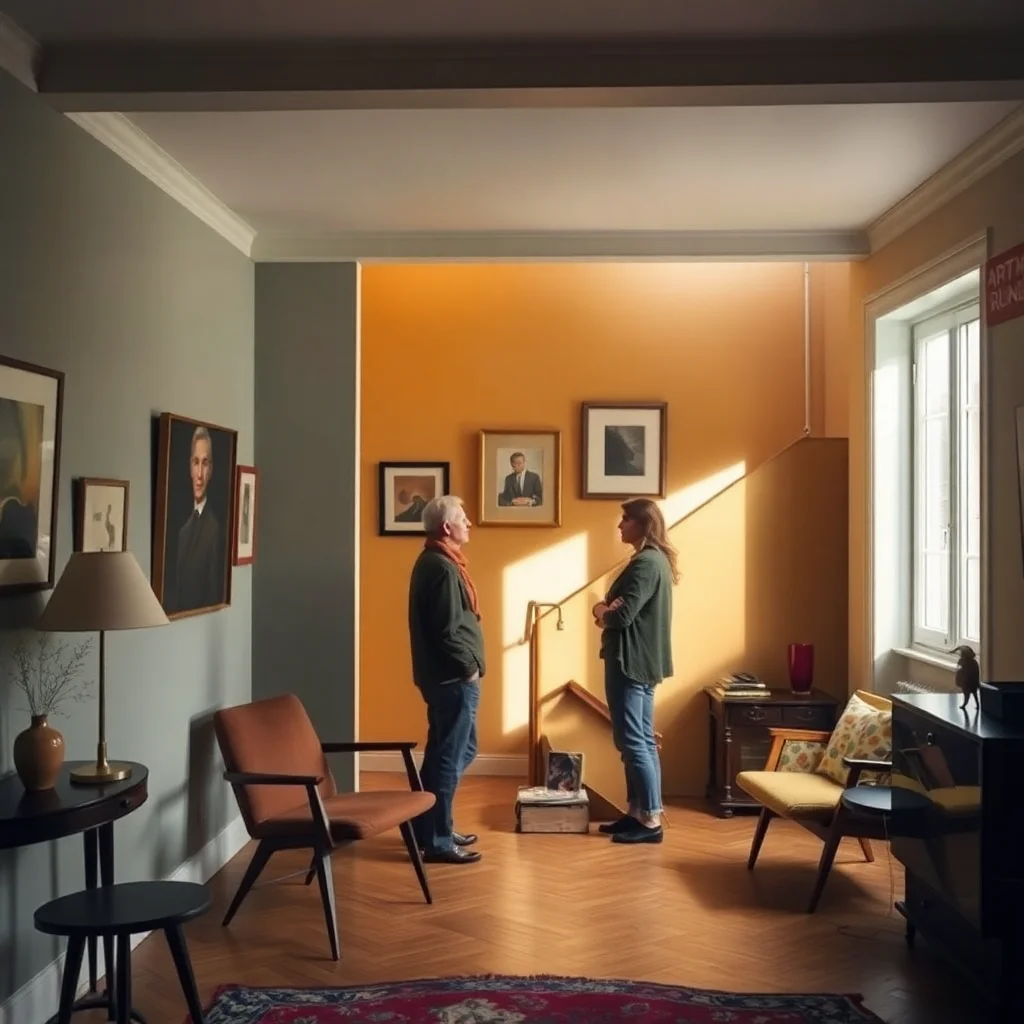
The renovation of the former home of Belgian artist Antoon De Clerc, now reshaped by Atelier Vens Vanbelle, makes a forceful argument against the soft, sentimental language that usually surrounds historic interiors. This is not a case of dutiful restoration, where every hinge, cornice and joinery decision pretends time stopped in a single year. Instead, the house is treated as a cultural instrument: one that can be retuned with Bauhaus colour, 1950s-inspired domestic cues and contemporary interventions without losing its memory. The result is not purity. It is friction.
That friction matters because the new life of heritage homes increasingly depends on whether they can speak to the present without becoming theme parks of the past. A house like this is culturally relevant not when it faithfully reconstructs a moment, but when it stages a dialogue between several moments at once. In that sense, the renovation operates less like conservation and more like curation. It understands that domestic identity is now assembled from references, not inherited as a fixed whole. That logic also appears in When the Home Becomes a Master Plan, where domestic space is read as an evolving system rather than a sealed object.
Atelier Vens Vanbelle’s approach is especially pointed because it refuses the familiar binary between respect and reinvention. The artist’s house is not flattened into nostalgia; it is layered into a new aesthetic system. The question is no longer whether a historic interior should look original. The question is whether it can still produce meaning when original and invented coexist openly.
A Bauhaus palette as a declaration, not a citation
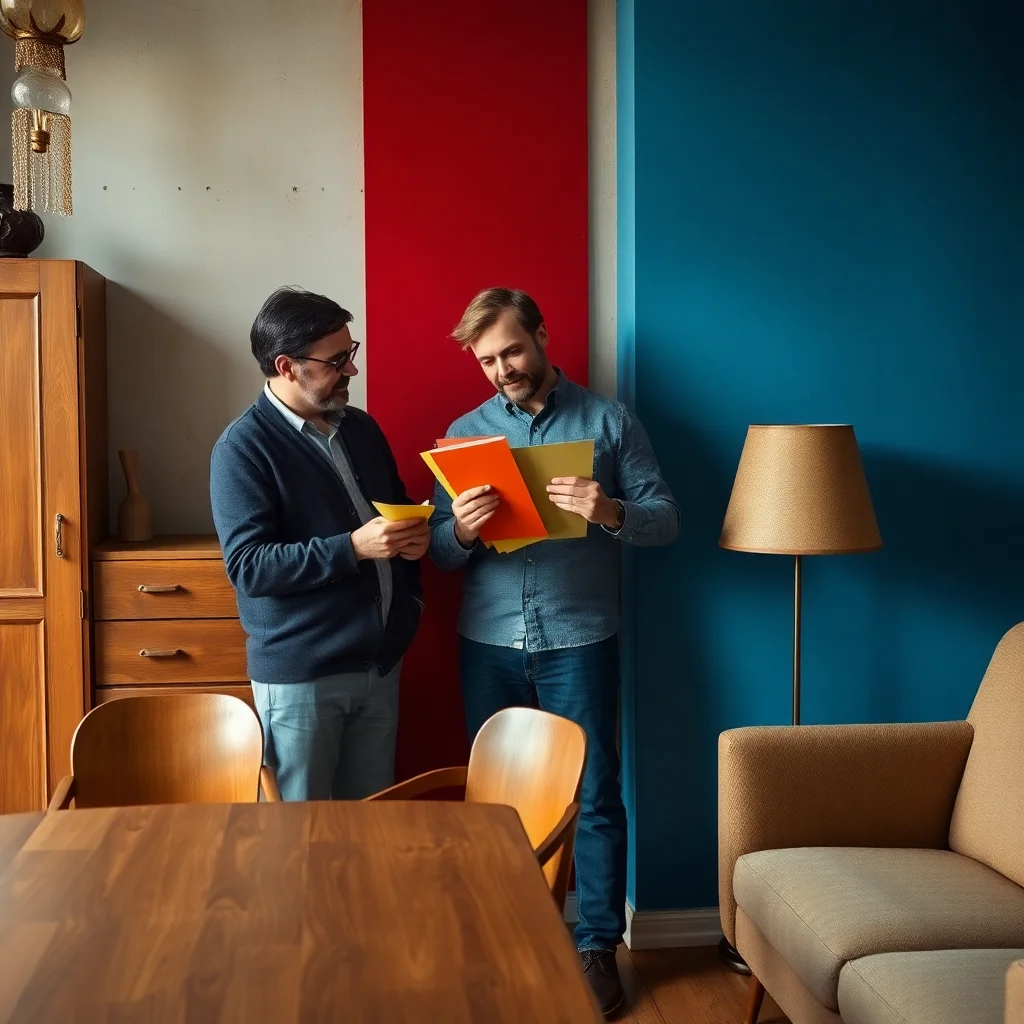
One of the renovation’s sharpest moves is chromatic. Bauhaus colour is not deployed as a retro flourish, but as a structural language that disciplines the house’s atmosphere. Reds, yellows and blues have long carried the avant-garde’s claim that colour can organise life, not just decorate it. Here, those tones do not simply signal design literacy; they actively reprogram the emotional temperature of the rooms.
This is where the house departs from the polite heritage interior, which often uses neutral restraint to imply seriousness. By contrast, a Bauhaus-inflected palette asserts that history can be vivid and slightly unruly. It recalls the pedagogical clarity of Josef Albers, the chromatic conviction of Walter Gropius-era modernism, and the domestic optimism of interwar experimental interiors. But the project is not reenactment. It is selective extraction: enough Bauhaus to energise, not enough to fossilise.
That distinction is crucial. In too many renovations, colour is treated as a reversible accessory, something to be softened for resale or calmed for consensus. Here, colour becomes ideology. It says that a historic home can be edited with confidence and still remain legible as heritage, provided the intervention is intellectually coherent. Heritage, in other words, does not have to be beige to be authentic.
Midcentury styling turns nostalgia into a usable present
The 1950s layer in the house complicates matters further. Midcentury styling, with its slim legs, rounded profiles and domestic ease, is one of the most overused visual languages in contemporary interiors. It can quickly become a shorthand for taste rather than thought, a safe nostalgia sold through catalogues and hospitality branding. But in this project, the midcentury reference is not a lazy throwback. It functions as a bridge between the historic shell and the new interventions.
Midcentury design remains powerful because it promised a democratic modern life: lighter furniture, cleaner circulation, fewer gestures, more utility. In the context of a former artist’s house, that promise gains new relevance. A domestic interior meant to support making, living and displaying can benefit from the practical elegance associated with designers such as Florence Knoll, Friso Kramer or Pierre Guariche. Their legacy is not merely stylistic. It is about spatial clarity and human use.
That is why this renovation is more interesting than a straightforward period revival. It borrows from the 1950s not to recreate an era, but to recover a sensibility: openness, proportion, and a belief that everyday life can be thoughtfully designed. The house thus becomes a hybrid of artistic biography and postwar domestic optimism. It asks a provocative question: why should a historic home be faithful to one time period when culture itself is layered, contradictory and remix-driven?
Contemporary intervention prevents the house from becoming a set
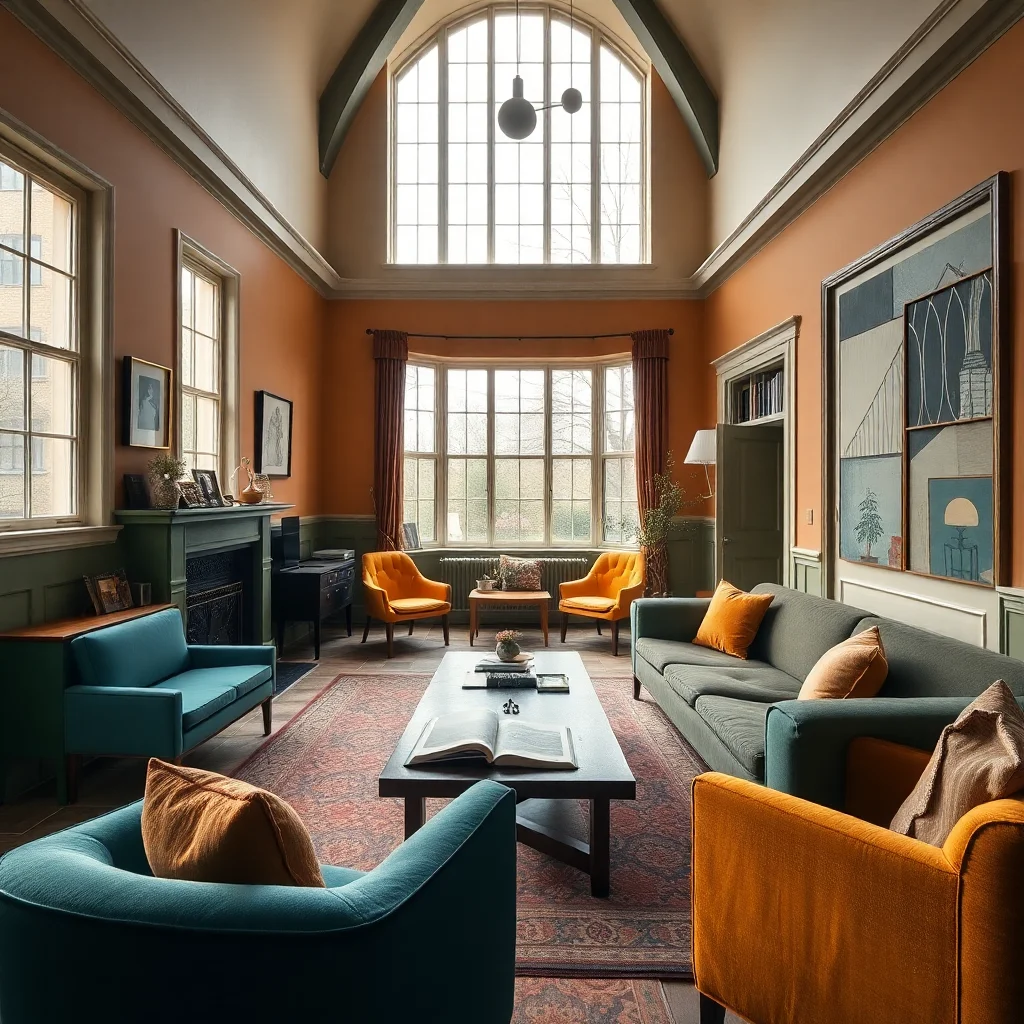
If the Bauhaus colour and midcentury cues provide historical charge, the contemporary intervention keeps the house from collapsing into scenic imitation. Atelier Vens Vanbelle understands that any heritage renovation risks becoming theatrical if the new work is too deferential. Instead, the project uses the present as a visible author. This is not a hidden retrofit disguised as old architecture; it is an edited composition in which new and old are allowed to read against each other.
That decision aligns the house with a broader lineage of design projects that refuse false continuity. Think of Carlo Scarpa’s Castelvecchio in Verona, where the old building is made more legible by precise modern additions, or the way John Pawson’s minimal interventions often sharpen rather than erase inherited structure. Even contemporary museum and residential renovations by practices such as Neri&Hu have demonstrated that the most persuasive heritage work is often the least nostalgic. It respects age by not pretending to be aged itself. The same tension between inherited form and new civic use is explored in Hunstanton School and the Second Life Dilemma, where reuse becomes a design argument in its own right.
In the artist’s house, that means the new elements do more than fill gaps. They establish a new domestic grammar. The tension between authentic fabric and contemporary insertions gives the interior a strong pulse. One senses that this house is not being embalmed for admiration; it is being prepared for use. That is a far more radical proposition.
Can multiple nostalgias produce a stronger home?
The bigger editorial issue raised by this renovation is whether historic homes can be made culturally relevant again by borrowing from several nostalgic timelines at once. The answer, increasingly, appears to be yes — but only if the borrowing is intelligent. A single historical reference can flatten a house into a period tableau. Multiple references, by contrast, can create depth, ambiguity and surprise. The trick is to ensure they converse rather than compete.
This layered strategy reflects how people actually live now. We move between digital present, analog memory and curated identity every day. Why should houses remain locked in a single historical register? A home that mixes Bauhaus colour, midcentury styling and contemporary intervention mirrors contemporary consciousness more honestly than a faithful restoration ever could. It accepts that domestic life is not linear. It is sampled, revised and continuously re-authored.
That does not mean anything goes. The power of this renovation lies in disciplined eclecticism. Each historical layer has a job to do. Bauhaus supplies clarity and edge; midcentury styling offers warmth and usability; contemporary intervention prevents ossification. Together, they create a layered domestic identity that feels alive rather than staged. This is not the death of heritage. It is heritage learning how to perform in a post-authentic world.
And that may be the most important takeaway: cultural relevance is no longer guaranteed by preservation alone. A historic home must now justify itself aesthetically and intellectually. By operating as a retro-futurist collage rather than a restoration, this artist’s house suggests that the future of heritage may depend on how bravely we edit the past.
- What this renovation rejects: the idea that historic interiors must be muted, reverent and visually obedient. It refuses the false virtue of neutrality and replaces it with authored contradiction.
- What it borrows from modernism: the Bauhaus belief that colour can organise experience, not merely decorate a surface. The palette becomes spatial logic rather than surface styling.
- What midcentury contributes: a practical domesticity associated with postwar optimism, where furniture, proportion and circulation support daily life rather than theatrical display.
- What contemporary design adds: clarity, contrast and visible authorship, ensuring the renovation reads as a present-tense intervention rather than an imitation of the past.
- Why the artist’s house matters: it shows how biography can become architecture without being embalmed. The home becomes a medium for cultural layering, not a shrine.
- What this signals for heritage: the next relevant historic interior may be the one willing to host multiple nostalgias at once, provided they are edited with rigor.
Get the Mainifesto weekly — curated design debates, speculative ideas and the week's best articles every Saturday.
Editorial Perspectives
Questions and counterpoints developed by the Mainifesto editorial desk to extend the discussion.
Perspective 1
The interesting part here is not whether every detail is period-correct, but whether the house still reads as a coherent spatial system. In practice, heritage buildings survive best when the old fabric is legible and the new layers are clearly of their time, not disguised as the original.
Perspective 2
This is more convincing than the usual nostalgia-performance that passes for preservation. A house is not a museum label; it accumulates meanings, and when the intervention is intelligent, the clash of eras can produce a sharper historical truth than a neat reconstruction ever could.
Perspective 3
I’d argue for remixing, but only if it respects the building’s actual history rather than flattening it into a style exercise. Faithful reconstruction can be useful after loss, yet in most occupied homes the more honest act is to preserve what matters and add new layers that solve current needs without erasing the old ones.
Perspective 4
From a practical point of view, a house has to work for how people live now, not just for how it photographed in 1956. If the contemporary additions improve comfort, layout, and maintenance while keeping the character intact, that’s a better long-term outcome than locking a property into a fragile period past.