Data Centers as Civic Monuments
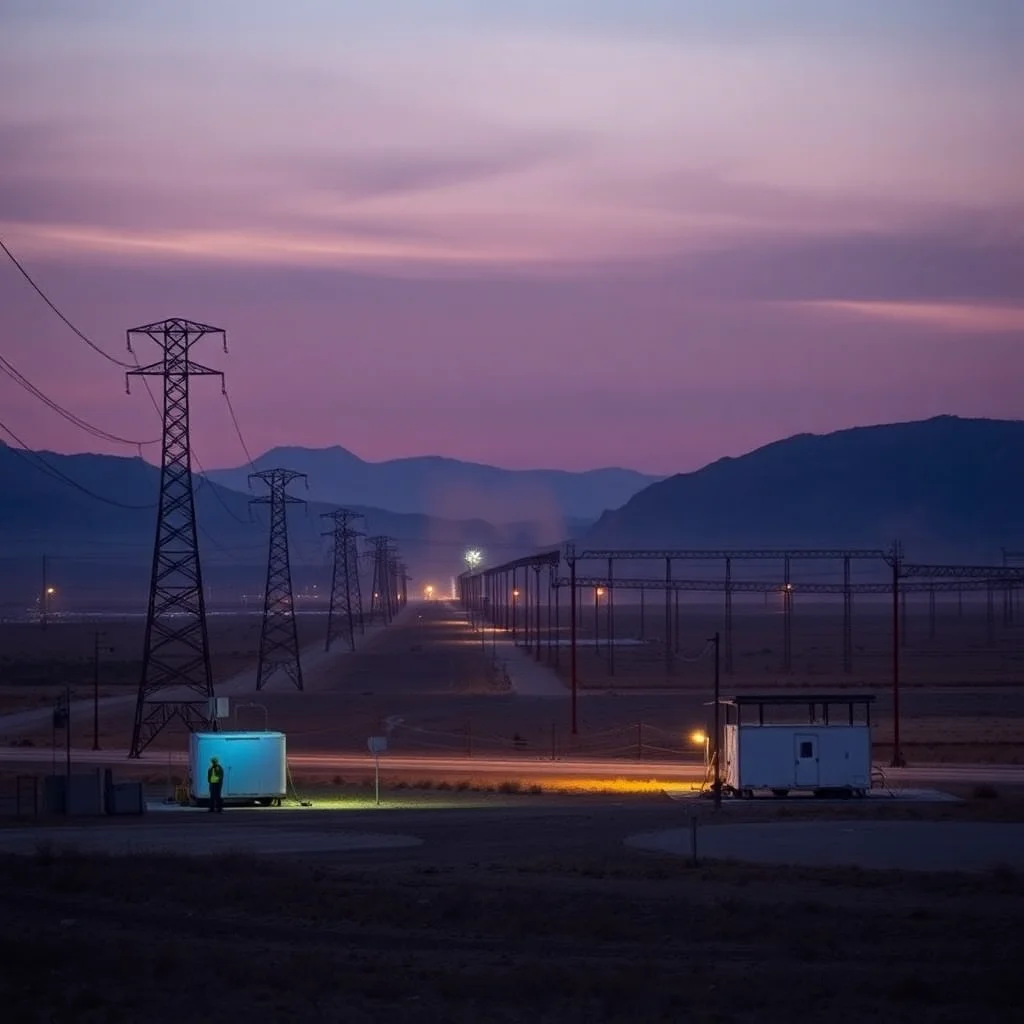
The new monument is not a tower. It is an engine.
For a century, architecture’s symbolic hierarchy was easy to read: museums stood for culture, towers for capital, stadiums for collective ritual, and civic halls for the machinery of democracy. That order is collapsing. In Box Elder County, Utah, the newly revealed Stratos Hyperscale Data Center by Gensler for O’Leary Digital signals a different architectural regime entirely: the most consequential buildings may no longer be the ones we visit for meaning, but the ones we never enter, yet depend on every minute of the day. With a projected scale of 7.5 gigawatts and a 60-building development footprint, Stratos is not simply infrastructure. It is a territorial claim.
This is why the project matters beyond the fevered world of hyperscale computing. It asks whether data centers — once treated as sealed technical boxes, hidden behind fencing and silence — are now too powerful to remain architecturally mute. If they are the physical substrate of AI, cloud services, financial systems, logistics, and surveillance, then they are already civic in function, even if they are privately owned. The question is whether design will continue to disguise that fact or finally admit it. That tension sits at the heart of whether AI is becoming architecture’s junior partner, where the tools of computation increasingly shape what gets built and how.
Architecture has a habit of moral lag. It tends to design for what institutions were, not what they have become. But data centers are no longer peripheral utilities tucked into industrial parks. They are the engines of the contemporary public sphere, deciding how we search, transact, model, watch, and work. A building that mediates so much collective life should not be allowed to hide behind generic cladding and logistical innocence.
Hyperscale is not just size; it is a new civic condition.

The temptation is to think of hyperscale data centers as a technical category, a matter of racks, cooling loads, and power availability. But the scale itself is the argument. Once a campus reaches the size of a small district — and once it consumes enough electricity to resemble a utility corridor — it stops behaving like a building and starts behaving like a city-making force. The Stratos project in Utah, embedded in the larger Wonder Valley development, makes that transformation legible. It is architecture in the plural: clusters, systems, reserves, buffers, roads, substations, and the politics of land use.
That is exactly why the old vocabulary no longer works. We have long accepted that airports, museums, and universities deserve architectural clarity because they organize public life. Data centers now do the same, except they do it invisibly. Their social contract is strange: they demand land, water, grid capacity, and local accommodation, but provide only abstraction in return. That asymmetry will eventually trigger a design backlash. Communities will ask not just how much power the facility uses, but what kind of neighbor it is allowed to be.
Look at how other infrastructural buildings have evolved under pressure. Rail stations became urban rooms. Waste facilities were forced to become cleaner, more legible, even pedagogical. The best water-treatment plants now have visitor centers and landscape strategies because the public no longer tolerates pure utility. Data centers are headed for the same reckoning. Once their impacts are felt locally, they will need more than security fences and corporate opacity; they will need spatial arguments for their existence. The same shift is visible in projects like architectural robotics, where buildings are imagined less as static shells and more as responsive systems.
What Gensler’s Utah project suggests about form and visibility.
Gensler is not alone in chasing the visual future of computational infrastructure, but its role matters because big firms can normalize what niche specialists cannot. In Utah, the Stratos project appears to operate at the scale of a master plan rather than a single object, which is telling: the data center of the future may not be a monolith at all, but a choreographed field of buildings, utility spaces, and landscape buffers. That move opens the door to a new architectural language — one that can communicate power without pretending to be a civic monument in the old stone-and-steps sense.
There are precedents worth naming. BIG has repeatedly argued for infrastructural buildings that become public landscapes, from energy-related proposals to the render-heavy urbanism of its master plans. Foster + Partners has turned technical programs into polished architectural narratives, whether in data, aviation, or mobility. In Scandinavia, some of the most sophisticated digital infrastructure projects are already conceived with a stronger relationship to climate, landscape, and community than the typical American shed. The lesson is not that data centers need to be pretty. It is that they need to be legible. That also means being mindful of who controls the image in the first place, a concern explored in The New Visualizer Is an Algorithm.
Visibility matters because secrecy breeds distrust. A data center can no longer behave like a classified object when its resource footprint affects an entire region. If hyperscale facilities are to earn social license, they may need fronts, edges, thresholds, and even public interfaces that explain their presence. That could mean landscape parks that double as stormwater infrastructure, visitor centers that disclose energy and cooling systems, or civic-facing lobbies where residents can see — rather than simply suspect — what the building is doing.
Two possible futures: the fortified machine or the accountable institution.
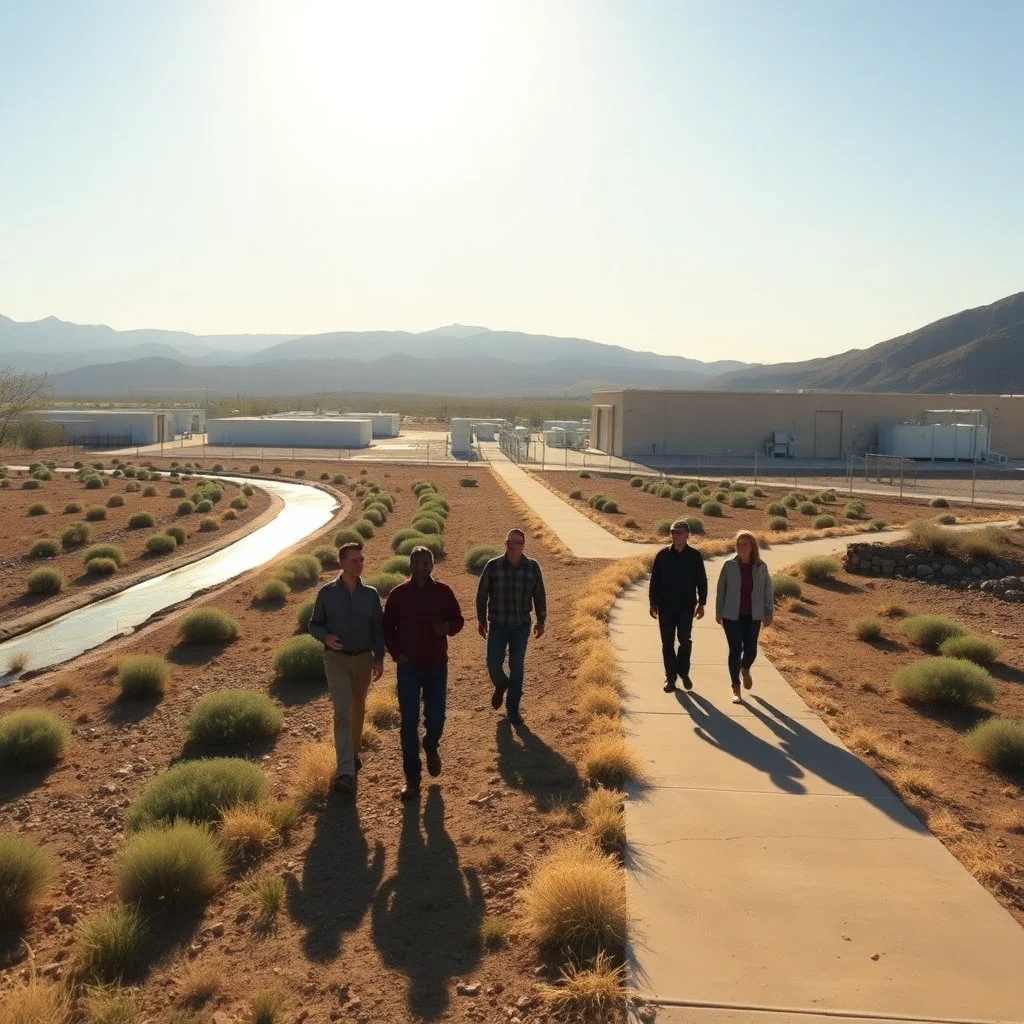
PRO: Designing data centers like public institutions would force accountability into a sector that has long relied on opacity. Public institutions are expected to justify their siting, embody values, and offer some degree of architectural dignity. A data center that is asked to perform like a civic building might expose its energy use, rationalize its land consumption, and contribute something more durable than tax revenue: trust.
That trust will matter in places like Utah, where land, water, and grid politics are inseparable from identity. In that context, a hyperscale campus cannot behave like an imported machine dropped into the desert and insulated from local consequences. It must negotiate with its surroundings. The best precedent may be the way cultural institutions increasingly use architecture to demonstrate stewardship — think of libraries as carbon-conscious community centers, or museums that turn their back-of-house logistics into public pedagogy. Data centers could do the same with cooling, substations, and maintenance corridors, transforming hidden systems into educational ones.
CONTRA: Yet there is a danger in over-civilizing the data center. Not every consequential building should be forced into the language of publicness. Some infrastructure works best when it is efficient, standardized, and deliberately non-iconic. Airports, warehouses, and substations do not need theatrical forms to do their jobs; in fact, spectacle can produce bad performance and inflated costs. The risk is that architecture mistakes moral seriousness for visual expression, producing expensive gestures that do nothing to solve the deeper problems of energy demand and land use.
There is also a political trap. If hyperscale facilities are aestheticized as monuments, they may become harder to challenge. A beautifully rendered data campus can soothe public resistance without changing the underlying dynamics of extraction, consolidation, and carbon intensity. The real issue is not whether a data center looks civic, but whether it acts civic: does it share benefits, mitigate harms, and accept scrutiny? Form alone cannot grant legitimacy. These questions echo broader debates in digital ethics in design, where the profession must decide when to adopt technology and when to refuse it.
The design challenge is not symbolism. It is governance made visible.
The future of data center architecture will be determined less by style than by protocol. The question is how buildings express the conditions under which they deserve to exist. That may mean new expectations around transparency dashboards embedded in public-facing environments, energy and water disclosures integrated into the site experience, and campus layouts that treat community access as a political requirement rather than a marketing feature. The architecture of accountability will be the architecture of the next decade.
There are already clues in adjacent fields. Climate-resilient civic campuses increasingly combine landscape, infrastructure, and public circulation rather than separating them. Industrial designers are rethinking shells, louvers, and cooling systems as visible performance devices rather than hidden equipment. Urbanists are asking whether the utility building can also be a neighborhood marker, one that offers orientation rather than denial. A hyperscale data campus that embraces those lessons could become a new kind of civic anchor: not a plaza for gathering, but a landscape for understanding the invisible systems that govern daily life.
That would require a brutal honesty from developers and architects alike. It would mean admitting that the next major monuments are already being built, just not for the old audiences. They are for the networked society, for machine intelligence, for the continuity of clouded public life. The only remaining question is whether those monuments will be designed as fortresses or as institutions.
FAQ
What makes a data center a “civic monument”? A data center becomes civic when its scale and impact extend beyond private operations into public life. If it shapes energy systems, land use, water demand, and digital dependence for an entire region, it functions like civic infrastructure whether or not it looks like one.
Why is the Utah Stratos project significant? The Stratos Hyperscale Data Center in Box Elder County is significant because its scale makes the hidden power of data infrastructure visible. As one of the largest planned data center developments, it pushes the conversation from technical facility to territorial and architectural question.
Do data centers need to be beautiful? Not necessarily. They need to be legible, accountable, and contextually responsible. Beauty can help communicate those values, but it cannot replace operational transparency or social consent.
What would a public-facing data center include? It might include visitor spaces, landscape systems, environmental disclosures, and visible infrastructure such as cooling and power interfaces. The goal would be to make the building understandable to the communities that live with its consequences.
What happens when the cloud gets a front door?
The cloud has always been a lie of atmosphere. Its physical reality is industrial, land-hungry, and deeply local. Gensler’s Utah hyperscale project forces that truth into view. If the 20th century prized museums and towers as emblems of civilization, the 21st may be judged by whether we can turn computational campuses into accountable public institutions. If data centers are the new monuments, the real test is not whether they impress us. It is whether they answer to us.
Get the Mainifesto weekly — curated design debates, speculative ideas and the week's best articles every Saturday.
Editorial Perspectives
Questions and counterpoints developed by the Mainifesto editorial desk to extend the discussion.
Perspective 1
If a data center is going to dominate land use, energy, and infrastructure, hiding it behind a blank wall feels lazy, not neutral. But I’d rather see design focus on durability, access, and thermal logic first, then public-facing form second—otherwise it becomes expensive decoration on industrial hardware.
Perspective 2
This is exactly the kind of building typology that should force architecture to stop pretending only museums and libraries matter. If data centers now sit at the center of civic life, then their spatial and environmental systems should be legible, accountable, and maybe even publicly negotiable.
Perspective 3
We should stop treating data centers like shameful back-of-house boxes when they’re effectively part of the social infrastructure. If they consume power, water, and land at civic scale, they owe the public visibility, stronger design standards, and a real conversation about what kind of future they’re building.