
Mass Timber Theatre: Landmark or Carbon Claim?
PRO: Wood Makes a Cultural Building Feel Public Again
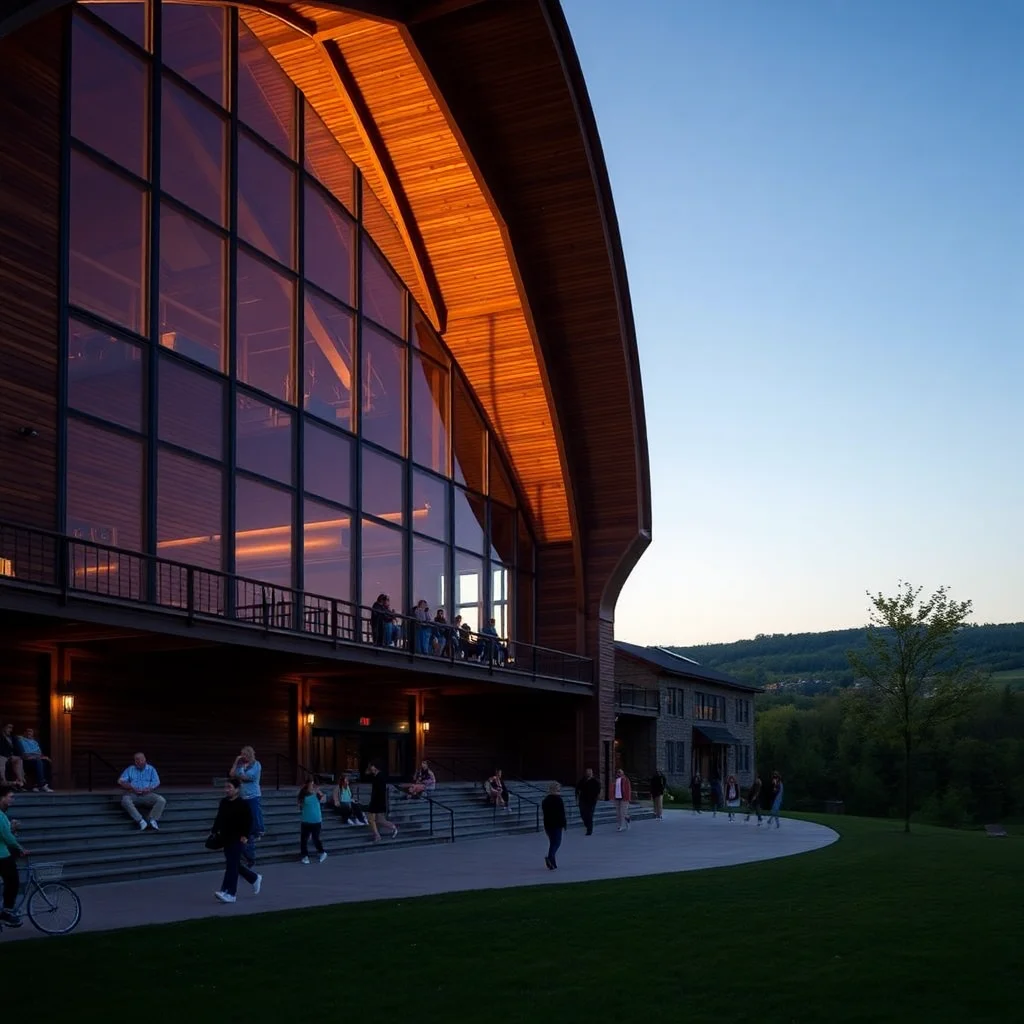
Studio Gang’s Samuel H Scripps Theatre in Garrison, New York, arrives with the kind of confidence cultural architecture desperately needs. Set on Hudson Valley Shakespeare’s 98-acre campus, the building does not hide behind a sealed, self-important object form. It opens toward the valley, wraps itself in a mass-timber shell, and announces a simple but radical idea: a theatre can be both an instrument of performance and a civic room for weather, landscape, and people.
That matters because so much contemporary cultural architecture has become defensive. Black-box volumes, fortress-like lobbies, and overdesigned icons often treat the public as guests at an exclusive event. By contrast, wood offers a different political image. It reads as warm, tactile, and legible. It suggests care rather than conquest. In this sense, the theatre joins a larger lineage of timber-led public architecture: from Norway’s tall-wood experiments like Mjøstårnet and the civic timber ambitions of the Sara Kulturhus in Skellefteå, to cultural projects such as the Oakwood Timber House approach seen in contemporary Scandinavian institutions that use exposed wood to soften the social distance of public space.
Studio Gang has always understood that material can be narrative. Jeanne Gang’s work often turns structure into social argument, whether in the branching columns of Aqua Tower or the environmental legibility of projects like the Arcus Center for Social Justice Leadership. Here, mass timber is not just a finish. It becomes the theatre’s face to the world, a visible proposition that public buildings can be low-carbon without looking ascetic. For a Shakespeare venue, that symbolism is potent: timber evokes craft, repertory, tradition, and the temporary magic of stage scenery. It says the building is not merely housed in nature; it is part of a cultural ecology.
And the climate case is not imaginary. Mass timber can reduce embodied carbon by replacing more emissions-intensive structural systems, especially when responsibly sourced and deployed with design discipline. In an era when cultural institutions are under pressure to show measurable climate action, a timber theatre offers more than green branding. It can demonstrate a different procurement logic, one that values renewability, assembly efficiency, and long-term stewardship. If public architecture is going to persuade rather than preach, a theatre like this is a strong place to start.
PRO: A Civic Landmark Needs More Than Neutrality
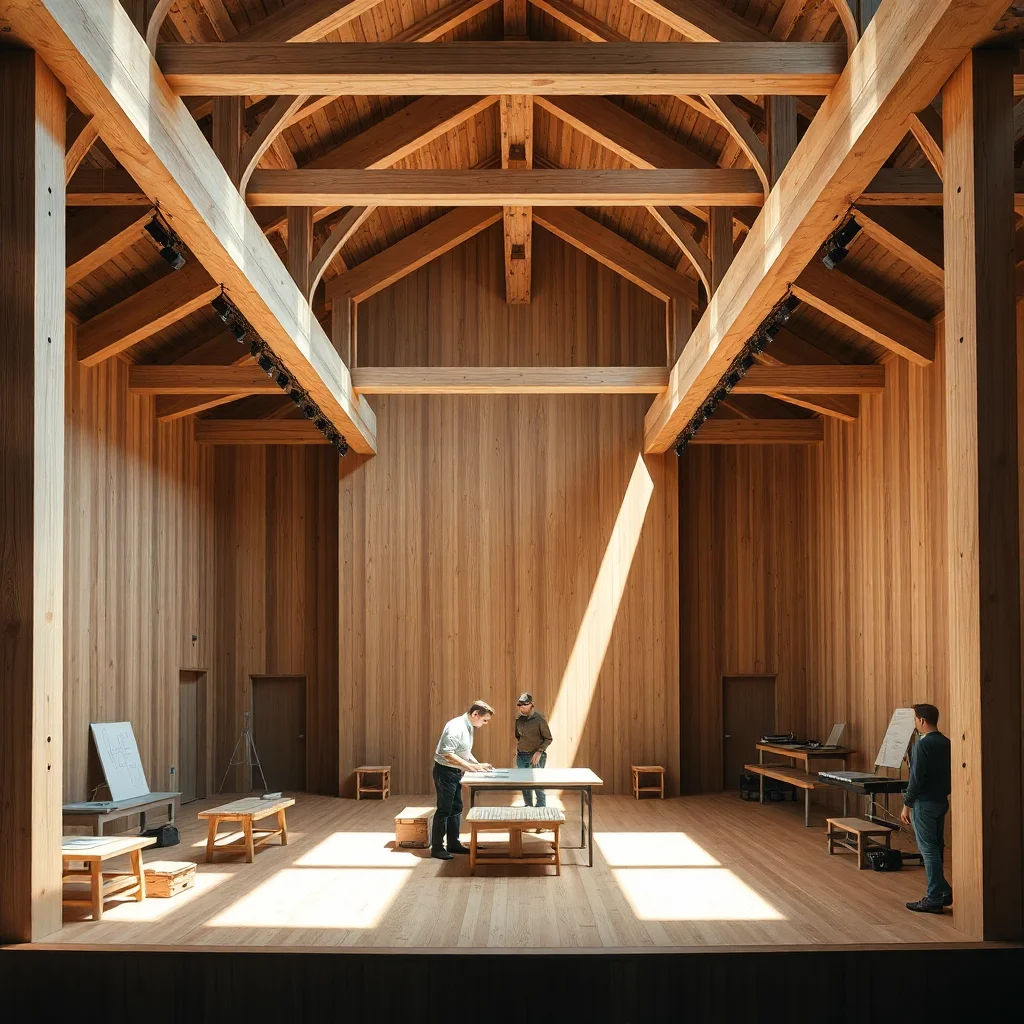
The argument for timber also rests on urban and experiential grounds. Civic landmarks should not be neutral containers for programming; they should give form to collective memory. A theatre in the Hudson Valley must belong to its landscape and its public culture at once, and wood helps bridge that divide. It makes a building feel less like an imported object and more like an extension of the region’s terrain, craft traditions, and seasonal atmosphere.
Think of how timber architecture has gained traction precisely because it can make institutions seem more humane. The recent wave of wood-heavy museums, libraries, schools, and performance spaces across Europe and North America reflects a public appetite for environments that reject the cold bureaucracy of conventional institutional design. The IDEA of sustainability here is not abstract carbon accounting alone; it is bodily comfort, acoustical softness, and visual warmth. A mass-timber shell can make an audience feel as though the building is listening back.
That emotional power is not trivial. Climate action will fail if it remains bureaucratic and invisible. Public buildings need to make ecological ambition legible, and wood is one of the few materials that can carry that message without resorting to didactic graphics or token rooftop greenery. It creates a direct sensory link between architecture and environmental ethics. In the best cases, mass timber becomes an everyday lesson: lower-impact construction can still look generous, contemporary, and civic-minded.
Theatre, too, is a fitting test case because performance spaces depend on atmosphere. A Shakespeare venue is already a place where language, weather, and collective attention converge. Studio Gang’s decision to open the building to the surrounding valley suggests a refusal of the sealed climate-controlled box. Instead, the theatre seems to invite exchange between interior performance and exterior world. That openness strengthens the argument that public architecture should model ecological reciprocity rather than deny it.
Seen through that lens, the building also participates in a broader question about whether heritage can become a civic event space without collapsing into spectacle. Timber’s appeal lies partly in its ability to feel rooted without becoming nostalgic, which is exactly the balance cultural institutions now struggle to achieve.
CONTRA: Mass Timber Risks Becoming Climate Theatre
But the wood revolution has a problem: it is increasingly easy to mistake atmosphere for ethics. Mass timber has become a powerful visual shorthand for sustainability, and that very success creates a danger. Institutions can now claim environmental seriousness through appearance, while the underlying carbon story remains partial, contested, or oversimplified. The question is not whether timber is good. The question is whether a timber envelope automatically means a low-carbon building.
It does not. Carbon benefits depend on sourcing, harvesting practices, transportation, manufacturing energy, adhesives, lifespan, and end-of-life assumptions. A beautiful exposed timber interior can conceal a heavy ecological ledger if the project leans on unsustainable forestry, long supply chains, or carbon-intensive supplementary materials. Even then, the building may be marketed as greener than it truly is because wood photographs better than concrete, steel, or the unavoidable complexity of life-cycle analysis.
This is where the seduction becomes politically useful for institutions. Cultural organizations need patrons, public funding, and moral legitimacy. A visible timber building offers all three: it is photogenic, fundable, and easy to narrate. But that can flatten sustainability into a style. Instead of confronting operational energy, lifecycle durability, retrofit potential, and adaptive reuse, institutions may simply swap one material vocabulary for another. The risk is not that timber is bad. The risk is that timber becomes a moral alibi.
Architectural history is full of supposedly progressive materials that were later absorbed into image-making. Green roofs became luxury signals. Curtain walls became corporate sheen. Mass timber could suffer the same fate if it is treated as a standalone virtue. A performance venue is especially vulnerable because its cultural prestige magnifies the symbolism. Once a theatre looks responsible, the institution can stop asking harder questions about carbon, justice, or the building’s full impact.
CONTRA: Cultural Architecture Needs Systems, Not Slogans
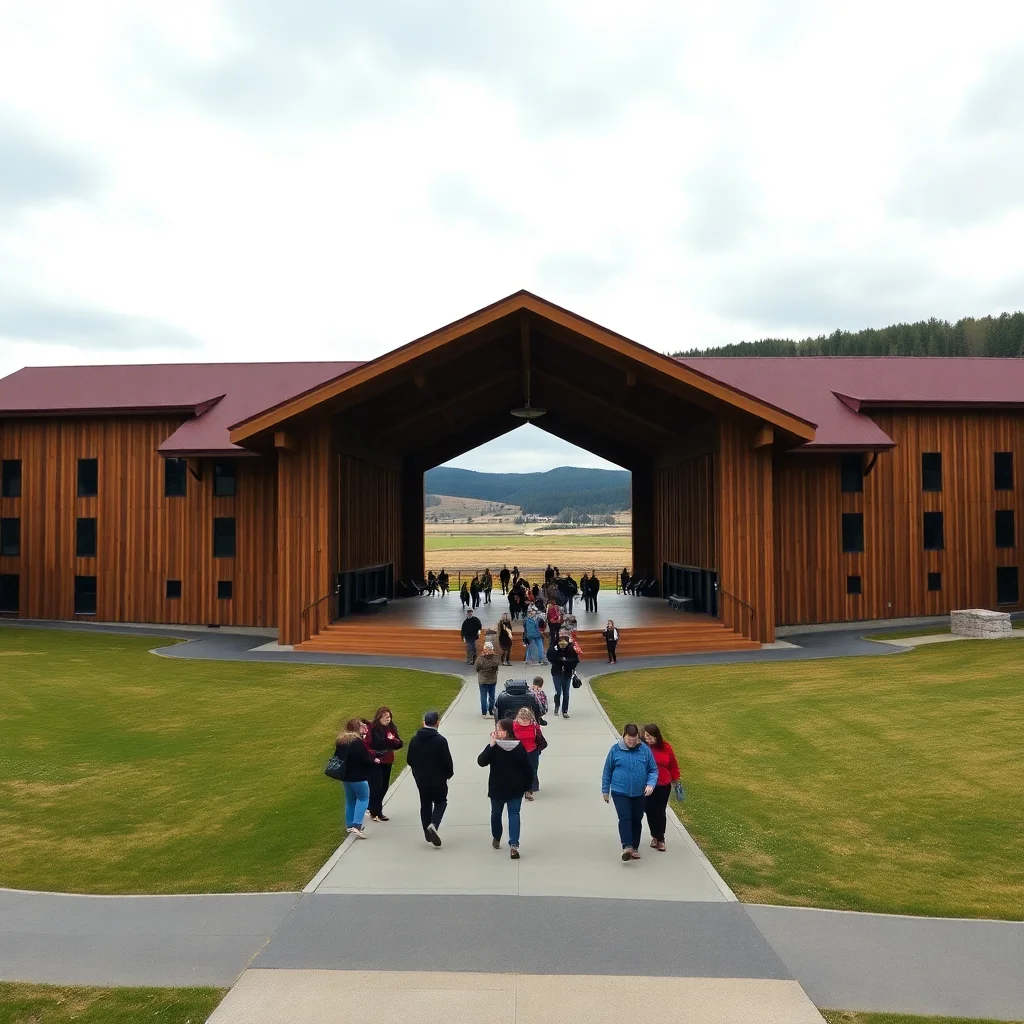
The deeper issue is that cultural architecture cannot solve the climate crisis by changing the visible surface of responsibility. If institutions want to claim genuine leadership, they must address a wider system: reuse before new build, modest program growth, reduced material intensity, and long-term carbon accounting that survives the opening-night press cycle. A mass-timber theatre may be preferable to a conventional steel-and-concrete one, but that is not the same as being a credible climate strategy in the fullest sense.
Look at the best recent architecture debates and the pattern is clear: meaningful sustainability comes from restraint as much as from material choice. Lacaton & Vassal’s retrofit ethic, for instance, has reshaped the conversation by insisting that the greenest building is often the one that already exists. Peter Zumthor’s Hønefoss School and similar projects show how atmosphere can be achieved without reducing architecture to a glossy environmental icon. Even in timber-heavy work by firms like Kengo Kuma, the question remains whether the material is being used to deepen ecological performance or to stage an aesthetic of naturalness.
For theatres, the stakes are sharper. Performance buildings are expensive, symbolically loaded, and frequently used to anchor regional branding. That makes them perfect vehicles for virtue signaling. A mass-timber shell can distract from larger questions: Why a new building at all? Could the existing fabric have been adapted? How much embodied carbon is actually saved? What happens after the media images fade?
Studio Gang’s theatre should be read in that context. Its strength is undeniable: it gives the Hudson Valley Shakespeare campus a public face that feels open, humane, and contemporary. But its weakness, or at least its vulnerability, is that it may be too easy to celebrate. The building will be judged not only by its beauty or audience experience, but by whether it proves that timber can move beyond symbol and into rigorous carbon policy. If it cannot, then mass timber remains what the cultural sector has always loved most: a persuasive story.
What the Theater Actually Proves
The Samuel H Scripps Theatre is important precisely because it sits on the fault line between aspiration and proof. It embodies the current belief that wood can make public buildings feel better to inhabit, easier to defend, and more aligned with climate consciousness. Yet it also exposes how quickly sustainability can become aesthetic theater when a material is treated as a brand rather than a system.
The right reading is not cynical rejection, nor effortless praise. It is pressure. Mass timber must be pushed harder than the images suggest. Cultural institutions should be forced to disclose sourcing, carbon accounting, durability plans, and the alternatives that were rejected. Otherwise the theatre becomes a perfect emblem of our era: a beautifully timbered building in which climate ambition is visible, but not yet fully verified.
That is why this project matters. Not because it settles the debate, but because it sharpens it. If wood is to remain the material of civic optimism, it must earn that role through evidence, not mood. And if architecture wants to claim climate credibility, it must stop confusing a warm surface with a serious argument.
The broader debate will keep returning to the same pressure point: can design move beyond aesthetics and actually shape public life, as explored in pieces like when climate adaptation becomes public space? The answer may determine whether timber remains a meaningful civic tool or just another polished image.
That tension also echoes discussions about whether a tower can be democratic, where the promise of a material or form can easily outrun the deeper question of who benefits from it. In that sense, the theatre is not an endpoint but a test case.
Get the Mainifesto weekly — curated design debates, speculative ideas and the week's best articles every Saturday.
Editorial Perspectives
Questions and counterpoints developed by the Mainifesto editorial desk to extend the discussion.
Perspective 1
Mass timber can be part of a serious climate strategy, but only if the project shows the whole ledger: sourcing, transport, durability, maintenance, and end-of-life. If this theater is just a handsome carbon story without hard data, then it is branding, not public value.
Perspective 2
We have seen this ritual before: structure turned into moral alibi, and material fetish dressed up as ethics. A timber theatre may be pleasant to admire, but without deep carbon proof it remains a cultural gesture, not a civic argument.
Perspective 3
A public good is not only measured in carbon math; theaters also carry memory, access, and local meaning. But if the project hides behind the romance of timber while ignoring deeper performance, then it risks becoming another polished emblem for a market that loves green language.