
Can Heritage Be a Civic Event Space?
Concept: Heritage, but not as a museum label
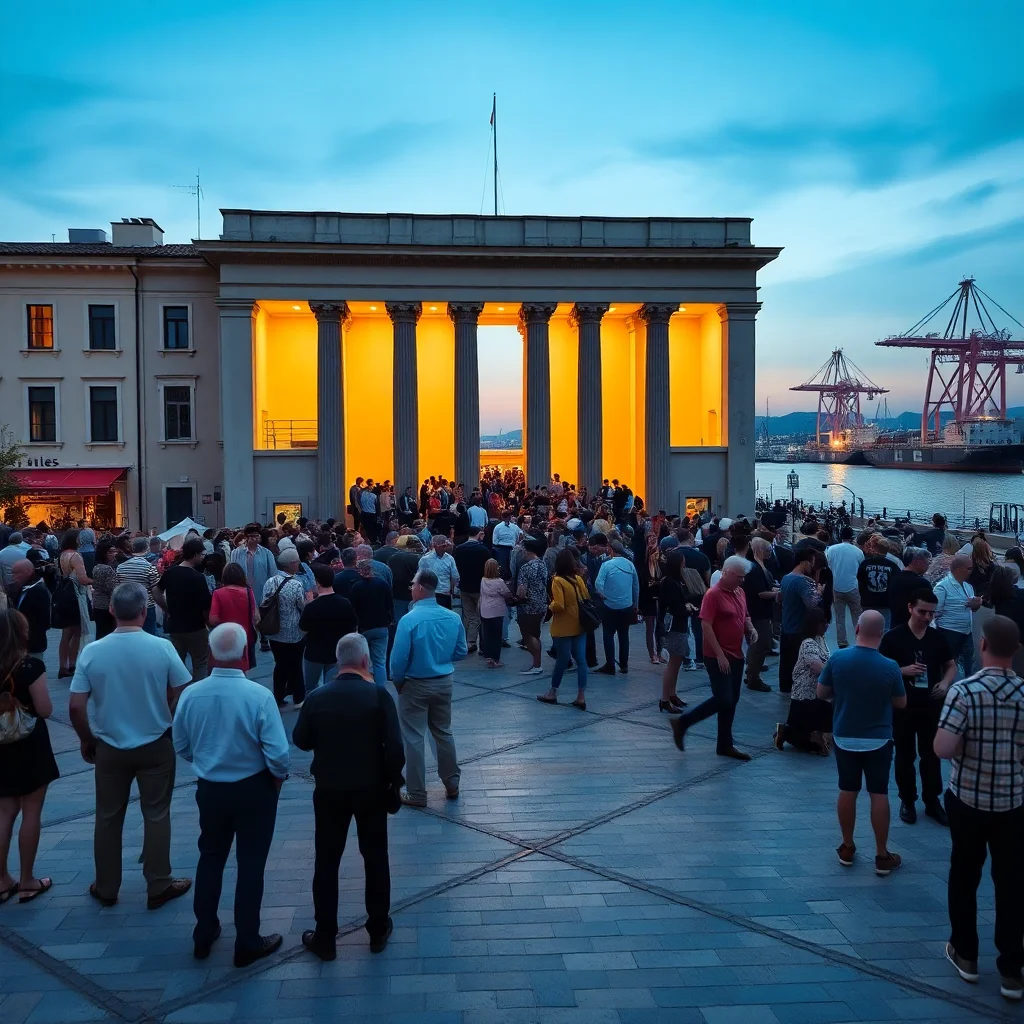
Heritage infrastructure is having a moment because cities are desperate for spaces that can do more than preserve. They want buildings that can host debates, markets, weddings, performances, talks, launches, and the endless municipal theatre of contemporary life. Castor Place in Piraeus, designed by MPNYC, and the renovated Edo-Tokyo Museum in Tokyo are powerful examples of how adaptation can extend the life of historic structures by refusing pure nostalgia. They do not treat history as a frozen relic; they treat it as a usable civic instrument.
That sounds admirable, even obvious. But the real question is not whether adaptive reuse is good. It is whether heritage infrastructure can become an event space without becoming self-conscious, over-scripted, and faintly ridiculous. Once architecture starts narrating itself too loudly, it risks turning into a set. Once it starts performing “layered identity” for the camera, the public gets less city and more exhibit. The tension is not between preservation and change. It is between living with history and staging it for consumption.
Castor Place works precisely because it leans into the port city condition: accumulation, friction, exchange, weathering. In that sense it belongs to a lineage that includes Copenhagen’s Noma-era warehouse conversions, London’s Tate Modern, and the now-common practice of turning industrial shells into cultural engines. But the best versions do not plaster on heritage as décor. They let the old structure remain stubbornly present while inserting new programs with enough confidence to avoid pastiche. That balance is closely related to the questions explored in When Buildings Age on Purpose, where wear is treated as a design asset rather than a defect.
Trigger: When preservation becomes performance
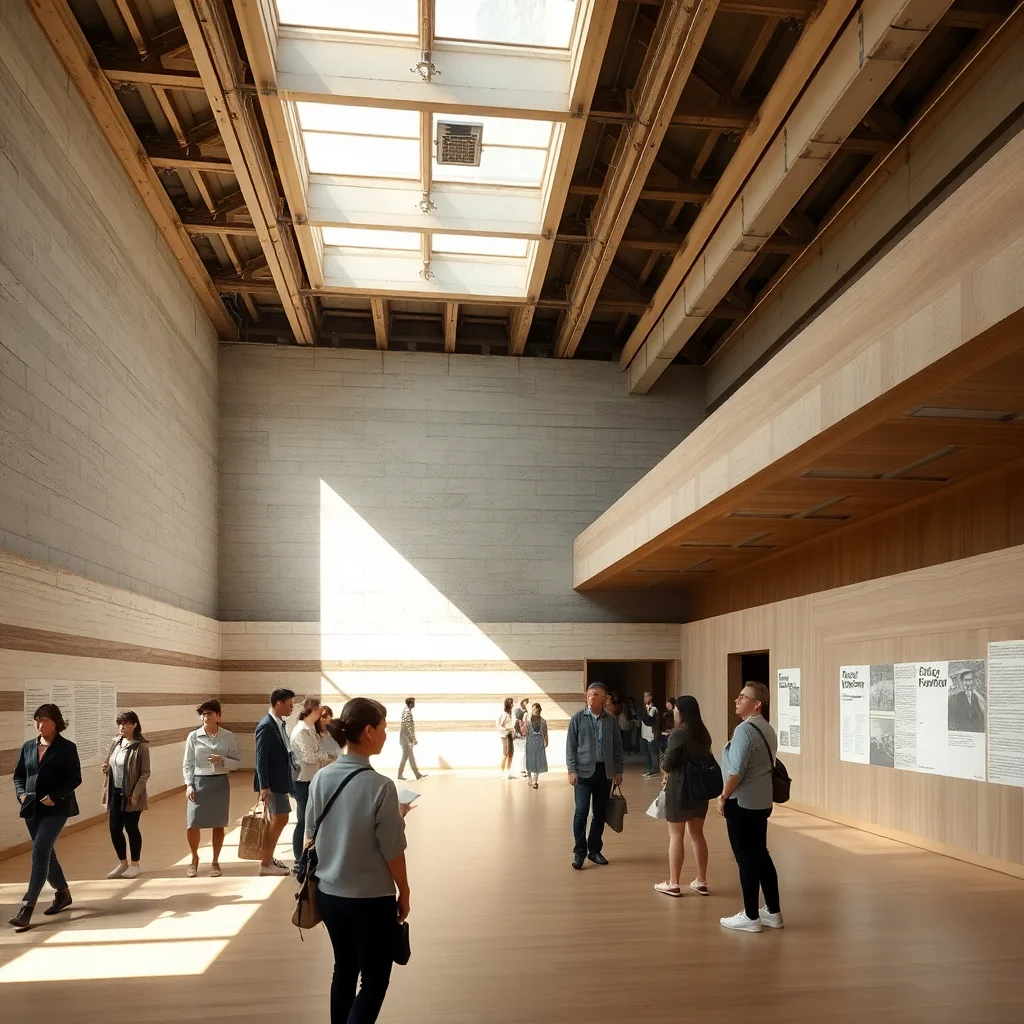
The trigger for the current debate is that we now expect every reused building to do double duty: preserve memory and generate footfall. Civic spaces are under pressure to become event spaces, and event spaces are under pressure to demonstrate cultural legitimacy. The result is a dangerous bargain. Developers and institutions begin to package authenticity as atmosphere, and atmosphere as product. A building’s scars become branding. Its age becomes an experience. Its roughness becomes something to be consumed under curated lighting.
This is where the renovated Edo-Tokyo Museum becomes such an instructive counterpoint. Japanese architectural culture has long understood that continuity does not require embalming. Think of Kengo Kuma’s work, or the broader postwar tradition of careful insertion, subtraction, and timber-led tactility. But even in Tokyo, a museum that interprets urban history can easily slide from interpretation into illustration. The line is crossed when the spatial narrative is so complete that visitors are no longer in a building; they are inside a story about a building. The architecture begins to explain itself, and explanation becomes a kind of insulation against ambiguity.
Castor Place raises the same concern from a different angle. Piraeus is not a neutral backdrop. It is a working port with the sediment of trade, migration, logistics, and ruin. To adapt such a site is not to prettify it but to negotiate with its contradictions. That is where the project’s value lies: in showing that historical depth can support public life without needing to be sanitized into a heritage tableau. Yet the more successful the project becomes as an event destination, the more vulnerable it is to the curatorial trap. What begins as legibility can harden into stage design.
PRO: Adaptation can revive civic life without erasing complexity
On the pro side, the argument is straightforward and strong. Historic structures often survive only when they are given a new public role robust enough to justify maintenance, funding, and daily relevance. The most successful adaptive projects do not merely conserve materials; they conserve urban usefulness. Tate Modern turned a power station into one of the world’s most consequential public interiors. Zeitz MOCAA transformed grain silos in Cape Town into a museum that made industrial heritage visibly useful. In both cases, the old building did not become scenery. It became infrastructure for social and cultural life.
Castor Place belongs to this productive camp. Its significance is not that it is “historic,” but that it treats history as a platform for contemporary gathering. That is a civic act. A port building adapted for events can host not just elite receptions but community assemblies, lectures, festivals, and everyday use that keeps the site active beyond office hours. This matters because dead heritage is merely expensive memory. Active heritage, by contrast, can redistribute urban attention away from sanitized business districts and toward places with thicker social texture.
There is also a democratic argument here. When old structures are adapted well, they resist the tabula rasa logic that still dominates many real-estate markets. Instead of clearing away the past to make room for generic glass, the city retains its grain. Compare this with projects like Les Grands Voisins in Paris, where temporary reuse turned a former hospital site into a social ecosystem, or 798 Art District in Beijing, where industrial architecture became a platform for art, commerce, and public wandering. These places are not innocent, but they prove that reuse can generate urban density of meaning, not just square meters.
Architecturally, the best adaptive projects preserve legibility without freezing time. You should be able to read what was there before and what has been added now. That clarity is not decorative; it is ethical. It tells visitors that cities are made by accretion, not by erasure. When done properly, event programming can intensify this reading. A concert in a former warehouse, a symposium in a former depot, or a civic reception in a converted port structure can make the building’s history palpable precisely because it is still being used, not merely admired.
CONTRA: Too much storytelling turns architecture into spectacle
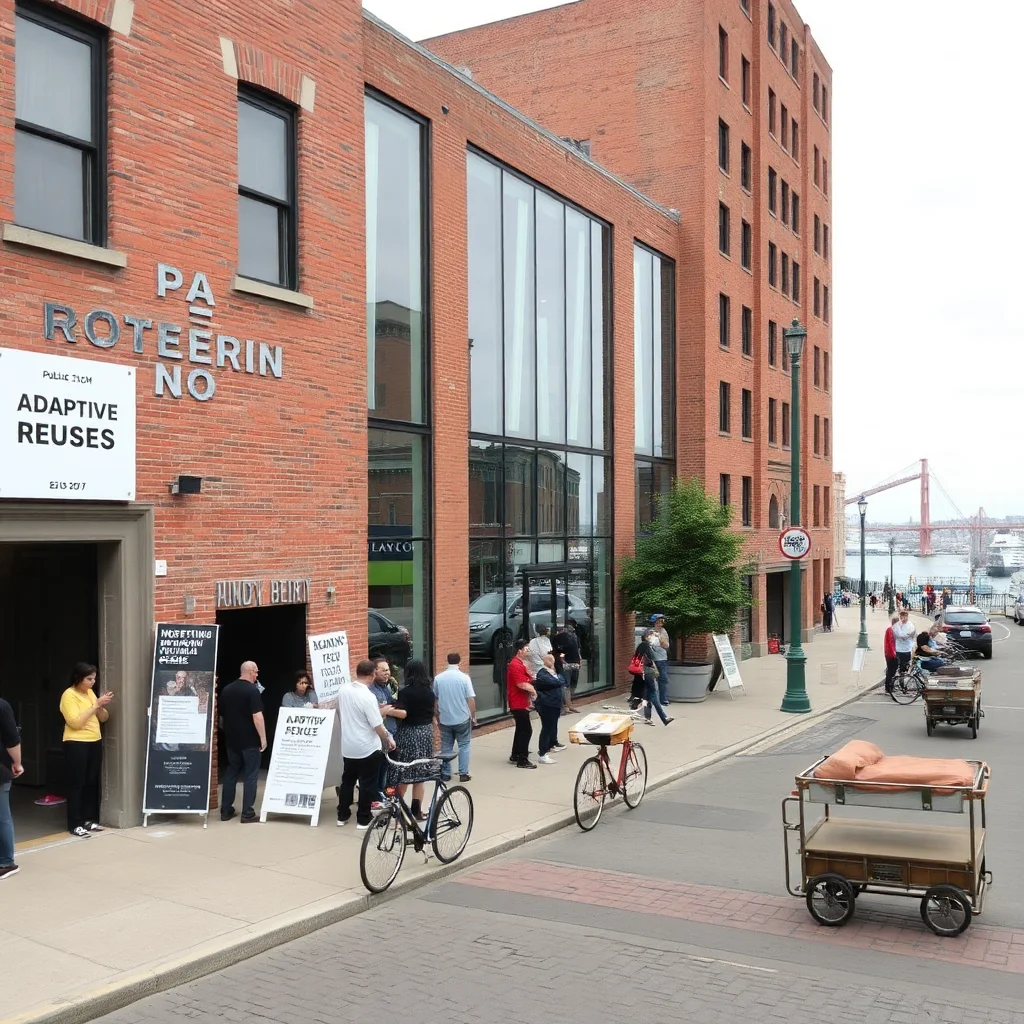
But the contra case is equally forceful, and it is where the industry is often dishonest. Once a heritage project is marketed through heritage language alone, it can become trapped in a loop of visualised memory. Every beam needs a plaque, every scar needs a narrative, every intervention needs to be “honest” in quotation marks. This obsession with legibility can produce spaces that are emotionally overdetermined and spatially underwhelming. Instead of allowing users to discover the building, the design pre-digests the experience for them.
This is the risk of the architectural theme park: not cartoonish fake oldness, but over-authored authenticity. The visitor is guided through a sequence of curated revelations, as if the building were an exhibition about itself. The result often resembles hospitality design borrowing the aura of history while stripping away its unpredictability. The old structure becomes a content generator. Its complexity is flattened into a narrative of “layered identity,” a phrase that too often masks the fact that the layer being celebrated is the one most legible to branding.
There is a reason some adaptive reuse projects feel suspiciously polished. They may preserve materials but lose social roughness. They may keep the shell while replacing the atmosphere with photogenic restraint. This is especially true when cultural venues become event venues, because the requirements of staging—lighting, circulation, acoustic control, sponsor visibility, VIP logistics—can overwhelm the actual spatial character of the original building. A port warehouse can become a ballroom with industrial wallpaper. A museum can become a heritage machine whose main job is to validate the right kind of visitor.
In this context, the renovated Edo-Tokyo Museum is a cautionary reference as much as a success. Any institution that packages urban memory risks reducing the city’s messy history into a narrative arc with a tidy moral. Meanwhile, projects like the adaptive transformations of railway halls in Europe, or the polished cultural conversions proliferating in former factories across China, show how quickly reuse can be absorbed into a global aesthetic of sanctioned ruin. The danger is not preservation itself. The danger is the market’s appetite for curated decay.
Castor Place therefore matters most when it refuses to become a generic “heritage venue.” If it is too fully instrumentalised as a scenic backdrop for contemporary culture, it loses the very thing that makes it politically interesting: its embeddedness in the real economy and memory of Piraeus. Architecture should not merely point to history. It should leave space for friction, silence, and ambiguity. The moment everything is explained, the building stops belonging to the city and starts belonging to the script. That caution is echoed in Monumental Hospitality and Heritage Luxury, which examines how atmospheres of prestige can overtake the public life they claim to serve.
List: Six rules for keeping heritage public, not theatrical
- 1. Keep the original readable, not over-literal. A building should reveal its past through material presence, not through excessive signage or decorative reenactment. The best interventions let users sense the old structure without being told what to feel at every step.
- 2. Let new programs do real civic work. Event spaces must serve more than prestige calendars. Community assemblies, public talks, local markets, and flexible cultural programming are what prevent adaptive reuse from becoming an exclusive lifestyle product.
- 3. Preserve roughness where it matters. Not every surface needs to be refined. Weathered stone, exposed concrete, structural scars, and imperfect transitions can retain the emotional charge of a site better than polished finishes ever will.
- 4. Avoid the heritage narrative overload. When every corner is explained, the architecture becomes a script. Good reuse permits mystery, contradiction, and even a little confusion, because cities are not museum captions.
- 5. Design for changing audiences, not just spectacular images. The most responsible civic event spaces can host a conference in the morning and a neighborhood gathering at night. If the building only works for photographers, it is already half a theme park.
- 6. Measure success by urban generosity. The real test is whether the project enlarges public life beyond its boundary. If it brings people into contact with the city’s layered history while remaining open, porous, and unsentimental, it has earned its place.
Conclusion: The city deserves less nostalgia, more nerve
Castor Place and the renovated Edo-Tokyo Museum sit on opposite sides of the same architectural dilemma, and the profession should stop pretending otherwise. Adaptation is not automatically virtuous, and preservation is not automatically noble. Both can be weaponised into marketable authenticity. What matters is whether a project can sustain public life without collapsing into a scripted encounter with the past.
The strongest heritage infrastructure projects behave like civic organisms, not themed experiences. They absorb new uses while refusing to flatten the memory already embedded in their walls. They make room for contemporary consumption, yes—but not at the cost of turning history into ambience. The city does not need more heritage branding. It needs spaces that are brave enough to be ordinary, complicated, and alive.
Get the Mainifesto weekly — curated design debates, speculative ideas and the week's best articles every Saturday.
Editorial Perspectives
Questions and counterpoints developed by the Mainifesto editorial desk to extend the discussion.
Perspective 1
Yes, heritage should be allowed to host civic life, and if that means some calibrated loss of purity, so be it. Buildings that cannot be inhabited by people beyond the museum queue risk becoming dead objects, and dead preservation is just another form of erasure — often one that opens the door to tourist spectacle and gentrification anyway.
Perspective 2
I remain suspicious of the idea that authenticity must be traded for public use, as if history were a stage set waiting for a crowd. Once heritage becomes an event machine, the building no longer shelters memory; it performs it, which is usually the first step toward vulgarity.
Perspective 3
The real question is not whether heritage can host public life, but who gets to program that life and who pays for the maintenance afterward. If civic use helps keep a building open and relevant, fine — but the operating model matters more than the nostalgia, otherwise you just build a prettier version of exclusion.