
When Buildings Become Interfaces
Architecture is no longer content to stand still
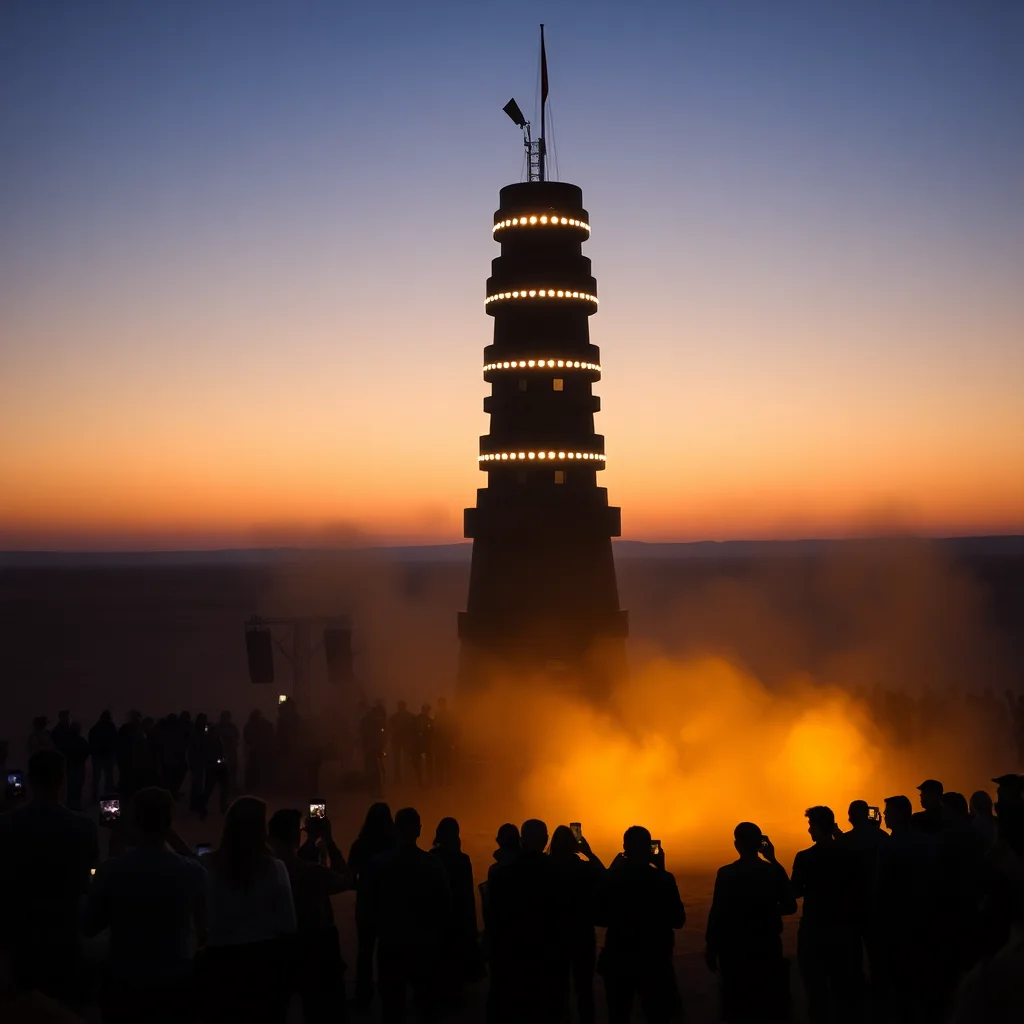
The Burning Man tower at the center of this debate is not just an object in the desert; it is a warning shot. By reframing digital communication as spatial form, light, and atmosphere, the installation suggests that buildings may soon stop acting like mute containers and start operating like interfaces. That is a profound shift. A wall that once separated inside from outside may now register voices, moods, data streams, and collective presence, then feed them back into space as illumination, vibration, or changing geometry. In other words: architecture may become less like sculpture and more like a live signal.
This is not science fiction. We already live among responsive environments. The “Media-TIC” building in Barcelona, for instance, uses dynamic facades to mediate sun and climate; Kiefer Technic Showroom in Austria famously transforms its skin through moving panels; and interactive pavilions at exhibitions from the Venice Biennale to Ars Electronica have long treated architecture as a computational and perceptual medium. Yet the Burning Man tower pushes the question further by putting human voice at the center. Not data extracted from bodies, but voice: collective, unstable, emotional, political. What happens when buildings do not merely host communication, but translate it into form?
That tension between expressive form and technical mediation is also what makes digital craft still feel like architecture such a pressing question. The moment geometry becomes programmable, the architect is no longer only shaping matter but also choreographing feedback, perception, and behavior.
From static monument to responsive medium
The history of architecture is full of monuments that claim to represent collective will. But most of them do so by freezing authority into stone. What is new here is not symbolism; it is feedback. A responsive building can listen, calculate, and react in real time. That makes it closer to a broadcast system than a classical monument, and closer to a social platform than a civic plinth. The difference is critical: platforms are never neutral. They structure who speaks, how long they speak, and what becomes visible.
Architects and artists have been testing this territory for years. Studio Gang’s experimental projects with climate and public participation, Philippe Rahm’s atmospheric architecture, and Diller Scofidio + Renfro’s media-saturated installations all treat the built environment as something that can modulate experience rather than simply enclose it. The Burning Man tower extends that lineage with a more charged proposition: if a building can visualize the chorus of many voices, it becomes a civic instrument. But instruments can be played by anyone—or captured by power. That ambiguity is the point.
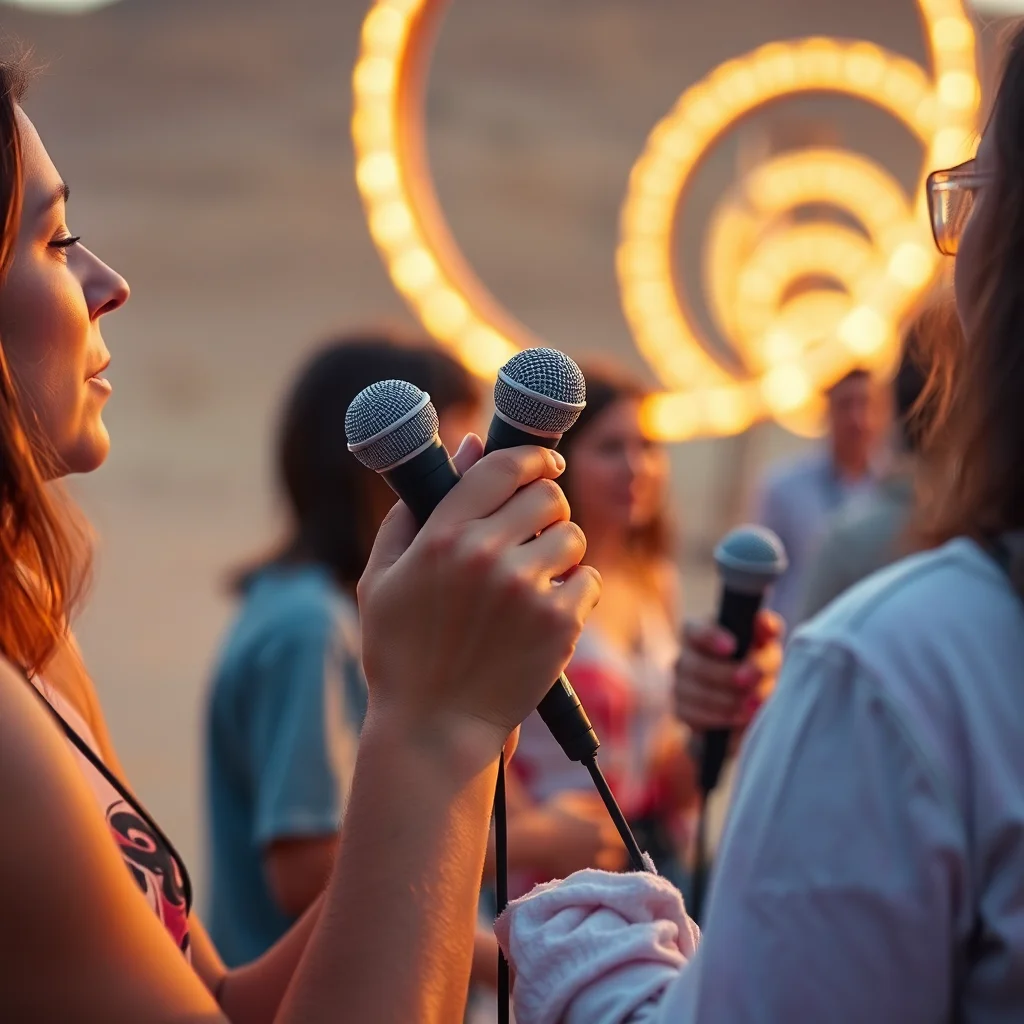
In the source installation, the structure’s rings of light map collective human voice input into a tower-like form, making communication legible as luminous volume. The architecture does not illustrate speech after the fact. It becomes speech’s second body. That is what makes the project unsettling and compelling. Once buildings begin to translate input into atmosphere, they stop being passive scenery and start shaping social relations in real time.
Seen this way, the debate overlaps with broader urban questions about who is included in the built environment and on what terms. Projects like car-free districts show that design can reorganize public life by changing the conditions of movement, visibility, and encounter rather than simply adding new objects to a city.
Voice is not data: it is politics
If architecture begins listening, the first temptation is to treat voice as a technical signal—amplitude, frequency, direction, intensity. That would be a mistake. Voice is never just sound. Voice carries accent, class, urgency, fatigue, dissent, and desire. It can build consensus or expose fracture. In a civic space, to capture voice is to risk flattening it into an aesthetic effect. The Burning Man tower is provocative precisely because it dramatizes this tension: it turns collective speech into atmosphere, but in doing so it raises the question of what gets lost in translation.
There are instructive precedents. Janet Cardiff and George Bures Miller have long shown that sound can construct immersive publics in which memory and space overlap. Rafael Lozano-Hemmer’s participatory installations, including works that visualize breathing, heartbeat, or speech, expose the beauty and threat of biometric publics: every participant becomes both author and subject of the system. In architecture, this matters because responsive form can easily become surveillance with better lighting. The moment a building “listens,” someone must decide what is stored, what is displayed, and what is erased.
That is why the crucial design question is not whether architecture can capture collective voice, but whether it can do so without converting participation into extraction. The building as interface must confront the ethics of representation. Otherwise it risks becoming a glamorous civic machine that stages pluralism while quietly filtering it.
When atmosphere becomes an argument
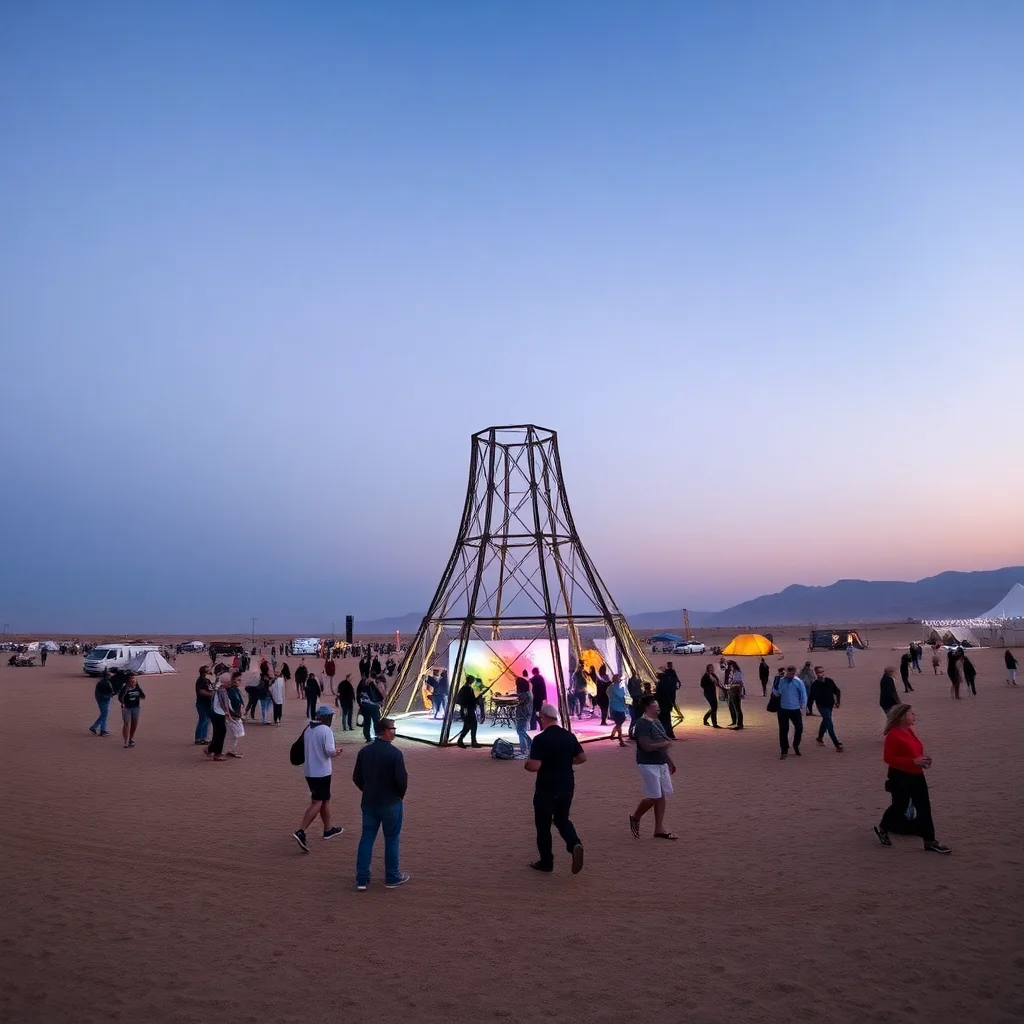
One reason these projects fascinate designers is that they operate below the level of language. They do not ask occupants to read a sign; they ask them to feel an environment shift. Light changes. Surfaces pulse. Sound condenses. A tower can become a diagram of shared intensity. This is not decoration. It is persuasion through atmosphere. The built environment has always shaped behavior through temperature, acoustics, scale, and visibility, but responsive media architecture makes that influence explicit—and therefore more dangerous.
Consider the legacy of the Fun Palace concept by Cedric Price and Joan Littlewood, which imagined architecture as a programmable social framework rather than a fixed object. Or the kinetic ambitions of Archigram, which treated buildings as platforms for change. Those visions were radical because they rejected permanence as a value. Today’s responsive architecture inherits that rebellion, but with sensors, software, and networked participation replacing analog improvisation. The result is a new kind of civic theater in which the audience helps write the stage set.
Burning Man has always rewarded this kind of speculative architecture because the event itself is a laboratory for temporary publics. In that context, a voice-reactive tower is not just spectacle; it is an experiment in collective legibility. Yet the larger architectural world must not romanticize the desert. Temporary freedom can conceal long-term implications. If the language of responsiveness migrates from festival grounds into housing, schools, transit hubs, and plazas, then architecture will cease to be background. It will become opinionated infrastructure.
That broader shift is visible in debates over whether vernacular forms can be retooled for contemporary demands. The question posed by vernacular house types becoming climate tech is not nostalgic; it is about whether old spatial intelligence can be made to work with present-day environmental pressures without losing its social meaning.
The future building will curate, not just contain
The most radical implication of interface-architecture is that buildings may soon curate social life the way platforms curate feeds. They will not simply host events; they will shape the conditions under which events become visible, audible, and memorable. Imagine a library that dims certain zones when it senses communal silence, or a public hall whose surfaces swell with light when multiple speakers overlap, making disagreement visible rather than suppressing it. Imagine a hospital foyer that softens acoustically in response to distress, or a council chamber that renders civic participation as spatial change instead of abstract votes.
This is both opportunity and trap. Responsive design can democratize perception by making hidden patterns palpable. It can also turn architecture into a mood manager that nudges behavior without accountability. The best examples will therefore be those that reveal their own mechanisms rather than hiding them. Transparency here is not glass; it is legibility. Occupants should understand how the environment is responding, to whom, and for what purpose.
That is why the Burning Man tower matters beyond its immediate context. It is not merely a beautiful experiment in luminous form. It is a prototype for a broader cultural shift in which architecture becomes a medium of collective authorship. But authorship is not harmony. The future responsive building will have to tolerate conflict, contradiction, and noise. If it only amplifies consensus, it will become a decorative lie.
And as architecture becomes more curated, the stakes around power and access become harder to ignore. Even hospitality projects can function as forms of spatial control, which is why the politics of luxury hospitality matters to the same conversation about who shapes the public realm and who merely inhabits it.
Speculation with consequences
Speculative architecture is often dismissed as fantasy, but the best speculative work identifies a real technological threshold before institutions are ready to name it. That is exactly what happens when a tower turns voice into light. The gesture appears poetic, yet it points toward serious questions about urban governance, accessibility, embodiment, and power. Who gets to speak? Whose voice is deemed representative? Can a building differentiate between enthusiasm and distress, between crowd energy and coercion?
Designers already have tools that can answer some of these questions, but not all. Responsive facades, environmental sensors, machine learning, projection mapping, spatial audio, and real-time data visualization are mature enough to be deployed at civic scale. What remains unresolved is the political imagination. Architecture has traditionally valued stability because institutions value control. Responsive architecture threatens that stability by making buildings contingent, and contingency is the enemy of bureaucratic comfort.
That is why the stakes are not aesthetic alone. If architecture can capture collective voice, it can also amplify collective agency. But only if designers resist the seduction of seamlessness. The building must not pretend to be the voice of the people; it must become a forum in which voices remain distinct even as they are translated into form. That tension—between unity and plurality, atmosphere and evidence, spectacle and accountability—is where the future of architecture will be decided.
The question is no longer whether buildings can respond. The question is whether they can do so without becoming instruments of manipulation dressed up as public imagination.
FAQ
What does it mean for architecture to become an interface? It means the building stops acting as a passive container and begins receiving input—voice, movement, climate, data—then translating it into spatial or atmospheric feedback such as light, sound, or shifting surfaces.
Is responsive architecture a new idea? No. It has roots in kinetic architecture, cybernetic design, and media art, from Archigram and Cedric Price to contemporary interactive installations by artists like Rafael Lozano-Hemmer and architects working with adaptive facades.
Why is collective voice such a powerful concept in architecture? Because voice is social and political, not just acoustic. When architecture visualizes collective speech, it can make participation tangible—but it can also flatten difference or turn expression into spectacle.
What is the main risk of responsive buildings? The biggest risk is surveillance disguised as participation. If a building listens and reacts without transparency, it may extract data and shape behavior while pretending to empower users.
Are there practical applications beyond art installations? Yes. Civic halls, museums, transport hubs, schools, and hospitals could use responsive systems to improve legibility, comfort, and participation—if they are designed with clear ethics and accountability.
Get the Mainifesto weekly — curated design debates, speculative ideas and the week's best articles every Saturday.
Editorial Perspectives
Questions and counterpoints developed by the Mainifesto editorial desk to extend the discussion.
Perspective 1
If a building can actually read a crowd and shift atmosphere in real time, that’s interesting only if it improves behavior, dwell time, or sales. Otherwise it’s just expensive theater with a dashboard. The code should sit with whoever is accountable for the experience, not hidden in a black box nobody can explain when it breaks.
Perspective 2
The minute architecture starts “listening,” I worry about who gets translated and who gets ignored. Cities already have too many layers of control imposed from above; if these systems are real, their code should be public, contestable, and tied to local governance, not a vendor’s proprietary logic. Otherwise you’re just automating exclusion with prettier lighting.
Perspective 3
What interests me is not just responsiveness, but what kind of civic protocol sits underneath it. If buildings can sense and respond, the code should be open enough to be audited, adapted, and debated by the people using it. Otherwise the “collective voice” becomes a design fiction, not a real feedback loop.