
Airelles Venice and the Politics of Luxury
The new luxury frontier is no longer a resort. It is the city itself.
Airelles’ Venice debut arrives wrapped in the familiar language of refinement: heritage, discretion, craftsmanship, and a promise to restore splendour to a storied address. But in a city like Venice, luxury hospitality is never merely hospitality. It is an urban act with territorial consequences. Every suite, courtyard, restaurant table, and private transfer route redraws the boundaries of access in a place already under siege from day-trippers, cruise traffic, flooding, and the steady conversion of civic life into consumable atmosphere.
This is why the opening matters beyond the hotel press circuit. The debate is not whether the interiors are exquisite, or whether the service is impeccable. Luxury brands are expected to deliver beauty. The more urgent question is what happens when a global brand uses preservation as its moral alibi while quietly consolidating a fragment of the city into a controlled enclave. Venice, perhaps more than any other European city, exposes the contradiction: the same architecture that invites admiration can also enable exclusion.
Preservation is not a neutral virtue when it becomes a business model
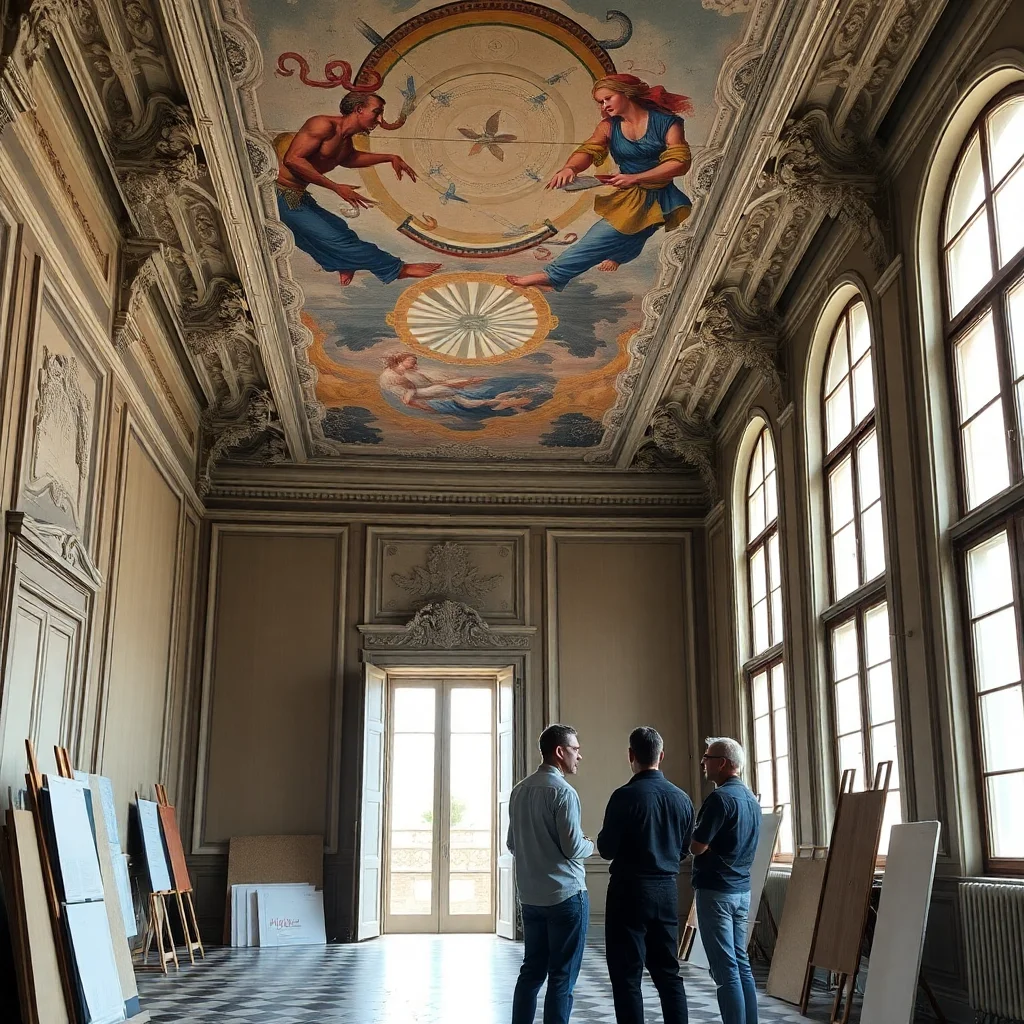
Luxury operators often present themselves as custodians of endangered fabric. The script is persuasive because it contains a real grievance: many historic buildings decay without private capital, and public institutions are frequently too slow, too underfunded, or too fragmented to intervene. A well-financed hotel can save roofs, frescoes, timber ceilings, and neglected masonry. It can pay for artisans, conservation surveys, and meticulous restorations that municipalities struggle to afford.
Yet preservation under luxury ownership is rarely disinterested. It is selective, choreographed, and monetized. The building is not saved for the city in the abstract; it is saved for a paying audience admitted by reservation. The restoration of historic rooms becomes part of the brand narrative, a backdrop for a lifestyle marketed as culturally literate and ethically superior. This is where the danger lies: the building remains physically intact while its civic function shrinks. It becomes heritage as amenity, not heritage as common good.
Architects and preservationists have spent decades wrestling with this tension. Carlo Scarpa’s additions to the Museo di Castelvecchio in Verona or his interventions in Venice itself demonstrated that conservation can be deeply contemporary without turning history into décor. By contrast, too many luxury conversions imitate the language of authenticity while removing the social roughness that makes a city legible. The result is not preservation but theatrical freeze-drying. For a broader look at this problem, see Restoration Beyond Freezing History.
Venice has already been turned into a consumable image
Venice is not starting from a blank slate. Its transformation into a fragile stage set has been years in the making. The city’s residential population has thinned, ground-floor commerce has shifted toward tourism, and the most valuable real estate increasingly serves transient visitors rather than long-term inhabitants. The problem is not one hotel. The problem is accumulation. When every restored palazzo, vacant monastery, or nondescript canal-side building is repurposed as a high-end address, the city’s actual everyday life is progressively squeezed out.
This is why Airelles’ debut should be read alongside a broader pattern visible in cities from Lisbon to Athens to Barcelona: the luxury sector often enters historical urban areas under the banner of revival, then creates an architecture of access that is exclusive by design. The public may admire the façade from the street or the canal, but the experience beyond that threshold is calibrated for a narrow clientele. The city is still visible, but increasingly behind velvet rope logic.
Urbanists have long warned against the privatization of the picturesque. When public-facing heritage becomes a premium commodity, the city’s symbolic capital is captured by those able to pay for intimacy with it. In Venice, that capture feels especially violent because the city has already been reduced in popular imagination to an image of itself. Luxury hospitality exploits that condition with ruthless elegance.
The brand-led hotel is the latest instrument of urban enclosure
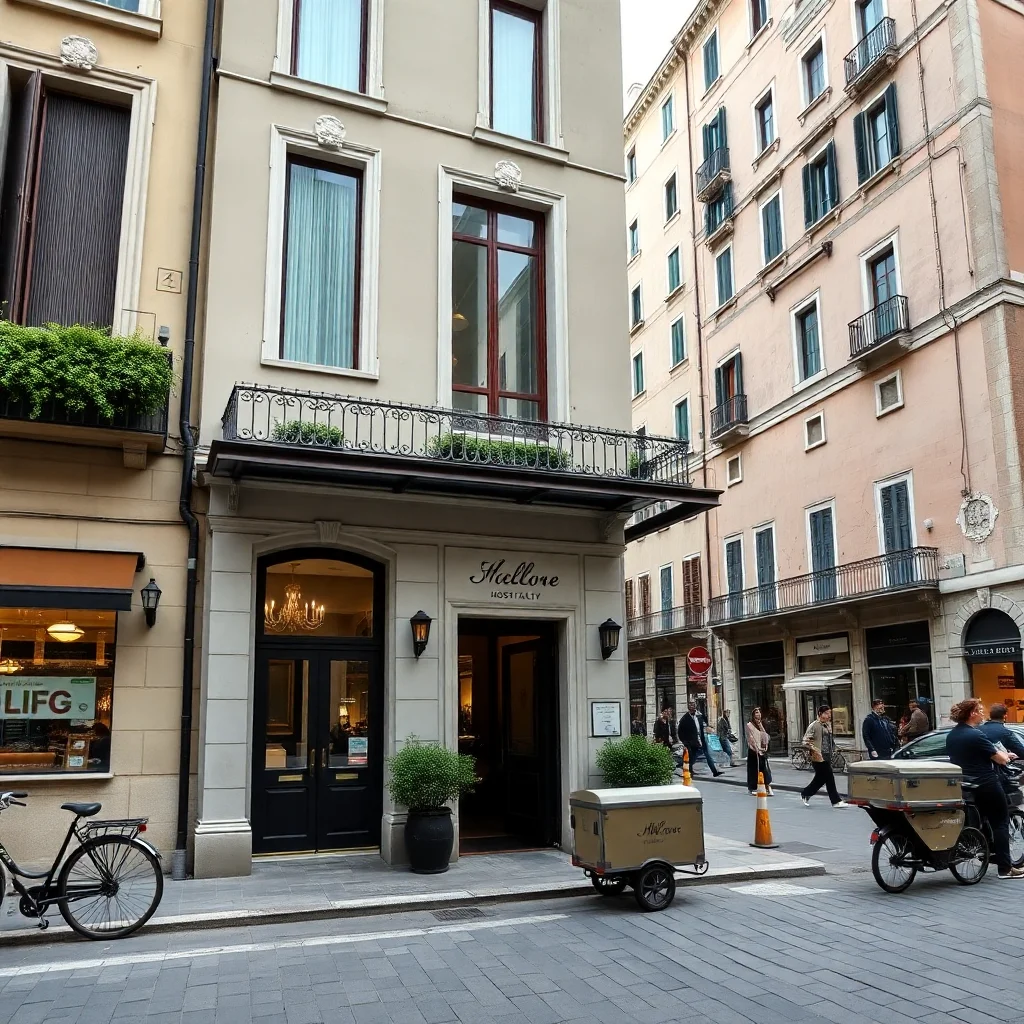
Hotels used to occupy a recognizable place in the urban ecosystem: a temporary home, a service economy, a threshold between visitors and citizens. Contemporary luxury hospitality has changed that equation. The new model is not simply accommodation but enclosed experience. It combines restaurant, spa, courtyard, retail, event space, and private transport into a managed environment that can operate almost as a micro-city. In practice, this often means the surrounding urban fabric is no longer engaged as public life but harvested as scenic capital.
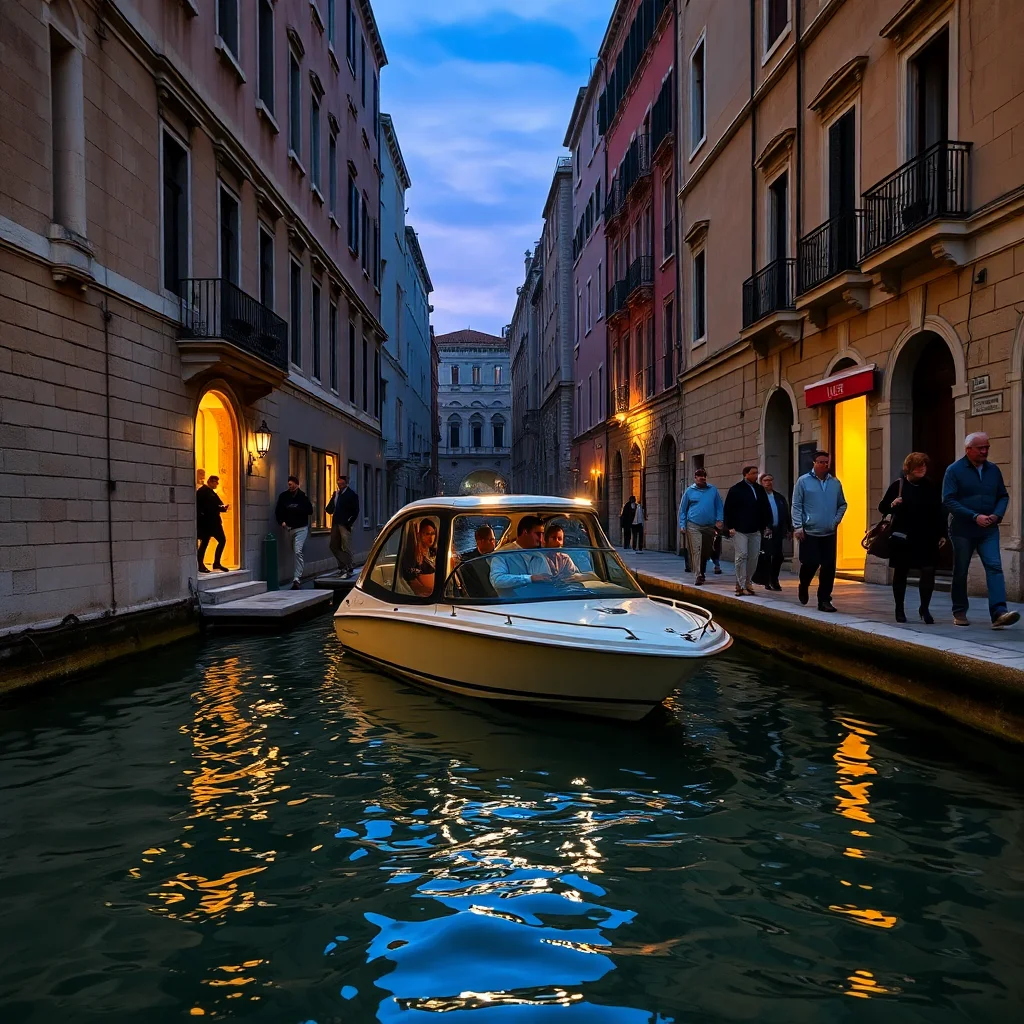
That logic is particularly potent in Venice, where the line between inside and outside is already architecturally dramatic. Water taxis, hidden entries, and gated gardens do more than improve service; they reinforce the idea that the most desirable parts of the city are those shielded from the city itself. Airelles, like many ultra-luxury operators, understands the emotional seduction of seclusion. But seclusion in a dense historic city is never innocent. It implies that the urban commons are noisy, inconvenient, or insufficiently curated for luxury consumption.
This is where the language of “quiet luxury” becomes politically interesting. Quietness is not just an aesthetic; it is an urban claim. It says the brand can mute the city’s complexity and sell a purified version back to the world. That may be commercially brilliant. It is also a form of spatial politics. In that sense, the question is similar to debates about whether heritage can serve civic life without becoming a theme park.
Two futures for fragile cities: stewardship or soft privatization
PRO: There is a genuine argument that luxury hospitality can rescue historic fabric from neglect. In many cities, high-end adaptive reuse has preserved buildings that would otherwise have crumbled or been demolished. When done well, such projects employ conservators, makers, and specialist trades, and they can model a form of repair that respects the original structure. The discipline shown by firms and designers who work with old fabric — from the restrained interventions of John Pawson to the material intelligence of Gae Aulenti’s museum work — proves that new use does not automatically mean vulgar erasure.
PRO: Luxury can also fund public access indirectly. Some operators open courtyards, host exhibitions, commission local artists, or support surrounding commerce. In theory, a hotel can become an ambassador for a district, channeling money into maintenance, crafts, and services that the city otherwise lacks. In an era of austerity, private capital is not a trivial resource; it is often the only capital available.
CONTRA: But every claim of stewardship must be measured against the actual social geography produced by the project. If the building is restored yet effectively removed from ordinary urban use, the city loses more than it gains. A hotel that trades on heritage while limiting access to those who can pay does not merely occupy space; it redefines what counts as legitimate presence in the city. This is how privatization creeps in: softly, beautifully, and under the cover of cultural respect.
CONTRA: The deeper issue is political, not aesthetic. A fragile city should not be managed as a luxury portfolio. Once preservation is structured around high-margin hospitality, civic priorities begin to follow private ones. The city’s best spaces become the most expensive ones, and the promise of renewal becomes indistinguishable from exclusion.
What responsible luxury would have to do differently
If luxury hospitality wants to claim legitimacy in Venice, or in any endangered historic city, it must accept obligations that go beyond conservation credits and artisan partnerships. First, it must increase permeability: more genuinely public spaces, not just performative lobbies. Second, it must support local housing and local labor in ways that are visible and durable, not merely seasonal. Third, it must submit to a stricter moral standard about scale. The question is not just what can be restored, but how much of a city can be monetized before the public realm is irreversibly thinned.
Design has a role here, but not as decoration. Architects and interior designers can choose whether a hotel behaves like a sealed capsule or a porous urban participant. The difference lies in thresholds, programs, and permissions: whether the ground floor is a wall or a passage, whether the courtyard is shared or staged, whether the building contributes to local circulation or interrupts it. Too many luxury projects fetishize arrival and ignore continuity. Yet cities are made of continuity, not arrival.
The best possible case for a project like Airelles’ Venice debut is that it will demonstrate restraint, sponsor repair, and avoid the hardening of the historic center into a branded enclave. The worst case is that it becomes another immaculate piece of soft occupation: beautiful, profitable, and steadily corrosive to the city around it.
What the city owes the hotel, and what the hotel owes the city
It is too easy to frame this as a battle between preservationists and developers, or between locals and visitors. The real conflict is between two competing ideas of value. One sees historic urban fabric as a shared inheritance that must remain socially alive. The other sees it as a premium asset whose survival depends on exclusivity. Airelles’ Venice opening sits exactly on that fault line.
Venice cannot survive as a museum city, because museums are designed for controlled encounter, and cities are supposed to remain inconvenient, mixed, and open-ended. But it also cannot survive if every corner becomes an accessory to elite consumption. Luxury hospitality in fragile places should be judged not by its polish but by its civic generosity. Does it widen access, or does it narrow it? Does it strengthen the city’s public life, or does it replace public life with a more expensive substitute?
That is the real test now. Not whether a hotel is beautiful, but whether beauty is being used to justify territorial capture. Venice deserves better than to become a private club with a canal frontage.
FAQ
Why is Airelles’ Venice debut architecturally significant?
Because it is not just a hotel opening; it is a test case for how luxury brands operate within fragile historic urban fabric. In Venice, every adaptive reuse project has civic consequences, especially when it affects access and publicness.
Is luxury restoration always harmful?
No. Private capital can save buildings that would otherwise deteriorate, and some restorations set a high standard for craft and conservation. The problem begins when preservation is used to legitimize exclusive use and shrinking public access.
What does “private club” mean in this context?
It refers to the way some luxury hotels function as enclosed worlds: controlled entries, curated atmospheres, restricted social use, and limited permeability to the surrounding city. In a historic center, that can amount to soft privatization.
How can luxury hospitality be more responsible in a city like Venice?
By increasing genuine public access, supporting local housing and labor, preserving permeability at street level, and resisting the urge to turn heritage into a sealed premium experience. Responsibility means strengthening the city, not just the brand.
Open question
When a luxury hotel restores a historic city and also redefines who can meaningfully inhabit it, at what point does preservation become occupation?
Get the Mainifesto weekly — curated design debates, speculative ideas and the week's best articles every Saturday.
Editorial Perspectives
Questions and counterpoints developed by the Mainifesto editorial desk to extend the discussion.
Perspective 1
If a luxury hotel is the only thing underwriting the restoration, I’m not going to pretend that’s pure civic virtue. But the minute the guest experience starts to override how locals actually move, enter, and use the city, you’ve crossed from preservation into exclusivity with better branding.
Perspective 2
The real question is whether the project expands access to the historic fabric or just performs care while tightening control. Restoration can be a civic instrument, but once thresholds, circulation, and publicness are designed primarily for paying guests, the building starts functioning like a privatized urban layer.
Perspective 3
This is the old deal in a new suit: capital comes in, repairs the stones, and quietly redraws the map of who belongs. Preservation becomes occupation when the city is still legible as Venice, but operationally it behaves like a gated asset managed for outsiders.