
The Spray-Painted Future of Footwear
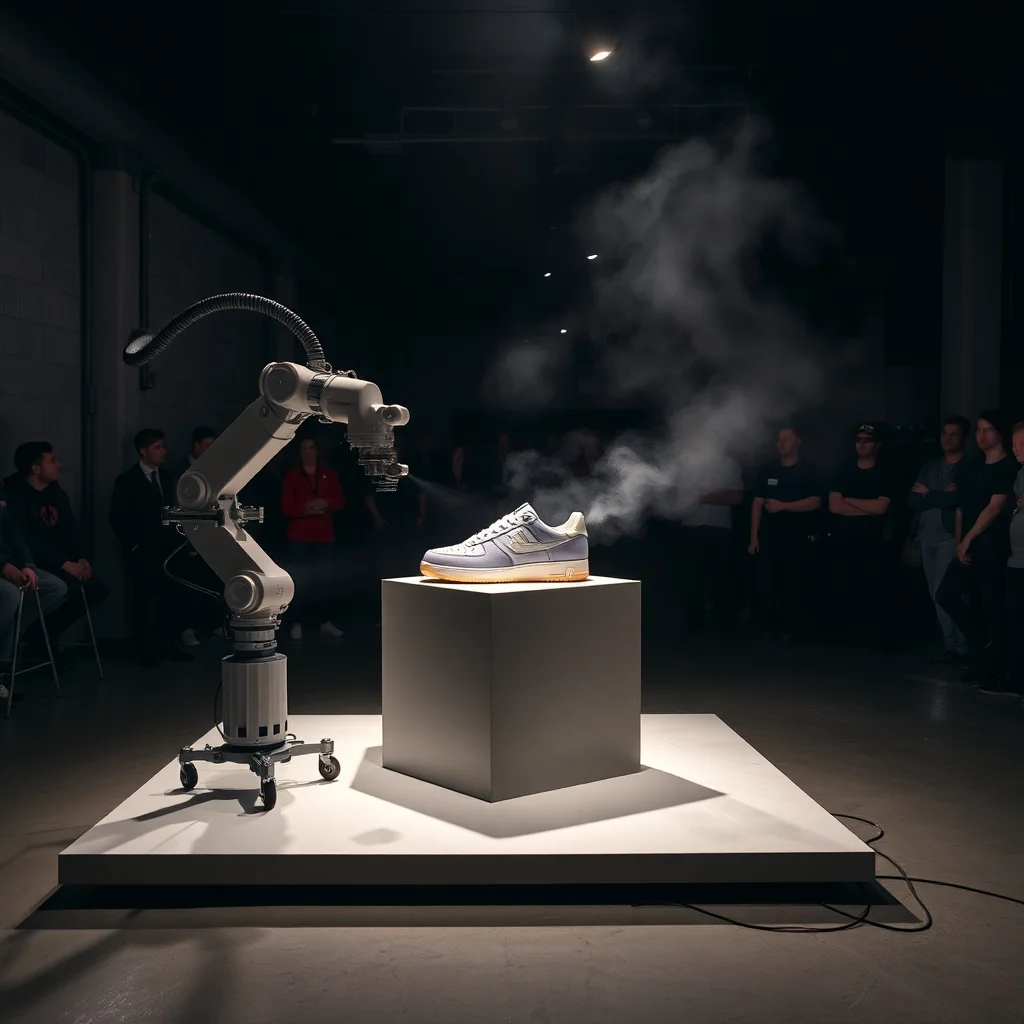
On’s LightSpray robot looks like a clean, futuristic answer to an old industrial problem: how do you make a shoe upper faster, lighter, and with less waste? The image is irresistible. A robotic arm moves with choreographed precision, spraying material into the shape of a running shoe upper, as if footwear design has finally escaped the tyranny of stitching, cutting, and gluing. But this is not just a product launch story. It is a manifesto for a new manufacturing logic — one in which objects are not assembled from discrete pieces so much as deposited into being, layer by controlled layer, by machines that treat material like code.
That shift matters because shoes are one of the most over-engineered, over-glued, and under-questioned products in modern consumer life. They are also a perfect laboratory for a broader industrial transition already visible in 3D printing, additive manufacturing, multi-material extrusion, and robotic fabrication. The real provocation is not that On can spray a better upper. It is that the future may belong to objects designed to emerge from a nozzle, not a factory line. The question is whether that future is genuinely less wasteful and more adaptable — or just a more seductive form of automation, dressed in the language of sustainability.
From stitching to deposition
Traditional sneaker construction is a compromise machine. An upper is cut from rolls of textile, reinforced, stitched, laminated, and bonded to a sole through a chain of labor and adhesives. Every step adds material, time, and waste. Even the most advanced brands are trapped in this logic. Nike has experimented for years with Flyknit, which reduces cut-and-sew waste by knitting uppers to near-final shape. Adidas has explored 4D printed midsoles, where lattice structures are grown rather than molded. New Balance, Puma, and others have tested digitally produced components, but most footwear still depends on the old industrial grammar of assembly.
On’s spray-on approach pushes that grammar further. Instead of knitting or cutting a fabric, the brand uses a robot to deposit material directly onto a form, creating an upper through controlled spray application. The appeal is obvious: fewer parts, less waste, more precise control over shape and performance. In theory, the upper can be tuned like a digital file — lighter here, denser there, stronger along the load-bearing zones and more open where breathability matters. This is design as deposition: not a shell made from pieces, but a surface built by intention.
That idea echoes developments beyond footwear. MX3D’s robotic metal bridge in Amsterdam showed how industrial arms can write structure into space. The Eindhoven-based work around generative and robotic fabrication has treated material as a responsive medium rather than a fixed stock. In product design, that same ethos appears in projects like Nervous System’s algorithmic jewelry and adaptive lattice objects, where geometry replaces assembly as the core of production. On’s shoe may be smaller and more commercial, but it belongs to the same family of thinking: if the machine can place matter with enough precision, then the object no longer needs to be assembled in the conventional sense.
That same shift in authorship is visible in other categories too, especially where brand identity once depended on a recognizable signature. After the Signature Brand in Luxury Design explores how products increasingly derive value from process, material intelligence, and system logic rather than from a fixed visual mark. On’s robot-made upper fits squarely into that transition, where the method becomes part of the message.
The sustainability promise is real — and limited
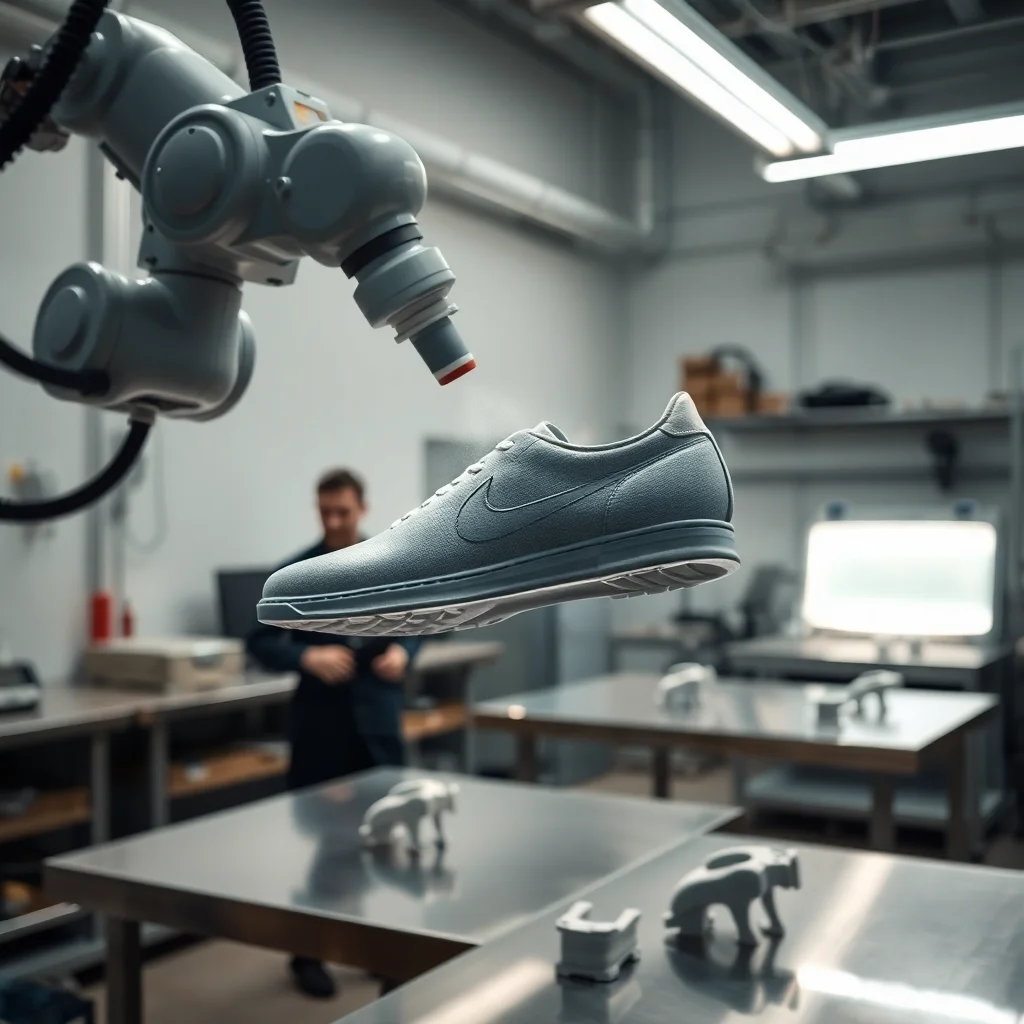
There is a serious environmental case for spray-based manufacturing, but it is narrower than the hype suggests. Reduced waste is not a marketing flourish; it is one of the main advantages of additive or near-additive processes. If you can eliminate offcuts, trim excess adhesives, and avoid multiple component assemblies, you can lower material loss and potentially cut transport and inventory burdens. A digitally controlled process also opens the door to on-demand production, which is one of the few genuine tools against overproduction, the fashion industry’s most grotesque structural habit.
But sustainability is never a single metric. A sprayable shoe upper may save material in one stage while demanding specialized polymers, energy-intensive machinery, proprietary tooling, and a tightly controlled supply chain. If the sprayed material is difficult to recycle, then the object has merely shifted its environmental debt downstream. The same critique haunts many “eco-innovations” in product design: they reduce one visible form of waste while hiding a deeper material lock-in. The danger is that consumers hear “robotic” and “sprayed” and imagine green modernity, when the system may actually be a smarter way to produce more branded objects faster.
This is where the comparison with fashion’s circular rhetoric becomes instructive. Brands frequently promise that digital production will enable local manufacturing and lower stock levels. Sometimes it does. More often, the result is a premiumized novelty, produced in limited runs, sold at high margins, and framed as responsible because it is technologically advanced. The risk with spray-on footwear is not that it fails technically. The risk is that it succeeds beautifully while leaving the larger consumption machine untouched.
Customization, but for whom?
The strongest argument for controlled material deposition is customization. A robot can, in principle, alter density, thickness, flexibility, and fit far more efficiently than a factory relying on standard patterns. That could mean shoes tuned to different foot anatomies, running styles, or performance needs. In a better version of this future, consumers would not be forced into rigid sizing conventions inherited from mass manufacturing. Instead, products could be made closer to the body, the use case, and the climate.
Yet customization is one of design’s most abused promises. The luxury market already sells “bespoke” as a premium accessory, while industrial customization often remains too expensive, too slow, or too dependent on scanning infrastructure. The issue is not whether a robot can spray a shoe upper in a unique shape. The issue is whether such systems become scalable enough to matter outside a flagship rollout and whether they are designed with accessibility in mind. If only elite runners, collectors, or early adopters get personalized products, then customization is just another varnish for exclusivity.
Design history is full of this tension. Dieter Rams imagined products that are both discreet and universally useful. Contemporary computational design often moves in the opposite direction, making uniqueness itself the selling point. In footwear, that can be powerful — a better fit is not a novelty, it is a functional upgrade. But if the manufacturing platform remains closed, proprietary, and tied to brand-controlled services, the user is not empowered. They are merely enrolled in a more sophisticated sales system.
For that reason, the debate around spray-based production also overlaps with broader conversations about proof, performance, and design credibility. Can a Sports Car Still Be an Object of Desire? considers how technical excellence is no longer enough on its own; products are increasingly judged by whether their claims can be demonstrated, measured, and trusted. The same logic now shapes performance footwear, where manufacturing innovation must earn belief through more than just a striking demo video.
The seductive machine aesthetic
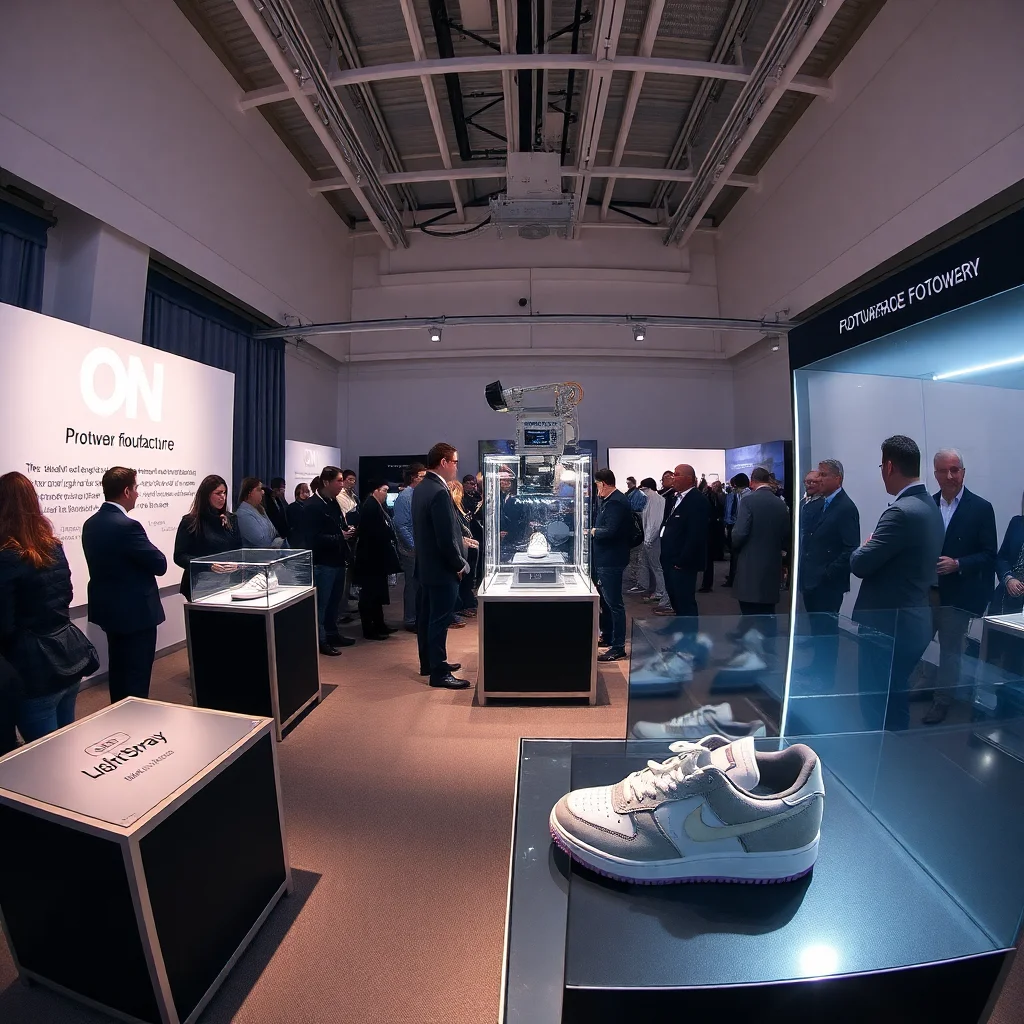
There is also a cultural dimension that should not be ignored: robots make things look inevitable. A spray robot in action is mesmerizing because it compresses production into a single, legible performance. Viewers see movement, precision, and material transformation at once. The machine becomes proof of progress. That is a powerful image, and a dangerous one. It can turn manufacturing into spectacle, making the political economy of production feel clean, smooth, and almost weightless.
This is why the On footage matters beyond the technical demonstration. It is not merely showing how a shoe is made; it is staging a new industrial fantasy. The factory is no longer noisy, dirty, and human-intensive. It is a controlled theater of deposition, where automation appears elegant rather than extractive. In the design world, this aesthetic has a long afterlife: the polished prototypes of rapid manufacturing, the white-walled labs of digital fabrication, the alluring renderings that make complexity seem frictionless. The problem is not that these images are false. The problem is that they can obscure the actual material systems behind them.
Product design should be suspicious of its own charisma. When a process looks too clean, too inevitable, and too ready for Instagram, it is worth asking what has been omitted: labor conditions, repairability, recyclability, energy use, and the relationship between proprietary machinery and public benefit. The spray-painted shoe is compelling because it collapses design and manufacture into one elegant gesture. But elegance is not ethics.
That tension between visual seduction and material reality is also a recurring theme in contemporary surface design, where tactility and finish are often doing as much narrative work as engineering. The Gritty Renaissance: Texture Reshaping Design looks at how texture has become a form of meaning in its own right, a reminder that the look and feel of an object can shape our judgment of its value long before we understand how it was made.
What this means for product design
If spray-on footwear becomes more than a headline, it could signal a broader transition in product design from assembly-based manufacturing to field-based fabrication. That would affect not just shoes but helmets, protective gear, soft goods, medical devices, and other products where fit and material gradients matter. The design process would shift upstream: instead of drawing a thing and then figuring out how to build it, designers would script how matter should accumulate in response to performance data.
That is a profound change. It places designers closer to process engineers, material scientists, and robot programmers. It also demands new standards for accountability. A sprayed object should not only be lighter or more customizable; it should be repairable, traceable, and honest about its material afterlife. Otherwise, the future of manufacturing becomes a high-end trick: fewer seams, more control, same disposable culture.
The challenge for brands like On is to prove that spray-based production is not just another premiumized innovation story. To matter, it must deliver more than visual novelty and performance claims. It must create a system in which less waste is real, customization is broad, and automation serves the object rather than the spectacle. Until then, the spray-painted future of footwear remains what it currently is: an ambitious prototype of a smarter industrial world, and an open invitation to question whether smarter always means better.
FAQ
What is spray-on footwear manufacturing?
It is a production method where a robot deposits material directly onto a form to create a shoe upper, reducing reliance on cut-and-sew assembly, stitching, and layered construction.
Why is it considered more sustainable?
In theory, it can reduce offcuts, lower material waste, and support on-demand production. However, sustainability depends on the chemistry of the sprayed material, energy use, durability, and recyclability.
How does this differ from 3D printing shoes?
3D printing usually builds objects through layer-by-layer extrusion or sintering, while spray-based methods may deposit material as a coating or formed surface. Both belong to additive or near-additive manufacturing, but they use different material behaviors and machine setups.
Will spray manufacturing replace traditional shoe production?
Probably not entirely. It is more likely to become one tool among many, useful for certain performance products, limited editions, and customized components, rather than a total replacement for mass-market footwear.
Open question
If a robot can make shoes with less waste and more precision, does that mean design has become more responsible — or only more efficient at making desire look sustainable?
Get the Mainifesto weekly — curated design debates, speculative ideas and the week's best articles every Saturday.
Editorial Perspectives
Questions and counterpoints developed by the Mainifesto editorial desk to extend the discussion.
Perspective 1
What interests me is less the shoe than the process: a robot depositing material only where it’s needed is a very clean parametric logic. But responsibility depends on the whole system — feedstock, repairability, end-of-life — otherwise we’re just optimizing the geometry of consumption.
Perspective 2
This is the old modernist trick in a new skin: efficiency dressed up as virtue. A spray-painted shoe may waste less material, but it can still manufacture the same old hunger for novelty, only now with a greener halo.
Perspective 3
Precision is not the same as care. A robot can make the object cleaner, but sustainability only becomes real when the brand accepts less churn, fewer drops, and a slower desire cycle.