

Can a Sports Car Still Be an Object of Desire?
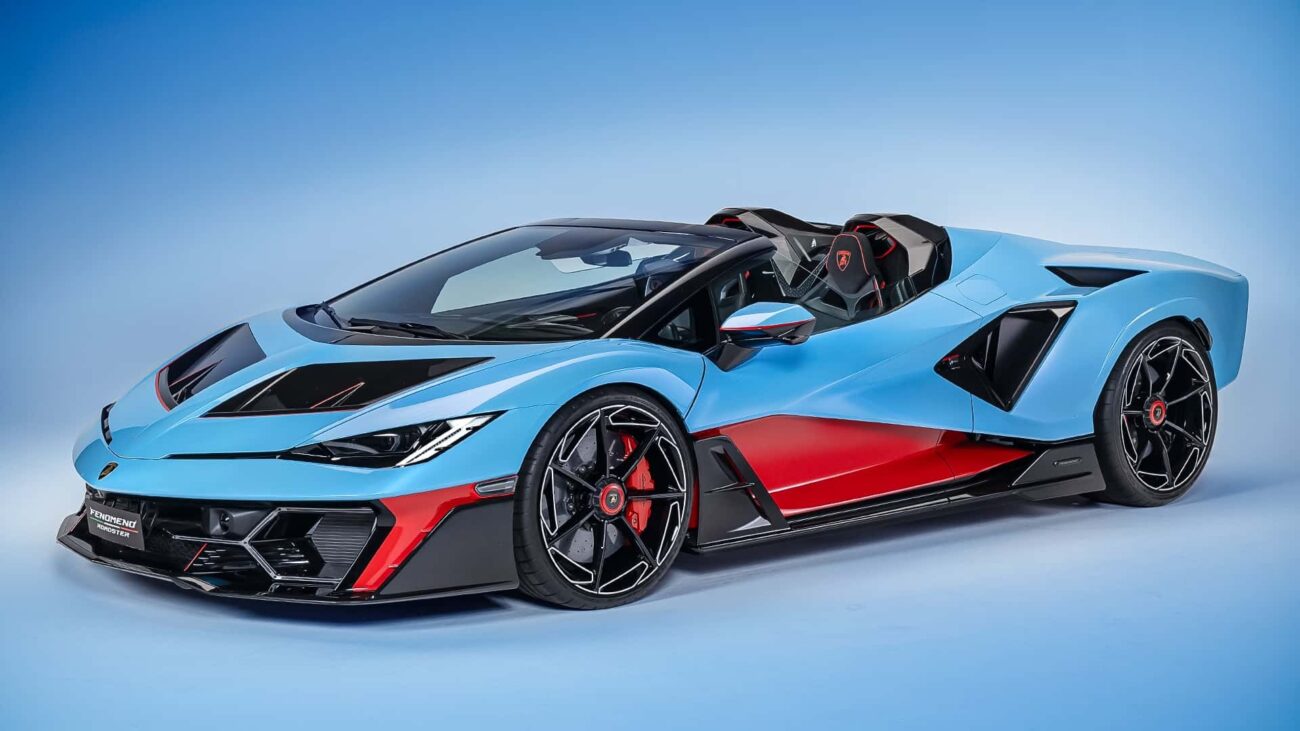
Can a Sports Car Still Seduce When Everything Must Be Proven?
The Lamborghini Fenomeno arrives in a culture that no longer worships speed by instinct. Today, every claim is interrogated: lap times, acceleration data, thermal maps, aero efficiency, battery curves, emissions spreadsheets. A sports car is no longer allowed to simply look fast and sound expensive; it must justify itself with evidence. That is the paradox of the Fenomeno. It is presented as an engineering statement, yet it operates just as powerfully as a cultural artifact—an object whose value is inseparable from scarcity, naming, and the theater of excess.
This is not a trivial shift. For decades, the supercar could depend on a familiar bargain: extraordinary performance would excuse extravagant form. The Lamborghini Countach, the Ferrari F40, the McLaren F1, the Porsche Carrera GT—each was judged partly by what it could do and partly by what it meant. But the age of proof has complicated that deal. A car must now compete with data-rich EVs, digital simulators, and a public that can watch onboard telemetry from its phone. The question is not whether the Fenomeno is fast enough. The question is whether speed alone can still generate desire when the world insists on receipts.
PRO: The Sports Car as an Engineering Proof Object

In the strongest reading, the Fenomeno justifies itself exactly the old way: through engineering extremity. Lamborghini has always understood that the supercar is most persuasive when it behaves like a manifesto in motion. The Miura redefined mid-engine proportion; the Countach weaponized visual aggression; the Aventador turned a V12 into a kind of mechanical opera. The Fenomeno continues that line by presenting performance not as a feature, but as a total design system where powertrain, aerodynamics, materials, and stance all communicate one thesis: excess can still be rationalized if it is executed with discipline.
That is why cars like this remain seductive to a certain audience. They are not bought for transportation; they are acquired as the most expensive form of validation. A hypercar can still be an engineering proof object, much as Zaha Hadid’s early projects were proof that geometry could become emotion, or as a Richard Mille watch is proof that absurd material complexity can be made wearable. The Fenomeno, in this sense, belongs to a lineage of design where the point is not utility, but the visible triumph of systems under stress.
And yes, driving dynamics still matter. The best sports cars do not merely accelerate; they choreograph weight transfer, steering response, braking confidence, and the psychological scale of speed. That is why the Porsche 911 GT3 RS remains compelling despite its clinical image, why the Ferrari 296 GTB has re-centered hybrid performance around feel rather than numbers alone, and why Gordon Murray’s T.50 is revered not because it is the fastest on paper, but because it treats driving as a form of analog intimacy. If the Fenomeno can produce that kind of precision—if it can make a driver feel that the machine is not showing off but thinking—then the object of desire survives in the oldest and strongest sense.
PRO: Rarity, Naming, and Brand Theater Are Not Cheating; They Are Design
But the Fenomeno also proves something else: in the ultra-luxury tier, mythology is not a decoration around the product. It is part of the product. Lamborghini does not sell a car the way Toyota sells a car. It sells a myth of radicality, a public fantasy of ungoverned form. The name itself matters. “Fenomeno” is not a technical term; it is a rhetorical one. It announces exception before the first specification sheet appears. That is branding as architecture: the object is framed before it is understood.
Collectibility now shapes desire as much as driving does. The contemporary supercar is often valued as a limited edition sculpture with an engine attached. Buyers know it, manufacturers know it, and the market prices it accordingly. Consider how the Ferrari Monza SP2, Aston Martin Valkyrie, and Pagani Utopia operate in this space: each is a machine, but also an event, a status ritual, and a future auction headline. Their real-world use may be minimal, but their cultural performance is immense. In this realm, scarcity is not a side effect; it is the mechanism by which meaning is concentrated.
This is why the accusation that “it’s just branding” misses the point. Branding is not separate from design; it is a spatial, visual, and emotional organizing principle. Marc Newson understood this when he designed for speed not only as form but as a lifestyle promise. Giorgetto Giugiaro understood it when he gave mass shape to aspiration. Lamborghini, more than almost any carmaker, has made brand theater into an aesthetic discipline. The Fenomeno does not need to hide this fact. On the contrary, it should lean into it. In the age of proof, the most honest luxury may be to admit that desire is engineered just as carefully as horsepower.
CONTRA: When Performance Becomes a Spreadsheet, Desire Starts to Rot

Yet the argument for the Fenomeno is also its vulnerability. The more a sports car is forced to justify itself through proof, the more it risks becoming a luxury appendix to a performance report. We live in a culture where everything is comparative: quarter-mile times, Nürburgring claims, power-to-weight ratios, launch-control figures, software updates. This obsession flattens distinction. If the car’s identity becomes reducible to metrics, then any sufficiently powerful machine can imitate desire. The emotional monopoly of the sports car begins to dissolve.
That is a dangerous development for a category built on irrational attachment. The classic dream car was never loved because it was efficient. It was loved because it exceeded reason in visible, audible, almost indecent ways. The Lamborghini Diablo, for instance, was less a solved problem than an unforgettable confrontation with form. The McLaren F1 remains legendary not because it won an Excel spreadsheet, but because it fused engineering seriousness with an almost religious sense of occasion. If the Fenomeno cannot preserve that irrational surplus, then it becomes merely expensive proof that expensive things can still be made.
And here is the deeper issue: the ultra-expensive sports car may no longer be the best place to experience performance at all. Electric performance cars have rewritten expectations. Rimac, Lotus, and even Porsche’s electrified trajectory suggest that acceleration can now be delivered with shocking coherence, while track-capable EVs offer repeatability and data-backed competence impossible for older analog icons. When proof becomes the dominant language, the old supercar starts to sound like nostalgia with a warranty. Its V12 romance, its drama, even its violence can begin to feel like a museum piece masquerading as progress.
CONTRA: The Desire Economy Has Moved Beyond the Steering Wheel
There is also a moral fatigue surrounding luxury performance. In a world under climate pressure and inequality scrutiny, the ultra-expensive sports car can seem like a relic of private excess pretending to be public aspiration. The industry responds by calling it art, craft, or engineering pinnacle, but those labels do not erase the social optics. A machine priced like a building, built in tiny numbers, and used mostly as a symbolic asset is increasingly understood as a prestige commodity rather than a mobility object. The desire it generates may be real, but it is no longer innocent.
That shift changes the role of design. A supercar can no longer rely on physical experience alone; it must produce narrative value across media, events, concierge ownership, and social visibility. The car becomes a total environment of desire management. Owners are not only buying the drive; they are buying access to a curated world of launch venues, private previews, and brand-sanctioned myth. In that sense, the Fenomeno may be less like a car than like a luxury pavilion—temporary, theatrical, and carefully staged. The aura once generated by the road is now manufactured in controlled conditions.
So can a sports car still be an object of desire in the age of proof? Yes, but only if it understands that proof has changed the game. The car must still deliver driving satisfaction, because without that, it becomes empty theater. But it must also operate as a cultural sculpture, a brand signal, and a deliberately scarce event. Lamborghini’s challenge with the Fenomeno is not to choose between engineering and mythology. It is to make them inseparable enough that the buyer feels both the machine’s competence and its irreducibility. If it succeeds, desire survives. If it fails, the sports car becomes just another luxury product trying to outrun skepticism with noise.
FAQ
Is the Fenomeno more about performance or collectibility? It is designed to be both. In the supercar market, collectibility amplifies performance, and performance legitimizes collectibility. The strongest versions of this category turn engineering into myth rather than treating them as separate value systems.
Why do limited-production cars still attract buyers if they are rarely driven? Because their value is not limited to use. They function as cultural signals, investment assets, and curated experiences, much like rare watches or contemporary art. Driving is only one part of their appeal.
Do electric supercars threaten the relevance of cars like the Fenomeno? They threaten the old hierarchy, yes. EVs can outperform many combustion cars in acceleration and repeatability, but they do not automatically replace the emotional theater, sound, and symbolism that define the Lamborghini myth.
What makes a sports car desirable today? A sports car must combine credible dynamics with a powerful narrative. In the age of proof, desire depends on the ability to satisfy both the rational buyer and the irrational collector.
Open Question
When a sports car is fast enough, rare enough, and expensive enough to become mythology, does it still need to be driven to be meaningful?
Get the Mainifesto weekly — curated design debates, speculative ideas and the week's best articles every Saturday.
Editorial Perspectives
Questions and counterpoints developed by the Mainifesto editorial desk to extend the discussion.
Perspective 1
Of course it still needs to be driven — otherwise it’s just a gilded rumor with carbon-fiber eyelashes. The myth only matters because the machine can still perform, like a diva who can actually sing.
Perspective 2
If I can’t feel the grain of the materials through the steering wheel, the stitching, the switchgear, then the whole thing becomes stage set, not design. Rarity and theater are fine, but craftsmanship is what gives an object its dignity when the spotlight goes off.
Perspective 3
It’s meaningful only if it does something beyond advertise itself. Once you’re at this level of price and exclusivity, the car is already a symbol; driving it should justify the symbol, not just decorate a garage.