
Green Walls: Climate Fix or Fire Hazard?
The architecture of reassurance is now under suspicion
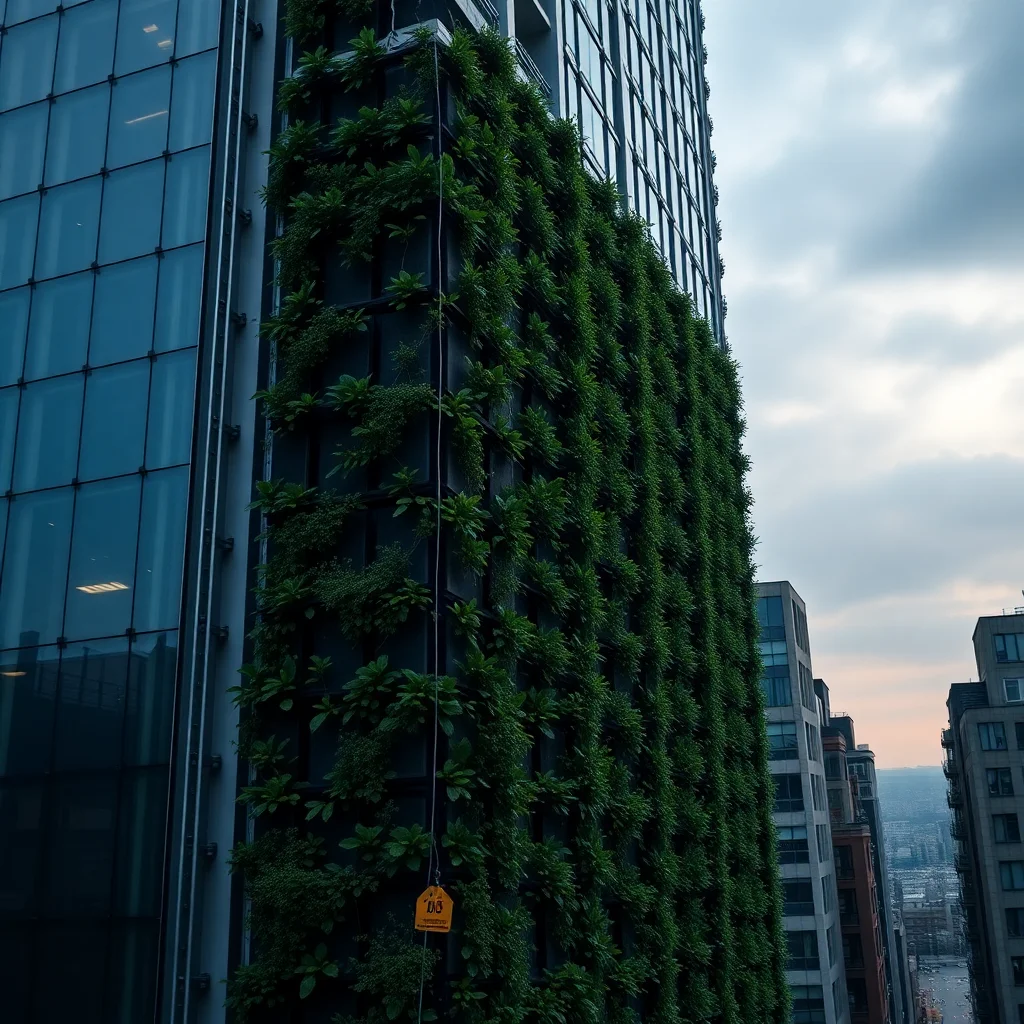
Green walls have become one of the most seductive gestures in contemporary architecture: a promise that cities can be cooled, softened, and made breathable without abandoning their density. They read as evidence that design has grown wiser, more ecological, more alive. But the new warning around plastic-potted systems should puncture that optimism. If the facade is meant to embody resilience, then a combustible planting assembly is not a minor technical detail — it is a contradiction at the heart of the climate aesthetic.
According to research shared exclusively with Dezeen, some living-wall systems may carry a fire risk comparable to the combustible cladding that helped turn Grenfell Tower into a national trauma in the UK. That is not a rhetorical flourish; it is a political alarm. The problem is not the plant itself. It is the infrastructure beneath the leaves: the plastic pots, trays, carriers, membranes, and hidden fixings that make the “green” facade possible. In other words, the sustainability story is being told with materials that may be structurally incompatible with safety.
Design culture loves the visible benefit and ignores the concealed liability. Green walls photograph beautifully, signal environmental intent instantly, and convert otherwise dead elevations into marketing-ready surfaces. Yet as the architecture industry learned with foam insulation, composite panels, and other seemingly efficient products, the most dangerous materials are often those sold as rational upgrades. The current debate is not whether biophilic design is worthwhile. It is whether our excitement about surface-level greening has outrun material accountability.
What a green wall actually is — and why the material choice matters

Living walls are not just climbing plants on a trellis. They are systems: modular units, irrigated panels, or vertically stacked pots fixed to a facade and kept alive by pumps, drainage, and substrate. In high-profile residential towers, office lobbies, schools, and hotel atriums, the effect is often lush and immediate. Patrick Blanc’s pioneering vertical gardens, from the Musée du quai Branly in Paris to later commissions around the world, helped turn the green wall into a global icon of urban regeneration. But once the idea moved from experimental botany into mass-market facade product, the language of ecology began riding on industrial components.
That is where the issue sharpens. Plastic is ubiquitous because it is lightweight, cheap, durable, and easy to mold into standardized modules. Yet those same qualities can become liabilities in a fire. Once a facade assembly contains enough combustible content, the whole system can contribute to flame spread, toxic smoke, and falling debris. The lesson from past facade disasters is brutally simple: performance is not aesthetic. A wall that looks restorative may still behave catastrophically when exposed to heat.
We should be wary of the way “natural” has become a marketing category rather than a verified material condition. A facade covered in foliage does not automatically become environmentally virtuous. If the living wall depends on petroleum-based planters, plastic irrigation lines, and hidden membranes that have not been rigorously tested as a fire assembly, then the project may be exporting environmental risk into the very envelope meant to defend the building. The contradiction is architectural, not cosmetic.
Grenfell changed the burden of proof, but not fast enough
The Grenfell Tower fire made one fact impossible to ignore: facades are not passive skins. They can amplify disaster. The Grenfell tragedy exposed a system in which design ambition, cost pressure, regulatory gaps, and material opacity converged with lethal consequences. Since then, the British industry has been forced to scrutinize cladding, insulation, and fixings with a seriousness it should have adopted long before the fire. Yet the emergence of warnings about green-wall plastics suggests that the lesson has not fully sunk in.
There is a familiar pattern here. A building element gains popularity because it performs well in renderings, fits sustainability targets, or helps a developer tell a story of innovation. The industry then fragments responsibility: horticultural consultants handle the plants, facade engineers handle the support, contractors handle installation, manufacturers handle product claims, and regulators chase behind. In that gap between disciplines, risk becomes nobody’s job. Living walls thrive in precisely that interstitial space.
It is not enough to say that a green wall is a low-carbon or biodiversity-positive move. Those claims are only meaningful if the entire assembly is verifiably safe, maintainable, and durable over time. Fire safety is not a bolt-on extra. If a facade cannot survive a realistic ignition scenario without becoming a vertical fuel source, then its ecological narrative is irrelevant. In the post-Grenfell era, the question is not whether a product is innovative. It is whether it can be trusted not to fail in the exact conditions architecture exists to manage.
Biophilia has become a branding language — and that is the problem
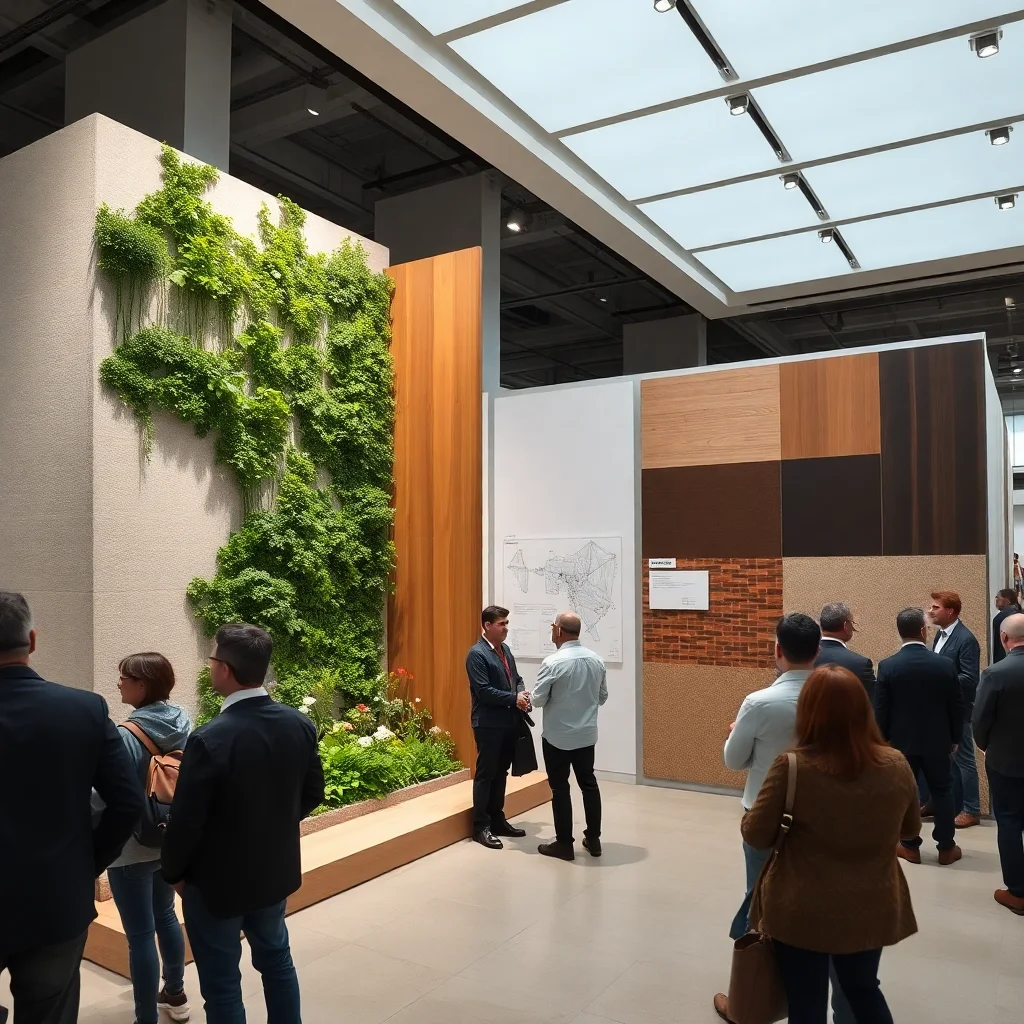
The rise of biophilic architecture has been driven by genuine urban need. Cities are hotter, harder, and more impermeable than they should be. Vegetation can mitigate heat island effects, support pollinators, improve microclimates, and give occupants psychological relief. Architects from Stefano Boeri, whose Bosco Verticale in Milan made the planted tower globally legible, to younger practices working with urban agriculture and regenerative envelopes, have helped move greenery from decorative afterthought to spatial strategy.
But the market has flattened that complexity into an image. The facade of leaves becomes a shortcut for sustainability, regardless of what is hidden behind it. This is how an ethical ambition mutates into style. The green wall becomes a signifier consumed by investors, hotel brands, civic institutions, and developers eager to show environmental seriousness without necessarily investing in the hard, often unattractive work of safer, lower-impact construction.
The problem is not biophilia itself. The problem is biophilia as a visual alibi. When greenery is treated as proof of virtue, scrutiny fades. Few clients want to hear that their living wall may require non-combustible substrates, carefully detailed cavity barriers, stricter maintenance regimes, or more expensive mineral-based components. Yet if a project cannot afford safety, then it cannot afford the luxury of its own green image. As with the return of soft architecture, the appeal lies in tactility and comfort — but softness without material rigor can become another form of negligence.
What safer green facades would actually demand
A credible response begins with material honesty. If green walls are to survive as a serious architectural tool, their assemblies need the same level of fire testing, certification, and lifecycle accounting expected of any facade system. That means scrutinizing planters, irrigation systems, backing boards, anchors, and drainage layers as an integrated whole rather than as a collection of convenient parts. It also means acknowledging that not every wall should be a living wall, just as not every roof should be a garden or every tower should carry trees.
Designers already have alternatives. Deep-plan planting at grade, balcony planting, terraces, shaded courtyards, and robust landscape strategies can often deliver more ecological benefit with less facade risk. In some contexts, climbers on non-combustible trellises may be far more responsible than modular plastic systems sealed into the envelope. Materially, mineral-based trays, metal supports, and non-combustible fixings may sound less glamorous than the sleek commercial modules sold to architects, but glamour has never been a fire-safety criterion.
The deeper shift is cultural: architects must stop treating maintenance as a post-completion nuisance. Living walls are living systems; they demand watering, pruning, replacement, inspection, and ongoing governance. A wall that depends on perfect maintenance to remain safe is not a passive object — it is an operational commitment. In that sense, the most honest green wall is the one that admits its dependencies rather than hiding them behind vegetation.
The list the industry should have made earlier
- Test the full assembly, not just the panel. A living wall is a system, so its fire behavior must be assessed as a whole — plants, pots, irrigation, fixings, membranes, and backing all included.
- Replace combustible convenience with non-combustible discipline. Plastic modules may be cheaper and easier to install, but metal or mineral-based alternatives should become the default where facade risk is high.
- Treat maintenance as part of safety. Neglected irrigation, dead planting, and accumulated debris can turn a biophilic feature into fuel. A beautiful wall that cannot be maintained is an unsafe wall.
- Do not confuse vegetation with sustainability. A facade covered in plants is not automatically low-carbon if the hidden infrastructure is petrochemical, short-lived, or impossible to recycle.
- Stop outsourcing accountability across disciplines. Landscape architects, facade engineers, contractors, and manufacturers must share liability instead of passing risk along the chain.
- Use greenery where it is structurally and operationally justified. Sometimes the best climate move is not a vertical garden at all, but a shaded terrace, a planted courtyard, or a facade strategy that privileges safety over spectacle.
The real test: can architecture give up the easy image?
This controversy should not be read as a takedown of green architecture. It should be read as a warning against sentimentalism. Cities need vegetation. Buildings need climate adaptation. People need spaces that soften heat, glare, and stress. But when a design language becomes too successful, it starts to conceal its own contradictions. The current scrutiny of plastic-potted green walls is valuable precisely because it forces the industry to confront the cost of its favorite image.
There is nothing progressive about replacing one hazardous facade logic with another. If the lesson of the past decade is anything, it is that technical optimism without material discipline is a luxury we can no longer afford. The future of biophilic architecture will not be decided by how lush it looks in a presentation board. It will be decided by whether it can survive regulation, fire testing, maintenance reality, and ethical scrutiny without collapsing into performance art.
So the question is not whether green walls should disappear. The question is whether architecture is willing to make them accountable — or whether it will continue to dress risk in leaves and call it sustainability.
Get the Mainifesto weekly — curated design debates, speculative ideas and the week's best articles every Saturday.
Editorial Perspectives
Questions and counterpoints developed by the Mainifesto editorial desk to extend the discussion.
Perspective 1
A green wall is only a climate solution if the whole assembly is counted, not just the plant layer. If the support system adds fire risk or shortens the building’s lifecycle, then the environmental argument gets much weaker very fast.
Perspective 2
We have seen this movie before: the fetish for a lush image outruns the reality of construction. A facade that performs nature while relying on combustible plastic feels less like ecology than a decorative alibi.
Perspective 3
From a guest experience standpoint, nobody cares how poetic the wall is if it becomes a liability. If the system can’t be safe, durable, and easy to maintain, then it’s not a solution — it’s a very expensive problem with vines on it.