Ocean Plastic Façades: Sustainability or Green Theatre?
PRO: a façade that turns waste into a public argument
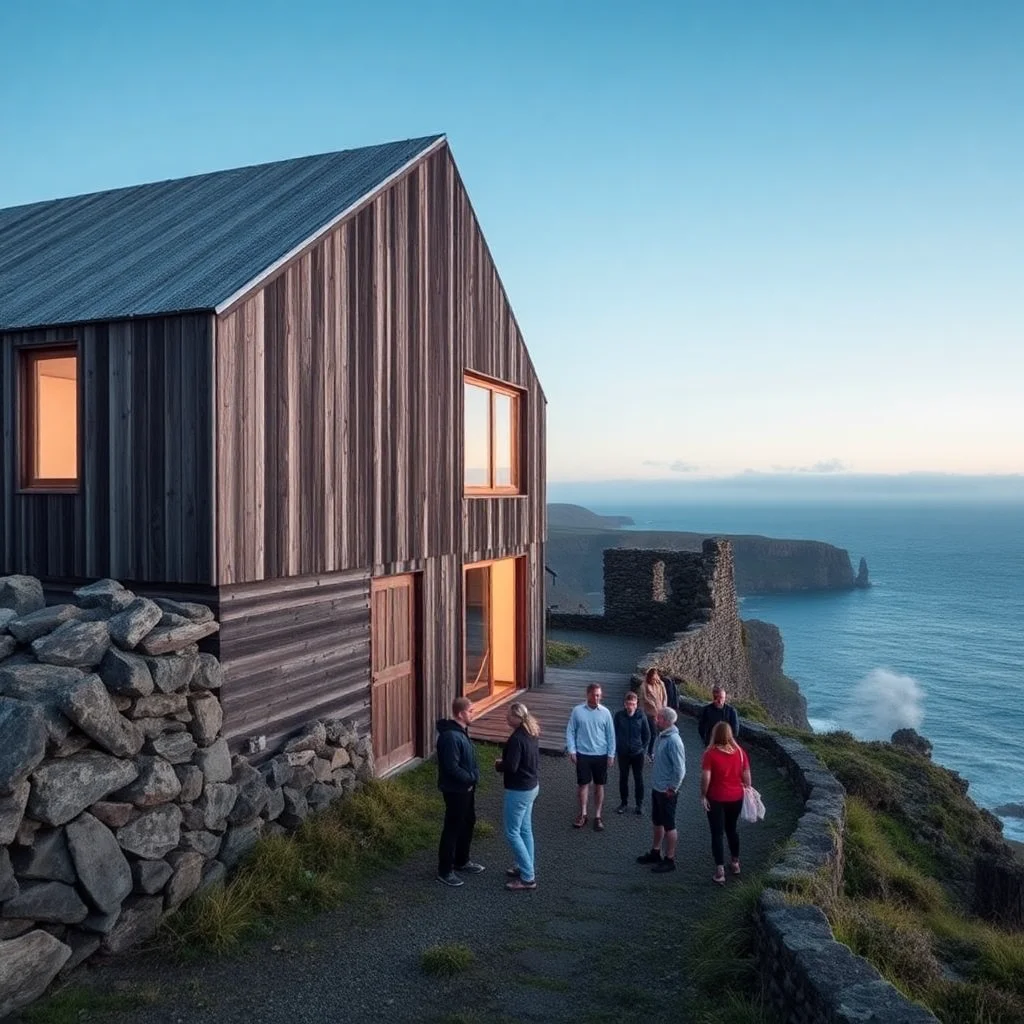
Atelier Backlar’s Blue House in the Azores is hard to dismiss because it is not merely a house with a “sustainable” finish; it is a literal collision of histories. On São Miguel Island, where a former whaler’s tavern is partially preserved as ruin, the studio wraps the new intervention in recycled ocean plastic and pairs it with locally sourced timber. The result is a building that does what architecture rarely does well: it makes an abstract environmental crisis visible at the scale of daily life. Ocean plastic stops being a distant statistic and becomes a wall, a weathering surface, a tactile claim on the landscape.
That visibility matters. Architecture has always used material as rhetoric. Stone announced permanence; steel announced modernity; cross-laminated timber now announces carbon conscience. Recycled ocean plastic adds a new vocabulary: contamination transformed into envelope, pollution converted into evidence. For a clifftop house overlooking Capelas’ whaling bay, the symbolism is especially charged. Whaling once extracted value from the sea through violence; now the house proposes a gentler, if still complicated, act of return—taking maritime waste and reintroducing it as shelter. In that sense, the material does not just decorate a façade. It stages an ethical reversal.
This is where the project joins a wider lineage of materially assertive work. Frank Gehry’s early cardboard furniture, Neri Oxman’s material ecologies, and more recently studios working with mycelium, algae, and biocomposites all understood that material innovation becomes culturally relevant when it can be seen. The point is not only performance; it is legibility. A façade made from recovered ocean plastic gives the public an immediately readable story about reuse, marine debris, and the politics of extraction. Unlike invisible insulation upgrades or hidden mechanical efficiencies, it performs sustainability in the street and on the cliff edge.
And that performance can be productive. Design culture is driven by symbols long before policy changes catch up. When exposed timber meets recycled plastic, when ruin meets new envelope, the building offers a compact lesson in adjacency: old and new, local and global, ancestral labor and contemporary waste. It turns architecture into a diagram of repair. In a field too often accused of greenwashing by spreadsheet, visible recycling can puncture cynicism by making remediation concrete enough to touch. That same logic also appears in architecture that stops hiding its ecology, where the material story is treated as part of the public argument rather than a technical afterthought.
PRO: visible reuse can shift taste, not just carbon accounting
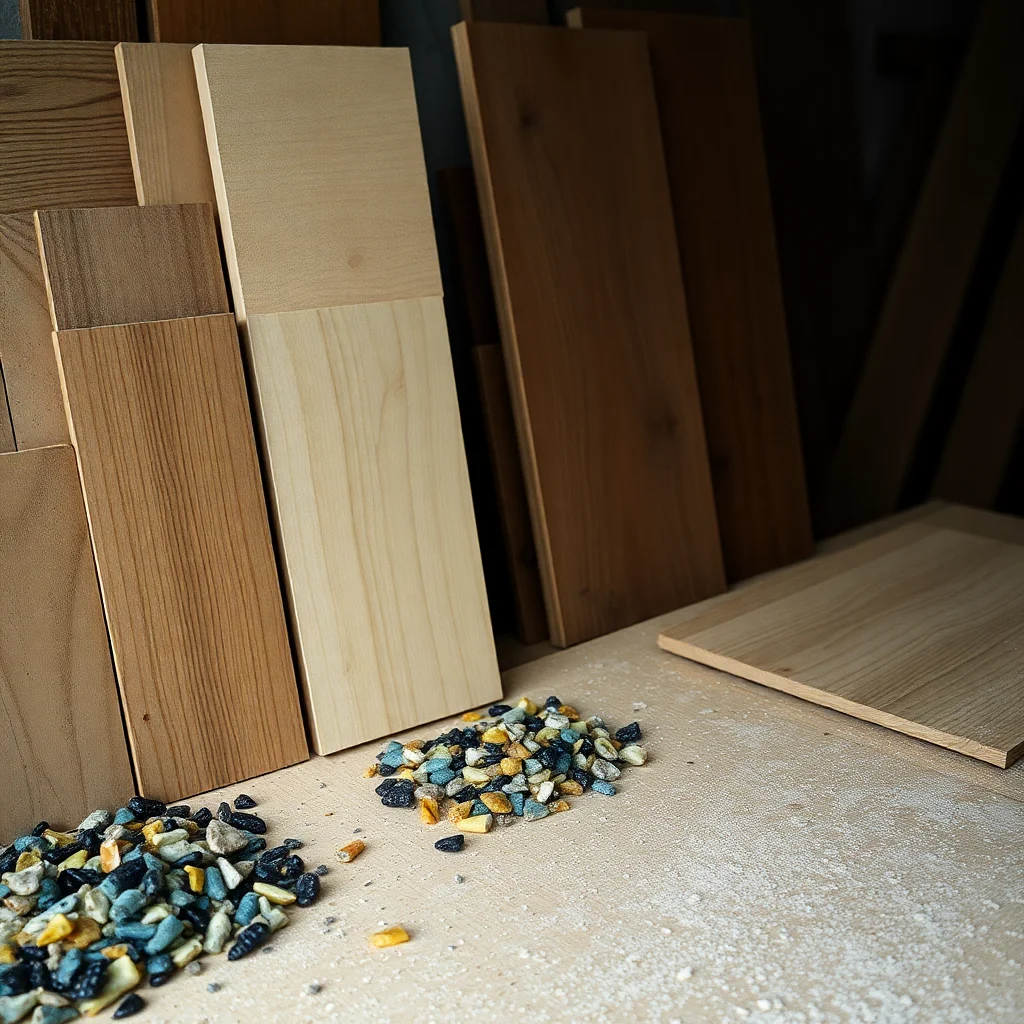
Material culture changes when people begin to desire what once looked undesirable. That is the quiet power of this type of project. If recycled ocean plastic can move from beach cleanup bins into a clifftop house in the Azores, it begins to shift the aesthetic status of waste. The material no longer belongs only to protest placards or civic guilt; it enters the realm of craft, proportion, and atmosphere. That move matters because architecture does not merely follow environmental ethics—it helps manufacture them by making certain solutions feel inevitable, even beautiful.
There is precedent. The reuse of brick in Lacaton & Vassal’s transformations, the moral charisma of salvaged wood in Japanese minka restorations, and the new prestige attached to mass timber all show how architectural taste can accelerate material transitions. If recycled ocean plastic is treated with the same seriousness—detailed carefully, integrated rather than pasted on, and combined with honest local timber—it can become part of a broader shift away from disposable cladding culture. The question is not whether the material is immaculate. It is whether architecture can make imperfection look intelligent.
The Blue House also benefits from its site specificity. São Miguel’s volcanic geology, maritime exposure, and layered heritage make the material story less like a gimmick and more like a regional proposition. This is crucial. Recycled ocean plastic as a façade makes a far stronger case when it is anchored to place, climate, and existing material traditions. In other words, the issue is not the plastic alone; it is the negotiation between imported waste and local craft. That negotiation can generate a new vernacular—one in which repair is not hidden but composed.
Studio and designer references support the argument. Formafantasma’s work on extraction and resource narratives has long insisted that design must confront the politics of supply chains, not just the finish line. The same logic applies here: a façade can educate by making provenance visible. If the public can read how marine debris, timber, and ruin fit together, the building becomes an object lesson in circularity. That does not solve the climate crisis, but it changes the cultural conditions in which solutions become acceptable. It also echoes debates around carbon storage, forest burial, and timber carbon markets, where material choice is inseparable from the systems that organize it.
CONTRA: the danger of turning remediation into a look
Yet the critique is unavoidable: once a material becomes photogenic, it risks becoming theater. Recycled ocean plastic is especially vulnerable to this problem because its moral charge is so high. The material arrives pre-loaded with virtue, so any building using it can appear virtuous by association. For a design audience hungry for narratives of responsibility, that can be enough. The trouble is that visibility can substitute for impact. A façade can communicate recycling without proving that recycling is the most effective, durable, or scalable option.
This is the central suspicion surrounding the Blue House and similar projects: are they changing material culture, or are they aestheticizing remediation for an architectural public that already knows how to applaud? If the answer is the latter, the project risks becoming a premium image of concern—an environmentally legible luxury surface. In that scenario, ocean plastic is less a structural intervention than a branding device, folded into the familiar economy of magazine spreads, awards, and speculative discourse. The danger is not falsehood; it is reduction. Sustainability becomes a visual genre.
There is also a technical question that cannot be waved away by good intentions. Recycled plastics vary in composition, aging behavior, and maintenance needs. In marine climates, UV exposure and salt air are unforgiving. If the façade weathers poorly, needs frequent replacement, or depends on complex treatments to remain presentable, its symbolic value may outstrip its environmental logic. A building that claims circularity while locking itself into future maintenance burdens may simply displace the problem down the road.
Moreover, the romantic pairing of ocean plastic with local timber and ruins can obscure uncomfortable hierarchies. Who collected the waste? Under what labor conditions was it sorted and processed? How much energy was required to transform marine debris into façade material? The picturesque alliance of ruin, timber, and plastic may soothe the conscience of the observer while leaving supply-chain reality out of frame. That is classic green theatre: a morally satisfying scene whose backstage remains invisible.
CONTRA: architecture should change systems, not just images
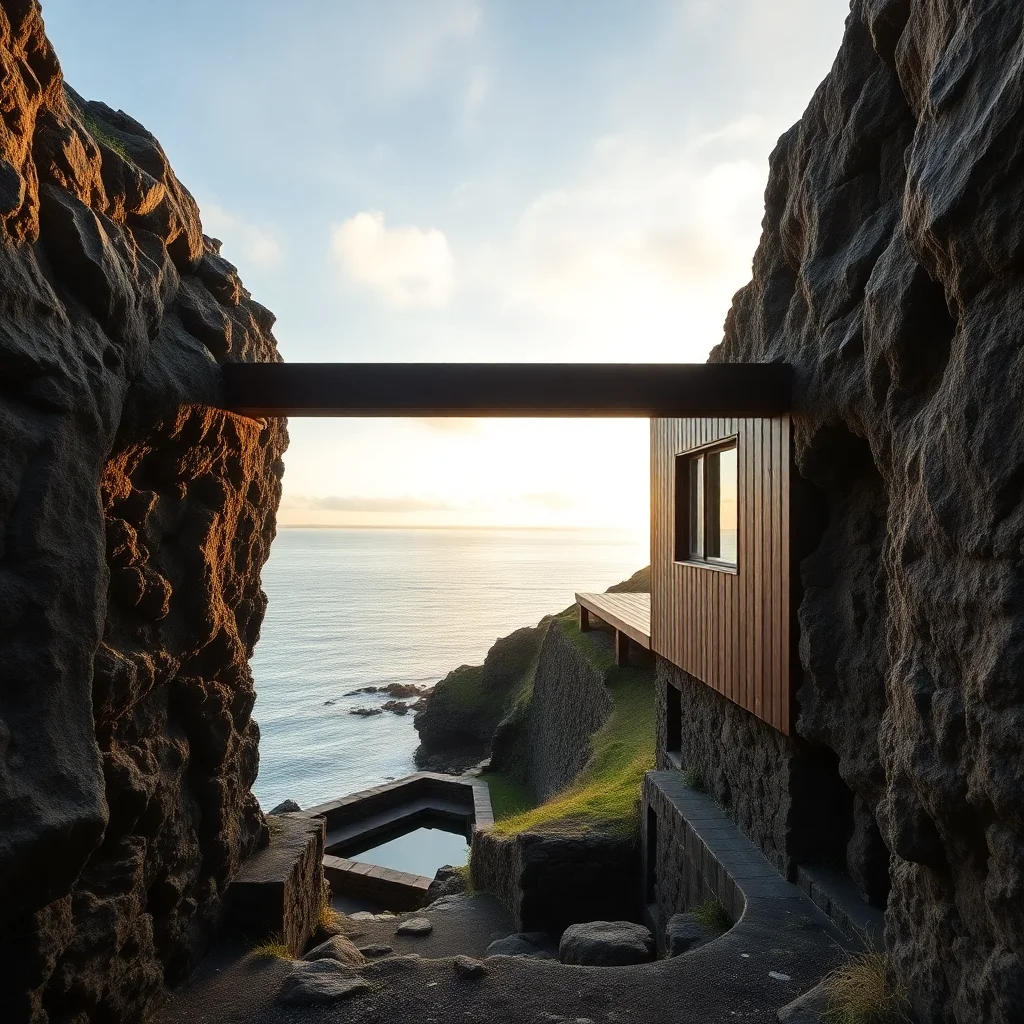
The bigger critique is political. Architecture loves prototypes because prototypes are easier to celebrate than systems. A single house wrapped in recycled ocean plastic can be shared across media as evidence of progress, but isolated examples do not automatically alter building codes, procurement structures, waste infrastructure, or industrial capacity. Without those changes, the project remains a cultural signal rather than a material transition. It tells us what a good future might look like, but not how to build it at scale.
This is where the comparison with better-established low-carbon strategies becomes uncomfortable. Mass timber works because it is not only aesthetically persuasive; it is becoming industrially organized. Reuse has force because demolition salvage can be integrated into wider material networks. By contrast, ocean plastic façades are often bespoke, dependent on narrative value and architectural novelty. They may inspire, but inspiration is a weak substitute for replication. If each project requires a bespoke story to justify itself, the material is still trapped in the gallery logic of exception.
There is a more severe irony, too. The ocean is full of plastic because modern production systems are designed to externalize waste. If architecture simply recovers a tiny fraction of that waste and turns it into elite housing, it risks making the problem feel solved at the point of consumption while the upstream machinery remains intact. The aesthetic of repair can become a pressure valve for guilt. We admire the façade and leave the system untouched. That is not circularity; it is catharsis.
Still, the contradiction may be the point. Projects like the Blue House force architecture to confront its dependence on narrative as much as on materials. The real test is not whether recycled ocean plastic can look good. Of course it can. The test is whether its beauty is operational—whether it leads to better procurement, broader reuse, more accountable manufacturing, and tougher regulation of marine waste. If not, then the façade is an elegant screen for a much uglier truth: design can make remediation visible without making it effective. The tension is part of the larger debate explored in The Return of Soft Architecture, where material softness is not a guarantee of political softness.
What this material debate is really about
The controversy around recycled ocean plastic façades is less about one product than about the politics of legibility. Architecture has always needed images to move ideas into public life. But in the age of climate crisis, image-making comes with a burden of proof. A façade that announces environmental responsibility must also justify its lifecycle, its labor, its maintenance, and its scalability. Anything less is a slogan in material form.
That does not mean such projects should be dismissed. On the contrary, they are useful precisely because they expose the fault line between symbolic and systemic sustainability. The Blue House shows how powerful the combination of ruin, timber, and recycled ocean plastic can be when architecture wants to tell a story of repair. It also shows how quickly that story can slide into aesthetic consolation if the material remains a one-off gesture. The question is not whether the building is sincere. The question is whether sincerity is enough.
In that sense, the strongest architecture may be the kind that can survive suspicion. It welcomes the critique, discloses the process, and refuses to hide the backstage. If recycled ocean plastic is to earn its place in architecture, it cannot rely on beauty alone. It must prove that it changes what we build, how we source, and what we are willing to consider worthy of a façade.
- What would count as success? A recycled plastic façade is only convincing if it can be maintained, replicated, and governed as part of a broader material system—not just admired as a one-off experiment.
- Can aesthetics drive policy? Yes, but only when the image points to a workable industrial model. Otherwise, beauty becomes a substitute for legislation, procurement reform, and waste reduction.
- Why pair plastic with timber and ruins? Because the contrast strengthens the narrative of repair: local continuity, historical memory, and modern remediation are made visible in one composition.
- Is this greenwashing? Not automatically. But any project that foregrounds recycling must disclose lifecycle costs, labor, and durability, or the environmental message becomes performative rather than persuasive.
FAQ
Q: Why is recycled ocean plastic attractive to architects right now?
A: Because it combines environmental urgency with a highly legible visual story. It lets architecture speak about waste, marine pollution, and circularity in a way the public can immediately recognize.
Q: Does a visible recycled façade actually reduce carbon?
A: Not by default. The climate value depends on the material’s processing, durability, transport, maintenance, and whether it replaces a more carbon-intensive alternative at scale.
Q: Why is the Blue House in the Azores significant?
A: Its impact comes from context: a clifftop site, a ruined whaler’s tavern, local timber, and a maritime history that make the recycled plastic feel like part of a regional narrative rather than a detached design trick.
Q: What would make this approach more credible?
A: Transparent lifecycle data, long-term performance, scalable sourcing, and a broader procurement model that turns the material from a novelty into a repeatable construction strategy.
Open question: if recycled ocean plastic is most powerful when it looks beautiful, how do we tell the difference between architecture that changes material culture and architecture that merely performs responsibility?
Get the Mainifesto weekly — curated design debates, speculative ideas and the week's best articles every Saturday.
Editorial Perspectives
Questions and counterpoints developed by the Mainifesto editorial desk to extend the discussion.
Perspective 1
If recycled ocean plastic can deliver a durable façade at a sensible cost, I’m interested. The difference between substance and theatre is simple enough: does it hold up in use, in maintenance, and in the numbers, or is it just a nice story for the brochure?
Perspective 2
From where I sit, the material has to earn its place by improving the guest experience, not by making the brand feel virtuous. If ocean plastic only reads as a sustainability badge, it’s theatre; if it changes procurement, maintenance, and the whole supply chain, then it starts to matter.
Perspective 3
Beautiful material can still be meaningful, but beauty alone proves nothing. I’d look for repeatable sourcing, verified lifecycle data, and whether the project influences other clients or local regulations, because that’s where material culture actually shifts.
Perspective 4
Architecture has always been tempted to turn ethics into imagery; today the ocean plastic façade is just the latest costume. If the work does not alter the conditions of production and circulation, then it belongs more to the realm of signage than of architecture.
Perspective 5
I’m wary of any material story that flatters the designer more than the place it comes from. The real test is whether it creates a longer culture of repair, reuse, and accountability, or whether it simply dresses up consumption with a cleaner moral vocabulary.