
Can Car-Free Districts Feel Like Real Cities?
PRO: The car has been evicted, and that is not a cosmetic move
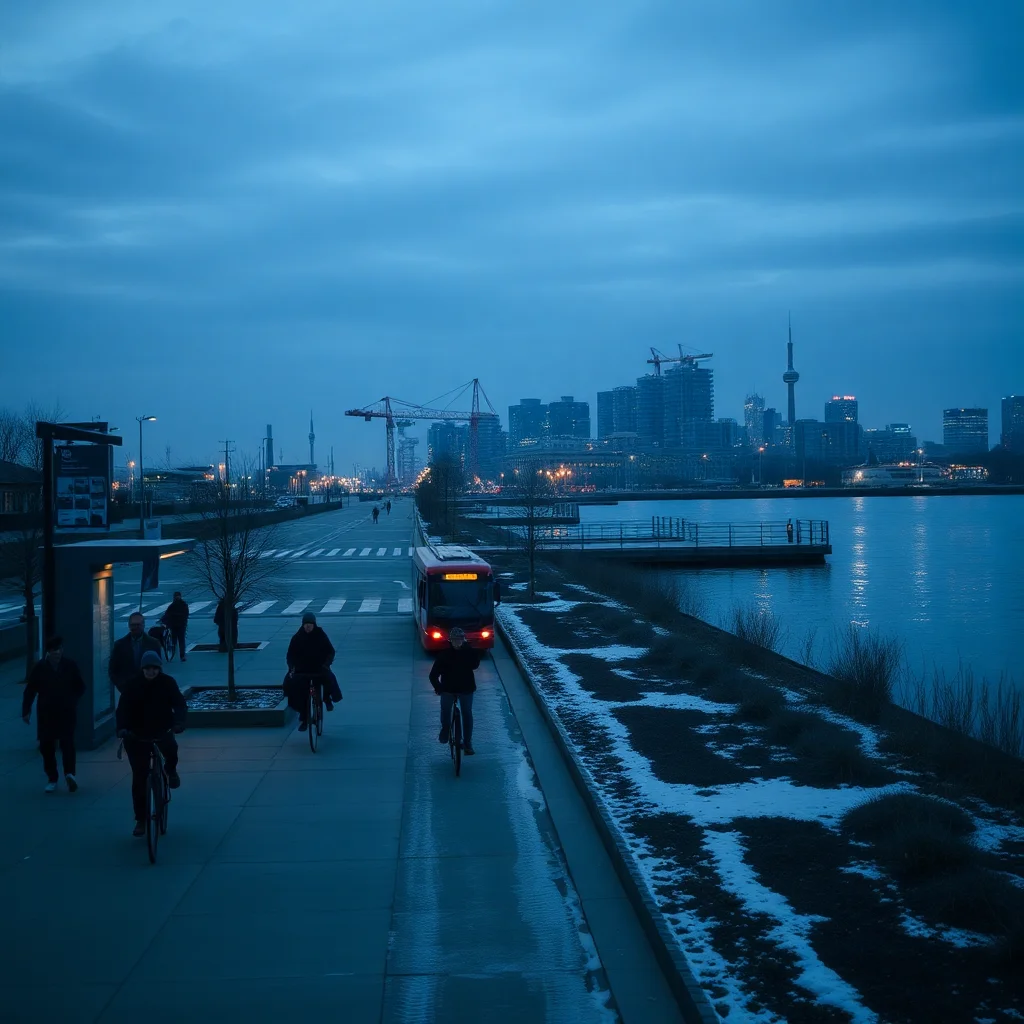
Toronto’s planned island district in the Port Lands, Ookwemin Minising, is being framed as a landmark for urbanism: 98 acres of waterfront redevelopment, a landscape-led neighborhood, and a car-free core that promises cleaner air, quieter streets, and public space with actual civic value. That sounds obvious only because cities have spent a century surrendering themselves to traffic engineering. To remove cars is not to add a lifestyle perk; it is to make a political decision about who the street belongs to. In that sense, the island’s ambition is real. A place designed without the daily dominance of private vehicles can finally prioritize pedestrians, cyclists, transit, trees, and weather-resistant public life over curb cuts and parking logic.
This is why the project matters beyond Toronto. From Vauban in Freiburg to the recycled industrial districts of Hammarby Sjöstad in Stockholm, the strongest recent precedents show that once cars are pushed to the edge, the city becomes legible again. Children move independently. Ground floors can actually host things people need rather than dead frontage. Public squares can be squares instead of traffic islands with benches. The best car-free districts do not merely reduce emissions; they restore the old urban compact in which density, proximity, and shared infrastructure create social friction in the best possible way. That friction is what makes a district feel alive.
It also connects to broader questions about how climate adaptation can become public space, because the best waterfront districts are no longer just about managing flood risk or stormwater in technical terms. They are about turning resilience into a civic experience that people can actually use, inhabit, and understand. That is part of what gives a place its public legitimacy.
The promise is more than environmental; it is urban and moral
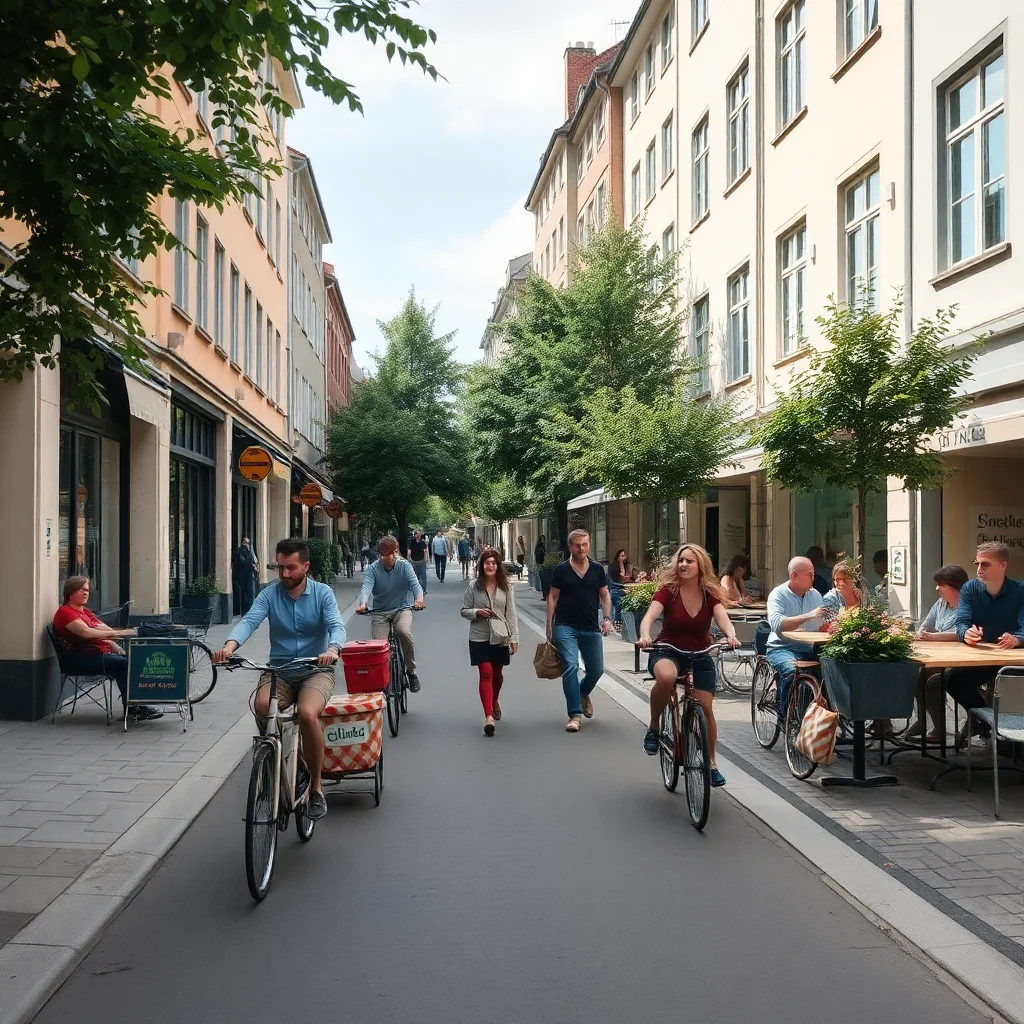
The appeal of a car-free district is not hard to understand because the failure of car-oriented planning is so visible. Streets widened for throughput become hostile to lingering. Ground floors become defensive. The private car behaves like an anti-social room on wheels, consuming space far beyond its use time. In a waterfront development like Toronto’s, where the public realm is doing the heavy lifting of identity, eliminating cars is a way of saying that the district is a place first and a traffic corridor never. That is not a small shift. It changes how architects can design thresholds, how landscape architects can choreograph movement, and how civic space can host markets, spill-out seating, play, and events without competing with exhaust and curbside chaos.
Designers have been making this argument for years. Jan Gehl’s work in Copenhagen did not merely beautify streets; it measured how life intensifies when walking is protected from cars. Gehl’s lesson has been repeated in places like King’s Cross in London, where public squares and pedestrian routes became the real infrastructure of place-making. Even more ambitious are schemes like the superblocks in Barcelona, where reallocated street space creates a finer urban grain and a more humane daily rhythm. In each case, the city becomes less about circulation as an end in itself and more about encounter. That is the promise Toronto is reaching for: a district where people are not crossing a transportation machine but inhabiting a neighborhood.
Landscape-led urbanism can do what zoning alone never managed
The involvement of Danish landscape studio SLA signals an important shift. Too often, “car-free” is treated as a transport policy with a bit of planting attached. But landscape-led urbanism understands that the public realm is not an afterthought; it is the architecture of daily life. Wetland edges, planted corridors, shade, stormwater systems, habitat, and seasonal variation are not decorative extras in a waterfront district. They are the material conditions that keep a place from becoming a sterile exercise in image management. When the ground plane is designed with ecological intelligence, public space can be both functional and sensorial rather than merely tidy.
That matters especially in a place like the Port Lands, where the challenge is not only mobility but climate resilience, soil remediation, and the creation of a new district from heavily engineered waterfront land. If this kind of neighborhood works, it will not be because the cars disappeared; it will be because the designers made a convincing substitute ecosystem of urban life. Streets must be narrow enough to feel intimate but generous enough to absorb service access. Paths must be porous yet legible. Retail, schools, transit, and public program must be close enough that walking becomes the default, not the sacrificial choice. In other words, car-free living is not a slogan. It is a logistics problem disguised as an ideal.
CONTRA: Remove the cars, and the real work begins
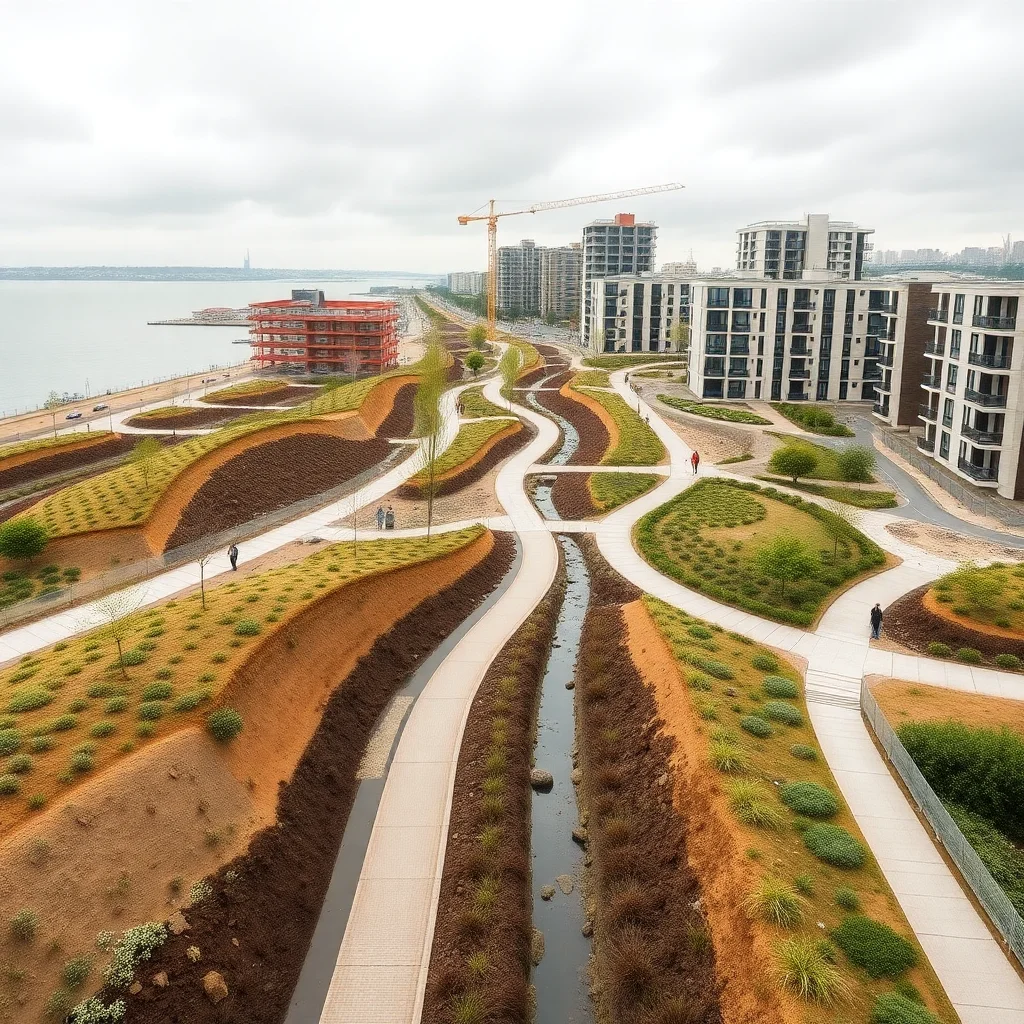
Here is the uncomfortable truth: eliminating cars does not automatically produce a city; it can just as easily produce a highly curated enclave. That is the danger Toronto’s island district exposes. Too many car-free developments are sold as if absence itself were architecture. No cars, no problem. But community does not emerge from a ban. It emerges from density, affordability, mixed use, timing, governance, and the unglamorous friction of everyday needs. If those are missing, the result is not urbanity but a polished, walkable stage set. The street may be calm, but it is calm in the way a rendering is calm.
The history of “human-scale” planning is full of districts that look exemplary on a masterplan and banal in practice. We have all seen the faux-village problem: winding lanes, pretty paving, and a social life that collapses at 9 p.m. because there are too few people, too little economic mix, and too much reliance on a single identity narrative. The danger is especially acute in waterfront megaprojects, where land values are high and public rhetoric outruns social reality. If the car is removed but the units skew expensive, the retail is curated, and the uses are too carefully managed, the district can become a climate-conscious version of a lifestyle mall. It may be walkable, but it is not necessarily democratic.
Questions of access and distribution are never far away in these debates, which is why an article like Who Gets to Live Near the Jobs That Need Them? feels relevant here. A district can be elegant on paper, but if it does not connect ordinary households to opportunity, the walkability becomes a privilege rather than a civic asset.
A car-free district can hide its dependencies rather than solve them
There is also a planning sleight of hand at work in many car-free schemes: the car does not disappear; it is displaced. Deliveries still need access. Emergency services need routes. Accessibility is non-negotiable. People with mobility impairments, parents with heavy loads, and residents traveling in adverse weather still need flexible movement. So if the design buries all this complexity below a clean public image, the district’s supposed purity is purchased by moving inconvenience out of sight. That is not urban sophistication; it is cosmetic discipline.
Consider how many celebrated “walkable” districts depend on nearby transit that was funded outside the project boundary, or on parking structures hidden at the periphery, or on informal labor that keeps the place functioning while the branded narrative celebrates leisure. Real cities are messy because they absorb contradiction. A credible car-free district must therefore do the opposite of what marketing prefers: it must reveal its systems. Service lanes, shared mobility, loading windows, snow clearance, waste handling, and accessible design all need to be visible in the planning logic, not treated as embarrassments. Otherwise the district becomes a moral performance in which the clean public realm depends on a dirty backstage.
The question is not whether cars are absent, but whether life is present
This is why the Toronto project should be judged not by its slogan but by its depth. Does it create a true neighborhood economy? Does it support a mix of incomes, ages, and household types? Does it allow enough program density to sustain daily life after the novelty wears off? Can it tolerate weather, maintenance, and the less photogenic realities of urban living? If the answer is yes, then car-free planning can indeed make a place feel more like a city: layered, social, legible, and generous. If the answer is no, then the district will still be admired—but more as an object lesson in planning aesthetics than as a living urban fabric.
The strongest versions of car-free urbanism are not anti-mobility; they are anti-monopoly. They refuse to let one mode dominate the street or one narrative dominate the project. Toronto’s island district could become a genuine urban model if it resists the temptation to treat the car ban as the headline and everything else as implementation detail. Because a city is not real when it is car-free. It is real when its public realm is dense with ordinary life, conflict, exchange, care, and unpredictability. Cars are only one obstacle to that condition. The larger enemy is emptiness disguised as design certainty.
FAQ
Are car-free districts automatically more sustainable? Not automatically. They reduce car dependence, but sustainability still depends on transit access, building performance, material choices, stormwater systems, and whether residents can actually live there without needing long off-site trips.
Why are waterfront districts especially prone to this debate? Because waterfront redevelopments often rely on strong branding and public realm imagery to sell a new identity. Without careful programming and affordability, the walkable landscape can become a polished shell rather than a working neighborhood.
What makes a car-free district feel like a real city? Density, mixed use, social mix, frequent transit, visible services, and a public realm that stays active beyond business hours. A district feels real when people live, work, shop, and argue there—not just stroll through it.
What is the biggest design risk in Toronto’s island project? Treating the removal of cars as the main achievement. The real challenge is designing a public realm, mobility system, and social mix robust enough to make the district durable in everyday life.
Get the Mainifesto weekly — curated design debates, speculative ideas and the week's best articles every Saturday.
Editorial Perspectives
Questions and counterpoints developed by the Mainifesto editorial desk to extend the discussion.
Perspective 1
If a car-free district feels curated, that’s not a failure — that’s the brief. People don’t choose places because they’re ideologically pure; they choose them because they’re easy, legible, and enjoyable enough to come back to, spend money in, and talk about. The real test is whether it works at 8 a.m. on a Tuesday, not whether it passes a purity test.
Perspective 2
Removing cars does not automatically create a city; it just changes the infrastructure problem. Too often these districts look like successful public realms because access, servicing, and affordability are being handled elsewhere, out of sight. If the model only works by exporting friction to surrounding neighborhoods, then it’s not a better city — it’s a better marketing image.
Perspective 3
A real city is messy, layered, and open-ended; the moment a district becomes too polished, you start to lose that. I’m not ضد walkability, but I am suspicious when “car-free” becomes a badge that masks who gets to stay, who gets priced out, and who does the invisible labor that keeps the place running. Cities have always been made of complexity, not just good intentions and nice paving.