
When the Home Becomes a Master Plan
The House Is No Longer a Box
The most interesting homes in circulation now are not being praised for squeezing the most function into the smallest footprint. They are being judged as domestic ecosystems: sequences of rooms, thresholds, outdoor rooms, built-in furniture, and everyday rituals that produce a way of living, not just a plan. That shift matters because it changes the architectural question from “How efficiently is space used?” to “How convincingly does the house choreograph life?”
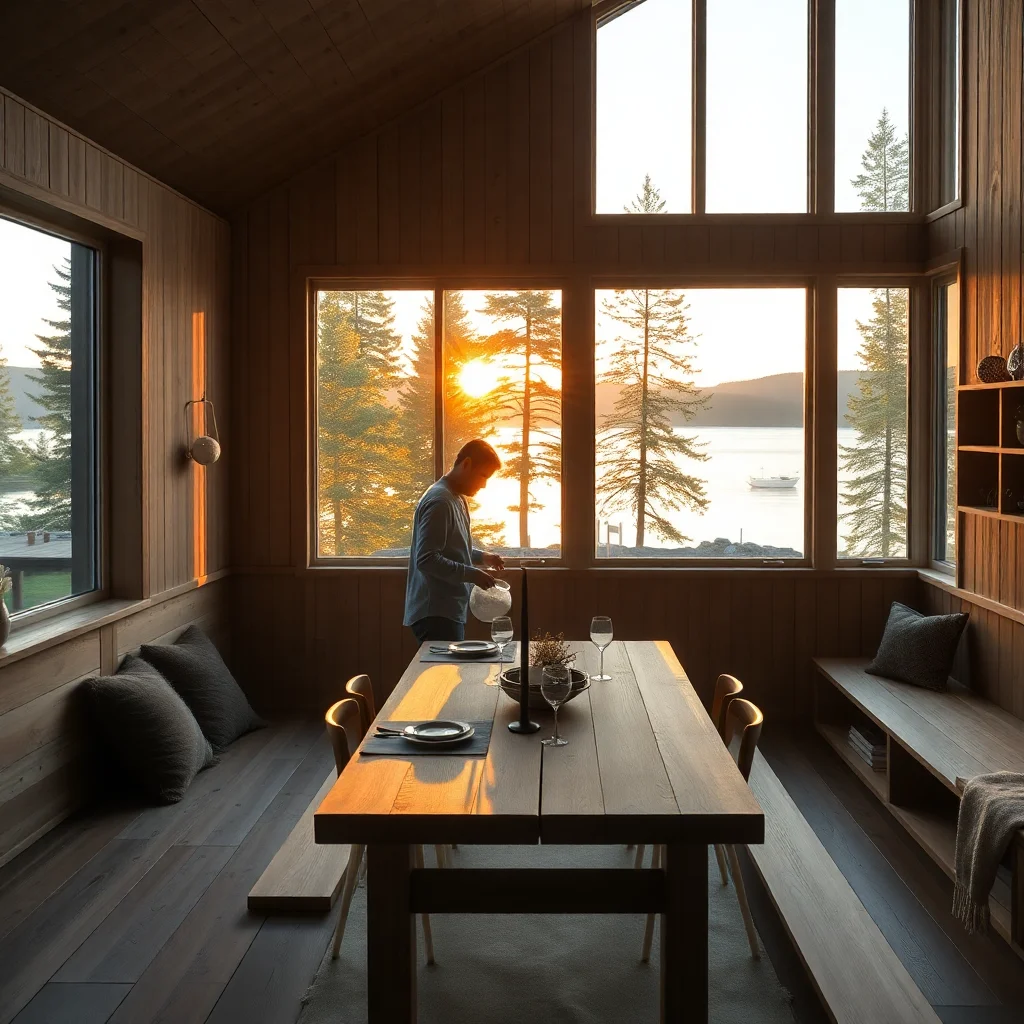
The Dyes Inlet House by Shed Architecture and Design is a useful signal. Its appeal is not that it stages spectacular entertaining, but that it makes the absence of entertaining feel like a design position rather than a limitation. Kirsten’s remark—“For people who don’t like to entertain a lot, there’s not that much we have to do because it’s just so pleasant being in the space”—is a quiet manifesto. The house does not chase maximal sociability; it creates a setting so calibrated that ordinary domesticity feels sufficient, even luxurious. That is an important distinction. The next wave of homes may not be measured by how many guests they can absorb, but by how elegantly they move between solitude, intimacy, and occasion.
In this sense, the home begins to resemble a master plan in miniature. Not because it is over-designed, but because it links scales: the chair to the hearth, the table to the patio, the landscape to the kitchen, the shed to the social room. Once you start reading houses this way, the old floor-plan fetish looks inadequate. A good plan can place rooms correctly; a stronger domestic project scripts mood, tempo, and use across time. That idea also helps explain when buildings become interfaces: domestic space increasingly behaves less like a static container and more like a responsive system of signals, transitions, and prompts.
From Floor Plan to Domestic Choreography
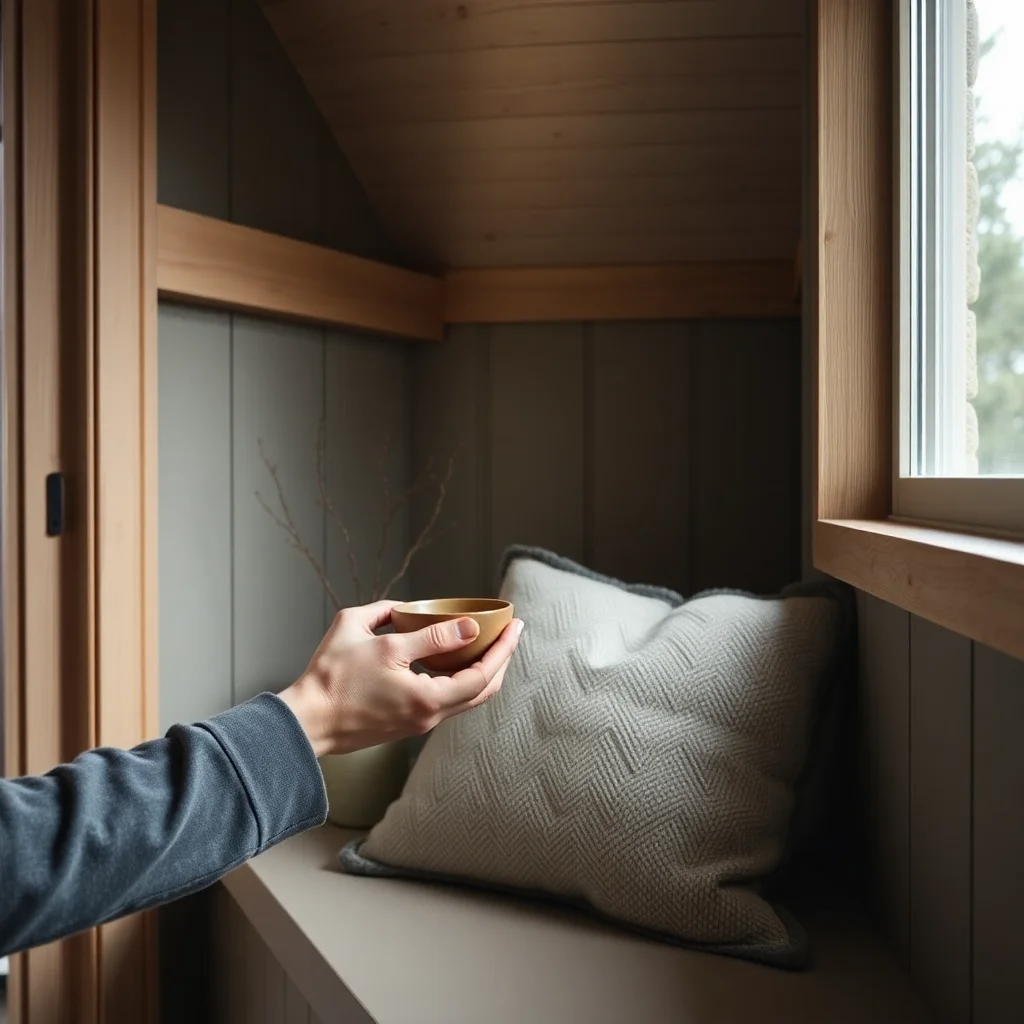
Architecture has long celebrated plans for their rational clarity, but domestic life is not a spreadsheet. A house succeeds when it can hold contradiction: retreat and gathering, work and rest, openness and privacy, the weekday and the exceptional dinner. That is why the best contemporary homes increasingly borrow from landscape design, hospitality, and even exhibition-making. They are less objects than sequences, and their success depends on the quality of transitions.
Consider how Scandinavian-inspired residential design has normalized this expanded brief. In many of these projects, the living room is no longer a sealed civic center but one node in a larger domestic field. A bench by the window becomes a reading refuge; a covered terrace functions as a seasonal extension; the kitchen island becomes a social border rather than a worktop. The house is composed through repeated adjacencies, not a single heroic room. The result is a domestic environment that feels more like a carefully edited campus than a traditional plan.
This is where the old obsession with square footage begins to look crude. Two homes can have the same area and produce completely different lives. One may be efficient and forgettable. The other may be spatially generous because it modulates experience: a compressed entry that releases into a sunlit volume, a quiet nook cut into the circulation path, a garden wall that gives the interior a second horizon. The architecture is not simply arranging functions. It is shaping behavior.
That behavioral shift is also why some designers now look back to inherited housing forms for cues. The question raised in can vernacular house types become climate tech again? is not nostalgic in the narrow sense; it asks whether familiar domestic types can be retooled to handle heat, shade, airflow, and seasonal use while still feeling emotionally legible.
PRO: Why the Ecosystem Home Is the Right Model
The strongest argument for the ecosystem home is that modern domesticity is already fragmented. People eat differently, work differently, host differently, and rest differently than they did a generation ago. The house that admits this complexity will outperform the house that pretends life is still organized around a fixed family script. A master-planned home can accommodate an early-morning coffee ritual, a remote work session, a Sunday gathering, and an evening retreat without forcing each activity into the same generic room.
This is not merely a matter of luxury. It is a matter of dignity. In projects such as those by Tadao Ando, where light and procession become essential to domestic experience, or in Kengo Kuma’s more porous relationship between interior and exterior, the home gains value by making everyday movement meaningful. Even on a smaller scale, a carefully handled built-in bench, a deep window seat, or a mudroom that acts as a psychological decompression chamber can change the emotional economy of a house. The point is not abundance. It is calibration.
The ecosystem model also supports longevity. A house that is organized around relational spaces rather than rigid program boxes can adapt as family structures shift, children grow, guests arrive less often, or work becomes more home-based. Flexible domesticity is not a trend; it is resilience. The most consequential homes will be those that can absorb change without losing their character. That means architecture must think beyond occupancy and into sequence, beyond layout and into ritual.
There is also a cultural argument. In an age of screens and abstracted social life, a house that offers tactile transitions, views to the landscape, and multiple scales of enclosure becomes a corrective. It reminds inhabitants that living is spatial before it is digital. The home as ecosystem resists the flattening logic of the app. It asks people to move, pause, gather, and withdraw with intention.
CONTRA: The Risk of Over-Designing Daily Life
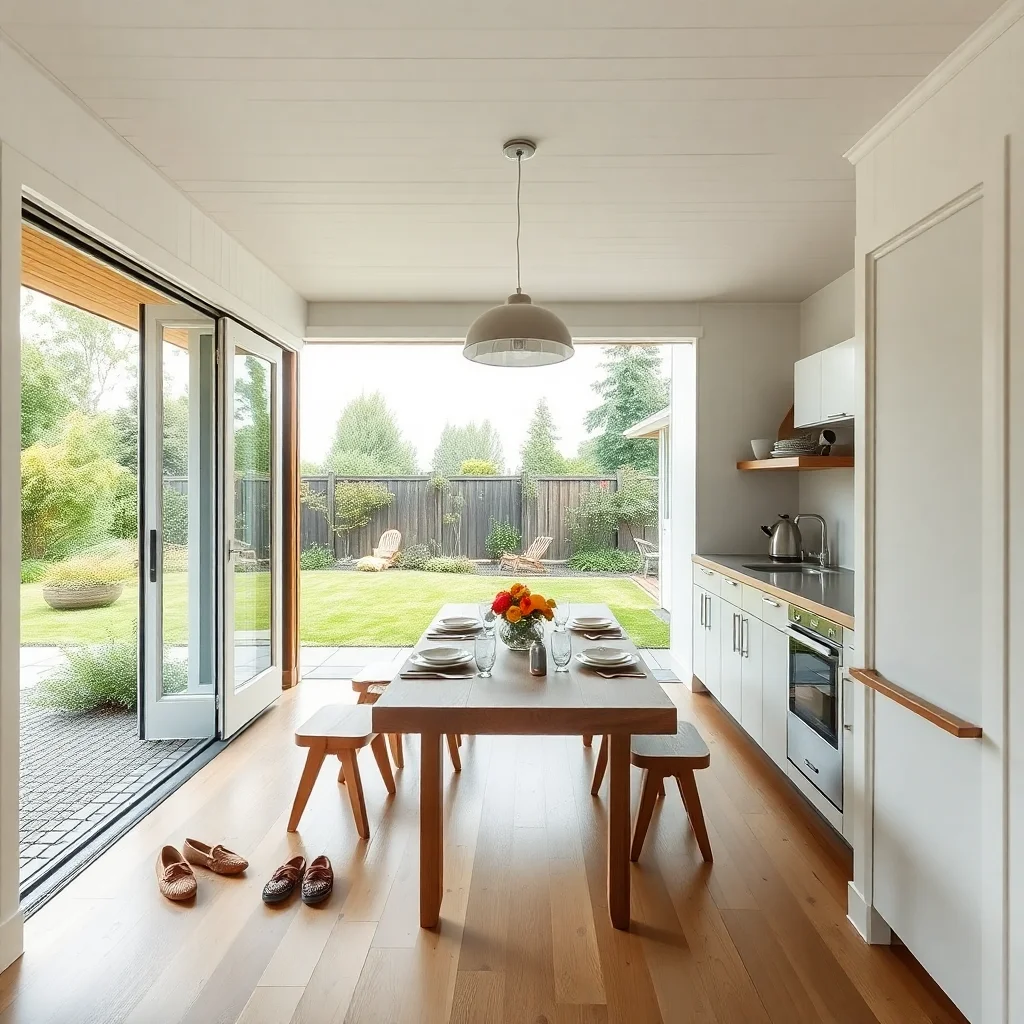
And yet the ecosystem home can become a tyranny of its own. Once architecture begins optimizing for ritual, there is a danger that the house becomes so choreographed it starts dictating behavior rather than supporting it. A home full of “moments” can feel like a set, and a house that is too committed to atmosphere may leave little room for mess, improvisation, or boredom—the very conditions that make domestic life human.
There is also a class problem embedded in this debate. Master-planned domesticity can slide into design elitism, where every threshold is meaningful, every material is curated, and every room promises a lifestyle narrative. That language flatters the homeowner but can conceal a simple truth: many people need durability, affordability, and adaptability more than symbolic richness. A house that photographs well is not automatically a house that serves.
Then there is the question of restraint. Not every home needs an elaborate sequence of outdoor rooms, sculpted storage, and bespoke furniture. Sometimes the best architecture is the one that leaves enough indeterminacy for life to be unruly. The danger in praising domestic ecosystems too enthusiastically is that we mistake density of design for depth of living. Good houses do not need to explain themselves at every turn. They should leave air in the system.
The lesson, then, is not to reject the master plan model but to discipline it. If a home begins to act like a master plan, it must also preserve a degree of incompletion. Otherwise the house becomes too legible, too scripted, too eager to perform. The most intelligent domestic architecture may be the kind that organizes living while still allowing it to escape the frame.
What the Best Homes Are Actually Selling
Look closely at the houses being admired now and a pattern emerges: they are selling not merely shelter, but tempo. They promise that arrival will feel distinct from dwelling, that entertaining will feel effortless because the space already does half the work, and that retreat will not require exile. In this sense, the home becomes a device for editing time. Morning, afternoon, and evening can each occupy a different register, even when the floor area is modest.
This is why material choices matter so much in the current conversation. Warm timber, soft daylight, durable surfaces, and carefully framed views are not decorative afterthoughts; they are the infrastructure of mood. Likewise, furniture is no longer neutral furnishing but spatial architecture at a finer scale. A built-in table can define community; a low sofa can slow conversation; a window ledge can become a destination. The whole house reads as a composition of invitations.
The editorial challenge for architecture is to stop romanticizing efficiency as an end in itself. Efficiency is necessary, but it is not the same as quality. A home can be efficient and emotionally flat. It can also be slightly inefficient and deeply alive. The new benchmark should be whether the home gives domestic life a richer grammar—one that supports entertaining without requiring it, and retreat without isolation.
That is the deeper implication of projects like Dyes Inlet House. Their power lies not in spectacle but in atmosphere disciplined by use. They propose that the highest ambition for a home is not to maximize function in the abstract, but to create a livable world at multiple scales. In that world, architecture is no longer a container for life. It is the framework through which life becomes legible, generous, and worth repeating. The tension between atmosphere and utility is also at the heart of can digital craft still feel like architecture?, where fabrication and expression are weighed against the risk of losing spatial substance.
FAQ
What does it mean for a home to be a “domestic ecosystem”? It means the house is understood as an interconnected set of rooms, thresholds, furniture, and outdoor spaces that shape daily rituals together, rather than as isolated functional boxes.
Why are architects moving beyond floor-plan efficiency? Because contemporary life is more fragmented and variable than older domestic models. Homes now need to support work, rest, solitude, and hosting across different times of day.
Is the ecosystem approach only for luxury houses? No. The idea can be applied at many scales through smart thresholds, built-ins, daylight, and flexible adjacencies. The real issue is quality of experience, not just size.
What is the main criticism of this trend? That it can become over-designed and overly scripted, turning daily life into a curated performance and favoring aesthetics over practicality or affordability.
Conclusion
The next generation of homes will not be judged only by how neatly they fit a program. They will be judged by whether they can host the unruly, repetitive, and emotional realities of living across multiple scales. That is a far more ambitious standard—and a much more interesting one.
Get the Mainifesto weekly — curated design debates, speculative ideas and the week's best articles every Saturday.
Editorial Perspectives
Questions and counterpoints developed by the Mainifesto editorial desk to extend the discussion.
Perspective 1
This is the right way to frame it: a home is not just a container, it's a small operating system with thresholds, courtyards, routines, and social protocols. But once you talk about choreography, you also have to ask who the house is choreographed for, because in many cities that script is shaped by climate, class, and access more than by taste.
Perspective 2
Efficiency still matters, but it’s a weak metric if it ignores how people actually live over time. I’d rather judge a home by whether the layout can absorb daily mess, changing family structures, and seasonal habits without constant correction; that’s where design proves itself.
Perspective 3
I like the shift from static plans to lived sequences, because it treats the house as an adaptive system rather than a fixed diagram. The harder question is whether we can measure that choreography rigorously—through light, movement, adjacency, and use patterns—without reducing life to pure optimization.
Perspective 4
Staging a way of life sounds seductive, but somebody still has to pay for the extra square meters, custom joinery, and maintenance. In the real market, the best home is the one that works hard on a sensible plan first, then earns its character through how well it functions day to day.