Can Floating Buildings Become Civic Infrastructure?
Water Is No Longer the Edge of the City
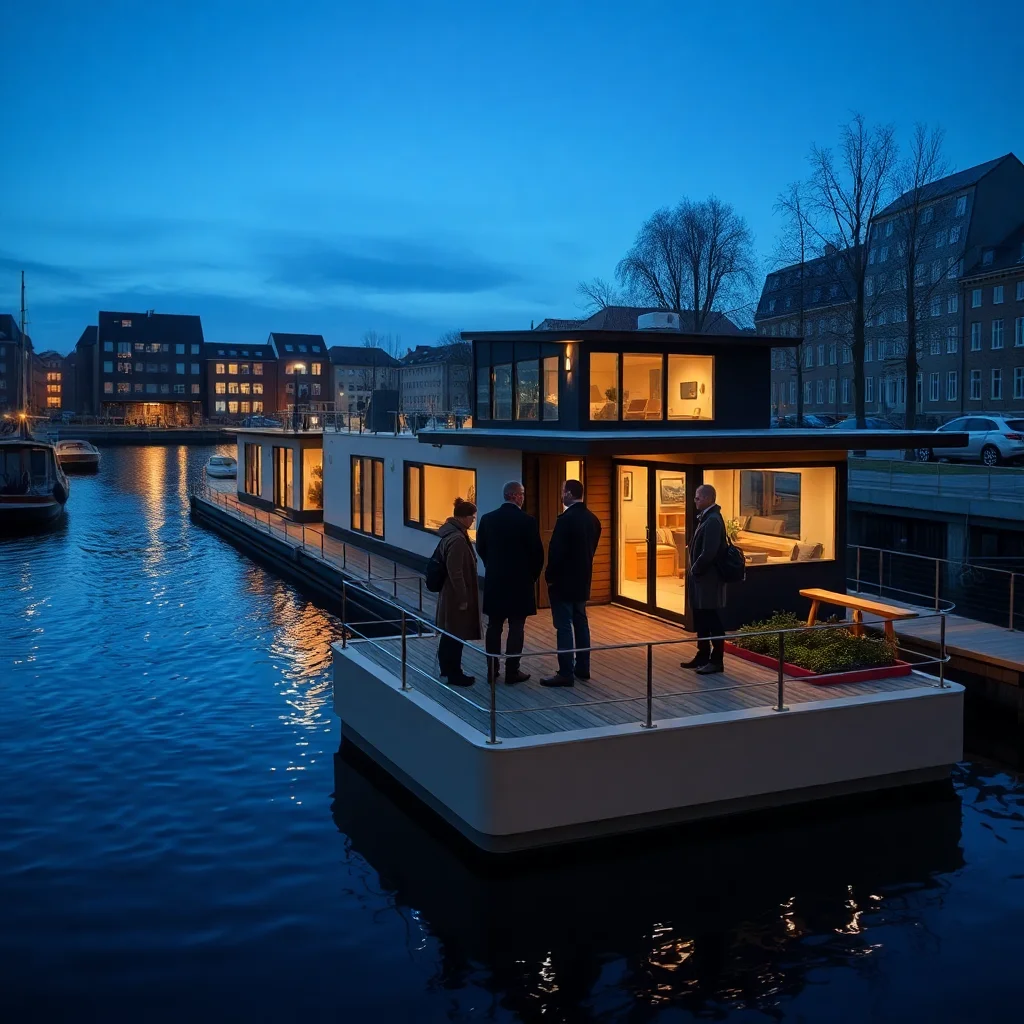
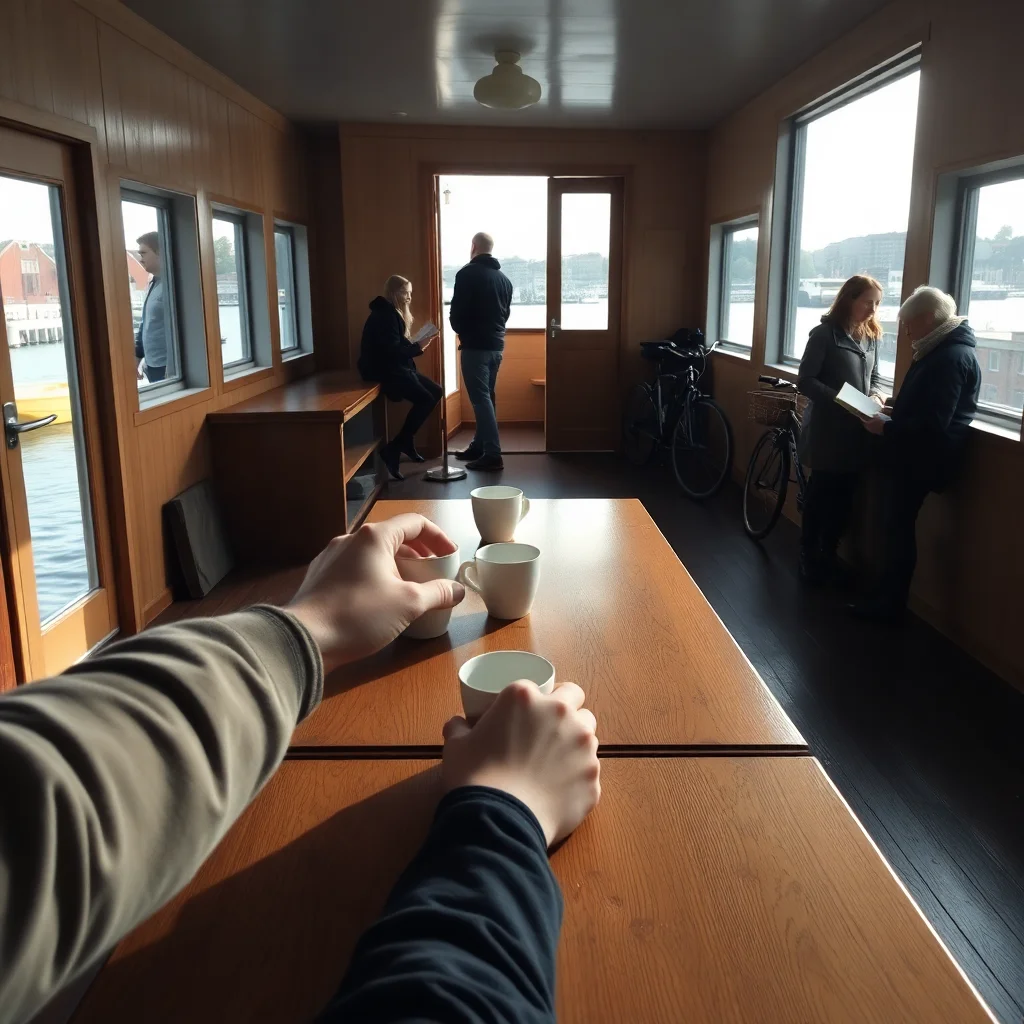
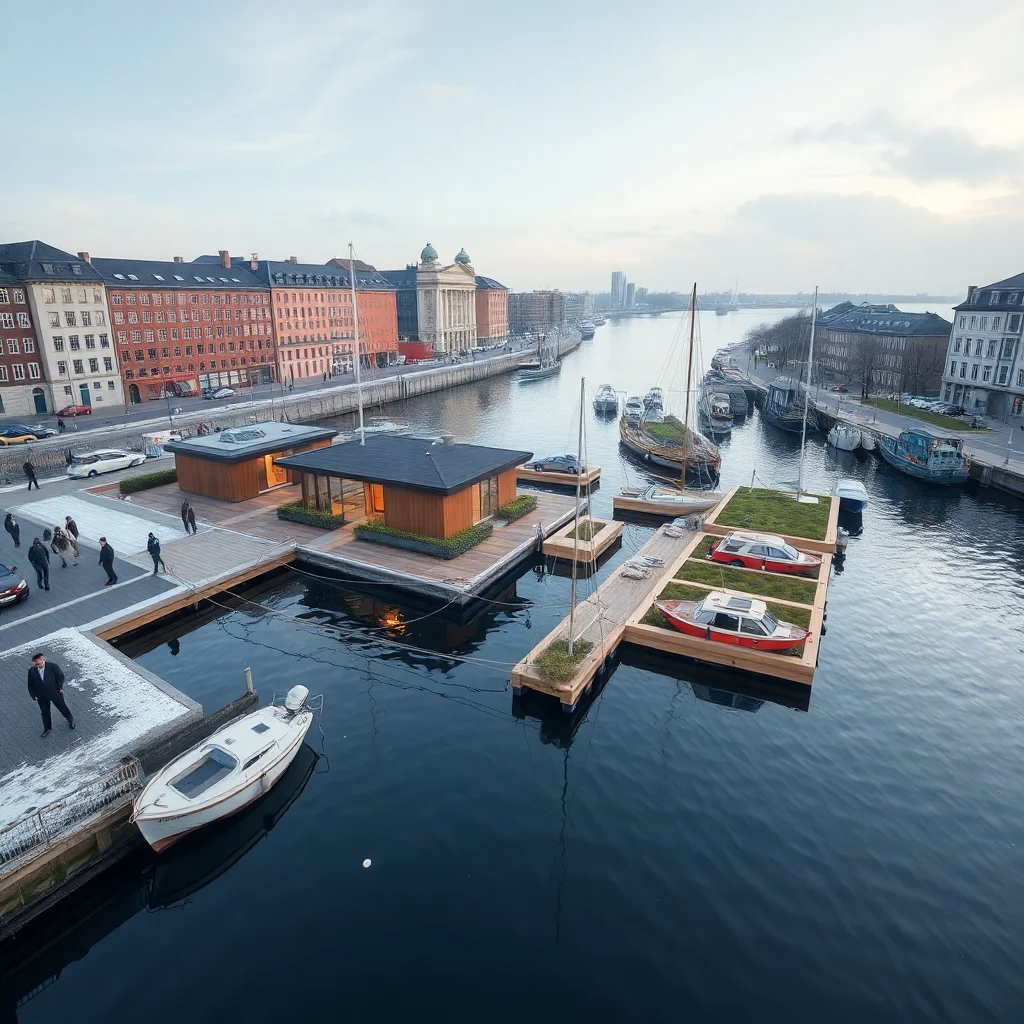
For centuries, cities treated water as a line to defend, drain, or romanticize. Now climate reality is forcing a more uncomfortable proposition: water is not outside urban life, it is inside it. Copenhagen’s new floating community space, Bedding 1, completed by Danish studios Arcgency and MAST beside the artificial island of Christiansholm in the Arsenalgraven canal, makes that shift vivid. It is not a marina fantasy or a billionaire’s dockside indulgence. It is a piece of civic architecture that assumes the canal can host social life, guest accommodation, and public belonging.
That matters because architecture has been slow to move from symbolic resilience to operational resilience. Too many “floating” projects remain demos: beautiful, isolated, and impossible to replicate. Bedding 1 points to a harder ambition. If water can be a site for gathering, staying, and moving through daily life, then the city’s most vulnerable edge becomes a productive, shared medium. The real test is whether this kind of amphibious urbanism can leave behind the language of spectacle and enter the language of infrastructure.
This is not a niche Scandinavian provocation. Across the world, rising seas, storm surges, and land scarcity are pushing designers to imagine settlement models that accept instability instead of fighting it with ever-higher walls. The question is no longer whether floating architecture is possible. The question is whether it can be normal.
From Object to Urban System
Bedding 1 is important precisely because it is framed as part of a larger civic sequence: one of three planned floating structures, joined by piers and a floating garden, creating communal space rather than a single icon. That system-based thinking is where the future lies. A solitary floating house can be admired. A network of floating public rooms, gardens, and pathways can be lived with.
The most successful precedents understand this distinction. In Rotterdam, the Floating Pavilion by PublicDomain Architects and DeltaSync was less a building than a climate conversation, demonstrating how lightweight construction can inhabit tidal logic. In the same city, the ambitious Rijnhaven floating neighborhood proposals have pushed the idea further: not just experiment, but district-making. In Amsterdam, the Schoonschip community shows that waterborne living can be collective, technologically sophisticated, and politically legible. These are not utopias. They are prototypes for governance, maintenance, and shared responsibility.
Yet floating architecture will fail if it remains trapped in the aesthetics of novelty. A pavilion is not a neighborhood. A guesthouse is not housing policy. To scale, amphibious urbanism must do what all serious infrastructure does: survive routine use, tolerate wear, and be financed, regulated, insured, and repaired. The architecture is only the visible tip; the real work is in mooring systems, utility connections, emergency access, and long-term stewardship. In other words, the project is not a building. It is an operating model.
The Civic Promise of Living on Water
What makes floating community spaces so provocative is that they challenge a deeply modern assumption: public life belongs on stable ground. But many cities already function through water-based networks of work, leisure, and identity. Venice has long performed civic life on canals, though its burdened tourism economy now distorts that heritage. In Lagos, Makoko’s amphibious settlements have made water an everyday fact of life, even as they reveal the danger of leaving adaptation to informal systems alone. In Dhaka, flood-prone neighborhoods have compelled architects and NGOs to imagine schools, clinics, and homes that can rise and shift with seasonal water.
The best amphibious projects do more than respond to disaster. They propose a richer public realm. Imagine a floating reading room during summer, a shared kitchen moored beside a neighborhood, or a bathhouse that expands civic access to water rather than privatizing it. If public space is where a city rehearses its democratic identity, then waterborne public space asks us to rehearse a different urban citizenship: one based on negotiation, buoyancy, and mutual dependence.
This is where designers like Koen Olthuis and firms associated with water-based urbanism have been most persuasive. They insist that the water city is not a retreat from density but a way to preserve it when land becomes unstable or overburdened. Similarly, BIG’s Oceanix concept for floating neighborhoods, though still speculative, has helped mainstream the idea that climate adaptation may require entirely new spatial typologies. The danger is that such visions remain too clean, too corporate, and too detached from the messy rhythms of actual neighborhoods. That is why Copenhagen’s modest, public-facing experiment is more instructive than a glossy masterplan.
Why Spectacle Is Not the Real Enemy
Floating architecture is often dismissed as picturesque climate theater. Sometimes that criticism is fair. The design press loves a buoyant silhouette, and developers love a sustainability story with photogenic reflections. But spectacle is not the real enemy; irrelevance is. A floating structure can be visually striking and socially necessary at the same time. The problem is when designers confuse attention with agency.
Consider the difference between amphibious urbanism and water-themed branding. One reorganizes access, resilience, and everyday routines. The other decorates the waterfront. A true civic water architecture must answer questions that look unglamorous from a render: Who pays for maintenance? How are utilities attached to a moving structure? What happens in a freeze, a storm, a drought, or a fire? Can children, elderly residents, and disabled users access it safely? Can it be adapted by community groups instead of locked into one program?
These are architectural questions, but they are also political ones. When housing grows unaffordable and cities continue to densify, the pressure to build on water will intensify. If floating structures are left to luxury markets, they will become climate privilege: a lifestyle product for the few. If they are integrated into social infrastructure, they can redistribute access to waterfronts that have long been privatized by ports, industry, and elite development.
Scaling Means Boring Things Done Brilliantly
To scale amphibious urbanism, architecture must embrace boring systems with radical seriousness. Modular pontoons, standardized utility couplings, adaptable moorings, and repairable envelopes matter more than flamboyant form. Dutch water engineering offers a crucial lesson here: success depends on infrastructures that disappear into normal life. The Dutch did not make water management powerful by making it glamorous; they made it powerful by making it continuous.
That same logic should govern floating civic architecture. Community spaces like Bedding 1 should be judged less by their novelty and more by whether they can be repeated, expanded, and locally governed. Can the design be assembled in different cities? Can it be financed by municipalities, cooperatives, or hybrid public-private models? Can it host multiple programs over time? Can it be retrofitted when the climate shifts again? These are the questions that separate genuine urbanism from one-off experiment.
There is also a cultural hurdle. Many people still see water as the enemy of permanence, while architecture still clings to the fantasy of fixed ground. But permanence is already an illusion in the climate era. Coastlines move. Storms mutate. Groundwater rises. Foundations fail. In that context, a building that can live between land and water is not a radical exception. It may be the most honest expression of what building now means.
The Future of the Waterfront Will Be Shared or It Will Be Useless
The old waterfront model is exhausted. Too often it produces luxury apartments, branded promenades, and private marinas, while communities are excluded from the very edges where cities reveal themselves most powerfully. Floating civic spaces offer a counter-vision: access instead of enclosure, adaptation instead of denial, collective use instead of single ownership.
Bedding 1 suggests that the next chapter of architecture may not be about conquering water, but about learning to inhabit it socially. That is a more difficult proposition than building a striking object in the harbor. It requires institutions, not just design talent. It requires public investment, local management, and acceptance that cities can have multiple forms of ground.
If amphibious urbanism succeeds, it will not be because buildings float. It will be because cities finally admit that water is part of the civic contract. The most radical architectural move may be to stop treating the shoreline as the end of urban life and start treating it as a shared beginning.
FAQ
What is amphibious urbanism? Amphibious urbanism is an approach to city-making that designs for both land and water, allowing buildings, infrastructure, and public spaces to respond to changing water levels instead of resisting them absolutely.
Why is Bedding 1 significant? Bedding 1 matters because it is not just a floating object; it is a floating community space and guesthouse positioned as part of a broader civic sequence, suggesting that water can support everyday social life.
What are the biggest obstacles to scaling floating architecture? The main obstacles are cost, regulation, maintenance, accessibility, utility connections, and governance. Without solving these, floating projects stay in the realm of demonstration rather than infrastructure.
Can floating buildings help with climate adaptation? Yes, especially in flood-prone or land-scarce cities. But they work best when integrated into larger systems of resilience, public access, and neighborhood infrastructure rather than treated as isolated emergency gestures.
Open Question
If the waterfront becomes the next civic frontier, should cities invest in floating public infrastructure now—or are we simply building beautiful prototypes for a future we are still refusing to govern?
Get the Mainifesto weekly — curated design debates, speculative ideas and the week's best articles every Saturday.
Editorial Perspectives
Questions and counterpoints developed by the Mainifesto editorial desk to extend the discussion.
Perspective 1
I’m interested if it solves a real program problem, not just if it photographs well at sunset. If the floating space can handle daily use, weather, maintenance, and security without becoming a novelty, then it starts to look like infrastructure rather than a branded stunt.
Perspective 2
Floating civic space can be useful, but only if it’s governed with the same seriousness as any other public asset. Otherwise it becomes a waterfront accessory for people who can already afford access, which is just gentrification with better engineering.
Perspective 3
The fascination with amphibious architecture is hardly new; every era rediscovers its own frontier and mistakes it for destiny. What worries me is the tendency to admire the prototype while avoiding the political question of who controls the water, the shoreline, and the public realm.
Perspective 4
We should absolutely invest now, but only in pilots tied to clear performance metrics: safety, accessibility, lifecycle cost, and ecological impact. Without that, these projects stay in the realm of speculative urbanism and never become scalable civic infrastructure.
Perspective 5
I’m not against the idea, but I’d want to see hard numbers before anyone calls it infrastructure. If the capex, maintenance, and insurance stack up, and it genuinely extends public use of the waterfront year-round, then it has a case.