
Do We Still Need a Universal Home?
PRO: The universal home was never just a house
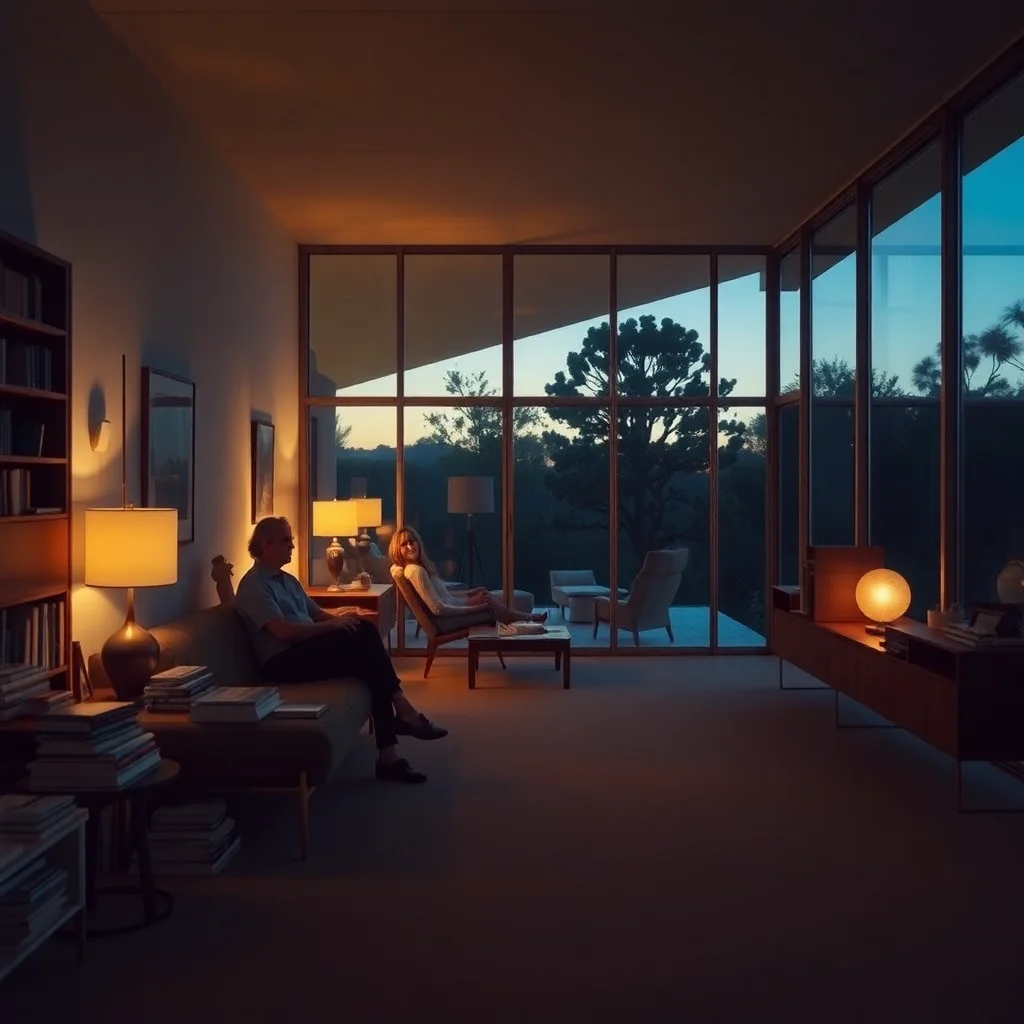
The Case Study Houses were not merely prototypes; they were cultural machines. Backed by Arts & Architecture magazine from 1945 onward, the program proposed that modern living could be condensed into repeatable, economical, elegant forms. In the iconic photographs of Charles and Ray Eames, the house seems less like a building than a lifestyle diagram: low benches, art objects, books, industrial materials, ease without clutter. The message was blunt and seductive — domesticity could be rational, open-plan, and intellectually modern. For a generation emerging from war and scarcity, that promise was not trivial. It was a democratizing fantasy with real force.
There is a reason the dream of the universal home persists. A good domestic model can do more than solve square footage; it can lower costs, reduce decision fatigue, and create a common language for building at scale. From the Eames House to Pierre Koenig’s Case Study House #22, modernism offered spatial clarity, prefabrication, and a belief that design could serve everyday life rather than decorate it. The open plan, the seamless threshold between inside and outside, the emphasis on standard components: all of this still appeals because it claims to replace class-coded ornament and inherited taste with a more legible, less exclusionary order. In theory, universal design is the opposite of elitism.
That is exactly why the myth is so powerful. A universal home is not only a floor plan; it is a moral claim. It says that architecture can rise above individual preferences and cultural noise to produce a shared standard of living. It sounds humane, even progressive. But the history of these homes reveals that the “universal” often meant something more specific: a postwar, white, middle-class, nuclear-family script dressed up as neutrality. The ideal looked open because it had already selected who counted as its imagined inhabitant.
Seen another way, this tension also explains why later projects such as armored facades with open living feel like such a sharp update to modernist ideals: they keep the aspiration toward openness, but acknowledge the need for protection, privacy, and climatic control that the Case Study myth often glossed over. The lesson is not that transparency failed, but that transparency was always only one part of domestic life.
PRO: Case Study Houses made modern life visible

One of the most important achievements of the Case Study Houses was their ability to turn domestic life into an image with public relevance. They understood that architecture is not only experienced in plan, section, or material detail, but also in how it is photographed, inhabited, and repeated. The Eameses’ house did not present itself as a sacred object; it appeared casual, flexible, and appropriated. Yet that casualness was designed. The suspended mezzanine, steel frame, translucent panels, and assembled objects all staged a new intimacy between production and dwelling. Modern domesticity was no longer hidden behind heavy curtains and inherited furniture; it was exposed as a working system.
That exposure mattered because it made architecture aspirational without being overtly monumental. Ruth and Charles Eames did not inhabit a mansion; they inhabited an argument. Similarly, Koenig’s steel-and-glass houses demonstrated that precision and economy could produce dignity rather than austerity. The modern house became legible as an adaptable framework, one that could be occupied by different personalities and habits. It is easy to dismiss this as merely stylistic, but style is never merely style when it organizes access, light, labor, and status.
What the program still teaches us is that domestic space should not be treated as an accumulation of sentimental exceptions. There is value in repeatable ideals, in systems that can be adapted across sites, budgets, and climates. Universal ambitions have historically driven sanitation, daylight access, ventilation, and more generous spatial standards. Without that impulse, housing degenerates into arbitrary compromise. The question is not whether ideals are useful, but whether the ideal can be honestly pluralized. Modernism at its best was a toolkit for that. Modernism at its worst became a style of convenience for people who already matched its assumptions.
CONTRA: Universal design quickly becomes a narrow cultural script
And here is the problem: the supposedly universal home tends to universalize one social order while erasing others. The Case Study Houses are now read as icons of openness, but openness for whom? The answer is often visible in the furniture arrangements, the tidiness of the photographs, and the absence of domestic labor. The clean line between architecture and life becomes a fantasy if one ignores who cooks, cleans, repairs, cares, and absorbs the friction that makes a house actually work. A plan can be flexible on paper and rigid in practice. The open living room may celebrate informality, but it can also expose women, children, and workers to continuous surveillance and unpaid labor.
Historic domestic interiors reveal the same tension. Modernism famously attacked clutter, yet clutter is often the material evidence of plural life: religious objects, inherited furniture, children’s drawings, extra bedding, medical equipment, tools, seasonal clothing, food storage. The “universal” interior too often treats these as disturbances rather than realities. That attitude is not neutral; it encodes a preference for minimal ownership, stable employment, small households, and predictable routines. It assumes a climate where glass walls are comfortable, a class position that can afford maintenance, and a social life that does not depend on multigenerational care or shared occupancy.
Think of how quickly the modernist home falters under different conditions. In dense urban housing, in hot climates, in cultures of extended kinship, or in economies where rooms must flex between work, sleep, and revenue, the modernist ideal can feel like a luxury wrapped in ethics. The architectural language of transparency and flow becomes less a universal grammar than a narrow script for a specific postwar suburb. This is why the mythology is so persistent: it mistakes a successful image for a shared reality.
For instance, the ongoing interest in courtyard living as a climate strategy shows how another domestic logic can respond more directly to weather, privacy, and shared use. Rather than treating openness as the default good, it treats enclosure, shade, and microclimate as part of a more adaptable and less doctrinaire approach to home.
PRO: The dream survives because architecture still needs common standards
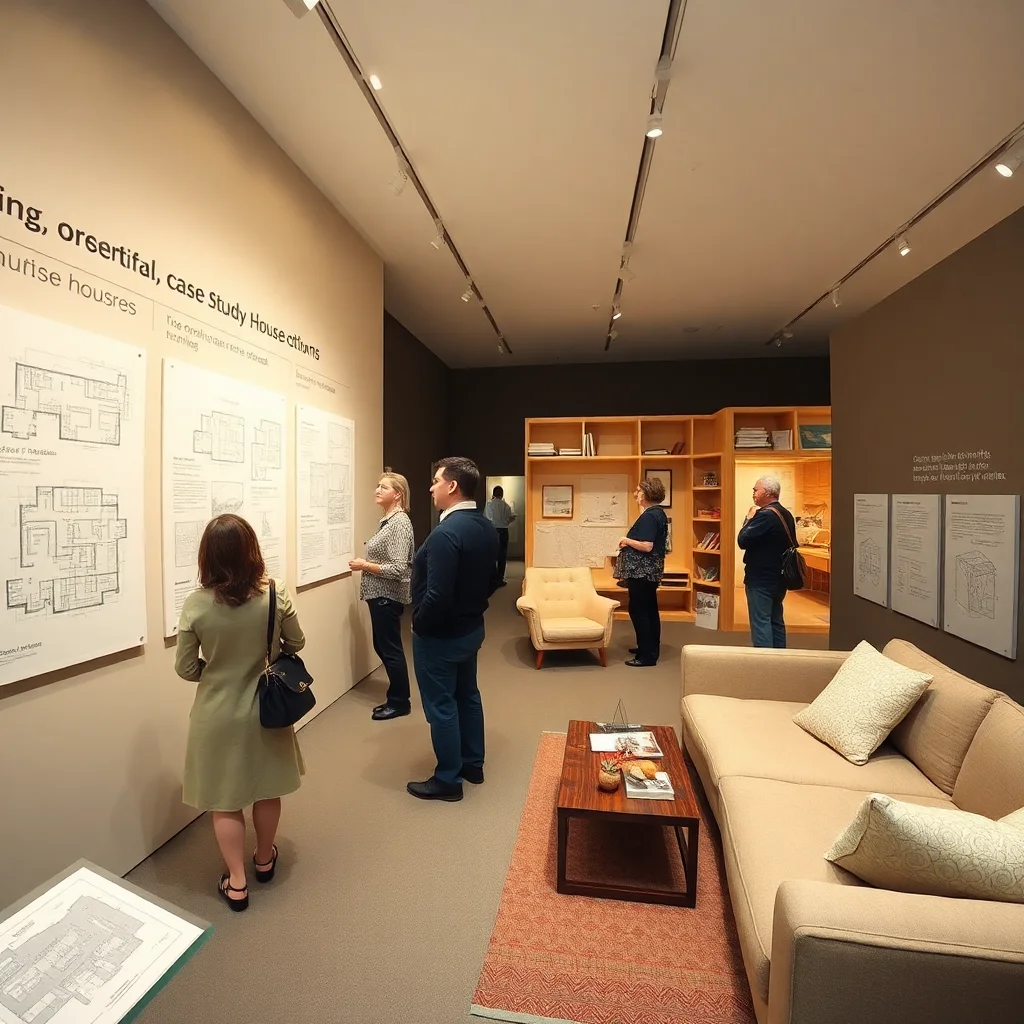
To reject universality altogether would be a mistake. Housing cannot be reduced to endless customization, because total personalization is expensive, slow, and often exclusionary. We still need standards for minimum room sizes, daylight, cross-ventilation, thermal performance, accessibility, and durable construction. We still need housing models that can be reproduced without becoming faceless. Modernism’s real contribution was not that every home should look the same; it was that architecture should be capable of making life easier through disciplined repetition.
Contemporary architects have repeatedly tried to salvage this ambition. From Herman Hertzberger’s housing experiments to more recent incremental housing strategies, the question has been how to combine repeatable structure with occupant agency. The best descendants of the Case Study logic are not the ones that mimic its aesthetics, but the ones that understand housing as an infrastructural framework rather than a finished identity. A universal home, in that sense, is not a single image. It is a system that allows divergence.
This is where the modernist legacy remains valuable. It insists that domestic architecture should not be reduced to bespoke consumption. In a housing crisis, the right answer is not to fetishize difference into luxury interiors. The challenge is to build repeatable shells that can absorb difference without collapsing into chaos. A universal ambition can still be radical if it no longer imagines a universal subject.
CONTRA: The future of domesticity is fragmented, and design must admit it
But architecture can no longer pretend that domestic life is organized around one household model, one climate, one labor pattern, or one identity. Families are recomposed, people live alone longer, care networks are distributed, and home is frequently a workplace, a refuge, a border checkpoint, and a site of negotiation all at once. The modernist dream of the universal home struggles because it overestimates stability. It imagines the house as a neutral container when, in reality, the house is a negotiation among bodies, histories, technologies, and power.
That is why revisiting the Case Study Houses is so revealing. They remain dazzling because they distilled a coherent life from a chaotic century. But their coherence now reads as selective. The more closely we look, the more they appear as cultural scripts masquerading as common sense. The task today is not to abandon ambition, but to change the target. Architecture should not ask how to produce one universal domestic ideal. It should ask how to produce many dignified domestic conditions — for renters, elders, cohabitants, blended families, single parents, migrants, remote workers, and people whose lives refuse the old nuclear template.
In that sense, the universal home is both obsolete and necessary. Obsolete, because no single image can describe domestic life anymore. Necessary, because without shared standards and collective imagination, housing becomes pure market fragmentation. The real provocation is this: maybe the modernist dream should survive not as a picture of how we all live, but as a demand that housing be capable of hosting lives that do not look alike.
That broader housing imagination also leaves room for adaptive reuse, especially where existing structures can be converted into homes, mixed-use buildings, or community assets instead of being demolished and rebuilt from scratch. Flexibility, not purity, may be the more durable modern value.
FAQ
What were the Case Study Houses meant to do?
They were a postwar housing program initiated by Arts & Architecture magazine to test economical, repeatable, modern homes for everyday life. Their broader goal was cultural as much as architectural: to define a new domestic ideal for the postwar United States.
Why is the universal home considered a myth?
Because it presents one particular social arrangement — often white, middle-class, nuclear, and suburban — as if it were natural and universally applicable. In practice, domestic life is shaped by class, climate, culture, family structure, and labor.
Did modernist houses ignore domestic labor?
Often, yes. Their photographic and spatial rhetoric tends to emphasize clarity and leisure while minimizing the work of cooking, cleaning, caregiving, and maintenance that keeps a home functioning.
Is there still value in universal design today?
Absolutely, but only if universality means shared standards and accessible frameworks rather than one fixed lifestyle. The challenge is to design housing that is robust, adaptable, and equitable without pretending everyone lives the same way.
So what should replace the universal home?
Not chaos. Not aesthetic relativism. Not the fantasy that every household must become a bespoke micro-brand. What should replace it is a politically honest housing culture: one that accepts repetition as necessary, but refuses to confuse repetition with sameness. The best architecture may no longer be universal in image, but it must remain universal in ambition — generous, adaptable, and indifferent to the old fiction that one domestic model can stand in for everyone.
Do we need a universal home, or do we need a housing imagination large enough to admit that universality was always a narrow story?
Get the Mainifesto weekly — curated design debates, speculative ideas and the week's best articles every Saturday.
Editorial Perspectives
Questions and counterpoints developed by the Mainifesto editorial desk to extend the discussion.
Perspective 1
I still think a universal home matters, but only as a framework, not a fixed template. If we strip it back to what actually holds up across budgets, climates, and family structures, we get something useful: adaptable plans, durable materials, and rooms that can earn their keep over time.
Perspective 2
The idea of a universal home was always more marketing than reality. What we need now is housing that admits difference from the start—climate, care work, density, and cultural habits all shape how people actually live, and design should follow that evidence instead of pretending one model fits all.