Who Gets to Change a World Heritage City?
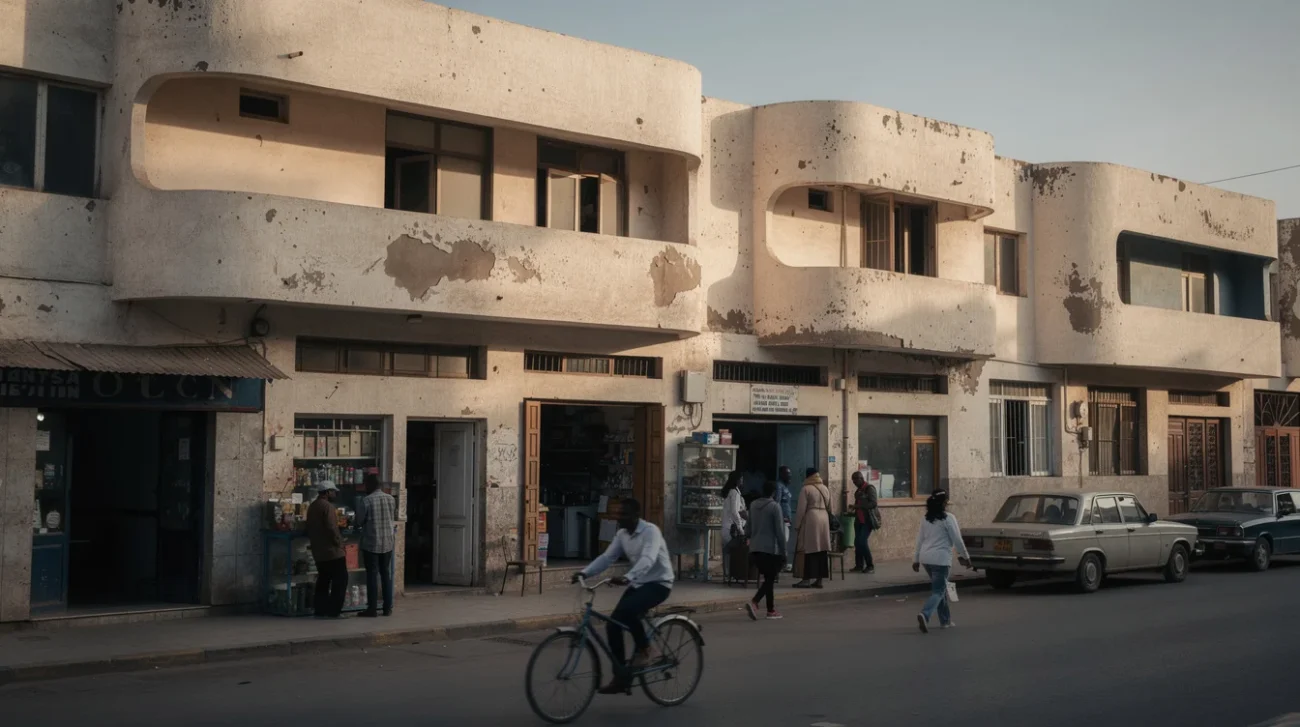
Asmara exposes a contradiction that architectural heritage prefers to keep picturesque: a city can be worth protecting and still need to change. Eritrea’s capital stands more than 2,300 metres above sea level, on a plateau beside the Great Rift Valley escarpment. Its extraordinary modernist fabric emerged through Italian colonial ambition, then survived decades of relative isolation that limited redevelopment. Neither condition offers a model for its future.
In July 2017, UNESCO inscribed “Asmara: A Modernist African City” on the World Heritage List. Recognition affirmed something more consequential than a collection of handsome buildings: a colonial urban project had become part of Eritrea’s national identity. But whose version of that identity should conservation protect? The decisive argument is no longer whether Italian architects deserve admiration. It is whether architectural continuity or everyday usefulness should carry greater authority when they conflict.
PRO: Protect the City, Not Just Its Icons
The strongest case for preservation begins with an unfashionable proposition: individual alterations can produce collective losses. A demolished corner building, an oversized replacement or a sequence of blocked arcades may seem defensible in isolation. Together, they can destroy the relationships that make an urban district legible. Asmara’s value lies not only in spectacular objects but also in the continuity between cinemas, shops, workshops, housing and streets.
Giuseppe Pettazzi’s Fiat Tagliero service station, completed in 1938, makes the obvious photographic argument, with its aeroplane-like concrete wings. The Cinema Impero, opened in 1937, offers another recognisable image of the city’s modernist ambition. Yet saving these landmarks while allowing their surroundings to become an unrelated field of speculative construction would preserve a logo rather than a place.
The Asmara Heritage Project’s documentation matters because it makes the wider city visible as an inheritance. Surveys and inventories can identify significance before a development proposal reduces the debate to the price of a plot. Conservation at urban scale protects relationships that property-by-property decision-making routinely undervalues. From this perspective, restrictions are not automatically an attack on residents. They can defend a shared environment against owners or investors whose private gains would impose permanent public costs.
PRO: Collective Identity Needs Material Continuity
Rejecting Asmara’s colonial buildings would not reverse colonialism. Eritreans have lived in, used and reinterpreted the city across generations. A building’s authorship does not give its architect permanent ownership of its meaning. The colonial project can become a national symbol precisely because subsequent inhabitants have made it serve a different historical identity.
That does not excuse the segregation and unequal power through which Italian colonial Asmara developed. It demands that those histories remain readable rather than being polished into a frictionless celebration of European design. Preservation should protect evidence, including uncomfortable evidence, while interpretation explains who built the city, who controlled it and who was excluded from its privileges.
Nor must conservation mean a ban on useful intervention. The 2013 inscription of the White City of Tel Aviv’s fellow modernist site, the Modernist City of Kaunas, is not the relevant precedent here; the relevant lesson across modernist heritage is methodological: identify significance, then distinguish essential fabric from adaptable space. In Asmara, that could mean preserving a street-facing composition while allowing carefully designed internal plumbing, electrical upgrades or a reversible access ramp.
The preservationist position is strongest when it accepts responsibility for delivery. If authorities require specialist repair, they should help make expertise and suitable materials accessible. Otherwise, a public commitment to heritage becomes a private maintenance bill. Protection deserves authority only when it supports continued occupation.
CONTRA: A Working City Is Not a Finished Composition
The opposing argument starts where architectural photography usually stops: behind the facade. A coherent streetscape cannot tell us whether a dwelling has adequate sanitation, whether a shopkeeper can receive deliveries or whether someone using a wheelchair can enter a public building. These are not secondary questions to be settled after authenticity. They determine whether the city works.
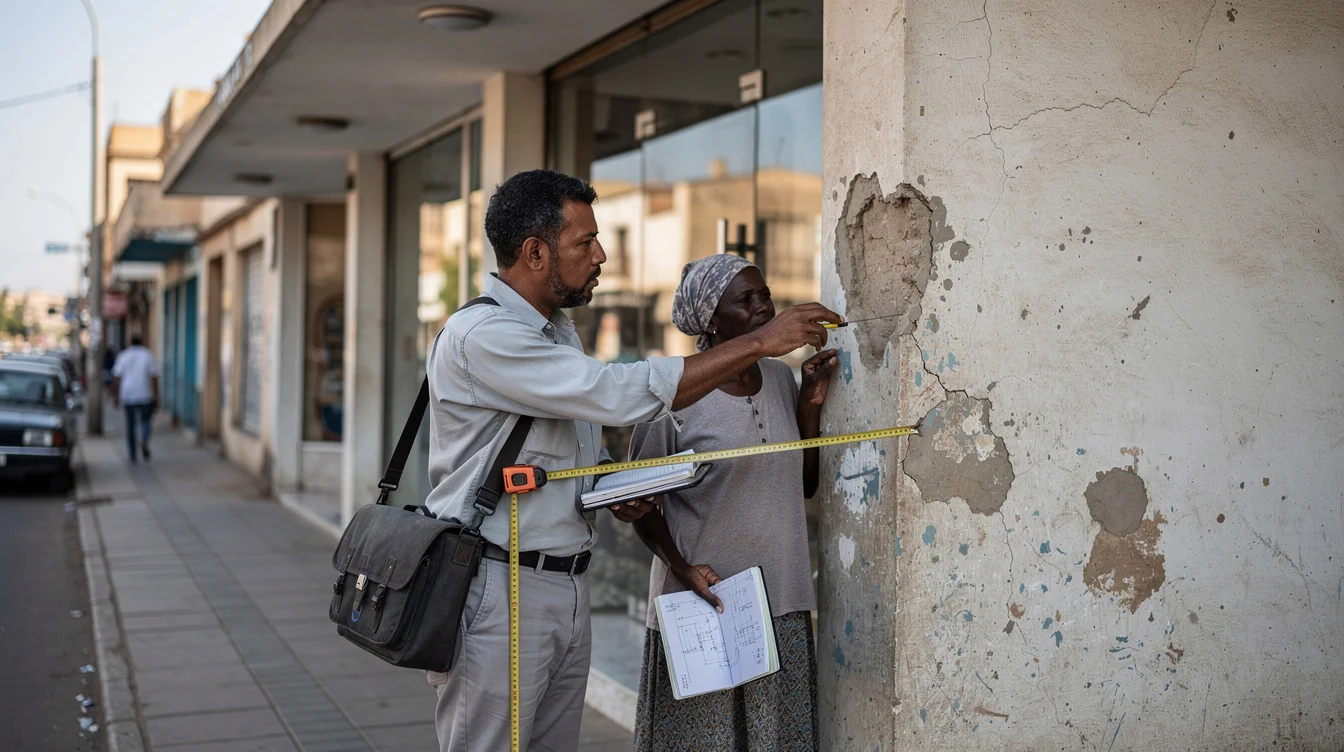
Consider a hypothetical household seeking a bathroom extension within a protected block. The proposal should be assessed for its effect on significant fabric, but also for the deprivation caused by refusal. Likewise, a shaded market structure, an accessible entrance or a discreet rooftop energy installation should not be rejected simply because it interrupts a preferred historical image. A conservation system that records visual change more carefully than unmet need has already chosen its constituency.
Lacaton & Vassal, working with Frédéric Druot and Christophe Hutin on the transformation of 530 dwellings at Grand Parc Bordeaux, offer a useful methodological comparison, not a ready-made solution for Eritrea. Their project improved existing homes through additions rather than wholesale demolition. Its relevance is the order of priorities: begin with inhabitants’ spatial needs, then design the intervention. Asmara should be allowed that ambition, rather than being treated as an accomplished composition whose users must adapt themselves to it.
CONTRA: Residents Need Power, Not Just Consultation
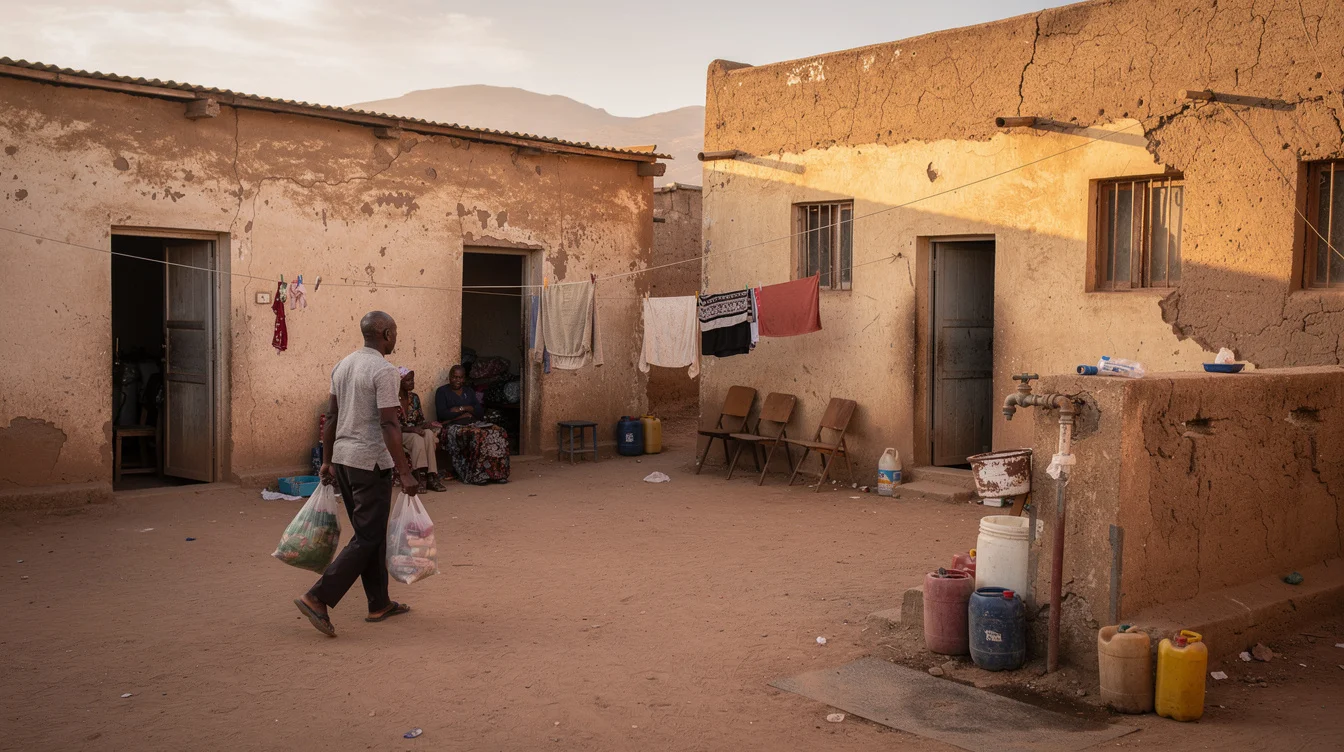
A resident-led approach cannot mean that any owner may build anything. Owners, tenants, traders and neighbours can have conflicting interests; a profitable addition for one person may remove another’s daylight or increase pressure on shared services. “The community” is not a single client. Giving residents authority requires procedures that expose these differences rather than hiding them behind a consultation photograph.
For Asmara, a credible alternative would judge proposed changes against published criteria: everyday benefit, displacement risk, structural safety, infrastructure capacity and damage to identified heritage significance. Tenants and users should have standing alongside titleholders. Refusals should explain what practical alternative remains, and an appeal process should be able to challenge conservation decisions as well as development approvals.
The Aga Khan Award-winning rehabilitation of the Revitalisation of Birzeit Historic Centre in Palestine offers a relevant comparison through its attention to reuse and public space. It is not a direct analogue for Asmara’s modernism or political circumstances. Its value is in demonstrating that inherited urban fabric can be approached as social infrastructure, not merely a visual asset.
Under this position, documentation is a starting point, not a veto. Some changes will be visible; some losses may be justified. If collective identity cannot accommodate the people currently producing it, conservation has confused continuity with obedience. The burden of proof should fall on anyone demanding that residents endure avoidable hardship to preserve an image.
FAQ: Who Should Decide Asmara’s Future?
Why did Asmara receive UNESCO World Heritage status?
Asmara was inscribed in July 2017 for its outstanding modernist urban heritage. Its significance encompasses an urban ensemble, not simply isolated monuments, and reflects both Italian colonial planning and the city’s subsequent place in Eritrean history and identity.
Does World Heritage status prohibit alterations?
No. Inscription does not require every building to remain untouched. Changes must be considered against the attributes supporting the site’s Outstanding Universal Value. National and local planning systems implement protection; UNESCO does not function as the municipal permit office.
What would resident-led conservation look like?
It would give residents meaningful influence over priorities, budgets and alteration decisions, rather than merely inviting comments on completed plans. Decisions would assess housing quality, accessibility, livelihoods and displacement alongside architectural significance, with transparent reasons and a route to appeal.
Can colonial architecture become a national symbol without erasing colonial violence?
Yes, if preservation acknowledges coercion and segregation while recognising subsequent appropriation and use. Conserving a building need not celebrate its original regime. The danger lies in presenting colonial design as an innocent aesthetic achievement detached from the unequal society that produced it.
When protecting Asmara’s collective identity conflicts with improving life for its residents, who should have the authority to decide what changes—and what survives?
Watch the Mainifesto Short
Get the Mainifesto weekly — curated design debates, speculative ideas and the week's best articles every Saturday.
Editorial Perspectives
Questions and counterpoints developed by the Mainifesto editorial desk to extend the discussion.
Perspective 1
Residents should have the final say on changes that make their homes safer, cheaper to run and fit to live in. If conservation rules block those improvements, whoever insists on preservation needs to explain who pays—not just which façade survives.
Perspective 2
I wouldn’t give today’s needs an automatic veto over heritage that belongs to future residents too. Before relaxing protections, shouldn’t we test whether reversible retrofits and carefully placed additions can deliver better living conditions without losing what makes Asmara distinct?
Perspective 3
Neither an international designation nor a national identity claim should give officials a blank cheque over residents’ lives. Put decisions through a local process with real resident representation, independent conservation advice and published budgets—otherwise participation means being consulted about a decision already made.