
When Mycelium Meets Electronics, What Happens at the End?
When Mycelium Meets Electronics, What Happens at the End?
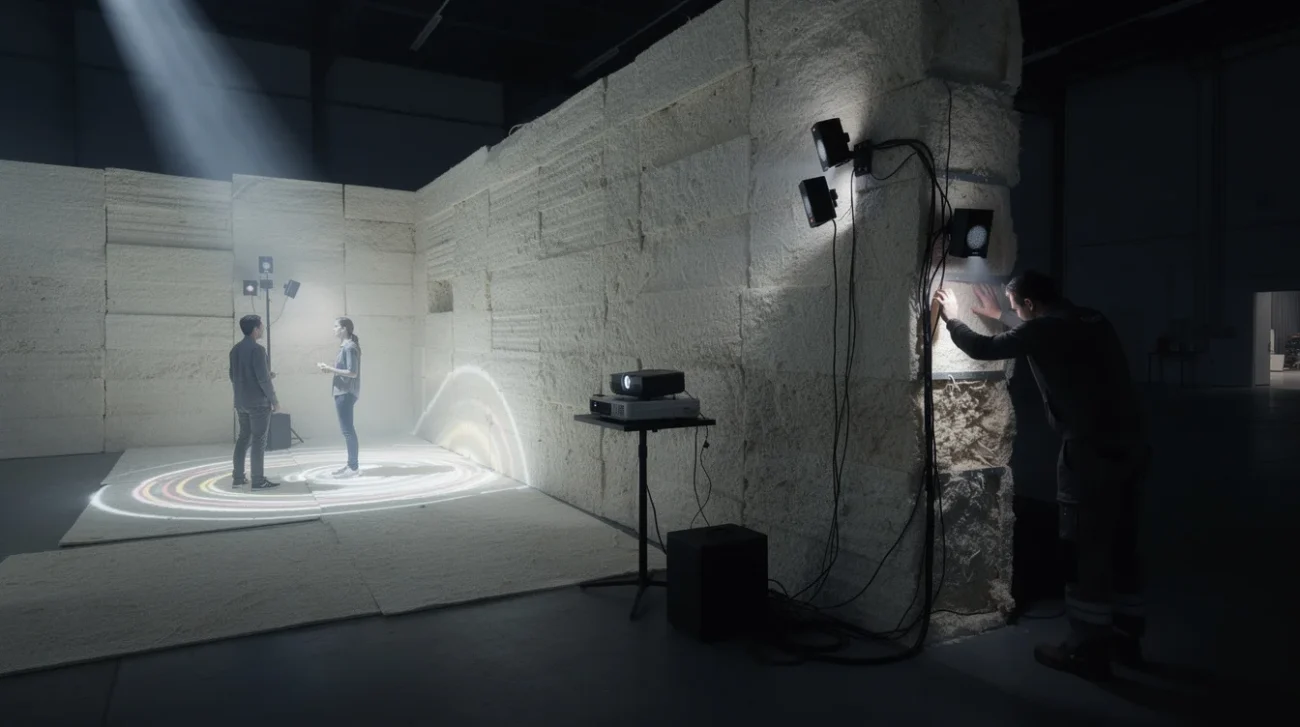
A pavilion that remembers your movements is an alluring proposition. A pavilion that leaves nobody responsible for its components is a familiar architectural problem. Hypha-lume, described by designboom as a system of reconfigurable mycelium modules combined with sensors, lighting, projection and sound, sits precisely between those possibilities. Human presence becomes an evolving spatial memory. But once the audience leaves, another choreography matters: who disconnects the sensors, removes the lighting and decides where the biological material goes?
The provocative test is simple: do not ask whether the pavilion contains mycelium. Ask whether it can stop being a pavilion without becoming mixed waste. That distinction separates a compelling material experiment from a credible circular system.
The available source description establishes the combination of biological modules and interactive technology; it does not establish the fixing details, repair procedures or recovery arrangements. This is not evidence that Hypha-lume fails. It is a reason to refuse the automatic promotion of a bio-based installation into an environmental success story. As with asking whether a rainforest retreat can put the forest first, the challenge is to distinguish environmental ambition from demonstrated outcomes. Architecture has become adept at photographing regenerative promise. It needs to become equally fluent in documenting the screws, contracts and labour that make that promise actionable.
A Grown Material Is Not a Complete Exit Strategy
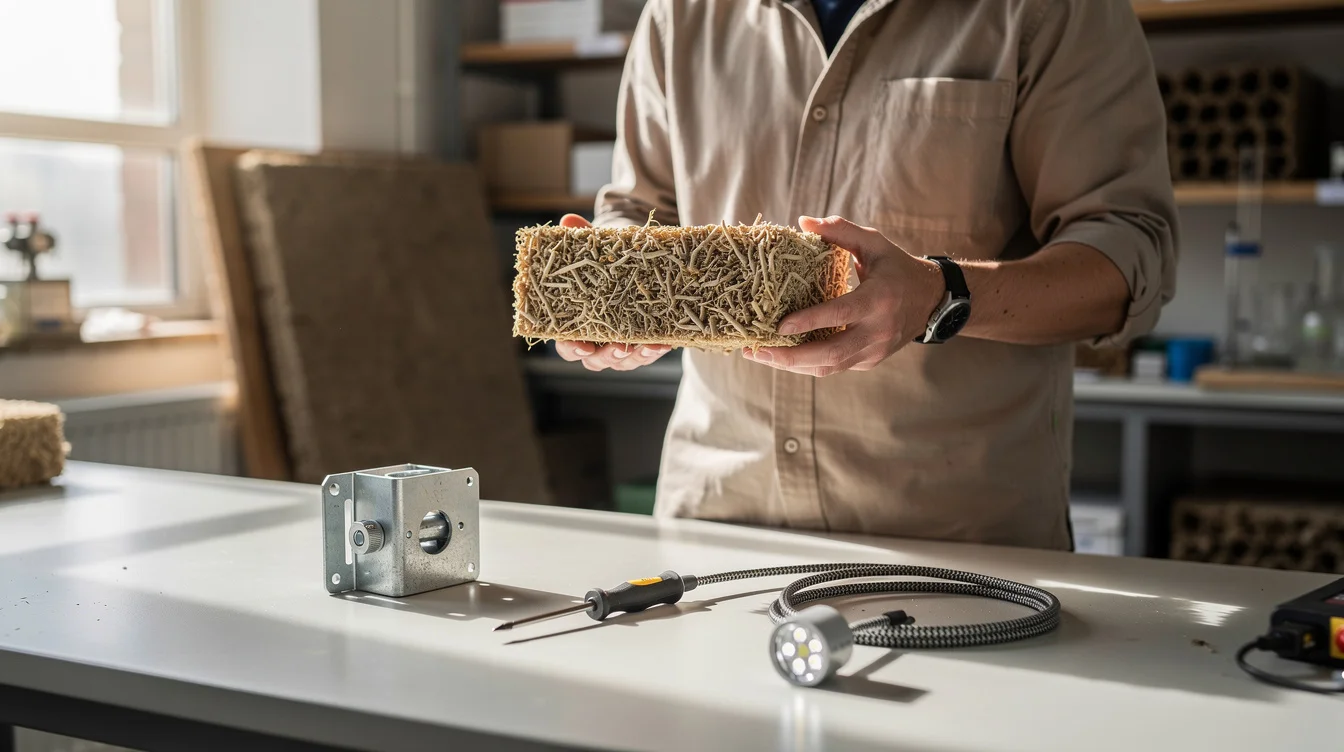
Mycelium composites typically use fungal growth to bind a feedstock such as agricultural fibres. Many architectural products are subsequently dried or heat-treated, meaning the finished component should not automatically be imagined as a living organism. Feedstock, processing, density and treatments all affect performance and possible recovery. The biological origin is the beginning of an investigation, not its conclusion.
David Benjamin and The Living made this distinction tangible with Hy-Fi, the 2014 installation at MoMA PS1, whose tower used mycelium-based bricks and foregrounded their planned composting after the exhibition. The Growing Pavilion, presented by Company New Heroes and the Dutch Design Foundation at Dutch Design Week in 2019, likewise brought mycelium into an architectural assembly involving other materials. Neither reference gives every subsequent fungal composite a universal compostability certificate. They demonstrate why the whole assembly and its destination deserve attention.
For Hypha-lume, the pertinent questions concern the actual modules: are there coatings, embedded inserts, adhesives or surface finishes? Can those additions be removed? What conditions would a receiving facility require? Bio-based, biodegradable and locally compostable are different claims. A component that might break down under particular conditions still needs an accessible, appropriate destination. Without one, its biological narrative can end in the same disposal stream as conventional exhibition scenery.
The Crucial Detail Is Where the Cable Meets the Module
Reconfigurability is promising because it suggests an architecture that can change without being demolished. Yet rearranging modules is not the same as separating material streams. A unit might move easily while carrying permanently bonded wiring, inaccessible fasteners or a lighting assembly that cannot be replaced without damaging its body. Mobility can disguise a tightly coupled product.
The decisive drawing is therefore not the atmospheric rendering. It is the section through the connection. In a separable system, sensors could sit on accessible brackets; lighting could occupy removable rails; cables could run through recoverable sleeves rather than disappear into adhesive-filled channels. Projection and sound equipment might remain on independent supports, allowing the biological enclosure to change without retiring functioning hardware. These are design options to test, not verified descriptions of Hypha-lume.
Stewart Brand’s account of buildings as layers that change at different speeds offers a useful framework. A projector, a control computer and a mycelium panel do not share a maintenance cycle. Forcing them into one inseparable component makes the shortest-lived part dictate the fate of the rest. The interface should accommodate different lifetimes, not conceal them. That may require visible access panels and less seamless detailing. Circular architecture must sometimes sacrifice visual purity to preserve material independence.
Repair the Experience Without Replacing the Architecture
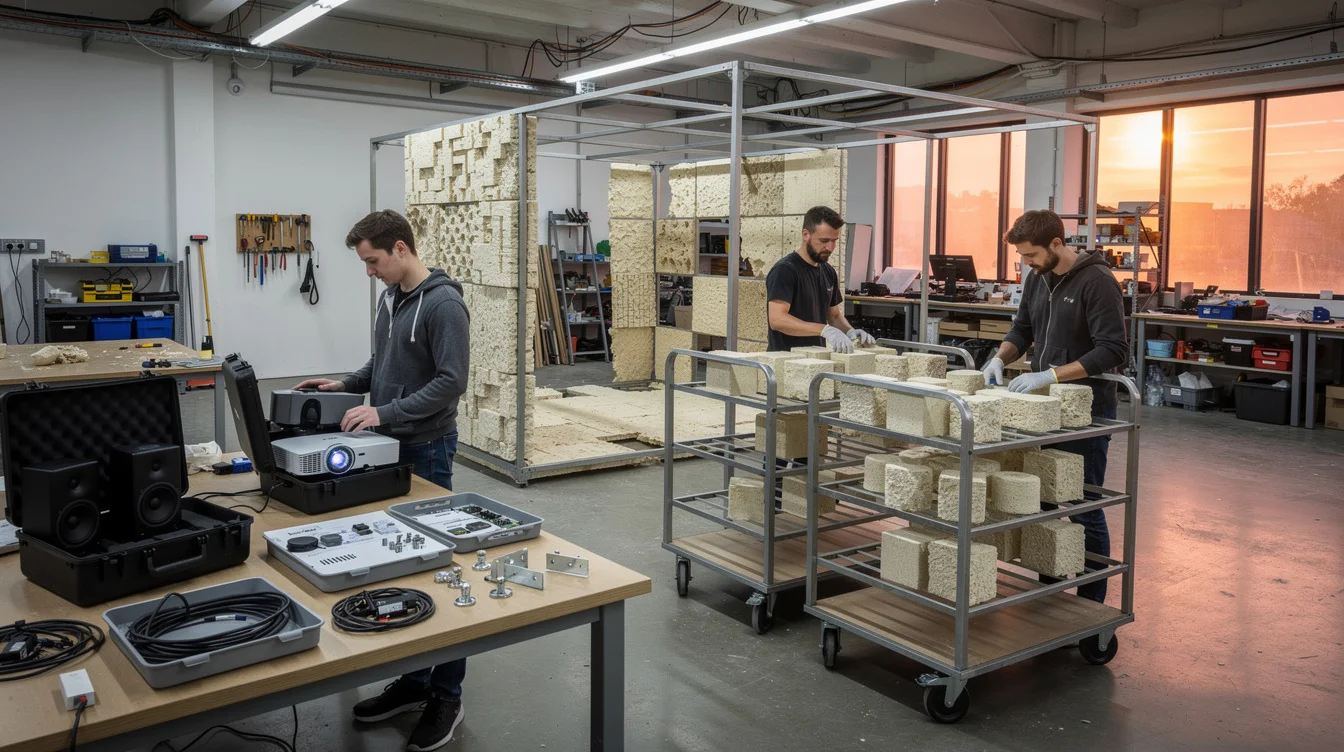
Interactive installations have at least two repair problems: physical failure and computational obsolescence. A damaged sensor is one issue; software that no longer runs on an available operating system is another. A pavilion can retain an intact shell while losing the technical conditions that made it responsive.
Fairphone’s modular phones and Framework’s repair-oriented laptops provide useful references outside architecture. Their relevance is not that a pavilion should resemble a consumer device. It is that replaceable parts, access instructions and identifiable components can become central design features rather than afterthoughts. Hypha-lume’s combination of sensing, lighting, projection and sound calls for the same discipline across several equipment families.
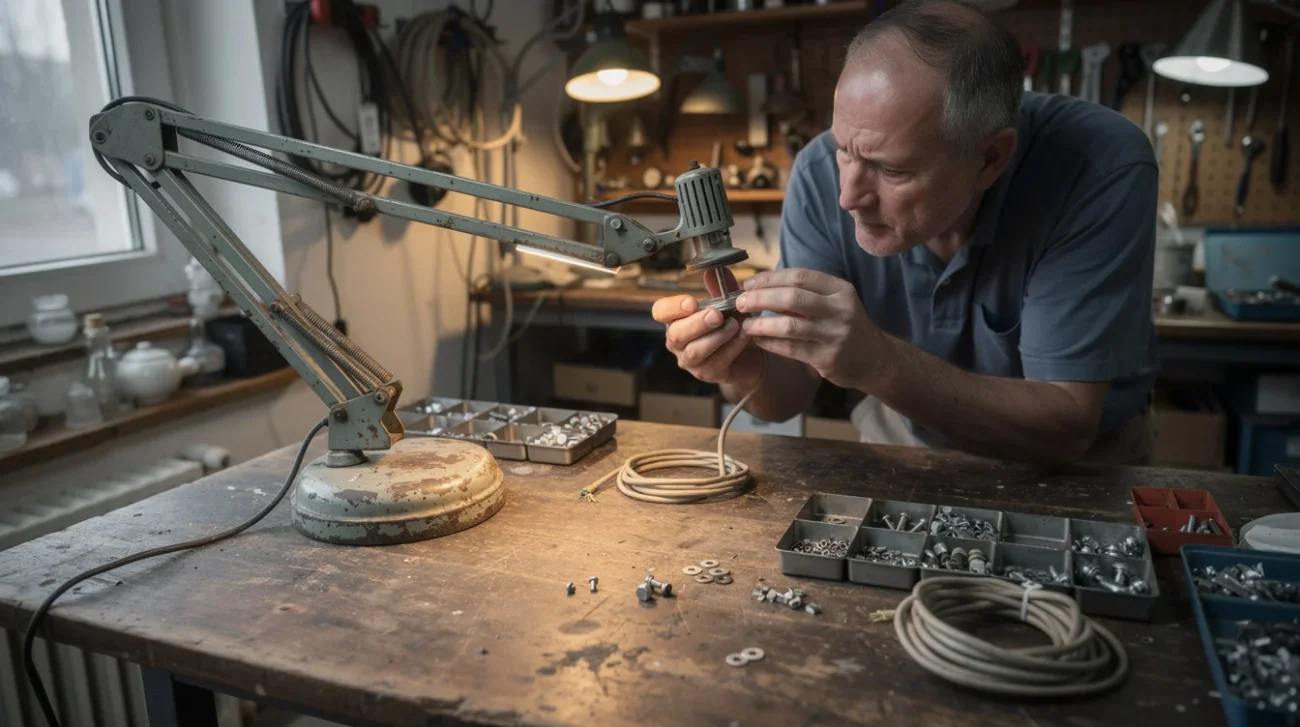
A credible maintenance package would identify sensor models, connector types, power requirements and software dependencies. It would explain how to replace one light source without discarding its housing, how to recalibrate a replacement sensor and how to operate the installation if one interactive layer fails. Could the pavilion remain usable with sound disabled? Could static illumination replace projection temporarily?
These questions are architectural, not merely technical. They determine whether a minor malfunction closes the space, triggers wholesale replacement or produces a manageable reduction in functionality. Like designing a park to accommodate flooding, they require planning for conditions beyond normal operation. Designing graceful degradation is less spectacular than designing an immersive premiere. It is also a more convincing expression of care.
Make the Final Performance a Disassembly Rehearsal
The strongest proof would be a public teardown before the project is celebrated as circular. Give a team the intended tools and instructions, then record the process. Count damaged modules, inaccessible fixings, mixed-material remnants and the time required to extract reusable electronics. Demonstrate reassembly, too: a component is not meaningfully reusable if removal leaves it too compromised for another installation.
Rotor, the Brussels-based cooperative, and its spin-off Rotor Deconstruction offer a pertinent precedent through their work on salvaging and recirculating building components. Their example redirects attention from abstract recyclability toward practical recovery: condition, removal, handling and the existence of another user. The lesson for interactive architecture is blunt. A theoretical destination is not a recovery system.
For Hypha-lume, a useful teardown record would distinguish modules ready for reuse, biological material accepted by a specified processor, serviceable electronics and equipment requiring specialist e-waste treatment. Recovery claims should report both mass and component outcomes. A heavy biological fraction can dominate a headline percentage while obscuring the loss of small, complex electronic parts.
Disassembly time belongs beside embodied-impact claims. If separation requires specialist labour that nobody has funded, the project has not eliminated waste. It has postponed a difficult invoice until the exhibition team is gone.
Circularity Needs an Owner After Closing Night
Even excellent detailing fails without custody. Who owns the projector after the pavilion closes? Who stores the modules, checks moisture damage and finds the next venue? Who deletes stored movement data if the interactive system retains any? The source description’s language of spatial memory does not establish whether identifiable information is collected, but it makes responsible data handling another question worth asking.
Temporary architecture can benefit from hiring established audiovisual equipment rather than purchasing installation-specific devices. Rental is not automatically lower-impact: transport, utilisation and replacement practices still matter. Nevertheless, equipment with an existing maintenance operation and a scheduled next user has a more concrete future than hardware bought for a single opening.
The same principle applies to the biological assembly. A take-back agreement needs named responsibilities, acceptance criteria and a budget. A material passport can document composition and connections, but documentation cannot substitute for an organisation willing to receive the parts.
Hypha-lume’s real opportunity is therefore larger than placing fungal material beside digital effects. It could demonstrate an architecture whose layers remain independently serviceable and independently recoverable. The environmental achievement would not be that biology and electronics briefly coexist. It would be that neither must be sacrificed when their collaboration ends.
FAQ: Mycelium, Electronics and the End of Use
Does using mycelium make an interactive pavilion circular?
No. Circularity depends on the complete assembly, including finishes, connections, electronics and recovery arrangements. Mycelium can support a circular strategy, but biological content alone does not prove reuse, safe processing or reduced overall impact.
Can mycelium modules be composted with embedded electronics?
They should not be sent to composting with electronic components attached. Hardware must be separated, and the remaining composite must meet the receiving facility’s requirements. Coatings, adhesives and inserts may affect acceptance.
What evidence would demonstrate that Hypha-lume is designed for disassembly?
Connection drawings, a component inventory, repair instructions and a timed teardown would provide useful evidence. Confirmed destinations for recovered parts would strengthen the case. The supplied source description does not establish these details.
Should reuse always take priority over composting?
Continued use of sound modules is generally worth investigating before material breakdown. However, contamination, damage, storage and transport can change the assessment. Composting is a possible final route for suitable material, not a reason to discard usable components.
If a pavilion can remember every visitor but cannot demonstrate a credible future for its own parts, should architecture still call it circular?
Get the Mainifesto weekly — curated design debates, speculative ideas and the week's best articles every Saturday.
Editorial Perspectives
Questions and counterpoints developed by the Mainifesto editorial desk to extend the discussion.
Perspective 1
Visitors may love a pavilion that remembers them, but my operations team needs to know what happens when a sensor fails. Show me replacement time, maintenance cost and who takes the components back before putting circularity in the brand story.
Perspective 2
I'd like to see disassembly treated as a design parameter alongside light response and growth geometry. Can the connections accommodate mycelium's variability while letting someone remove the electronics without destroying either? That's a more interesting technical challenge than visitor memory alone.
Perspective 3
Working with old buildings teaches you that a second life rarely follows the original designer's script. Hypha-lume doesn't need to predict every future use, but it does need parts people can access and repair without proprietary tools. And if only a specialist studio can afford that work, let's be careful about calling it a model for everyday architecture.
Perspective 4
No—not until there's a credible recovery route where the pavilion actually stands. A detachable circuit board is not circular if its only destination is an informal e-waste yard overseas. Name the local repair capacity, the take-back operator and who pays when the exhibition budget runs out.