
When Design Research Becomes a Luxury Brand’s Voice
When Design Research Becomes a Luxury Brand’s Voice
A luxury brand does not need another story. It needs someone willing to interrupt the stories that already sell. That is the promise—and the unresolved contradiction—of Formafantasma’s appointment as creative directors of Florence’s Officina Profumo-Farmaceutica di Santa Maria Novella, one of the world’s oldest surviving pharmacies.
As reported by Dezeen on 29 September 2026, founders Andrea Trimarchi and Simone Farresin will focus primarily on products, investigating their hidden histories and informing new launches. The distinction matters: this is not merely an invitation to redesign a visual identity. But neither does the announcement establish that the studio can change sourcing, formulations or production. The question is whether critical design research will become an instrument of product governance—or the most sophisticated voice in the marketing department.
PRO: Put the Research Where Decisions Are Made
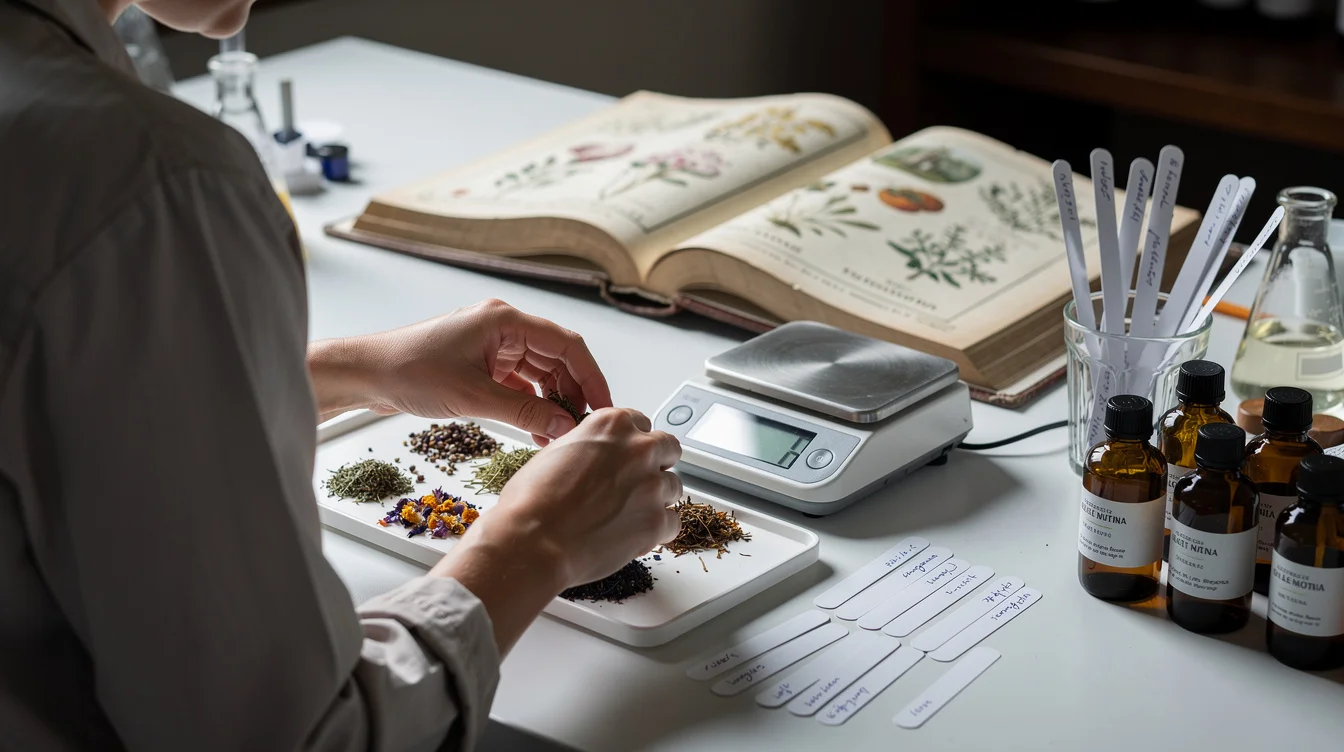
Research conducted outside industry can expose a system without acquiring the power to alter it. Inside a company, the same investigation can potentially reach purchasing briefs, material specifications and development schedules. Formafantasma’s appointment deserves attention because its stated product focus creates that possibility. A beautiful exhibition about extraction may change a visitor’s understanding; a revised procurement requirement can change what a business repeatedly buys.
The studio’s Cambio, first presented at London’s Serpentine in 2020, offers a useful precedent for its method, not a guarantee of future results. Rather than treating timber as an innocent aesthetic choice, the project examined the timber industry’s relationship to forestry, commerce and ecological knowledge. The designed object became an entry point into a much larger apparatus.
Applied to perfumery, that approach could make a fragrance ingredient legible as something other than an evocative botanical name. Where is it cultivated? What processing gives it its usable form? How do land use, working conditions and transport affect the claim that it is desirable? These are proposed lines of inquiry, not disclosed findings about Santa Maria Novella.
The advantage of working inside the brand is proximity to the moment when knowledge becomes a specification. If research can change an ingredient brief before a launch, it has already done more than supply an atmospheric paragraph for the product page.
PRO: Heritage Can Become a Method, Not a Costume
An old apothecary is a particularly productive setting because its products sit between bodies, plants, belief and commerce. Historical formulas are not simply recipes awaiting reverent preservation. They can reveal changing definitions of care, shifting access to materials and the technical compromises behind apparently timeless goods. Research could make continuity something a company must explain rather than merely claim.
Formafantasma’s Botanica, developed in 2011 for Plart, investigated plant- and animal-derived materials associated with histories of plastics before petrochemical dominance. Its relevance here is methodological: the archive can generate material alternatives instead of decorative quotations. That does not mean an early substance is automatically safer, cleaner or suitable for contemporary cosmetics. Historical interest is a starting point for testing, never a substitute for it.
At Santa Maria Novella, a similarly rigorous approach might ask whether a historical product format suggests a viable contemporary solid formulation, or whether a container can be redesigned for repeated use. Neither outcome should be presumed. Cosmetic safety, stability, cleaning, transport and actual customer behaviour would all need examination.
The strongest commercial argument is therefore not that research makes heritage richer. It is that research can make inherited assumptions negotiable. A luxury business may have room to fund this work, although high prices alone prove nothing about its priorities. If resources support testing and implementation, the appointment could turn the archive from a showroom asset into a development tool.
CONTRA: Critique Is Also a Premium Ingredient

Luxury is exceptionally good at absorbing the language of its critics. Scarcity becomes restraint; age becomes authenticity; technical complexity becomes connoisseurship. Research can join that vocabulary without disturbing the product underneath. A detailed account of an ingredient’s journey may distinguish a perfume from its competitors while leaving the conditions of that journey untouched.
This is not a charge that Formafantasma has already compromised its work. It is the structural risk of the commission. The company can capture the commercial benefits of intellectual seriousness immediately, while operational change remains expensive, slow and difficult to communicate. An appointment announcement generates attention long before anyone can evaluate a reformulated product or a revised supplier agreement.
The studio’s Ore Streams, initiated for the National Gallery of Victoria and subsequently expanded, investigated electronic waste through objects, films and research. Its strength lay in making the wider system visible rather than presenting recycling as an uncomplicated aesthetic virtue. Within a brand, comparable scrutiny could produce conclusions that are awkward for the client: a valued material might prove difficult to justify, or the most responsible intervention might be to avoid another launch.
That is where the distinction between research and storytelling sharpens. A business can sell the discovery of a contradiction while refusing to resolve it. Even candour can become a premium attribute when disclosure is treated as the achievement rather than the beginning of an obligation.
CONTRA: Without Decision Rights, Research Is Atmosphere
Creative direction is a title, not a public map of authority. The reported appointment does not establish whether Formafantasma can reject a material, delay a launch or require a supplier change. Without those powers—or an effective route to the people who hold them—investigation risks becoming advisory theatre. The researchers identify the problem; the business decides which fragments become visible.
The answer is not to demand that every commercial formula be published. Some confidentiality is legitimate. But accountability requires more than a polished account of intentions. A credible research-led programme would connect a question to a decision: an ingredient investigation led to a documented substitution; packaging analysis changed component weights; durability testing altered a closure. Each claim would need an appropriate baseline and evidence, not just a persuasive photograph.
Consider refillability. A reusable bottle is not automatically an environmental improvement if return journeys, washing requirements or low reuse rates undermine the proposition. The critical act is to test the system and accept an inconvenient result. The storytelling act is to display the refill bottle as proof before that result exists.
Santa Maria Novella should ultimately be judged on what becomes different, including what it chooses not to sell. Formafantasma’s reputation makes the experiment compelling, but reputation cannot serve as verification. Until research can impose consequences on commercial decisions, its critical authority remains something the brand borrows—and can potentially monetise without changing itself.
FAQ
What will Formafantasma do at Santa Maria Novella?
According to the reported appointment, Andrea Trimarchi and Simone Farresin will serve as creative directors, focusing primarily on products. They intend to investigate hidden product histories and inform new launches. Their precise operational authority has not been established in the supplied announcement.
What distinguishes critical design research from heritage storytelling?
Critical research tests claims, investigates uncomfortable evidence and allows findings to challenge an existing product or business decision. Heritage storytelling selects history to communicate value. Both can be accurate, but only the former requires conclusions to remain open before the investigation begins.
How could research change a perfume or apothecary product?
It could inform ingredient selection, supplier requirements, formulation, packaging or the decision to launch at all. Changes would still require relevant safety and performance testing. These are possible interventions, not announced outcomes of Formafantasma’s appointment.
What evidence should customers and critics look for?
Look for a clear connection between findings and implemented decisions, supported by suitable evidence and acknowledgement of trade-offs. An archive exhibition or extensive product narrative can communicate research, but neither demonstrates that the product or its production has improved.
If research reveals that a luxury brand’s most persuasive heritage claim should no longer shape its products, will the brand change the products—or commission a better story?
Watch the Mainifesto Short
Get the Mainifesto weekly — curated design debates, speculative ideas and the week's best articles every Saturday.
Editorial Perspectives
Questions and counterpoints developed by the Mainifesto editorial desk to extend the discussion.
Perspective 1
I’m for Formafantasma entering the house: critique has more leverage near the product brief than outside the boutique window. But Santa Maria Novella must let research retire a cherished formula or origin story; otherwise we’re in Lampedusa territory, changing everything so that nothing changes.
Perspective 2
I’m skeptical of this pairing: luxury is very good at turning criticism into another exclusive experience. I love a digital archive that opens history to scrutiny, but if an uncomfortable finding changes only the campaign—not the product—research has become the premium interface.
Perspective 3
A heritage claim is not just copy; it can determine ingredients, packaging and what customers believe they are buying. If the research discredits it, change those decisions first, then explain plainly what changed and why.