
Can Waterfronts Still Belong to Everyone?
PRO: The Marina as a New Civic Room
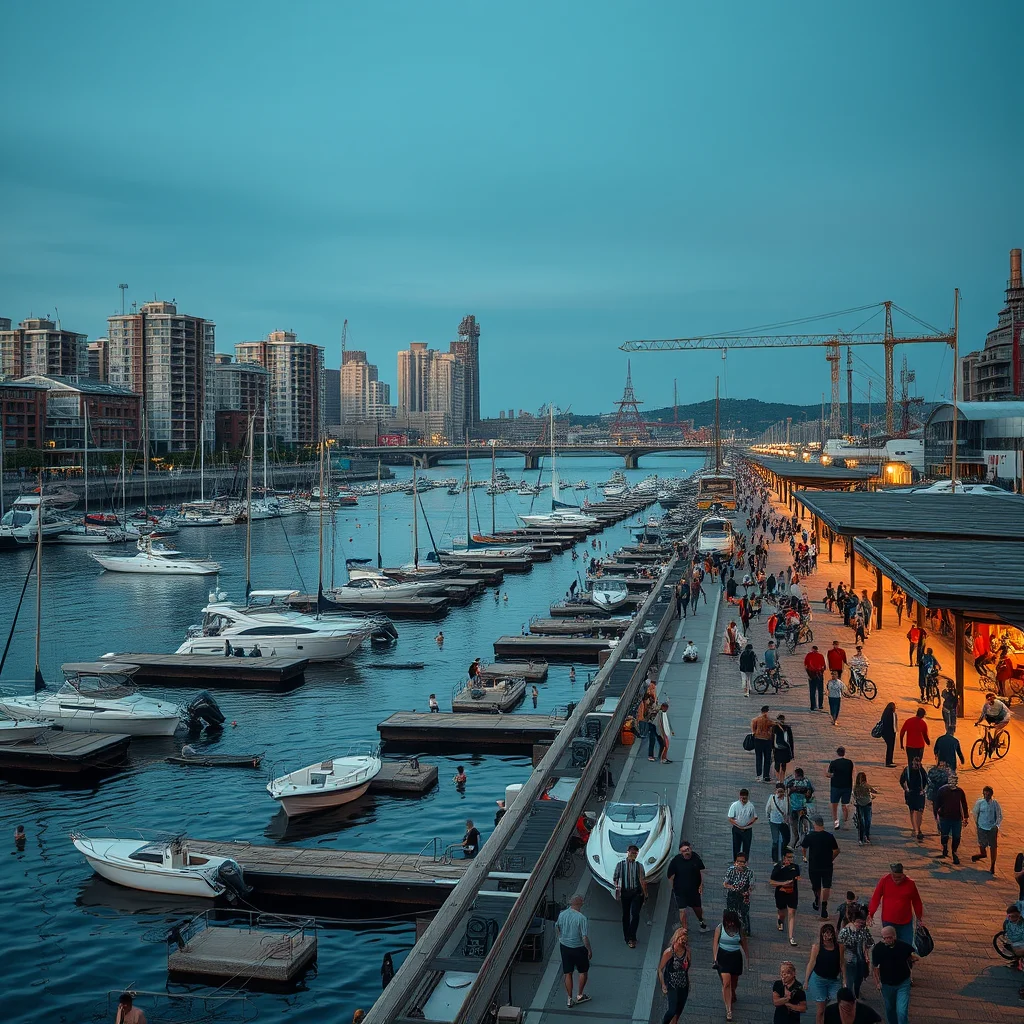
The marina is shedding its old image as a gated parking lot for expensive boats. In cities where industrial ports, rail yards, and flood defenses have long turned their backs on the water, contemporary marina complexes are being asked to perform a more ambitious role: not simply hosting vessels, but stitching together neighborhoods, public space, commerce, culture, and ecological repair.
This is a meaningful shift. The edge between land and water has always been urban territory, even when access was restricted by warehouses, customs fences, or derelict infrastructure. A contemporary marina can reopen that edge. Its boardwalks, floating platforms, ferry stops, public squares, swimming areas, and restaurants create a sequence of spaces in which the water becomes part of daily life rather than a distant view.
Barcelona’s Port Vell remains a useful, if complicated, precedent. The transformation associated with the 1992 Olympic regeneration connected the historic center to the harbor through promenades, cultural facilities, and public-facing commercial activity. The waterfront became legible as an urban destination. Yet the lesson is not that every city needs a copy of Barcelona’s formula. It is that maritime infrastructure can become civic infrastructure when it is designed as a connective tissue rather than an isolated enclave.
PRO: Access Can Be Designed, Not Merely Promised
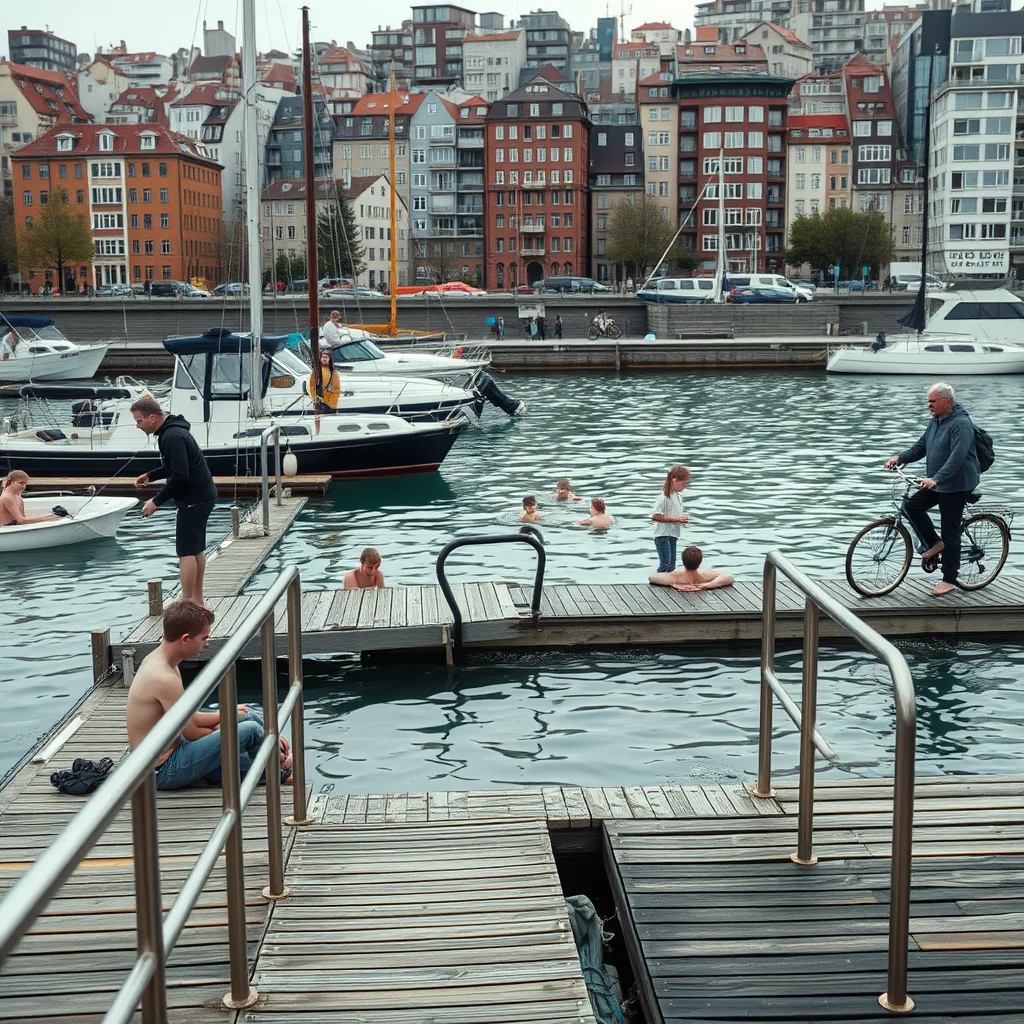
Public access is often treated as a legal condition: provide a path, install a sign, and declare success. The stronger projects understand access spatially and socially. They ask who can arrive, who can stay, what they can do for free, and whether the waterfront remains welcoming after the restaurants close. This is fundamentally a question of designing belonging into public space.
In Copenhagen’s harbor, projects such as Islands Brygge have helped normalize swimming, sitting, cycling, and informal gathering at the water’s edge. The harbor bath is not a marina in the narrowest sense, but it demonstrates the civic potential of maritime redevelopment: the edge becomes a shared urban room with multiple publics and multiple rhythms. Similar ambitions appear in Oslo’s waterfront transformation, where public promenades and bathing facilities have been integrated into areas once dominated by port activity.
Designers can make this inclusivity tangible through generous ramps instead of ornamental stairs, shaded seating instead of consumption-dependent terraces, robust materials instead of fragile finishes, and continuous routes for wheelchairs, bicycles, strollers, and service workers. A working marina can also support sailing schools, fishing cooperatives, repair workshops, water taxis, rowing clubs, and environmental education. These are not decorative additions. They are evidence that the waterfront serves a civic economy rather than only a leisure market.
The most persuasive marina is therefore porous. It allows people to move through without buying anything. It makes room for children watching boats, older residents meeting at the rail, and local workers whose relationship with the water is practical rather than aspirational. In this model, the marina is less a luxury object than a piece of urban equipment.
PRO: A Platform for Ecological and Social Repair
Waterfront renewal also offers an opportunity to repair damaged environments. Floating wetlands, oyster reefs, habitat ledges, permeable paving, and restored tidal edges can turn a hard harbor into a living system. The ecological argument should not be reduced to greenery pasted onto a luxury development; it should shape the engineering from the beginning. That approach aligns with broader efforts to design cities for urban wildlife rather than treating nonhuman species as an afterthought.
Resilient waterfront thinking, visible in projects such as Rotterdam’s floating architecture experiments and New York’s post-storm shoreline planning, treats water as a dynamic force rather than a picturesque backdrop. Marinas can incorporate adaptable pontoons, floodable public landscapes, and raised community facilities. Their infrastructure can demonstrate how cities live with rising seas while preserving access to the water.
There is a social dimension to this repair. Waterfronts often occupy neighborhoods that have absorbed pollution, noise, truck traffic, and industrial risk while receiving few public benefits. A civic marina can redirect investment toward those communities through apprenticeships, public programming, local procurement, and affordable workspaces for maritime trades. The point is not to aestheticize the harbor. It is to redistribute its value.
CONTRA: The Public Waterfront as Branded Experience
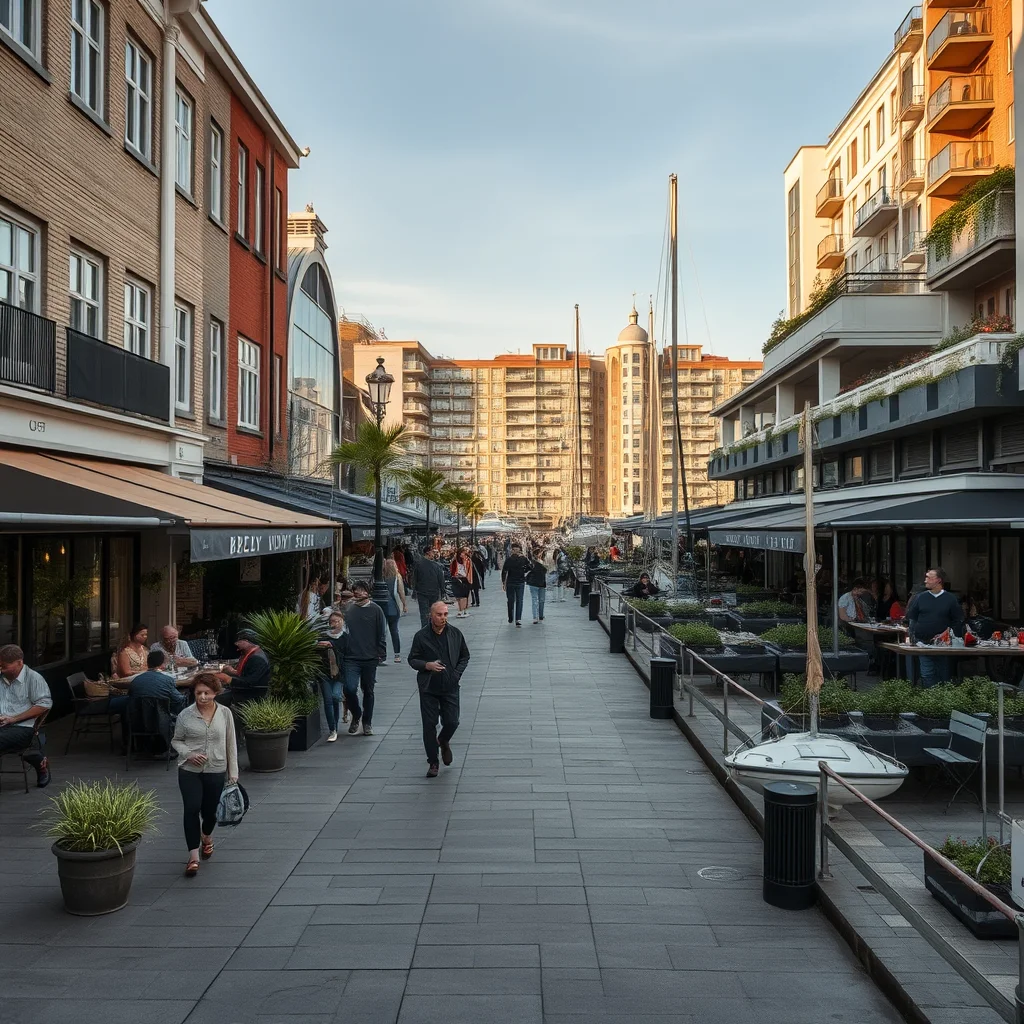
The trouble begins when the language of connection conceals a familiar real-estate strategy. A marina can appear open while functioning as a controlled landscape of consumption. The promenade is public, but the best views belong to private apartments. The square is accessible, but every comfortable seat is attached to a café. The water is visible, but swimming, fishing, launching a small boat, or simply lingering may be prohibited.
Port Vell illustrates the tension. Its regeneration produced an attractive public realm, but it also became associated with tourism, retail, and rising land values. A waterfront can be physically open and socially exclusive at the same time. The question is not only whether anyone can enter. It is whether everyone can recognize the place as theirs.
This is the central contradiction of branded waterfront development, much like the challenge of whether a branded public experience can still feel genuinely public. Municipalities want investment, tax revenue, visitors, and a legible image for the global city. Developers want premium addresses and carefully managed atmospheres. Designers are then asked to make privatization look like generosity: polished paving, curated planting, sculptural benches, and a continuous line of restaurants that photograph well but quietly narrows the range of permitted behavior.
CONTRA: The Marina Still Serves a Narrow Economy
Calling a marina civic infrastructure does not make it so. Its ownership, operating model, and long-term obligations matter more than its renderings. Berths are expensive. Maintenance is constant. Security, insurance, dredging, parking, and flood protection impose real costs. Without public requirements, the financial logic will favor high-yield apartments, hotel rooms, offices, and superyacht services over low-income access or unprofitable community uses.
That logic can displace the very waterfront cultures that made redevelopment attractive. Small boat owners, fishers, dock workers, market traders, and residents of older neighborhoods may be priced out or regulated away. A marina celebrated as a new urban connector can become a separator, severing communities from working water while offering them a curated spectacle of maritime life.
Even public programming can become a form of soft exclusion. A waterfront festival sponsored by a property group is not equivalent to permanent access. A sailing lesson available at a premium is not a community sailing program. An art installation cannot substitute for affordable space, public toilets, shade, safe transport, and the right to occupy the edge without spending money.
Climate adaptation creates another danger. Flood defenses and resilient landscapes are essential, but they can also become instruments of selective protection. If public money raises the value of a private marina district while neighboring communities remain exposed, resilience has become a real-estate subsidy. The city must ask who is protected, who pays, and who gains control of the shoreline after the project is complete.
CONTRA: A Civic Marina Needs Rules That Resist the Market
If waterfront renewal is to mean more than destination branding, civic ambition must be written into the contract. Public access should be continuous, enforceable, and available at all hours where safety permits. Development agreements should reserve space for non-commercial uses, require affordable maritime facilities, protect working harbors, and measure use by local residents rather than visitor counts alone.
Governance is as important as architecture. Community land trusts, cooperative berth models, public operating bodies, and participatory waterfront councils can prevent the marina from becoming an asset managed exclusively for investors. Cities should publish maintenance budgets, access rules, lease terms, and displacement indicators. They should also preserve the right to revise programming when the public realm fails.
The best test is brutally simple: can a person arrive by public transport, spend an afternoon beside the water without purchasing anything, participate in an activity, and return safely at night? Can a local teenager learn to sail? Can a fish seller, boat repairer, swimmer, or wheelchair user claim a legitimate place? If the answer is no, the marina is not civic infrastructure. It is a luxury development with a promenade.
FAQ: The Marina and the Public Realm
What makes a marina civic infrastructure? A civic marina connects neighborhoods to the water through genuinely public routes, facilities, and programs. It supports everyday use, ecological repair, and diverse maritime economies rather than functioning only as a leisure complex for boat owners.
Can a privately developed marina still be public? Yes, but only when public access and public benefits are legally protected rather than left to branding or goodwill. Operating agreements should guarantee continuous access, non-commercial space, affordable facilities, transparent rules, and meaningful community oversight.
What should cities measure after a marina opens? They should measure local use, affordability, accessibility, ecological performance, displacement, and the survival of working-waterfront businesses. Visitor numbers and property values alone reward the wrong outcomes.
Are marinas compatible with climate adaptation? They can be, if they incorporate floodable landscapes, habitat restoration, adaptable infrastructure, and equitable protection. Climate resilience becomes unjust when public investment primarily increases the value of exclusive waterfront property.
Get the Mainifesto weekly — curated design debates, speculative ideas and the week's best articles every Saturday.
Editorial Perspectives
Questions and counterpoints developed by the Mainifesto editorial desk to extend the discussion.
Perspective 1
A marina can function as civic infrastructure, but only if public access is designed as a requirement rather than left to the developer’s goodwill. Continuous promenades, affordable moorings, transit links, and genuinely public amenities matter more than the branding wrapped around the project.
Perspective 2
If the people who used the waterfront can no longer afford to live, work, or spend time there, calling the result public infrastructure is wishful thinking. Development has to pay for itself, but a polished promenade beside luxury housing is still privatization with better landscaping.
Perspective 3
Physical access is only one layer of publicness; pricing, security, transport, and even the data collected through the new district determine who can actually use it. Cities should treat marinas as operating systems with public obligations, not as isolated architectural objects that happen to touch the water.