What If Buildings Had to Work Offline?
A building should not require a login
Your phone is dead. The building’s subscription has expired. A platform has withdrawn support for its access system. None of these events should stop you entering your home, adjusting its temperature or switching on a light. Yet architecture increasingly allows the interface to become the landlord: an external service determines whether a physical space will cooperate with its occupants.
In his essay for designboom, Andrés Jaque, founder of the Office for Political Innovation, questions the politics of utopia under permanent connectivity. The trajectory from Archigram’s technological imaginaries to contemporary infrastructures of control supplies an uncomfortable starting point: connectivity is not merely a technical convenience. It distributes power.
Our proposal takes that critique into the building specification. An offline habitability standard would require essential building functions to remain usable without cloud services, personal accounts or continuous collection of occupant data. This is a proposed standard, not an existing certification. Its ambition is straightforward: make disconnection an ordinary mode of occupation, rather than a premium amenity or a procedure reserved for disasters.
From technological promise to compulsory participation
Archigram’s Plug-In City imagined architecture as an adaptable infrastructural framework. Cedric Price and Joan Littlewood’s unrealised Fun Palace explored a responsive environment shaped around changing activities. Neither project should be flattened into a prophecy of the smartphone-controlled apartment. Their continuing value lies in treating technological arrangements as things that can be redesigned, not accepted as destiny.
Today’s problem is less spectacular than the megastructure. It is the small dependency repeated everywhere: a visitor invitation available only through an app; a communal laundry requiring registration; a thermostat whose useful settings disappear behind a subscription. Each seems minor until participation becomes compulsory.
Jaque’s COSMO, a temporary water-purifying installation presented at MoMA PS1 in 2015, offers a useful methodological reference. It brought normally backgrounded infrastructure into public attention. It was not an offline-building prototype, but it demonstrates a valuable architectural move: make the system available for scrutiny.
The equivalent move here would expose the building’s digital dependencies. Which functions need an external server? Who can revoke access? What happens when the supplier disappears? A specification that lists finishes but conceals these dependencies is describing only half the architecture.
Specify the right to remain
The standard should begin with an occupancy-specific schedule of essentials. In housing, that would cover authorised entry, safe egress, lighting, basic heating and cooling controls, ventilation, water and sanitation, essential lift operation where provided, and access to shared facilities necessary for daily life. Schools, workplaces and care settings would need additional requirements.
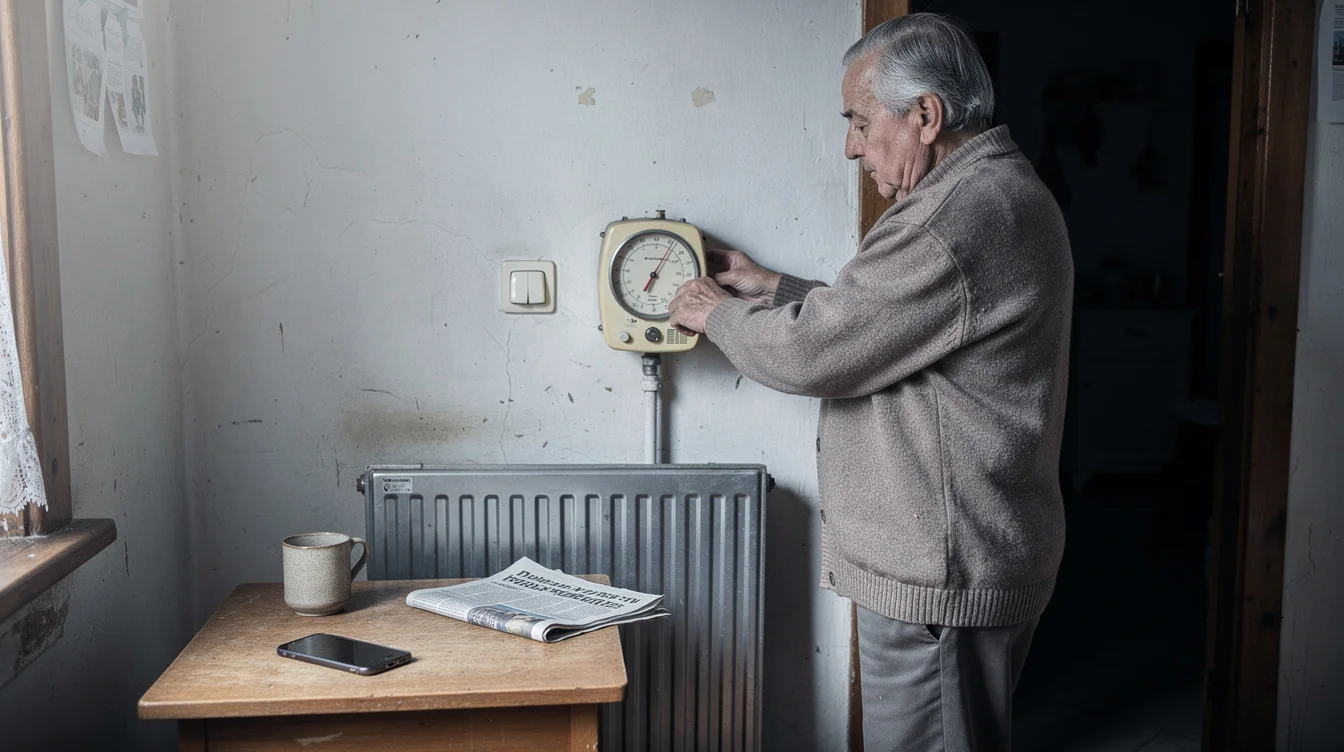
Compliance would mean that these functions retain a usable local operating path when the external network is unavailable. A resident should not need a vendor account to turn down the heating. A caretaker should not need remote permission to restore ordinary lighting. A visitor should be able to announce their arrival without owning a smartphone.
This is not a demand that buildings become independent of electricity, water or fuel. Offline operation and power-outage resilience are different tests. Emergency supplies, fire protection and life-safety systems remain subject to their own requirements. Nor does offline mean unlocked: locally validated keys or credentials can preserve access control without live cloud authorisation.
The crucial distinction is between operating a building and monitoring its occupants. Temperature readings used locally to control a valve need not become permanent records of household behaviour. Collect only what the function requires, and avoid retaining it by default.
Design two paths, not two classes of resident
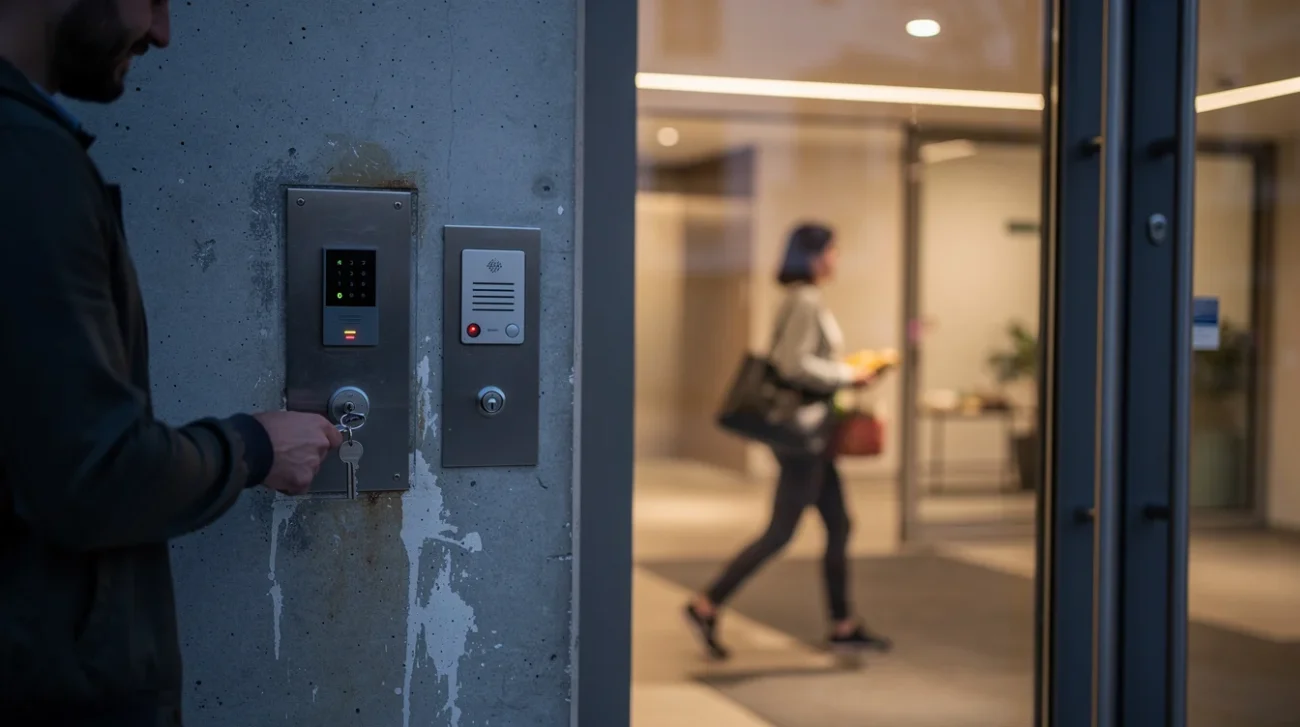
A parallel physical interface cannot be a token switch hidden in a locked cupboard. It must be reachable, legible and available during ordinary use. Consider a communal entrance with an accessible intercom, a locally functioning credential reader and a managed mechanical alternative. The app may remain, but losing a phone no longer means losing access.
Inside a dwelling, wall switches should operate lights without waiting for a distant server. Heating should have a local controller with understandable settings. Shading should offer a usable local control and, where technically appropriate, manual operation. Physical controls must also accommodate limited dexterity and vision; a tiny rotary knob is not automatically more inclusive than a screen.
Lacaton & Vassal’s housing work, including the transformation of Tour Bois-le-Prêtre with Frédéric Druot, provides a different but relevant precedent. Its added winter gardens and balconies expand the ways residents can inhabit and mediate their environment. That is not evidence of digital independence. It is evidence that architectural generosity can create choices that an interface alone cannot supply.
Openable windows, external shading and buffer spaces can reduce dependence on automated conditioning where climate, air quality, acoustics and safety permit. Where they cannot, reliable local mechanical systems must do the work. Offline habitability is not an excuse to romanticise discomfort.
Local intelligence needs a maintenance plan
The alternative to the cloud is not necessarily a building stripped of electronics. A local controller can coordinate pumps, ventilation and heating. Sensors can support efficient operation without sending occupancy histories to a remote platform. A network can remain inside the building, with internet access optional rather than structurally necessary.
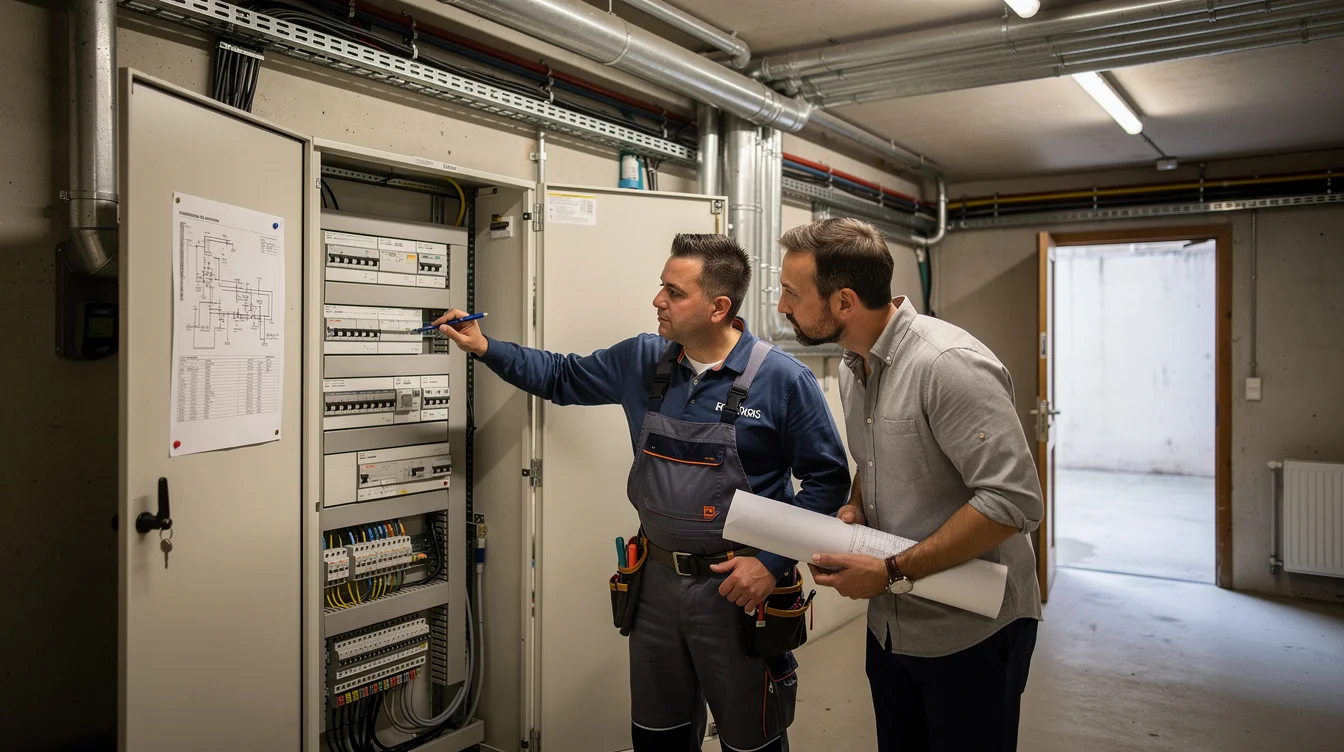
But a local server is not liberation if only one contractor knows its password. Procurement should require documented interfaces, transferable administrator access, configuration backups, replaceable components and a clear support strategy. Open protocols such as BACnet or KNX can help, but their presence alone does not guarantee an independently maintainable installation. Licensing, commissioning tools and implementation choices still matter.
The Centre Pompidou by Renzo Piano and Richard Rogers famously made building services architecturally visible. Offline habitability needs an equivalent commitment to operational legibility—not necessarily exposed pipes, but understandable diagrams, labelled controls and maintenance access that does not require destructive work.
Conflicting commands also need resolution. If someone opens a window, should heating pause? If a local control changes a setting, can remote management immediately reverse it? These priorities must be explicit. A physical button that software routinely overrules is not meaningful control; it is reassurance theatre.
Unplug the connection before handing over the keys
The decisive test should happen at commissioning: disconnect the external network while leaving normal utilities available. Demonstrate entry, lighting, environmental controls and the other scheduled essentials. Then test whether a new occupant can begin using those functions without creating a personal account. A device that works offline only after cloud registration has not passed the stronger test.
Short demonstrations are insufficient. Cached credentials and temporary permissions can disguise dependencies. Assessment should examine expiry periods, restart behaviour, replacement of failed equipment and the consequences of a vendor’s permanent disappearance. Qualified personnel should oversee any testing involving safety-critical systems; casual disconnection is not a substitute for a controlled procedure.
Repeat the assessment after major software or equipment changes. Give residents a concise operating guide and give maintainers the detailed documentation. For tenants, opting out of optional connectivity must not mean reduced access to essential amenities, punitive charges or a worse maintenance response.
Parallel controls and better documentation cost money. So do subscriptions, stranded hardware and emergency contractor visits. Social housing should be a priority for this standard, not its last recipient. If only wealthy households can buy freedom from compulsory connectivity, architecture has turned a basic condition of autonomy into another luxury finish.
FAQ
Would an offline habitability standard ban smart buildings?
No. Automation and connected services could remain optional layers. The requirement would be that essential functions keep working locally, without cloud authorisation, personal accounts or continuous occupant-data collection.
Would an offline building still work during a blackout?
Not necessarily. Losing internet access is different from losing electricity. Backup power, passive survivability and emergency operation require separate design decisions and tests, although they should be coordinated with offline provision.
How could access remain secure without the cloud?
Mechanical keys and locally validated electronic credentials can control entry without a live external connection. Secure implementation still requires credential-revocation procedures, maintenance and compliant emergency egress. Offline does not mean unrestricted access.
Can existing buildings adopt the standard?
Yes, through a dependency audit followed by targeted upgrades: local lighting controls, standalone environmental controls or non-app entry options. Feasibility varies by installation, and changes must preserve accessibility, security and life-safety compliance.
If a building can deny ordinary habitation until we connect, register and consent, should it be considered habitable at all?
Watch the Mainifesto Short
Get the Mainifesto weekly — curated design debates, speculative ideas and the week's best articles every Saturday.
Editorial Perspectives
Questions and counterpoints developed by the Mainifesto editorial desk to extend the discussion.
Perspective 1
A building that needs a server’s permission to let you in isn’t futuristic; it’s unfinished. Let’s make offline operation a design brief from day one, with controls people can repair and keep using long after the software company disappears.
Perspective 2
Show me the outage test, not another seamless-control demo. Can residents unlock the door, adjust the heating and switch on a light when the router is unplugged—and can maintenance staff replace those controls without a vendor subscription? That belongs in the specification, not the premium package.
Perspective 3
Connectivity can disappear through war, sanctions or a missed payment; a housing standard has to survive all three. If losing an account means losing access to your home, the building is exporting its infrastructure risk to the resident. Offline habitability should be a minimum requirement, not something tenants have to negotiate.
Perspective 4
I’m all for buildings that respond, surprise and become a medium for art, but nobody should have to join an audience to turn on the heating. The test is whether you can refuse the connected experience and still live there comfortably. Otherwise, consent is just the button between you and a warm room.