
Can a Replacement Building Inherit an Original’s Identity?
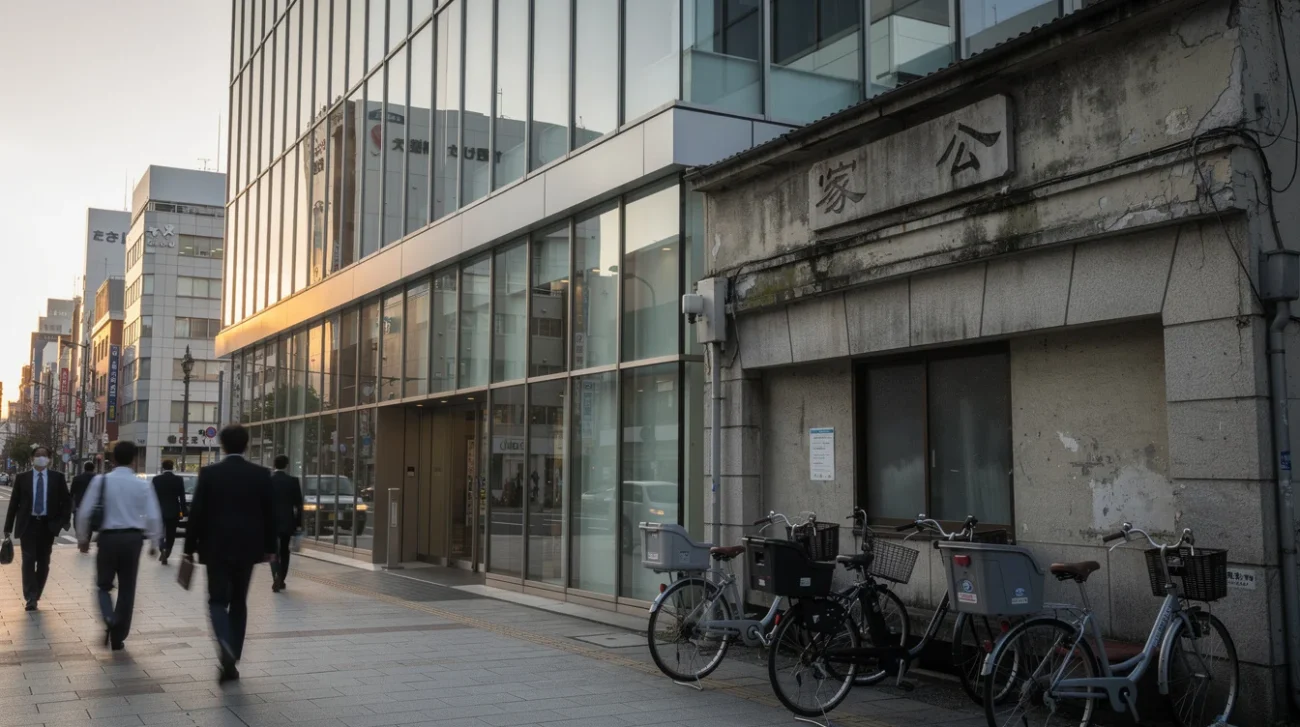
A building can inherit an address, a name and even an architectural vocabulary. Inheriting an identity is harder. At Tokyo’s Yaesu Daibiru site, redevelopment by Nikken Sekkei brings that distinction into focus: the claim to continuity rests on the design thinking of the former building’s architect, Togo Murano, rather than simply the survival of an old facade. This is a more ambitious proposition than cosmetic preservation. It is also a more dangerous one.
If architecture lives through ideas, replacement might extend a building’s cultural life. If it lives through matter, workmanship and accumulated occupation, replacement ends something that no visual resemblance can recover. The question is not whether the new building remembers the old. It is whether remembering entitles it to claim succession.
PRO: Identity Can Be a Method, Not an Object
The strongest case for architectural inheritance begins by rejecting the idea that a building’s identity is a fixed collection of visible features. Murano’s work makes that rejection credible. His Nissay Theatre in Tokyo, completed in 1963, is memorable not merely for individual materials but for the encounter between a composed exterior and an enveloping, shell-adorned auditorium. Its architecture operates through contrast, bodily movement and the orchestration of surprise. Copying one surface would transmit less of that intelligence than understanding how those experiences are produced.
Applied to Yaesu, this suggests a demanding brief for replacement: identify the predecessor’s spatial and civic principles, then make them productive under different conditions. How does an office building meet a pedestrian? Where does institutional formality soften into hospitality? How do details mediate between the scale of a commercial block and the scale of a hand? These are questions a successor can answer without pretending to be an older building.
A faithful copy can betray an architect more thoroughly than an intelligent departure. Treating Murano as a catalogue of motifs would reduce a complex designer to a branding resource. Treating his work as an argument about experience could sustain its relevance. The inheritance would be interpretive, not biological: a new author accepting responsibility for an earlier architectural proposition.
PRO: Rebuilding Can Carry Knowledge Forward
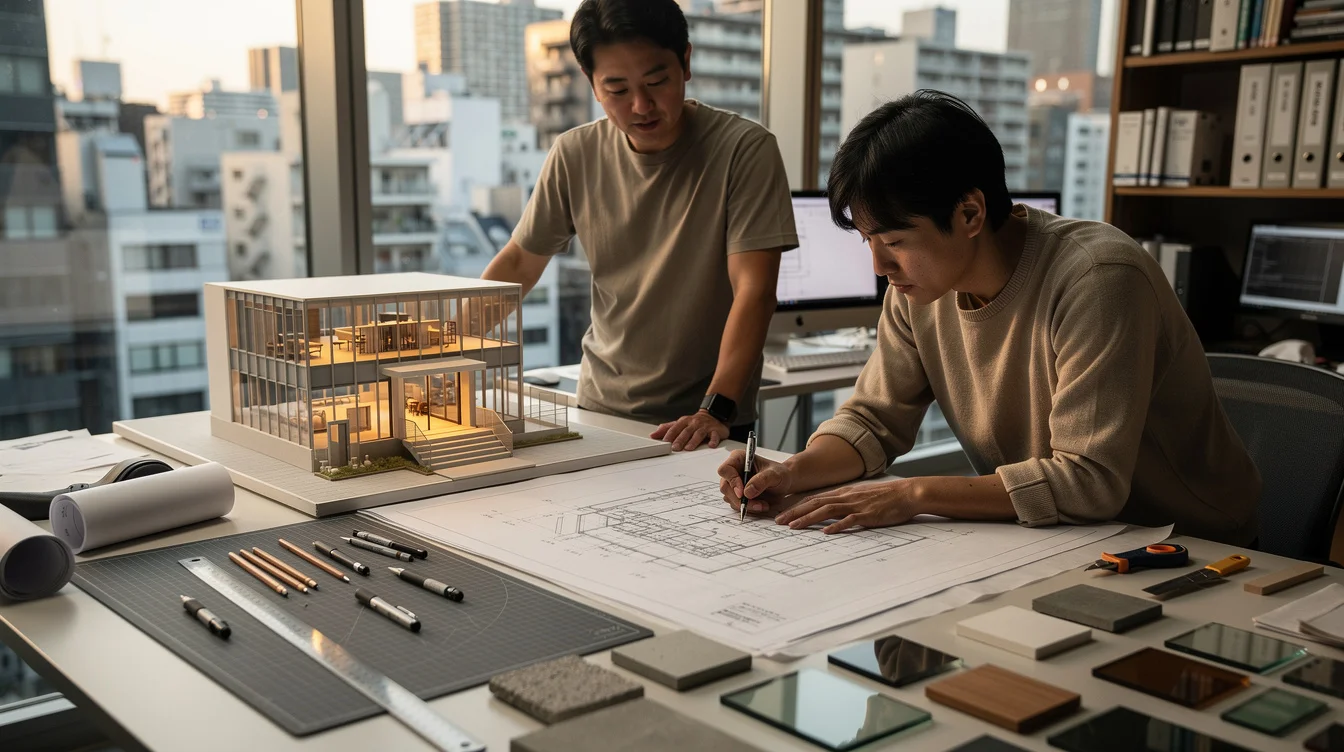
Japan’s Ise Jingu offers an important, often oversimplified comparison. Its principal sanctuaries are periodically rebuilt through the Shikinen Sengu tradition, generally on a twenty-year cycle. Continuity depends on ritual, craft transmission, prescribed forms and a sustained institutional commitment—not on the permanent survival of every timber. Material replacement does not automatically eliminate cultural identity when the process of replacement is itself part of the culture.
A commercial office redevelopment is not a Shinto sanctuary. It cannot borrow sacred legitimacy to excuse demolition. Nevertheless, Ise exposes a weakness in the claim that authenticity must always reside exclusively in original fabric. Skills, relationships and recurring acts of making can also carry heritage. For a contemporary successor, the equivalent obligation would be to explain precisely what knowledge is being transmitted, who holds it and how construction gives it substance.
David Chipperfield Architects’ restoration of Berlin’s Neues Museum, developed with conservation architect Julian Harrap, demonstrates another useful principle: continuity need not conceal the difference between old and new. That project retains historic fabric and is therefore not a precedent for wholesale replacement. Its relevance is ethical rather than procedural. New work can acknowledge its own date while entering a rigorous relationship with what preceded it.
For Yaesu Daibiru, the strongest position is consequently not “nothing has been lost.” It is that something worthwhile can be carried forward without counterfeiting age. Inheritance becomes credible when the successor declares its differences as clearly as its debts.
CONTRA: An Idea Cannot Preserve a Historical Witness
The objection starts where the inheritance argument becomes too convenient. Architecture is not intellectual property floating above a site. It is also a particular assembly of materials, made by particular people, altered by use and exposed to time. A worn threshold records occupation. An original joint records a construction practice. An awkward alteration may reveal a change in tenancy or social expectations. These are not decorative qualities that a design team can simply specify again.
Architectural historian and conservation theorist John Ruskin made the irretrievability of age central to his attack on restoration. His position need not be adopted wholesale to recognize its force here: replacing an object and preserving an object are different acts. A successor can interpret Murano, but it cannot become evidence of Murano’s original decisions in the same way that surviving construction can. Drawings communicate intention; built fabric also communicates negotiation, compromise and execution.
Tokyo’s Nakagin Capsule Tower sharpens this distinction. Kisho Kurokawa’s 1972 building was conceived around replaceable capsules, yet the proposed renewal mechanism never became routine. Its demolition in 2022, followed by the preservation and reuse of some capsules, allowed fragments and ideas to circulate. It did not preserve the inhabited tower as an urban ensemble.
Preserving the concept of replaceability was not the same as preserving the building. Likewise, a persuasive account of Murano’s thinking cannot restore the historical witness lost when an original structure disappears.
CONTRA: Continuity Can Become Demolition’s Best Alibi
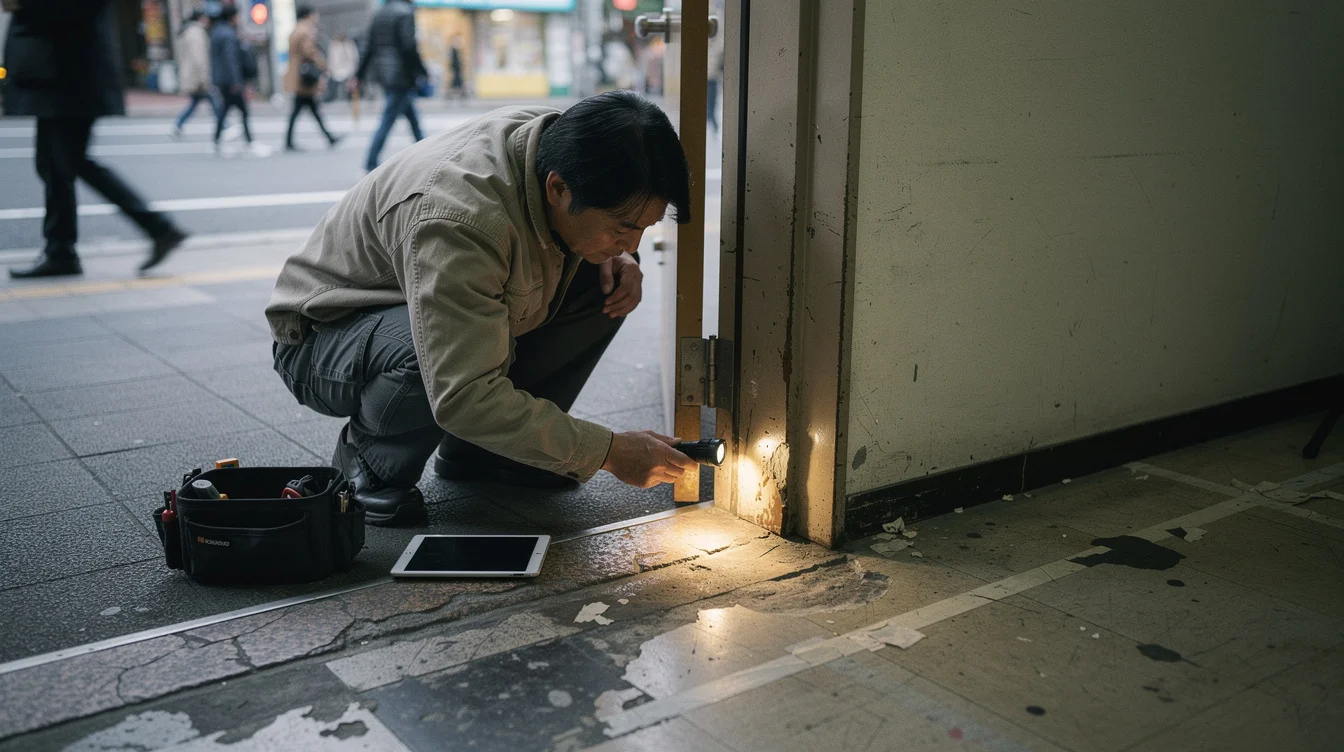
The political danger is that “inheriting the spirit” sets an easier test than retaining the building. A developer can commission research, quote an architect’s principles and produce a refined successor while avoiding the harder question: could substantial parts of the existing structure have remained? The sophistication of the architectural narrative may then obscure the poverty of the alternatives examined.
The transformation of 530 dwellings at Grand Parc Bordeaux by Lacaton & Vassal, Frédéric Druot and Christophe Hutin demonstrates why that question matters. Rather than replacing the housing blocks, the architects enlarged their usable space with winter gardens and balconies while retaining the existing buildings. The result did not depend on freezing their appearance. It treated the inherited structure as a resource capable of supporting a radically improved future.
That housing project does not establish that an office building in Tokyo could meet its requirements through the same strategy. Seismic performance, servicing, floor dimensions and site constraints demand project-specific assessment. But constraints must be demonstrated, not invoked as a ritual dismissal of reuse. The relevant comparison is between credible options, including partial retention, rather than between an ideal new building and an unrepaired old one.
Carbon makes this scrutiny urgent. New construction creates upfront emissions; demolition also discards existing material investment. Even bio-based construction must be assessed against the option of retaining what already exists. Operational improvements may offset some impacts over time, but the outcome depends on structure, energy supply, lifespan and the assessment boundary. Visual continuity is not a carbon calculation, and an architectural homage is not a conservation strategy.
The Verdict: Inheritance Is a Claim That Must Be Earned
A replacement building can inherit an original’s ideas. It cannot inherit the original’s age, and it should not be allowed to blur that distinction. Yaesu Daibiru matters because it makes the argument more interesting than the familiar choice between a retained facade and an indifferent new tower. Yet intellectual ambition raises the burden of proof rather than lowering it.
A credible claim requires an explicit account of the principles carried forward, an honest record of what disappeared and a transparent explanation of why retention was rejected. These should be publicly legible, not confined to a design statement. The successor deserves judgment as new architecture; the demolition deserves judgment as an irreversible decision. Neither verdict should automatically absolve the other.
FAQ
What is architectural inheritance?
Architectural inheritance is the transmission of a building’s spatial principles, craft knowledge, cultural associations or physical elements into later work. It can involve adaptation or replacement, but those processes preserve different things.
Why is Togo Murano relevant to Yaesu Daibiru?
Murano designed the former building at the site. The redevelopment’s continuity argument centers on engaging with his architectural thinking, making the relationship between interpretation and material preservation the critical issue.
Is retaining a facade enough to preserve identity?
Usually not. A facade can preserve an important streetscape presence while the loss of interiors, structure and circulation removes much of a building’s architectural and historical meaning. Its value depends on what else survives.
Is reuse always better than replacement?
No universal answer covers safety, accessibility, environmental performance and cultural value. Reuse should nevertheless be seriously tested through technical studies and whole-life carbon comparisons before demolition is treated as inevitable.
If a replacement carries an architect’s ideas forward but erases the material evidence of their work, who should decide whether that counts as inheritance?
Get the Mainifesto weekly — curated design debates, speculative ideas and the week's best articles every Saturday.
Editorial Perspectives
Questions and counterpoints developed by the Mainifesto editorial desk to extend the discussion.
Perspective 1
A replacement can inherit Murano’s ideas if they still shape how people enter, move through, and spend time in the building—not just how the developer sells it. Let users and independent architects judge that together; keeping every original surface isn’t the only way to deliver lasting value.
Perspective 2
I wouldn’t call it inheritance if Murano’s material decisions are erased; geometry and spatial principles are only part of the work. A model can reproduce relationships, but not the evidence of how something was made and altered over time—why should the people funding replacement get to declare that loss immaterial?