
The Cloud Has a Noise Problem—and Design Makes It Audible

The Cloud Has a Noise Problem—and Design Is Making It Audible
The cloud’s most successful design feature is not its interface. It is its apparent absence. Ask an AI assistant a question and the answer arrives without a loading dock, cooling plant or neighbouring bedroom attached. Infrastructure disappears behind the conversational surface. Someone else gets the building.
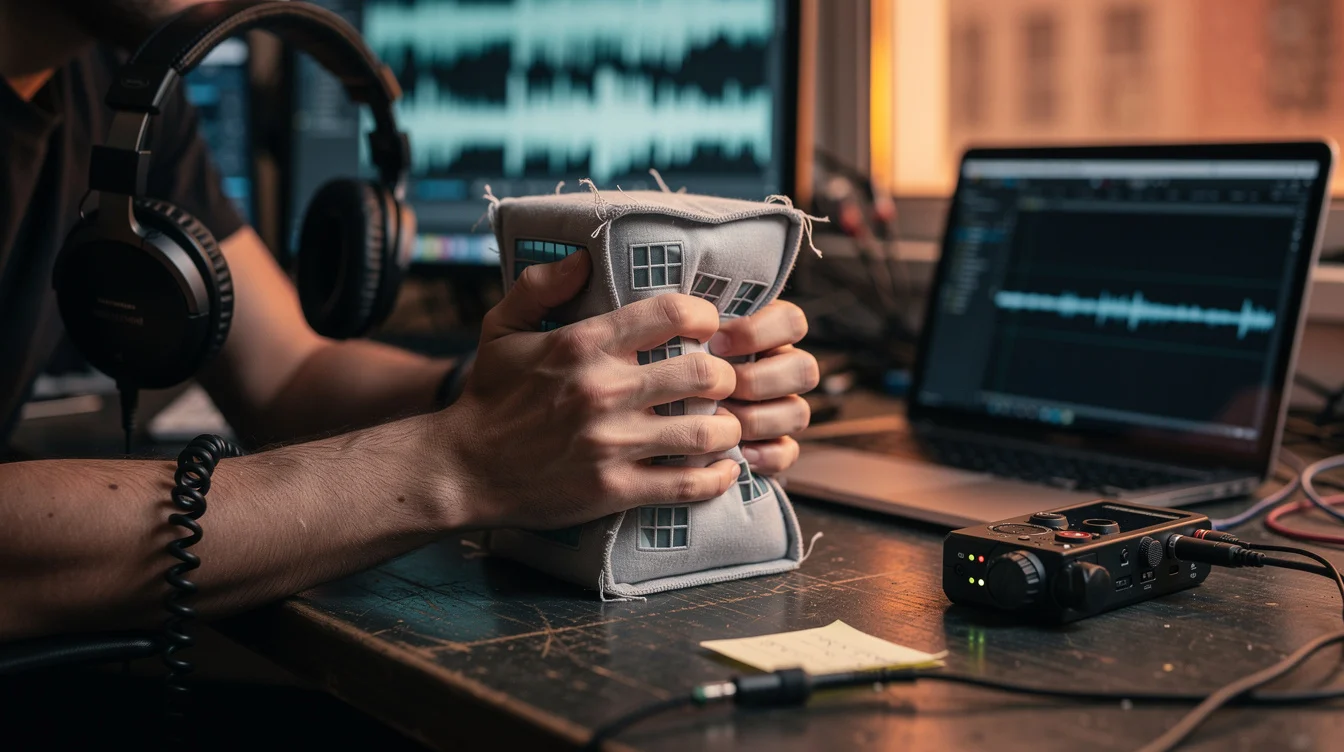
Bezzy gives that building a squeeze mechanism. As reported by Dezeen on 18 September 2026, New York creative agency Basura and musician Big Data have collaborated on a stuffed toy resembling a data centre. Squeeze it and it emits a recording made at a data centre in Virginia. The project belongs to a wider satirical campaign about the impacts of data centres and AI.
Dezeen describes the sound as an “ear piercing hum”. That phrase matters less as an acoustic assessment than as an editorial rupture: the cuddly object refuses to be comforting. Rather than polishing technology’s rough edges, Basura puts one in your hand.
The provocation is excellent. Its political effectiveness is not guaranteed. An irritating toy can reveal the material world behind a frictionless service. It can also make that revelation so charming that possessing the joke becomes a substitute for challenging the system. As with asking whether a bicycle can punish gentrification, the question is how far a provocative object can reach beyond symbolism.
The interface finally makes a nuisance of itself
Most consumer-product design treats unwanted sound as a defect. Fans get quieter, notifications become adjustable, and processing retreats into sealed enclosures. Bezzy reverses the brief. Its unwanted output is the point: a small, voluntary encounter with something that infrastructure neighbours may not be able to switch off.
That reversal places it in the lineage of Anthony Dunne and Fiona Raby’s critical design. Their book Design Noir argued for engaging the unsettling social and psychological dimensions of electronic objects rather than merely making them useful or attractive. Bezzy applies that attitude to an infrastructure category usually represented through immaculate server aisles, luminous diagrams and reassuring abstractions.
The stuffed-toy format adds a sharper contradiction. Softness invites touch; the squeeze produces refusal. It borrows the approachable grammar of a mascot while withholding the pleasant reward that mascot design normally promises.
But the interaction also builds in an escape. The person holding the object initiates the noise and can put the toy down. A resident beside mechanical infrastructure does not necessarily control when equipment operates. Bezzy therefore works best as an argument about unequal control, not as a simulation of living beside a data centre. The distinction separates useful provocation from an empathy gimmick.
A recording is evidence of sound—not its full burden
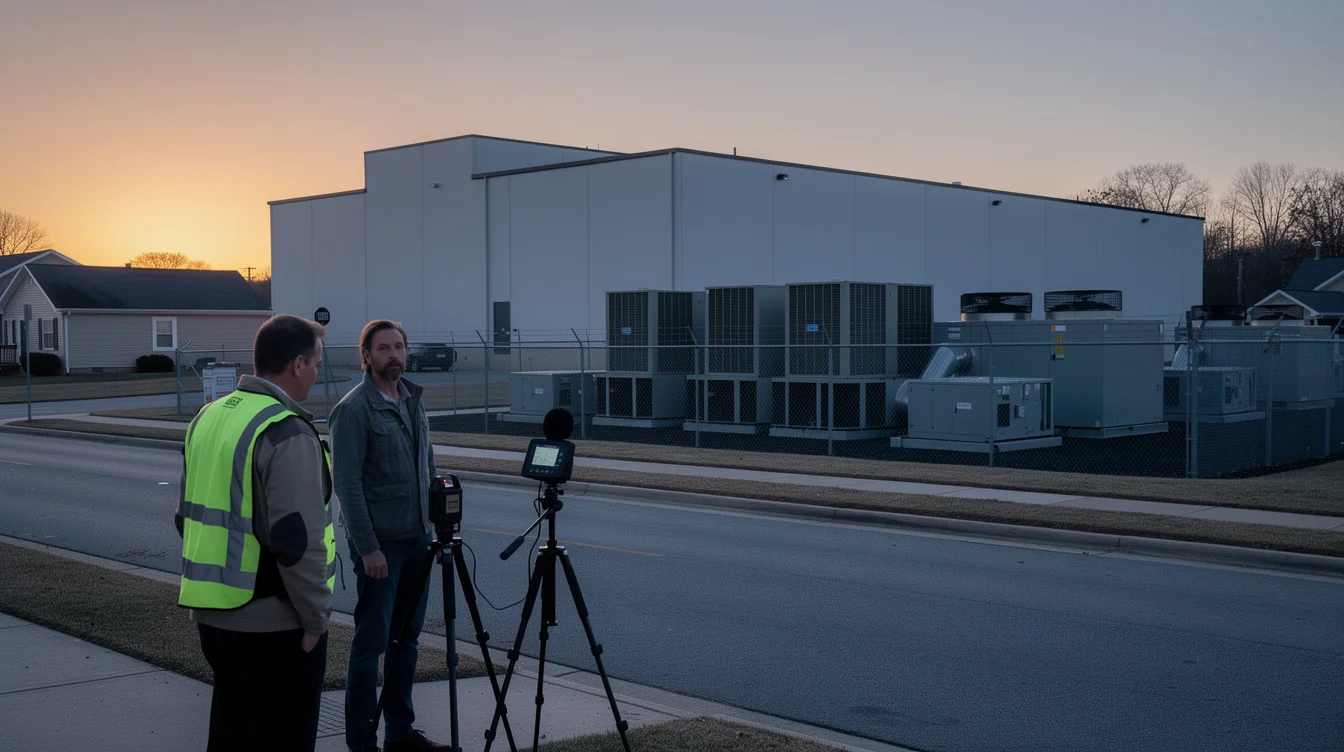
Data centres are physical assemblies of servers, cooling equipment, electrical systems and, commonly, backup generators. Their acoustic effects depend on the equipment, operating conditions, building envelope, surrounding landscape and distance to listeners. A tonal component or recurring equipment cycle can matter differently from a steady broadband sound. “Noise” is not a single interchangeable substance.
Virginia is a pointed source location because the state, particularly Northern Virginia, is a major data-centre hub. Yet the supplied account does not establish the recording’s precise site, measurement conditions, playback calibration or relationship to nearby homes. The toy should not be treated as a calibrated demonstration of residential exposure.
A miniature speaker cannot reproduce a full-scale sound field faithfully. Duration also changes the experience: a few seconds at a desk cannot stand in for a persistent disturbance during sleep or an evening outdoors. That limitation does not invalidate the design. It identifies what the object can honestly do: direct attention.
Artist Lawrence Abu Hamdan’s investigations into sound and listening offer a useful comparison. His work insists that what is heard must be interpreted through context, testimony and the conditions of recording. Bezzy supplies the sensory interruption. Any serious campaign around it must supply the missing context.
Make the cloud visible, then follow the connections
The toy joins a broader design effort to challenge technology’s supposedly weightless existence. Kate Crawford and Vladan Joler’s 2018 project Anatomy of an AI System mapped the material resources, labour and data behind an Amazon Echo. Its force came from connecting a small domestic object to an enormous extractive and logistical system.
Ingrid Burrington’s Networks of New York pursued a complementary tactic: teaching readers to recognise the street markings, equipment and other urban traces of internet infrastructure. Where the network seemed invisible, a guide to looking made it legible.
Bezzy contributes something those predominantly visual approaches cannot: an interruption that occupies the listener’s space. A diagram can be glanced past. An abrasive sound makes a claim on attention. The move from looking to listening is especially apt when the contested cost is itself acoustic.
Still, data centres are not synonymous with AI. They also support storage, streaming, financial services and countless ordinary digital operations. AI’s expanding infrastructure demands deserve scrutiny, but attributing every server building or recorded hum exclusively to AI would weaken the critique. The strongest argument is more precise: frictionless digital services rely on facilities whose burdens are geographically concentrated, while their benefits and profits can travel much further.
Political tangibility needs an address and a decision
Making an issue tangible is not the same as making it politically actionable. A squeeze tells you that infrastructure has a sound. It does not tell you who approves a facility, which operator is accountable, what limits apply or how a neighbour can challenge an inadequate assessment.
This is where critical product design should become less precious about the product. Imagine Bezzy presented beside an annotated planning application, a clearly sourced recording location, residents’ testimony and an explanation of the relevant complaint process. The toy could attract attention; the accompanying material could direct it towards an actual decision.
Noise governance also needs more than a reassuring number in a promotional brochure. Depending on the jurisdiction and site, meaningful scrutiny could include background measurements, assessment of tonal characteristics, night-time conditions, cumulative effects and checks after occupation. Acoustic consultants and affected communities should help define the questions rather than being invited only to validate a finished proposal. As with AI sound alerts and definitions of safety, the crucial question is who sets the threshold and whose experience counts.
The design consequences are architectural as well as administrative: equipment placement, separation distances, enclosures, barriers and quieter machinery. None is a universal cure, and some involve spatial, energy or maintenance trade-offs. That is precisely why noise belongs in early siting and design decisions—not in a public-relations response after the machinery starts.
The collectible is where critique gets comfortable
The danger is not that Bezzy uses humour. Humour can puncture corporate language faster than an earnest infographic. The danger is that the object’s success might be measured entirely through the familiar machinery of attention: coverage, photographs, desirability and circulation among people already fluent in design-world irony.
There is no need to assume a particular price, production run or sales strategy to recognise the risk. A satirical object can become a badge of informed consumption regardless of how it is distributed. Its owner gets to demonstrate awareness; the underlying infrastructure remains someone else’s problem.
Dunne and Raby’s later book Speculative Everything positioned design as a means of opening discussion about possible futures. That ambition should not be confused with an exemption from consequences. Discussion has value, but a project making claims about local burdens should ask who gets to participate and who benefits from the resulting visibility.
For Bezzy, the decisive evidence would sit beyond the object: collaboration with affected residents, transparent sourcing, useful public information or links to specific accountability efforts. These are criteria for judging its political reach, not claims about what the campaign already provides. Without that connection, the toy risks turning a conflict over land, infrastructure and everyday life into an unusually good punchline.
Keep the irritation; refuse the alibi
Bezzy’s strongest move is to reject the assumption that good design must always make an encounter smoother. Here, friction is informative. The unpleasant output breaks the seamless chain between request and reward that digital platforms work so hard to maintain.
But irritation is an opening, not an outcome. The design should be judged neither as a failed policy instrument nor as automatically radical because it is annoying. Its value depends on what the interruption enables: better questions, sharper reporting, community participation or pressure on decisions that determine where infrastructure goes and how it operates.
The cloud does not need another mascot that makes its contradictions lovable. It needs interfaces to accountability. A stuffed data centre can be one of them, provided the joke points beyond itself.
FAQ
What is Basura’s Bezzy toy?
Bezzy is a stuffed toy resembling a data centre, created by New York creative agency Basura with musician Big Data. When squeezed, it plays a recording from a data centre in Virginia. It is part of a broader satirical campaign addressing data centres and AI.
What causes data centre noise?
Sources can include cooling fans, chillers, air-handling equipment, electrical equipment and backup-generator operation or testing. What neighbours hear depends on the facility’s design, operating conditions, distance, terrain and acoustic mitigation.
Does the toy reproduce what residents experience?
Not faithfully. A recording played through a toy cannot recreate the original sound field, exposure duration or surrounding conditions. It can draw attention to the issue, but assessing residential impacts requires contextual evidence and appropriate acoustic measurements.
Can critical design influence infrastructure policy?
It can help frame issues, attract attention and support public participation. Its political usefulness grows when it connects audiences to affected communities, reliable evidence and specific planning or regulatory decisions rather than stopping at symbolic awareness.
If design can make the cloud’s noise collectible, what would make it accountable instead?
Get the Mainifesto weekly — curated design debates, speculative ideas and the week's best articles every Saturday.
Editorial Perspectives
Questions and counterpoints developed by the Mainifesto editorial desk to extend the discussion.
Perspective 1
The cloud is quiet for the customer because someone else lives beside the cooling plant. Basura’s toy makes that distance audible, but accountability means noise limits in planning approvals, independent monitoring, and residents having the power to force changes—not just file complaints.
Perspective 2
I like a new-media object that refuses to sit there looking frictionless; irritation can be a useful way into the politics of AI. But once the noise becomes a collector’s conversation piece, the critique risks becoming a status symbol. Put it in an exhibition with affected residents setting the agenda, not just an artist explaining their discomfort.
Perspective 3
A noisy miniature can make the point, but it can’t tell you what a neighbourhood is actually enduring: frequency, duration, and night-time exposure matter. I’d want the object linked to measured site data and a named operator’s obligations—and a bill of materials for the toy itself. Making another electronic collectible isn’t automatically a critique of excess.