
When Landscape Becomes the Building Material
The building is no longer the protagonist
Architecture has spent centuries rehearsing the same theatrical arrangement: landscape as stage, building as actor. The mountain is framed, the forest is approached, the river is given a balcony. Even the most sensitive modern buildings often remain objects placed before a view, carefully composed against a supposedly passive world.
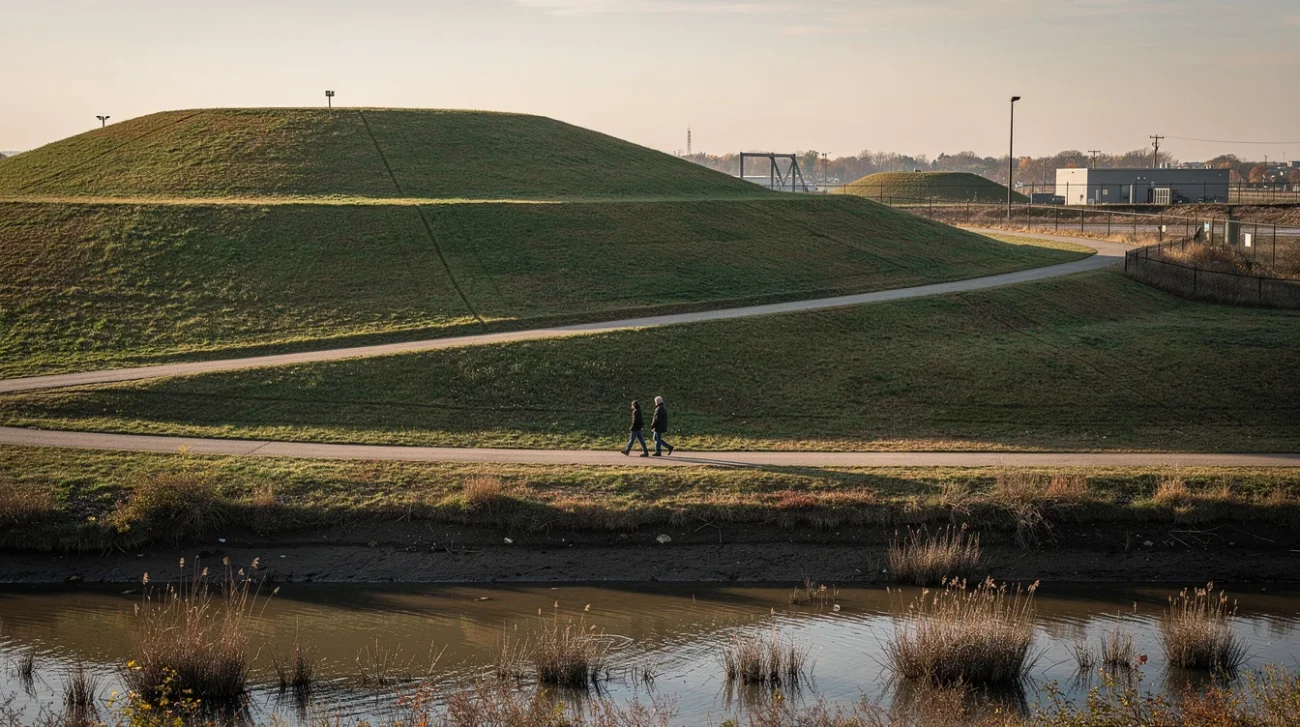
That arrangement is beginning to look intellectually exhausted. A growing body of work treats terrain, vegetation, water, weather and inherited structures not as context but as active building materials. The question is no longer how a building can sit beautifully in a landscape. It is how a landscape can generate the building in the first place.
This shift is visible in projects that bend with contours, retain existing trees, occupy abandoned structures and allow planting to determine circulation. It is visible in rammed-earth walls that borrow their colour from a site, roofs that extend the slope beneath them and paths that follow animal movement rather than abstract geometry. The result is not architecture disguised as nature. It is architecture that gives up its demand to be read as a singular object.
The distinction matters. Green roofs, planted façades and panoramic glazing can still produce conventional buildings with a botanical accessory. Landscape-led architecture is more demanding: it asks the site to control form, programme, material and time. It replaces the monument with a negotiation.
Yunxi Valley and the ethics of gentle interruption
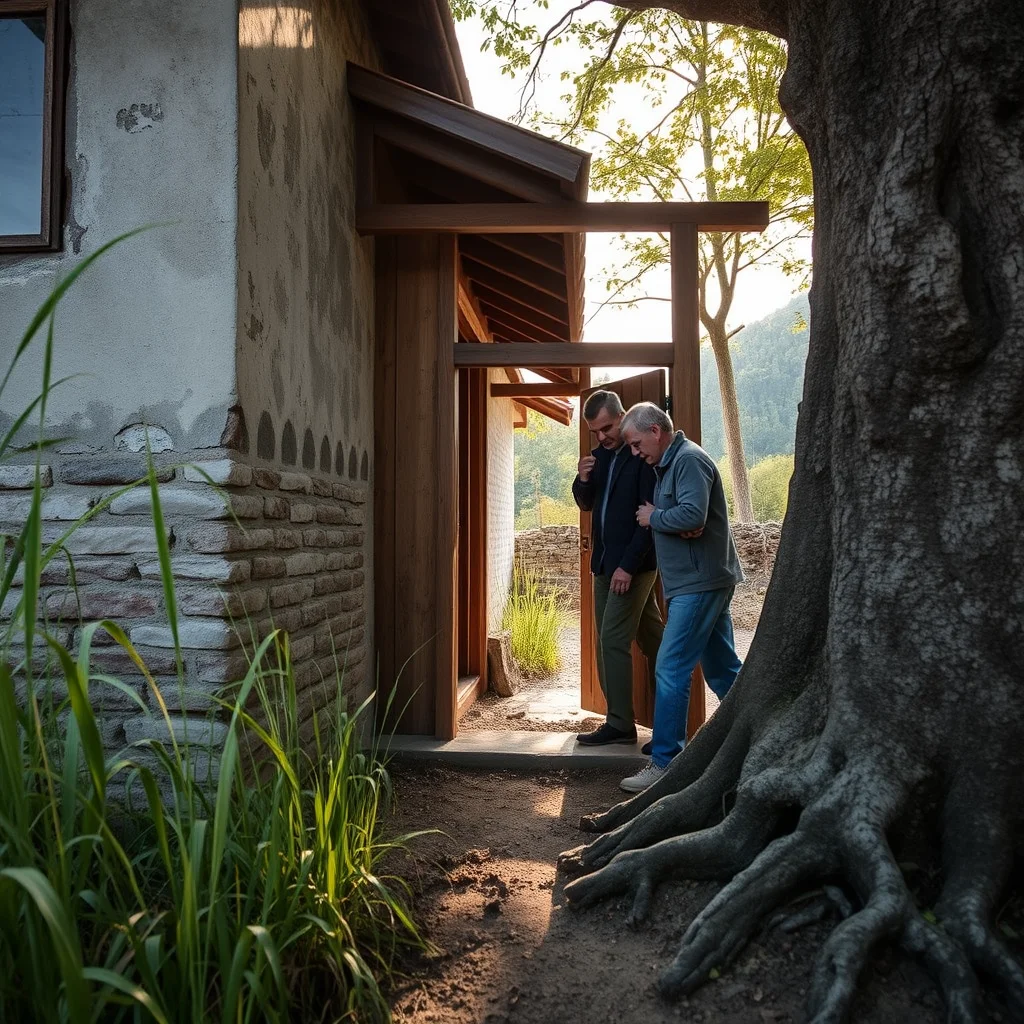
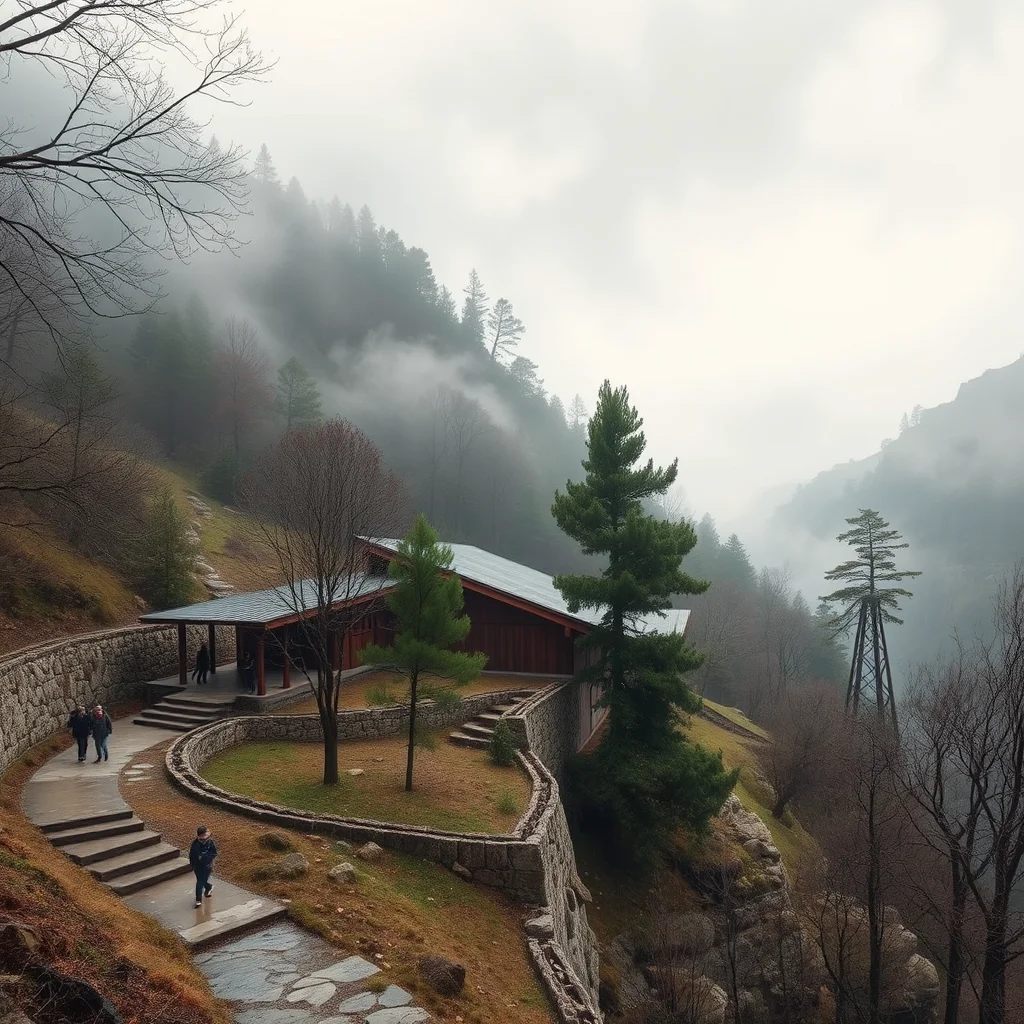
The Yunxi Valley project beside Zhouluo Grand Canyon in Liuyang offers a lucid example of this attitude. Set among mountains, valleys and woods, the development begins from a refusal to reshape the land into a clean, consumable image. Its spaces follow the existing terrain, while old houses are renovated rather than erased. New interventions are positioned as continuations of local life, not as isolated attractions competing with the wilderness.
That approach is significant because hospitality architecture usually turns nature into a product. A resort promises an escape, then clears the slope for a road, grades the ground for a view and standardises the rooms that face it. Yunxi Valley proposes a different sequence: preserve memory, accept irregularity and let the buildings grow along the terrain like local plants. The metaphor is not decorative. It describes a practical discipline of restraint.
In such a project, the old house is not merely a nostalgic shell. It is a repository of construction knowledge, social memory and embodied scale. Renovation as a form of heritage preservation becomes a form of ecological work because it limits demolition, retains material energy and keeps the site legible. New spaces can then act as connective tissue between what already exists: a threshold under trees, a path around a slope, a room that opens toward a valley without claiming ownership of the view.
This is architecture as gentle interruption. It does not pretend to disappear, nor should it. Every foundation changes drainage; every path concentrates footsteps; every roof casts shade. The ambition is instead to make those changes reciprocal, measured and visible. Life flourishing alongside nature means accepting that the building is a participant in a living system, not its landlord.
From object-making to ecological stitching
The conceptual roots of this movement reach beyond any single site. Frank Lloyd Wright’s Fallingwater made the stream, stone and cantilever inseparable, though its heroic formal language still announced the architect’s hand. In contemporary practice, the emphasis is shifting from organic expression to ecological dependence. Glenn Murcutt’s lightweight buildings in Australia respond to wind, sun and seasonal change with remarkable precision. Anna Heringer’s earthen projects make local labour and soil central to both construction and cultural value. Rural Studio turned modest resources into an argument against architecture’s obsession with prestige.
Other designers push the idea at territorial scale. In the Netherlands, landscape architect Piet Oudolf composes planting as a temporal structure, making decay and seasonal succession part of the designed experience. In Belgium, the practice 51N4E has explored buildings and public spaces as agents within complex urban and social conditions rather than autonomous forms. In China, projects across rural and mountainous regions increasingly confront the challenge of adapting contemporary programmes to villages, forests and agricultural systems without flattening their differences.
The most compelling work understands that ecology is not a visual style. It is a set of relationships operating across time. A building may be materially low-carbon yet ecologically crude if it fragments habitat or demands excessive maintenance. Conversely, a robust intervention with a larger initial footprint may support restoration, reuse and long-term stewardship. Landscape-led architecture therefore requires more than renderings of moss and mist. It requires hydrological mapping, soil knowledge, urban wildlife planning, careful procurement and governance after completion.
Architecture becomes stitching when it repairs continuities: between a village and a forest, a ruin and a new use, a watershed and a public path, a human schedule and the slower calendar of plants. The building is no longer the finished object. It is one seam in an unfinished fabric.
Form should follow disturbance, not fashion
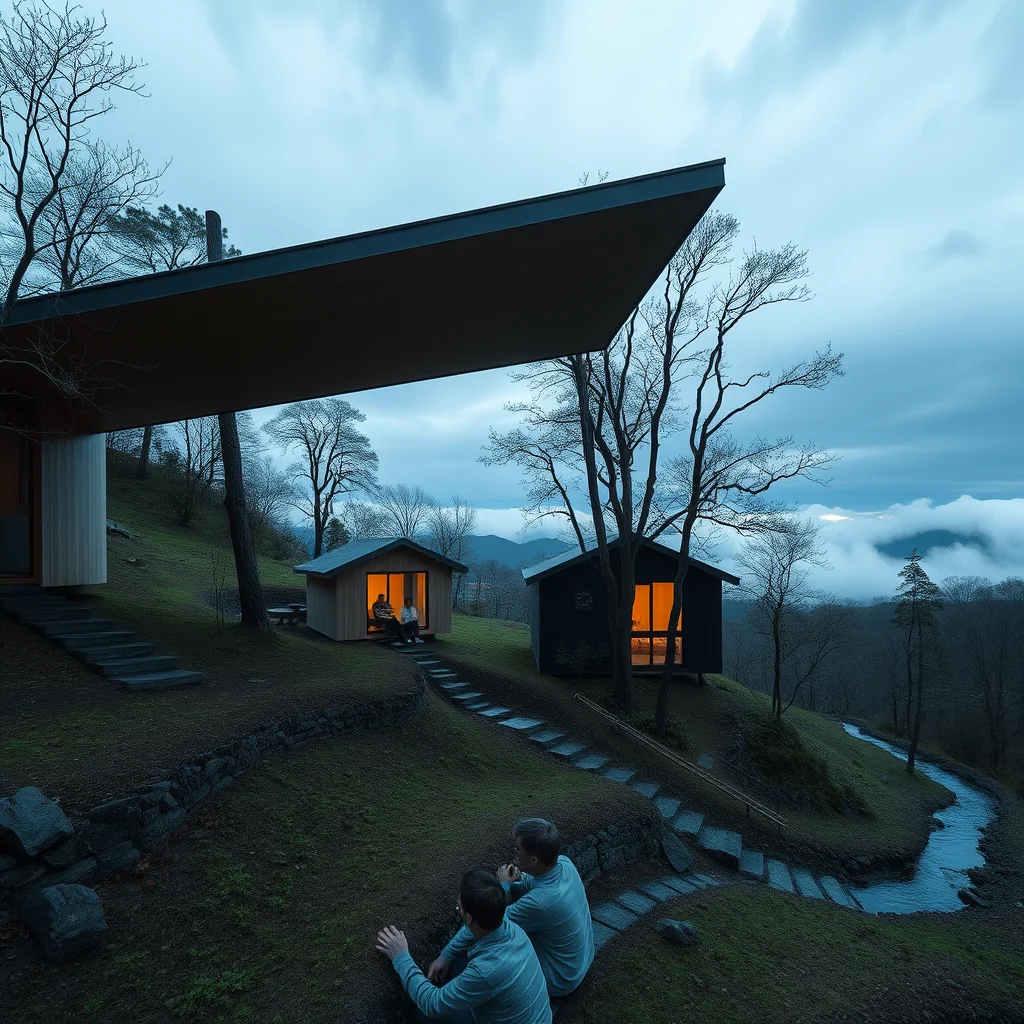
This proposition also changes what counts as formal intelligence. A sharp silhouette may be less sophisticated than a building that accepts a difficult contour. A deliberately uneven façade may be more rigorous than a smooth curtain wall if its irregularity preserves mature trees or manages heat. The architect’s signature moves from visual novelty to the quality of the disturbance produced.
Consider the lessons of projects such as Peter Zumthor’s Therme Vals, where local quartzite and the mountain’s geological presence organise the experience, or Tadao Ando’s Chichu Art Museum, where much of the building is buried to protect the island’s horizon. These projects are not interchangeable models, and neither is free from the culture of architectural pilgrimage. Yet both demonstrate that presence can be calibrated through subtraction, weight and sequence rather than spectacle alone.
The next generation must go further. Topography should influence where a building is permitted to touch the ground. Existing vegetation should shape not only the site plan but the programme, creating rooms that move around root zones and courtyards that become habitats rather than ornamental voids. Water should be treated as infrastructure and public experience at once. Materials should be selected for repair, weathering and eventual disassembly, not simply for their first photograph.
This does not mean every building must be camouflaged or buried. A conspicuous building can still be ecologically accountable. The danger lies in confusing visual modesty with actual care. A low-profile villa that imports stone from across the world and irrigates a decorative garden is not gentler than a compact, visible structure that restores a damaged slope. Landscape as building material is an operational claim before it is an aesthetic one.
The politics of letting a site lead
There is also a political edge to this approach. To let terrain lead is to question the authority of the client, the masterplan and the deadline. Sites are slow, contradictory and resistant to optimisation. They contain land rights, memories, species and informal uses that do not fit neatly into a development schedule. A landscape-led project must therefore make room for forms of knowledge that professional architecture has often treated as secondary: local maintenance, seasonal observation, craft, farming and communal memory.
Yunxi Valley’s preservation of old houses points toward this broader responsibility. Memory is not an image applied after construction; it is a material condition of the place. Keeping an existing wall or path can preserve a social orientation that no new design can convincingly reproduce. The building becomes less an act of replacement than an act of listening.
Yet this language can be appropriated. Developers may market “nature-integrated” retreats while enclosing common landscapes, displacing residents or turning rural life into a luxury atmosphere. The ecological aesthetic is now commercially powerful, which makes its ethics more urgent. Who gets access to the valley? Who maintains the planted roof? Which species are protected, and which are removed for a cleaner view? Who is allowed to decide what counts as an authentic relationship with nature?
The future of architecture will not be secured by softer shapes alone. It will depend on contracts, planning rules, land stewardship and post-occupancy accountability. If landscape is genuinely a building material, then it cannot be consumed like cladding. It must retain agency.
A less heroic architecture
The most radical consequence of this movement is cultural. It asks architects to surrender the fantasy of total authorship. The building may be altered by roots, stained by rain, colonised by insects and reinterpreted by occupants. Its success may become harder to photograph because the most important work happens underground, seasonally or collectively.
That is not a retreat from design. It is a more expansive definition of it. Design can choreograph care, make ecological processes perceptible and create conditions in which human activity does not automatically become domination. It can build thresholds instead of borders, repair instead of clear, and accommodate change instead of treating weathering as failure.
At Yunxi Valley, the ambition to grow peacefully alongside nature offers a necessary corrective to reckless expansion. The project matters not because it solves the contradiction between development and wilderness, but because it refuses to hide that contradiction behind a photogenic object. Its architecture proposes a quieter kind of confidence: buildings that belong through participation.
Landscape will never be a neutral material. It is alive, contested and already designed by climate, culture and time. The architects who understand this will not produce less ambitious work. They will produce work whose ambition is measured by what it allows to continue.
FAQ
What does it mean to treat landscape as a building material?
It means allowing terrain, vegetation, water, climate and existing structures to determine architectural decisions rather than using them as a scenic backdrop. The approach affects siting, structure, circulation, programme, materials and long-term maintenance.
Is landscape-led architecture the same as biophilic design?
No. Biophilic design often adds natural references or planting to a building for human wellbeing. Landscape-led architecture is more fundamental: the ecological conditions of a site actively generate the building and constrain its intervention.
Can this approach work in cities?
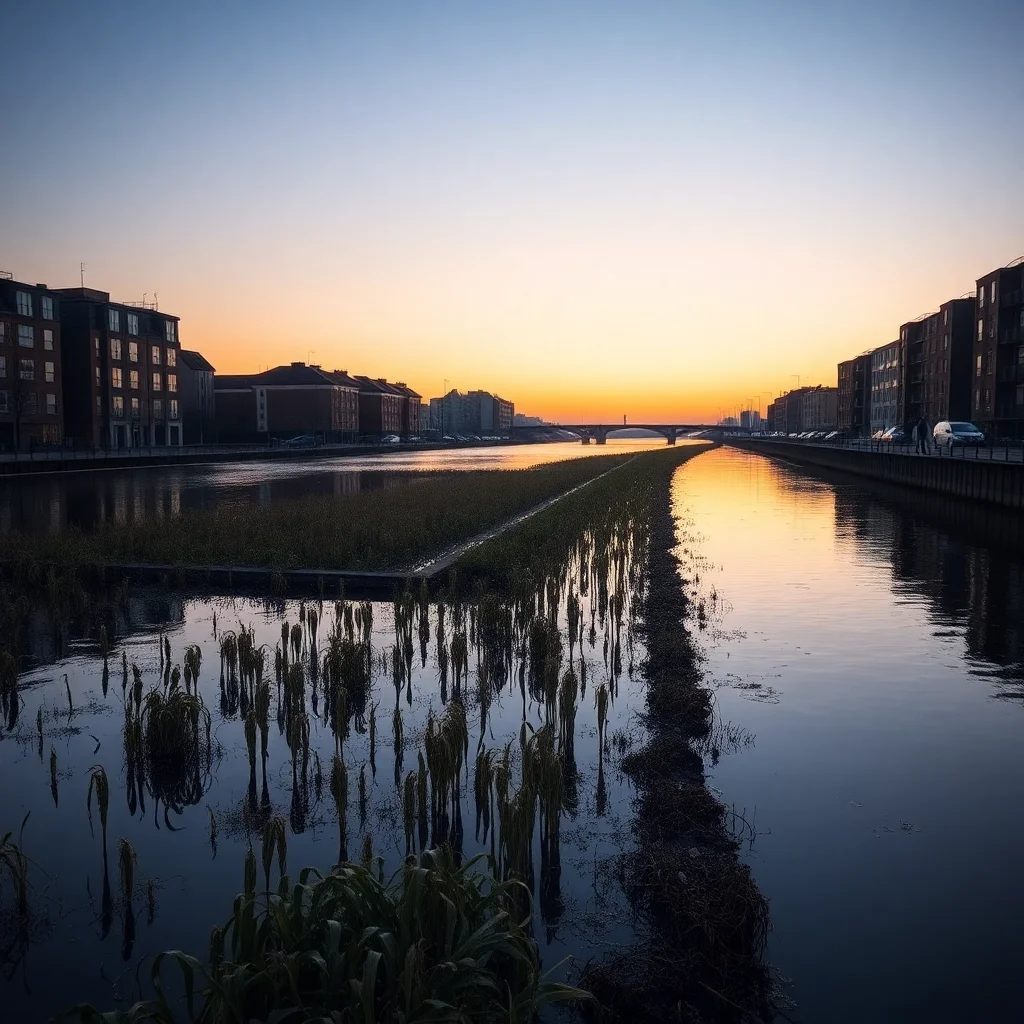
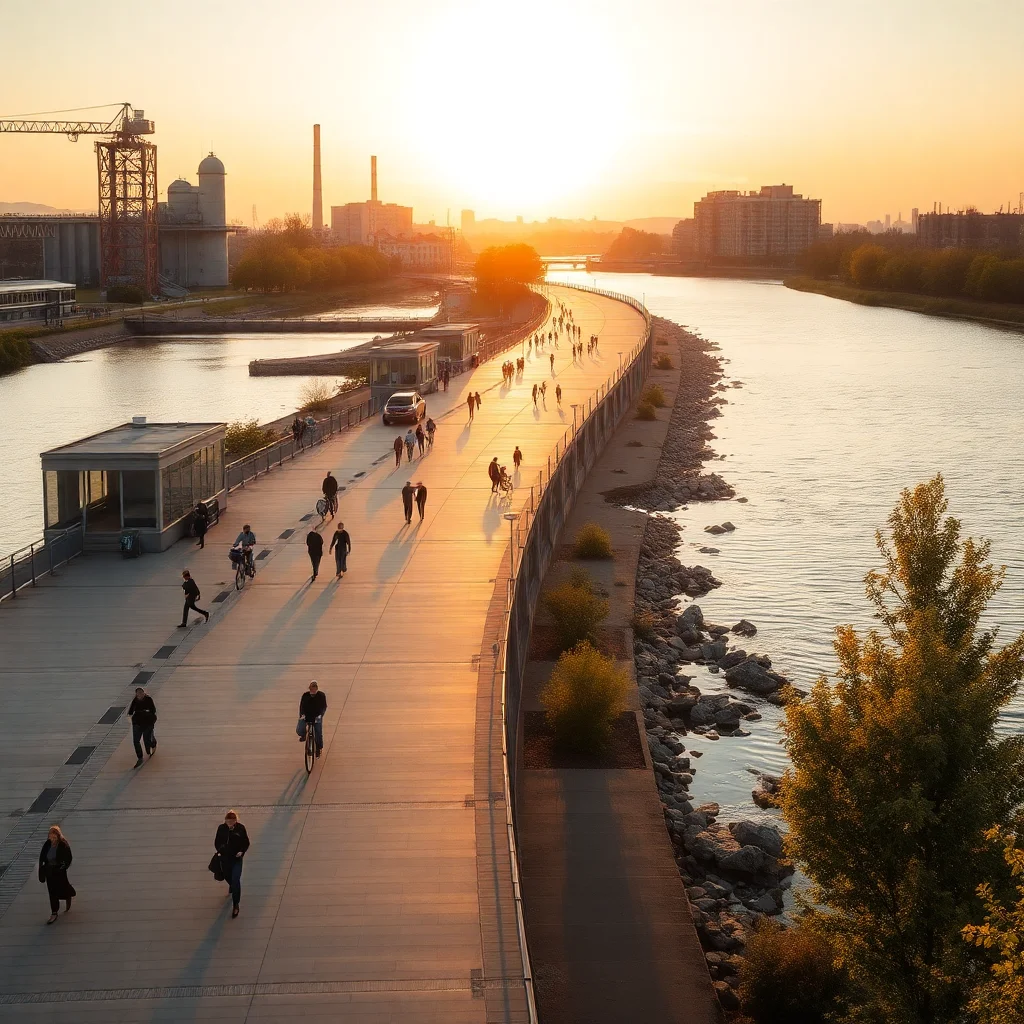
Yes. Urban examples can preserve mature trees, reopen buried waterways, reuse industrial structures, create habitat corridors and follow existing social routes. In dense areas, ecological stitching may mean repairing a fragmented public realm rather than building in a remote wilderness.
What is the main risk of landscape-integrated architecture?
The language can become a marketing device for exclusive resorts and developments that damage the places they claim to celebrate. Genuine projects must address access, biodiversity, local communities, resource use and maintenance alongside appearance.
Get the Mainifesto weekly — curated design debates, speculative ideas and the week's best articles every Saturday.
Editorial Perspectives
Questions and counterpoints developed by the Mainifesto editorial desk to extend the discussion.
Perspective 1
Letting the landscape lead sounds compelling until you price the drainage, maintenance and insurance. The authority has to sit with whoever carries the long-term risk, with local communities at the table; otherwise 'gentle' becomes an expensive slogan rather than a workable brief.
Perspective 2
This is less a departure from architecture than a return to its oldest theatrical fantasy: the building dissolving into nature. Yet the rhetoric of agency remains suspiciously human, as in the picturesque garden—someone still edits the view, and usually someone with money.
Perspective 3
Guests do not book an ecological stitch; they book shade, privacy, easy arrival and a room that works. Give the site a voice, certainly, but measure the result in comfort, operating cost and repeat visits—not in how elegantly the concept presentation avoids the word 'building.'
Perspective 4
The difficult question is how landscape agency gets translated into rules rather than mood boards. Can models track soil health, water movement, habitat and cultural memory over time, then let those changing inputs alter the building without turning the site into another automated control system?
Perspective 5
The people with authority are usually the people who already control land, capital and data, so the language of agency needs a political audit. A building can be gentler, but only if maintenance, displacement and resource access are designed into the project—not added as environmental branding afterward.