

Vollebak’s Sonic Jacket and the Future of Wearable Space
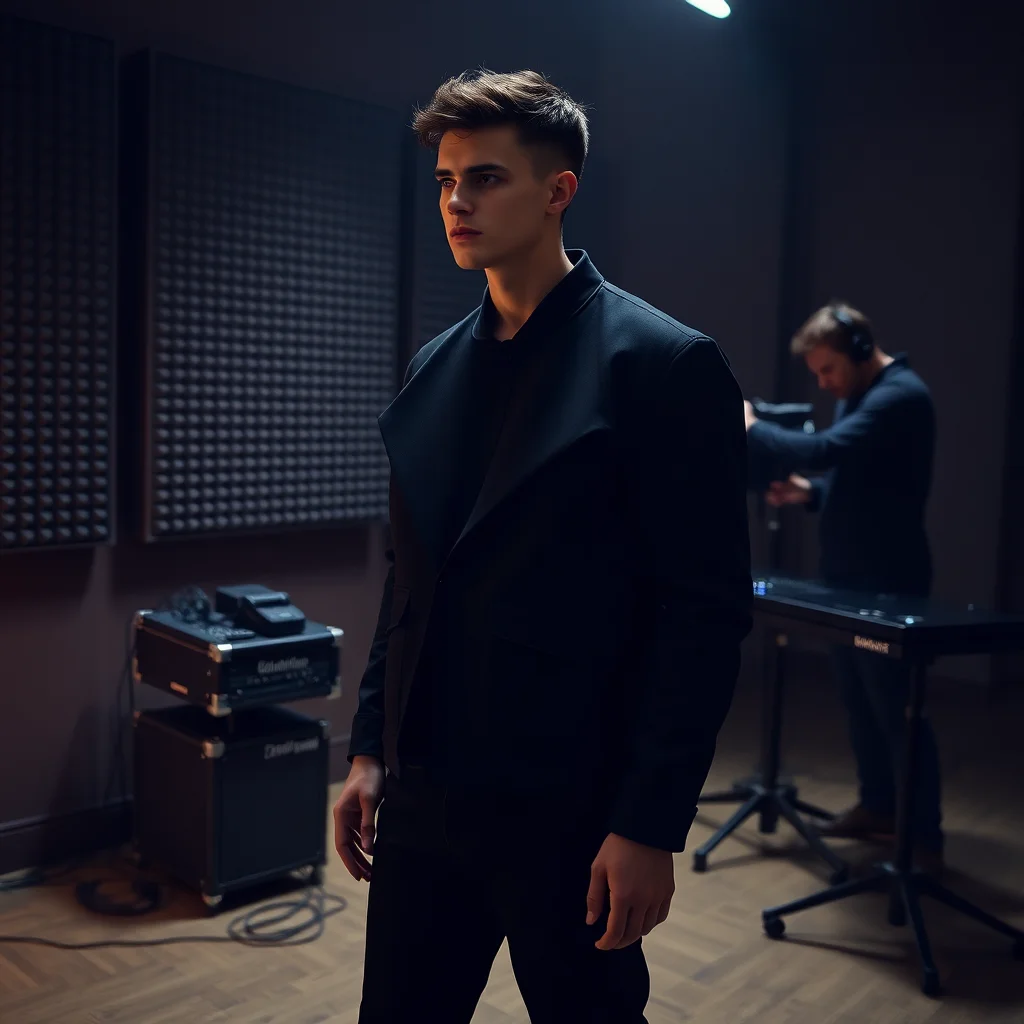
The Jacket Is No Longer Just a Garment
Vollebak’s sonic jacket is not interesting because it is “smart” in the usual tech-bro sense. It is interesting because it attacks a far stranger frontier: the idea that clothing might operate like an atmosphere. In the Designboom feature, chief creative officer Nick Tidball frames the piece as an emotional resonance chamber for the body, using sound not as decoration but as a physiological force that shifts mood, consciousness, and attention. That is a much more radical proposition than wearable convenience. It suggests that apparel can become environmental infrastructure.
Fashion has spent the last decade pretending that embedded tech was enough. Heated parkas, GPS runners’ jackets, biometric rings, and haptic sneakers all promised the same modest upgrade: efficiency. Vollebak pushes in a different direction. The jacket does not merely track the body; it tries to alter the room the body inhabits by changing the body’s inner weather. This is where the project becomes architecturally provocative. If a garment can modulate the nervous system, then architecture is no longer only walls, light, and material. It becomes a field of sensations negotiated at skin level.
That shift echoes work far beyond fashion. Archigram imagined environments as plug-in systems. Prada’s famous experiments with performancewear made utility look desirable. Studio Roosegaarde has treated technology as an atmospheric instrument, from light-responsive public spaces to poetic civic interventions. But Vollebak’s sonic jacket goes one step further: it proposes that the interface between self and space may be portable, wearable, and intimate. The body becomes the room; the room becomes a mood device.
Sound as Soft Architecture
Architects have long known that sound can shape space more forcefully than image. Sacred buildings use reverberation to induce awe. Concert halls are tuned to make listening feel almost bodily. Tadao Ando’s concrete interiors often feel less like objects than pressure chambers, where silence itself becomes a material. In that lineage, Vollebak’s sonic jacket is not a gimmick but a thesis: if sound can structure perception in a building, why not in clothing?
The jacket’s premise takes design into the domain of psychophysiology. Sound is not abstract here. It can slow breathing, elevate pulse, alter focus, and even trigger memory. That is why playlists are marketed as productivity tools and why meditation apps lean heavily on tonal environments. Vollebak is translating that logic into a garment, implying that the surface closest to the skin may be the most consequential site of environmental design. Instead of walking into a calibrated room, the wearer carries a calibrated condition.
This is where the speculative question sharpens. Could fashion become a sensory interface that modulates mood the way smart lighting does in homes and workplaces? Could a jacket create a temporary “interior” around the wearer, one that changes in response to stress, boredom, or overstimulation? We already accept that architecture can be adaptive. Why should clothing remain passive when bodies are increasingly trapped in algorithmic environments that are themselves designed to influence behavior?
Design history offers plenty of warnings and inspirations. The Sensitive Wall and media façade movements made buildings reactive, but often visually loud and emotionally shallow. In contrast, wearable design has the chance to be intimate without being performative. It can work below the level of spectacle. That is what makes Vollebak’s experiment consequential: it refuses the usual wearable-tech fetish for dashboards and data, and instead imagines sensation as the primary interface. For a broader look at the design politics of embedded intelligence, see whether AI is becoming architecture’s junior partner.
From Apparel to Emotional Infrastructure
The strongest reading of the sonic jacket is not that it is a product, but that it is a prototype for emotional infrastructure. Architecture has already been invaded by wellness language: circadian lighting, acoustic optimization, biophilic design, and materials marketed as calming or restorative. What Vollebak suggests is that the same logic can descend to the scale of the body, making garments into micro-environments that participate in the regulation of mental state.
Think of the implications in everyday life. A commuter jacket that dampens the aggression of the city through sound design. A concentration garment for students or designers entering deep work. A recovery layer for hospitals or airports, where sensory overload is part of the damage. The project is speculative, yes, but it is not whimsical. It belongs to a lineage that includes Philips’ ambient technologies, Nike’s ongoing experiments with adaptive performance wear, and Issey Miyake’s long-standing interest in garments that move with, rather than simply cover, the body.
There is also a darker reading, which design culture should not dodge. Once clothing becomes capable of mood modulation, it can become a tool of optimization, compliance, and control. If a jacket can calm you, can it also make you more productive? More docile? More available to work? Architecture has already been captured by wellness capitalism, where “comfort” often masks behavioral management. Wearable sensory systems risk becoming the next frontier of that same agenda. Similar concerns are already surfacing in other fields, including digital ethics in design, where the question is not whether technology can intervene, but when it should refuse to.
Still, the provocation matters because it exposes a blind spot in contemporary design. We obsess over smart materials and responsive facades while ignoring the fact that the most immediate environment is the one we wear. Vollebak’s sonic jacket turns this hierarchy inside out. It asks whether the future interior is not a room at all, but a condition carried on the body.
Why This Matters to Architecture, Not Just Fashion

Architects should pay attention because the sonic jacket collapses several design disciplines at once. It is garment, device, acoustic environment, and behavioral instrument. That hybridity matters in an era when domestic life, work, and social identity are already mediated by wearable and spatial technologies. The jacket makes visible a reality architecture has been slow to admit: the built environment is no longer limited to the built.
In practice, this could reshape how designers think about interiors. If sensory modulation can be distributed across clothing, furniture, and architecture, then the room becomes one node in a larger atmospheric system. The wall no longer has to do all the work. Soundscapes, textiles, temperature, and wearable interfaces could cooperate to create adaptive zones for focus, sociality, recovery, or play. This is a more nuanced future than “smart home” marketing, because it treats ambience as relational rather than automated. It also aligns with the logic behind responsive lighting systems, which show how atmosphere can be tuned as a wellness tool rather than a gimmick.
Some of the most relevant precedents come from outside the mainstream. Pauline Oliveros’ deep listening practice treated sound as a spatial and bodily discipline. The work of Ryoji Ikeda has shown how sonic environments can become almost architectural in scale. Fashion designers like Hussein Chalayan have repeatedly treated garments as spatial and conceptual systems, folding motion, engineering, and narrative into one object. Vollebak’s jacket sits in this experimental corridor, but with a sharper technological edge and a more explicit psychological ambition.
The key issue is not whether every jacket should hum, vibrate, or resonate. It is whether design will continue to treat the body as a passive inhabitant of space. The sonic jacket insists on the opposite. It imagines the body as an active acoustic chamber, one that can be tuned. That idea may sound extreme, but so did the idea of a building that responds to heat, light, and presence. The future of architecture may be less about form and more about frequency.
PRO: The Case for Wearables as Immersive Environments
1. They make atmosphere personal. A room can be beautifully designed and still feel wrong to a nervous system under stress. Wearables like Vollebak’s sonic jacket suggest that atmosphere does not have to be universal; it can be tailored to the individual, giving people control over their own sensory conditions.
2. They extend architecture beyond the building envelope. If ambient systems can move with the body, then design is no longer trapped inside fixed walls. This opens a richer model of interiority, where the person carries a portable microclimate of sound, attention, and emotional tone.
3. They make emotional design explicit. Buildings already influence behavior, but often under the guise of neutrality. Wearable sensory systems force designers to admit that comfort, focus, and calm are not accidental side effects; they are engineered states.
4. They could support care and accessibility. People with sensory sensitivities, anxiety, or neurodivergent processing differences may benefit from garments that help regulate overload. This is not a niche fantasy; it is an emerging design responsibility.
5. They invite a new material culture. The sonic jacket points toward clothing as acoustically aware, emotionally responsive, and spatially active. That makes fashion less disposable and more infrastructural, which is exactly where contemporary design needs to be heading.
CONTRA: The Case Against Turning Clothing Into a Room
1. It risks aestheticizing control. Once garments are built to modulate mood, they can also be used to steer behavior. The language of wellness is already a common mask for productivity culture, and wearable ambience could become another instrument of soft coercion.
2. It may overclaim on consciousness. Designers love to speak about altered states, but not every sensory intervention produces meaningful psychological change. Without rigor, the sonic jacket could drift into the familiar territory of expensive techno-mysticism.
3. It could flatten the role of architecture. If fashion begins to absorb too much atmospheric responsibility, architecture may be reduced to a static backdrop. That would be a loss. The power of interiors lies partly in shared space, not just individual optimization.
4. It may deepen inequality. Sensory-enhancing garments will likely arrive first as premium objects. That means the ability to buy calm, focus, or recovery could become another luxury distinction, not a public good.
5. It invites dependency on mediation. The more we rely on devices to regulate mood, the less we learn to inhabit friction, silence, and ambiguity. A jacket that changes how you feel may also make it harder to experience the unfiltered world.
These objections are not reasons to dismiss the sonic jacket. They are reasons to take it seriously. The most interesting design objects do not solve problems; they reveal the terms of the future argument. Vollebak’s jacket does exactly that. It exposes a coming culture in which apparel, interface, and interior no longer occupy separate categories. The question is whether we will use that convergence to expand human agency or refine new forms of behavioral management.
In the end, the sonic jacket matters because it makes a bold and uncomfortable claim: the next interior might be worn, not entered. If that is true, then fashion is no longer the surface of architecture. It is one of architecture’s operating systems.
Get the Mainifesto weekly — curated design debates, speculative ideas and the week's best articles every Saturday.
Editorial Perspectives
Questions and counterpoints developed by the Mainifesto editorial desk to extend the discussion.
Perspective 1
The provocative part isn’t the jacket, it’s the power shift: once clothing starts shaping attention and mood, you’re really talking about soft infrastructure on the body. In cities already full of surveillance, stress, and algorithmic nudging, I’d be wary of handing that sensory control to brands or markets with no public accountability.
Perspective 2
I’m interested, but only if the claims survive production reality. Sensory garments sound seductive until you ask about durability, calibration, wash cycles, and how consistent the effect is across bodies and climates. If the wearer can’t understand or control the input, then it’s not design—it’s a black box with good PR.
Perspective 3
This is exactly where wearables should be heading: not just tracking the body, but helping people actively shape their environment and mental state. The wearer should control it first, because once mood becomes a product feature, the market will optimize for engagement instead of wellbeing. Design needs to keep that agency in the user’s hands.