
The Future of Aging at Neighborhood Scale
Aging is no longer a private problem
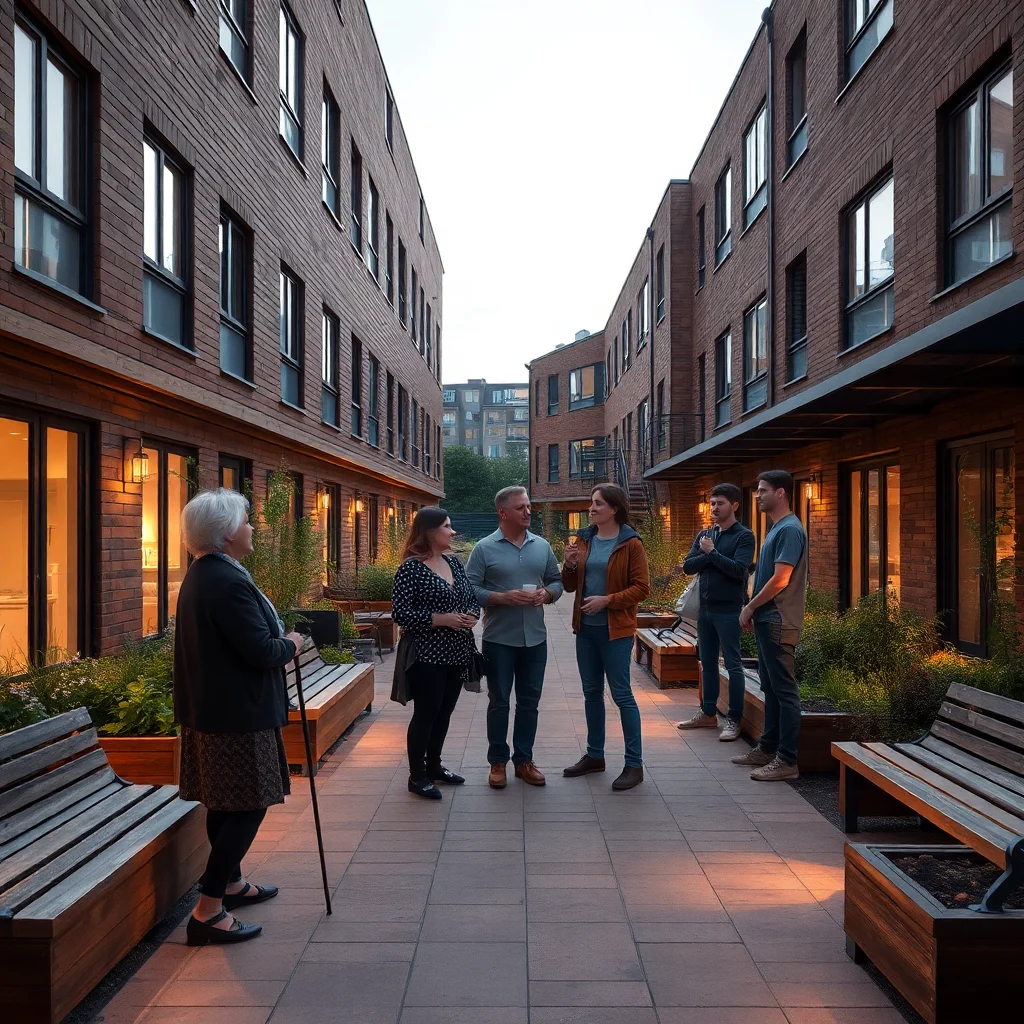
The most radical idea in housing today is also one of the oldest: that people should live among neighbours they know. Intergenerational co-housing is being sold as a humane correction to the twin failures of the contemporary city: loneliness on one side, and unaffordable, atomized housing on the other. At its best, it proposes a built environment where care is not outsourced to institutions, and ageing is not hidden behind the sterile language of “independent living.”
This is why developers such as Town, founded by Jonny Anstead, matter. Town’s pitch is not merely real-estate uplift with a social halo. It is an argument that design can actively improve wellbeing by creating spaces where families, older adults and younger residents overlap in daily life. The vision is seductive because it answers multiple crises at once: people want community, governments need care models that cost less than isolation, and cities need new housing forms that do not assume the nuclear family as the only legitimate unit.
But seduction is not the same as justice. The question is not whether people enjoy shared gardens, communal dinners and a sense of belonging. The question is who gets access to them, who pays for them, and who is quietly screened out by the economics of “healthy community.”
From sheltered housing to social infrastructure
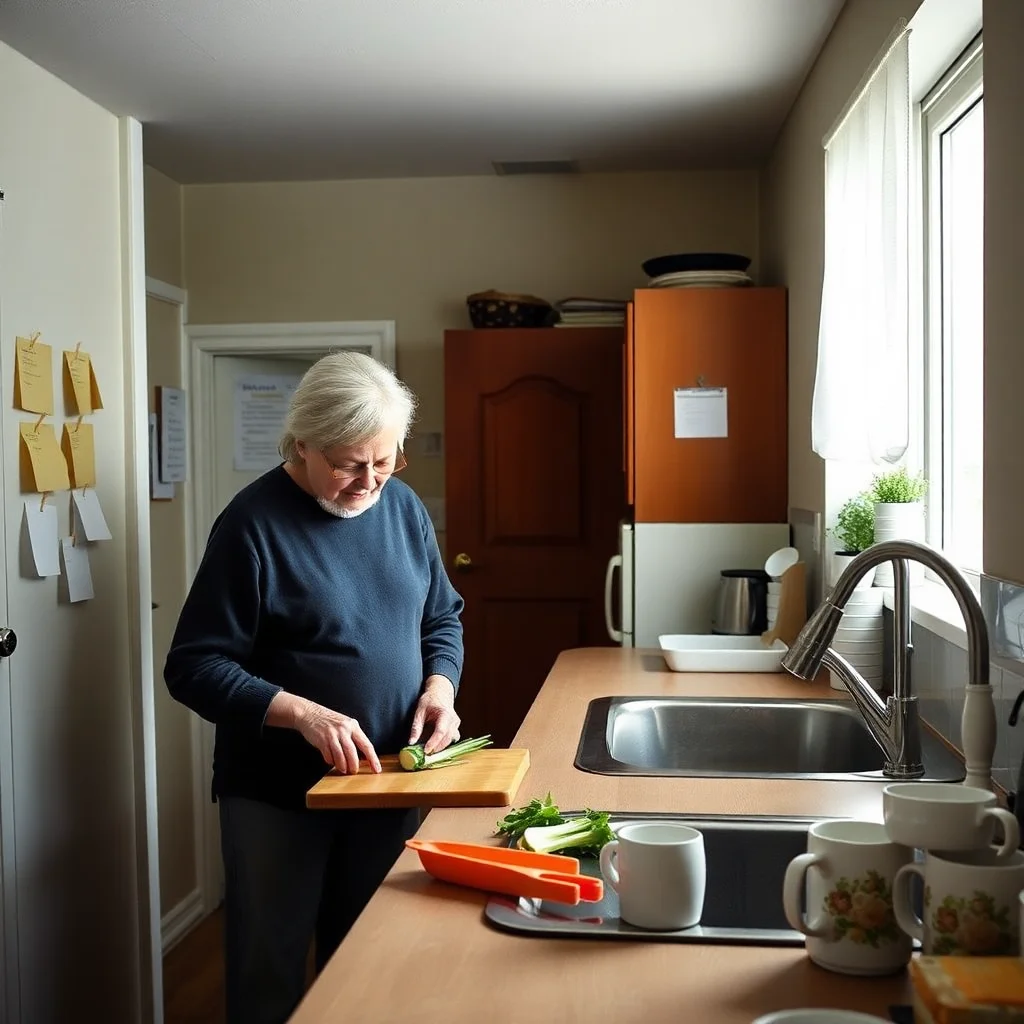
The history of ageing architecture is littered with euphemisms. “Retirement living,” “assisted living,” “senior communities” — each term attempts to soften a reality that often remains segregated, age-stratified and architecturally timid. In many places, older residents are either warehoused in institutions or pushed into suburban developments that privatize every aspect of life. The result is predictable: fewer incidental encounters, more loneliness, and a care burden transferred to families already stretched by work and housing costs.
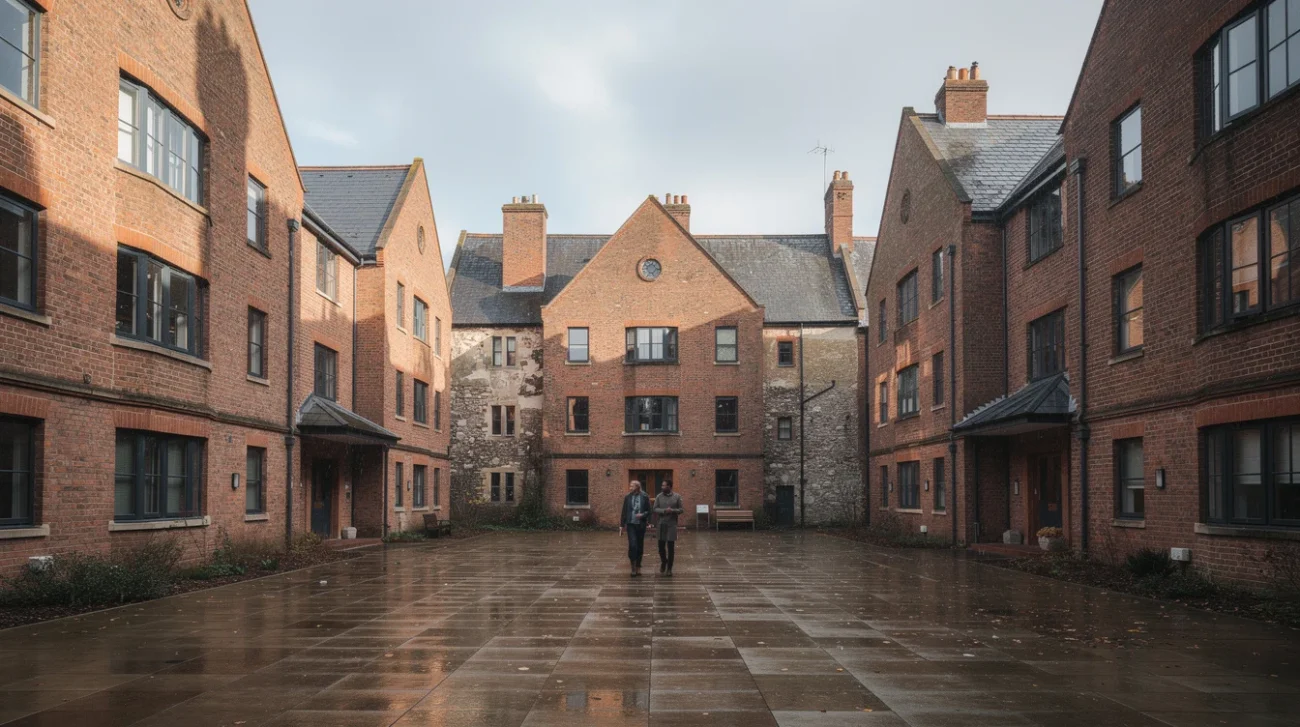
Intergenerational co-housing breaks with that model by treating domestic life as social infrastructure. The Danish co-housing tradition, from the late-1960s models developed by Jan Gudmand-Høyer to later communities such as Sættedammen and the many kollektivhuse that followed, proved that shared kitchens, common rooms and collective decision-making can reduce isolation without eliminating privacy. More recently, projects such as Courtyard Living as Climate Strategy show how shared spatial patterns can support both everyday sociability and environmental performance, while the older but still influential CARMEN project in Berlin demonstrate that co-housing can be dense, urban and family-friendly rather than pastoral and exclusive.
What makes the current wave different is the explicit focus on ageing. The point is not only to house older people near younger ones, but to redesign the everyday choreography of support: who notices when someone is ill, who helps carry groceries, who can water plants during a hospital stay, who has a spare hour for a conversation that prevents despair from hardening into crisis. Good architecture cannot replace care, but it can make care visible, legible and easier to offer.
That is partly why the language around these projects matters so much. In some cases, the same design sensibility that sells a quieter, more composed domestic life also appears in other sectors of the built environment, from hospitality to housing, where atmosphere becomes part of the value proposition. The risk is that a caring model can be absorbed into a polished lifestyle brand before it has a chance to become a public good.
The aesthetics of belonging are easy to sell
Here lies the danger. Once belonging becomes a design feature, it also becomes a marketable amenity. The contemporary property industry has learned to package social life as luxury. Roof terraces become “neighbourhoods.” Concierge services become “community.” Wellness is attached to high-end finishes, timber warmth and generous daylight, as if social cohesion were a material palette rather than a political condition.
This is where intergenerational co-housing risks becoming the next premium lifestyle product for people already able to buy stability. It is not difficult to imagine the marketing deck: mature professionals downsizing into a place where children are present but not too present, older residents are “active” but never visibly frail, and mutual aid is framed as a curated experience. That version of community is not a civic project. It is a gated emotional economy.
Architecture has seen this trick before. The co-working industry promised shared culture and ended up producing expensive membership clubs. Build-to-rent promised flexibility and often delivered generic apartments wrapped in branded social programming. If intergenerational housing follows the same path, it will preserve the language of solidarity while filtering out the people most in need of it: low-income older adults, renters with unstable work, migrant families, disabled residents and those whose lives are less easy to aestheticize.
The same tension appears in projects that celebrate openness while carefully controlling access and image. Whether the setting is a residential development or a public-facing institution, the underlying question is whether social promise is being used to widen participation or simply to make exclusivity feel more palatable.
What designers can learn from real co-housing precedents
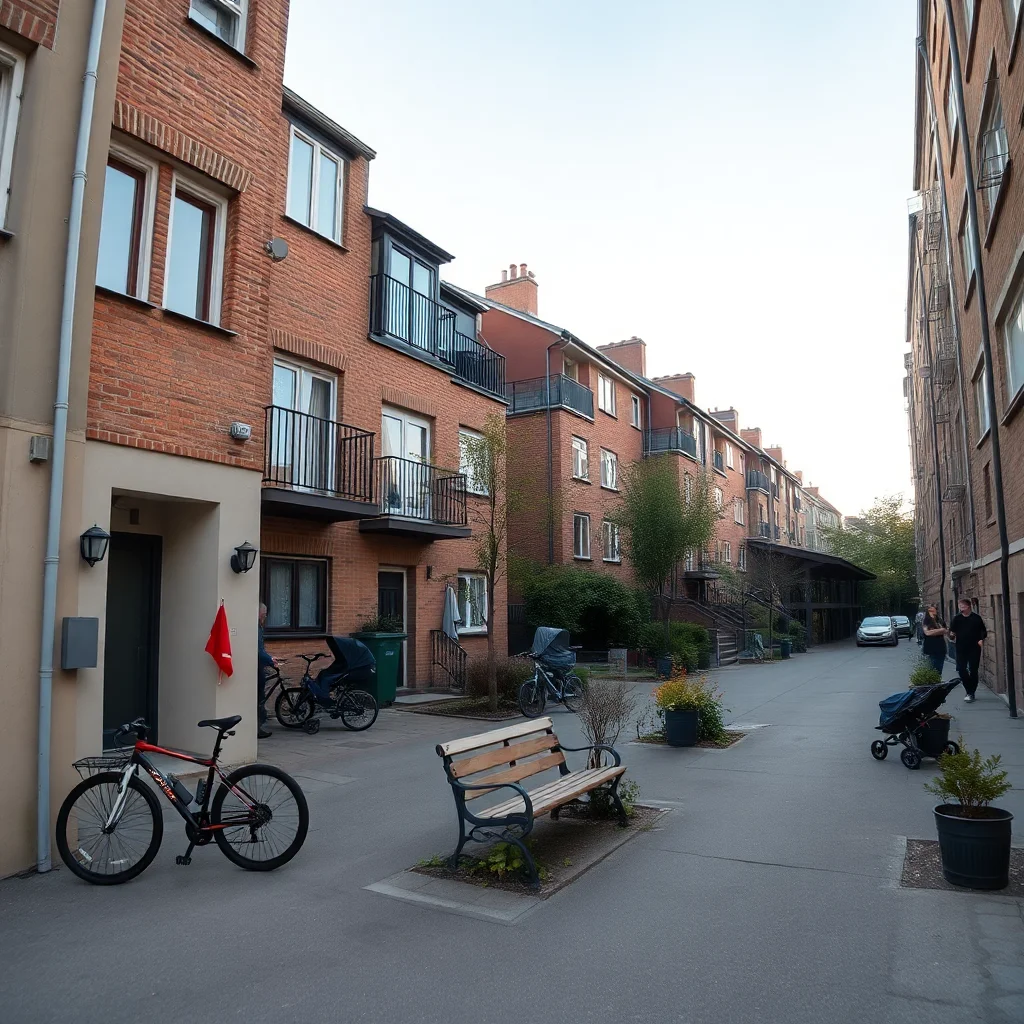
Successful co-housing is not defined by a moodboard. It depends on spatial modesty, governance and long-term affordability. The strongest examples share a few traits. First, they place the common room where it must be crossed, not hidden. Second, they give residents enough private space to avoid the burnout that can come from forced sociability. Third, they build systems that survive disagreement, because communities are made of conflict as much as care.
These principles are visible in a range of influential precedents. In the Netherlands, collective housing experiments such as the woonerf model and later urban co-housing initiatives turned circulation spaces into social territory rather than leftover corridors. In the UK, projects like Older Women’s Co-Housing in North London show how peer-led models can support later-life independence while resisting the humiliations of institutional care. In Denmark, architect Jan Gehl’s broader urban thinking reminds us that social life is not accidental: it emerges when environments slow people down enough to meet.
Town’s work is interesting because it pushes this logic into mainstream development language. That may be its strength and its weakness. Mainstreaming makes a model scalable, but it also invites dilution. The architectural challenge is not to create a picturesque village-in-the-city. It is to engineer ordinary life so that generosity is built into circulation, thresholds and shared resources.
There is also a broader design lesson here about restraint. Some of the most convincing housing and civic projects succeed not by adding spectacle, but by reducing friction and allowing people to share space on humane terms. The result is less theatrical than many developers would prefer, but far more durable.
Affordability is the real design test
Any serious conversation about ageing at neighbourhood scale must begin with affordability, because without it the entire model is a moral performance. Co-housing is often celebrated for its social benefits, but housing pressure changes the meaning of every promise. If shared gardens and communal kitchens are only accessible to buyers with substantial capital, then the project merely redistributes comfort upward.
A credible model would need a mix of tenure types, including genuinely affordable rental, shared ownership and protected long-term covenants that prevent speculative resale. It would also need to confront the high cost of land in cities where family-sized housing is already scarce. That means working with councils, community land trusts, housing associations and employers, not just private equity. In other words, the architecture of intergenerational living must be backed by a political architecture that can resist market capture.
Designers often talk about inclusivity in terms of ramps, lifts and universal access. Those are non-negotiable, but they are not enough. Inclusion also means economic diversity, cultural diversity and bodily diversity. A community that looks mixed in promotional photography but is socially homogenous in practice has failed the brief. The real test is whether a resident with limited income, limited mobility or limited family support can remain there with dignity over time.
The future of ageing should be messy, not curated
The deepest appeal of intergenerational co-housing is that it restores ageing to the public realm. It suggests that old age should be seen, negotiated and shared, not hidden. That is a powerful rebuke to a culture that valorizes youth, productivity and privacy while treating dependence as failure. If cities are serious about longevity, they need forms of housing that acknowledge the unavoidable fact of mutual reliance.
Yet the future worth defending is not a polished wellness enclave. It is messy, negotiated and open to people who are not equally resourced. It includes the difficult resident, the noisy child, the disabled neighbour, the person recovering from redundancy, the widower who needs company at 8pm, and the parent who cannot pay market rent but can contribute labour, time or care. Anything less is not intergenerational living; it is curated sociability with a better PR strategy.
Architecture has the opportunity to do something bolder than invent another housing typology. It can make dependency respectable again. It can insist that neighbourhoods should be built not only for efficiency and resale, but for the slow work of staying human together.
FAQ
What is intergenerational co-housing?
It is a housing model where residents of different ages live in proximity and share some spaces or responsibilities, such as gardens, kitchens or meeting rooms, while keeping private homes. The aim is to reduce isolation and make everyday support easier.
Why is it being discussed as a solution for ageing?
Because it offers an alternative to both loneliness at home and institutional care. Older residents can remain independent longer when neighbours are close enough to notice needs early and exchange practical help.
Can co-housing stay affordable?
Only if affordability is designed into land ownership, tenure, and resale rules from the start. Without protections, the model is easily absorbed by the premium housing market and becomes exclusive by default.
What makes a co-housing project genuinely inclusive?
A mix of incomes, ages, and abilities; accessible design; resident governance; and the ability to stay over the long term without economic displacement. Social programming alone does not equal inclusion.
Open question
If ageing is becoming a design problem, will we build neighbourhoods that share care fairly — or only elegant enclaves for those who can afford the privilege of community?
Get the Mainifesto weekly — curated design debates, speculative ideas and the week's best articles every Saturday.
Editorial Perspectives
Questions and counterpoints developed by the Mainifesto editorial desk to extend the discussion.
Perspective 1
The real question isn’t whether we can design for aging, it’s whether we can build governance and land systems that keep care from being privatized into a premium amenity. Neighborhood-scale co-housing only works if it sits inside mixed-income, publicly supported infrastructure; otherwise it’s just another polished enclave for people who already have options.
Perspective 2
We keep acting as if community can be packaged like a lifestyle choice, when in cities the best care networks have usually come from messy, layered places with memory. If aging is a design problem, the answer isn’t sleek senior districts — it’s adapting existing neighborhoods without pricing out the people who already hold them together.