

When Architecture Learns to Wait

Design is leaving the clock of industry
For more than a century, design has obeyed the logic of the factory: extract, process, assemble, ship, replace. Speed has been the hidden aesthetic, even when the visible result looked handmade, organic, or “natural.” But a small cluster of recent projects points in a very different direction. Root-grown textiles, plant-based lighting, and wall pieces cultivated rather than manufactured suggest that design is beginning to live by a biological timeline instead of an industrial one. In this emerging mindset, the object is not finished when it leaves the workshop; it continues to grow, soften, dry, mutate, and in some cases decay.
The project drawing attention here, Rootfull, is emblematic. Rather than treating roots as an agricultural byproduct, it guides living plant roots into bio-textiles and soft objects: garments, lighting, wall elements, and textile-like surfaces that are literally co-authored by time. The result is not a cleaner version of sustainability marketing. It is a direct challenge to the most cherished fantasy in product design: that perfection means stability. What if instability is the point? What if waiting is not a flaw but a design method?
This is where the conversation becomes provocative. Architects and designers have spent years trying to “close the loop,” but most circularity talk still imagines a human-controlled cycle of efficient reuse. Living materials introduce a less obedient model. They are circular only if you accept that growth takes time, that failure is not exceptional, and that life cannot be compressed into a production schedule. That is not a technical tweak. It is an aesthetic and ethical overhaul.
Rootfull and the return of biological authorship
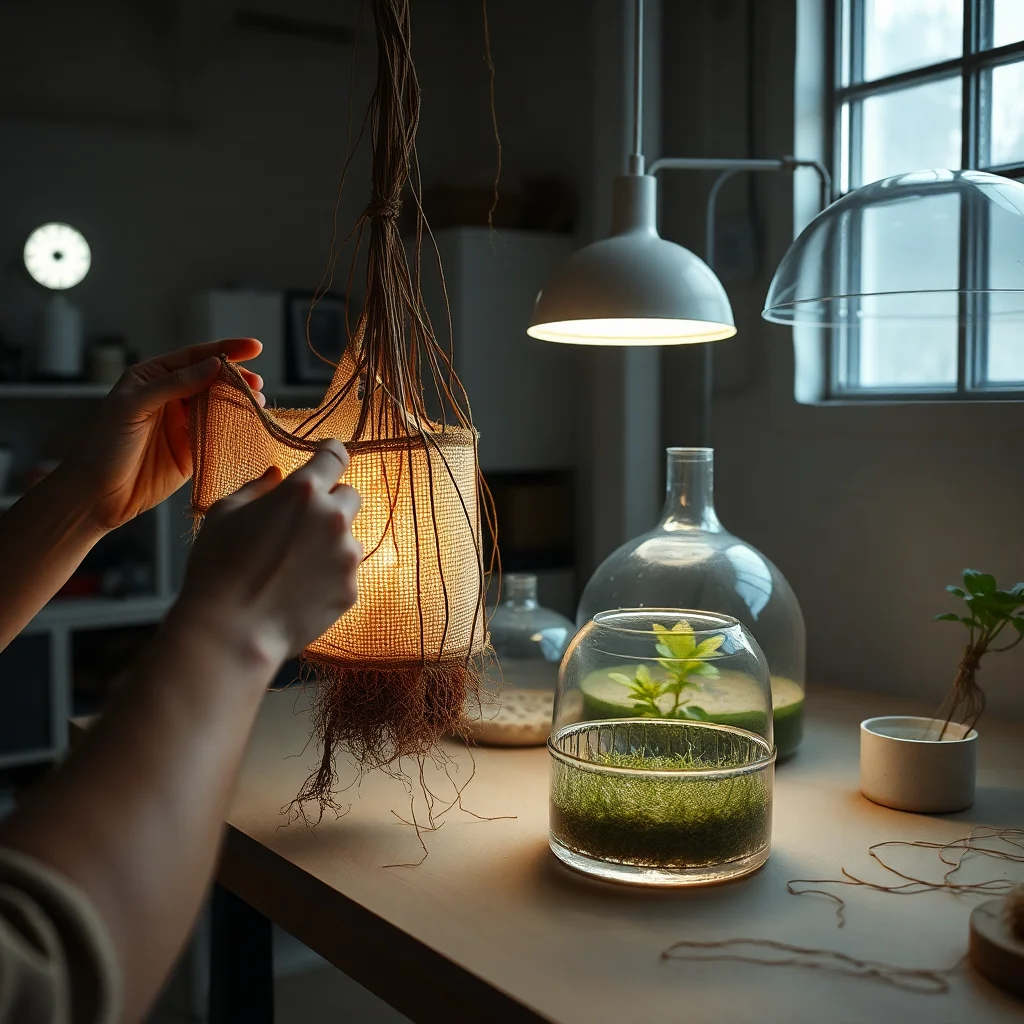
Rootfull’s relevance lies in its refusal to treat biology as a decorative veneer. The project, as presented through designboom, uses plant roots as active agents in the making of bio-textiles, lighting components, and soft design pieces. Instead of printing a leaf motif on a synthetic surface, it recruits the root system itself to generate structure, texture, and character. That shift matters. It moves authorship away from the lone designer and toward a collaborative process with living matter, where shape emerges from care, conditions, and time.
This lineage is not entirely new. Neri Oxman’s “Material Ecology” research at MIT made a strong case for design that is computational, biological, and environmental at once, while her Silk Pavilion showed how silkworms and algorithms could co-produce a structure. Janine Benyus’s biomimicry thinking similarly argued that nature is not a style source but a design mentor. Yet Rootfull belongs to a newer, more intimate register: not the spectacle of a futuristic shell, but the domestic scale of textiles, lamps, and wall interventions. It asks what happens when living systems enter the room quietly, as furnishings rather than monuments.
That quietness is radical. In product design, the object is usually expected to freeze experience into usability. Root-grown materials do the opposite: they foreground process, variability, and care. A root-made textile is not just a textile with a story attached; it is a record of temperature, humidity, microbial activity, and time. Its aesthetic value is inseparable from its biology. For designers conditioned to control every variable, that can feel like surrender. In truth, it is an expansion of the medium.
It also hints at a broader shift already visible in other material experiments, including seaweed-based lighting and post-plastic design, where the point is not simply to replace one substrate with another but to rethink what a material can do while it is still alive, semi-living, or decomposing.
Patience as a material, not a delay
The industrial imagination treats waiting as waste. Living materials invert that logic by making patience productive. When mycelium is grown into panels, as in the research popularized by companies like Ecovative, the timeline includes colonization, drying, and stabilization. When algae are cultivated for color or translucency, as in growing material experiments across Europe, the object arrives through a sequence of living states rather than a single fabrication event. Rootfull extends this temporal logic into softer categories—textiles and lighting—where the expectation of refinement is especially strong.
This matters because patience changes what a designer can value. In conventional product development, time is money and variability is a defect. In a biological timeline, time becomes a medium of formation. A root network can thicken, branch, and densify; a plant-based lamp can reveal a subtle translucency; a wall piece can express growth patterns that are impossible to standardize without killing their character. The “finish” is less like a final coat of lacquer and more like harvesting at the right moment.
We already know this logic from food and agriculture, where ripening, fermenting, and drying are accepted as necessary forms of making. The real provocation is that design rarely grants the same dignity to objects. It prefers immediate legibility. But living materials demand an architecture of anticipation. You have to design not only for what a thing is, but for what it will become if left alone, cared for, or deliberately allowed to age. That is a profound shift in authorship: the designer becomes a steward of conditions, not merely a master of form.
Decay is not the enemy of beauty
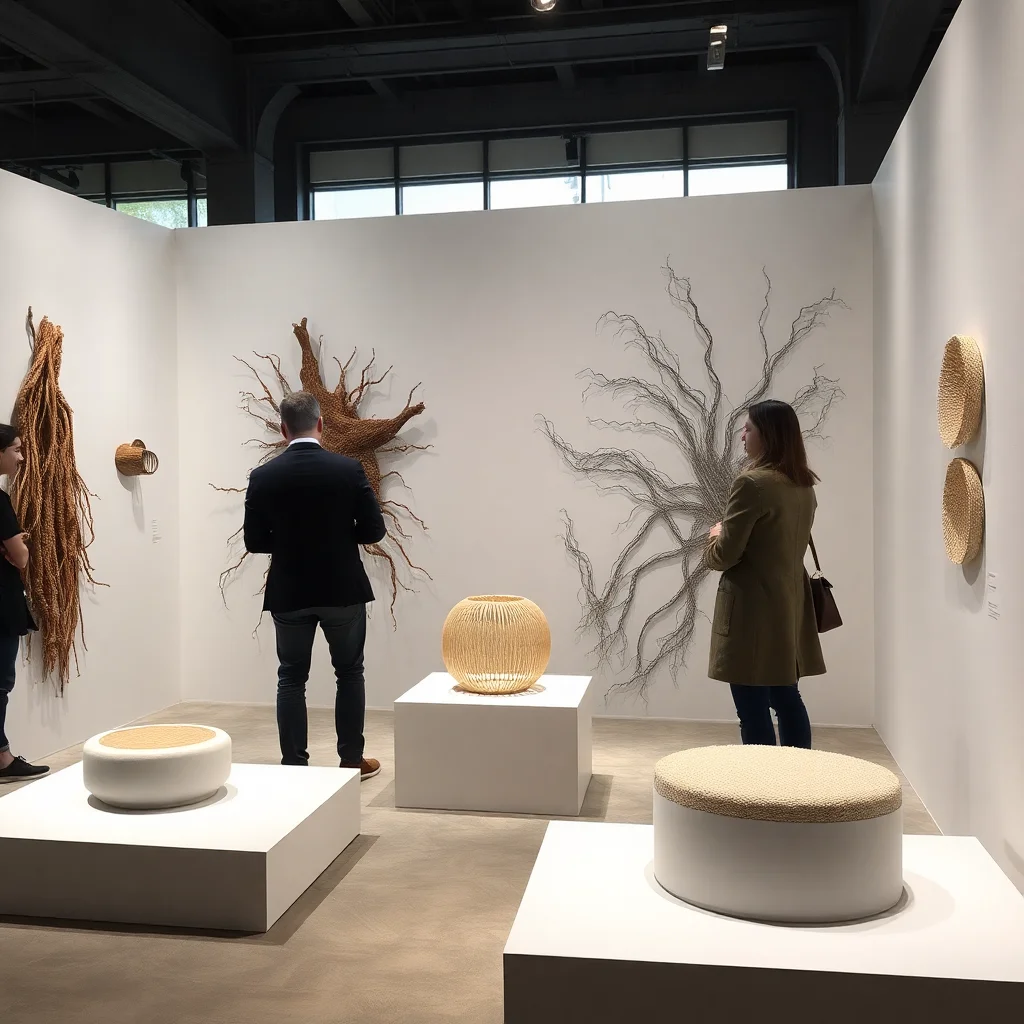
Modern design has built a moral hierarchy around durability. To last is good; to change is suspect; to fail is unacceptable. Yet living materials expose the fragility of that framework. Decay, discoloration, and shedding are often treated as technical compromises, but they may be the most honest features of a bio-based object. A root-grown surface that slowly dries and shifts tone is not broken; it is honest about its life cycle. The aesthetics of living materials therefore challenge an industrial fetish for the immaculate.
We can see the argument in projects beyond Rootfull. The Living’s Hy-Fi tower at MoMA PS1 used agricultural waste and mycelium-based bricks to propose temporary architecture with a deliberate endpoint. Studio Klarenbeek & Dros have explored 3D printing with algae-based and bio-derived materials, turning material change into design language rather than error. Even in fashion, Suzanne Lee’s BioCouture experiments and more recent lab-grown textile research by emerging studios have made visible the possibility that garments might be cultivated, not stitched from petrochemical derivatives.
In this field, decay is not a problem to be suppressed; it is evidence that the material is alive, or was alive, or remains in dialogue with life. This is where the political edge of the conversation sharpens. If a product can be composted, reabsorbed, or transformed without becoming landfill, then longevity must be redefined. The goal is no longer permanent sameness. It is graceful transition. Designers must learn to compose for disappearance, not just endurance. That is a much harder aesthetic, because it requires the discipline to make things that do not pretend to be eternal.
What architects must unlearn
Architecture, perhaps more than product design, has romanticized permanence. Concrete, steel, glass: these are the materials of control, prediction, and monumentality. Yet the climate crisis has made that model look increasingly delusional. Buildings are not static objects but metabolic systems that consume, age, leak, absorb, and weather. The question is whether architects will keep hiding that truth behind maintenance budgets and cladding systems, or begin to design with life cycles in view from the start.
Living materials offer a difficult lesson. They cannot be treated as technical upgrades sprinkled onto an unchanged profession. They require new procurement models, new maintenance expectations, new insurance logic, and new standards of care. They also demand a cultural shift. An architect trained to celebrate the crisp corner and the resolved detail may struggle with a root-grown wall whose character evolves over months. Yet that unresolved quality may be precisely what a future-facing practice needs. It replaces the fantasy of control with a more credible ethic of participation.
This does not mean every building should become a greenhouse or every lamp should visibly decay. It means the profession must stop treating biology as a novelty category. In a world of drought, waste, and exhausted supply chains, living materials are not whimsical experiments. They are design research into resilience, humility, and adaptation. The challenge is not whether we can make objects from roots, fungi, algae, or plant fibers. The challenge is whether we can admit that such materials force us to design slower, accept impermanence, and relinquish authorship in favor of stewardship.
The new aesthetics of living materials
What emerges from Rootfull and its peers is not a trend but a new aesthetic regime. This regime values softness without sentimentality, circularity without corporate platitudes, and beauty that includes transformation rather than hiding it. In product design, this could mean a lamp whose shade matures with use, a wall panel whose texture records its growth phase, or a garment whose structure is harvested at a moment of optimal tension and softness. The point is not gimmickry. It is to build objects that acknowledge they are part of life, not above it.
That future will require more than material experimentation. It will require a language that can describe living surfaces without collapsing into metaphor. It will require educators to teach time as a design parameter. It will require clients brave enough to accept ambiguity. And it will require a public willing to see beauty in processes that are incomplete, seasonal, or in flux. The reward is not merely lower embodied carbon, though that matters. The deeper reward is a design culture that stops pretending the world is dead matter waiting to be ordered.
Maybe the most radical thing Rootfull offers is not a root-grown textile at all, but a refusal of the industrial illusion that every good object should arrive fully formed, unchanged, and obedient. Living materials ask for a different contract. They ask to be tended. They ask to be waited for. They ask us to admit that patience can be a form of intelligence, and that decay may be the most elegant proof that design is finally learning to live.
That shift also reopens a conversation about value, especially in adjacent debates over evidence as a new luxury signal and how proof, process, and traceability can become part of an object’s appeal rather than just its documentation.
FAQ
- What are living materials in product design?Living materials are substances grown, cultivated, or biologically transformed as part of the design process, such as root-based textiles, mycelium panels, algae-derived surfaces, or plant-fiber composites. Unlike conventional materials, they change over time and often require care, controlled conditions, or harvesting at a specific stage.
- Why is Rootfull significant?Rootfull is significant because it treats plant roots as active design collaborators rather than waste or decorative imagery. By shaping lighting, textiles, garments, and wall pieces through growth, it demonstrates a more intimate and time-based model of making.
- Do living materials actually make design more sustainable?They can, but only if they are developed with full life-cycle thinking. A bio-based material is not automatically sustainable; it must still consider cultivation, energy use, durability, repair, reuse, and end-of-life composting or recycling.
- Will architecture realistically adopt this approach?Yes, but selectively and unevenly. Living materials are most likely to enter architecture first through interiors, temporary installations, shading systems, acoustic elements, and furnishings before scaling to structural applications.
Open question: If design’s next frontier is biological rather than industrial, are we ready to value things that grow, age, and disappear on their own terms?
Get the Mainifesto weekly — curated design debates, speculative ideas and the week's best articles every Saturday.
Editorial Perspectives
Questions and counterpoints developed by the Mainifesto editorial desk to extend the discussion.
Perspective 1
The biological timeline is the interesting part here, because it forces design to stop pretending it can control everything. I’m excited by root-grown textiles and plant-based lighting, but the real test is whether these materials add more than a poetic layer of “green” novelty and actually change how we make, maintain, and discard things.
Perspective 2
Architecture has always lived with time; the difference now is whether designers are willing to admit decay instead of disguising it. If we start valuing materials that grow and disappear, fine—but only if that patience isn’t used as a polished excuse for fragile projects, short life cycles, or another round of aesthetic consumption dressed up as ethics.
Perspective 3
I can work with materials that age, but only if the guest experience stays clear and the maintenance story makes sense. A lobby lamp that dies on its own schedule sounds romantic until it hits the budget, the turnaround time, and the brand standards, so the bar here is usefulness first, philosophy second.