
Fehmarnbelt Tunnel: Connectivity at the Baltic’s Expense?
A Shorter Route to Europe, a Bigger Footprint in the Baltic?
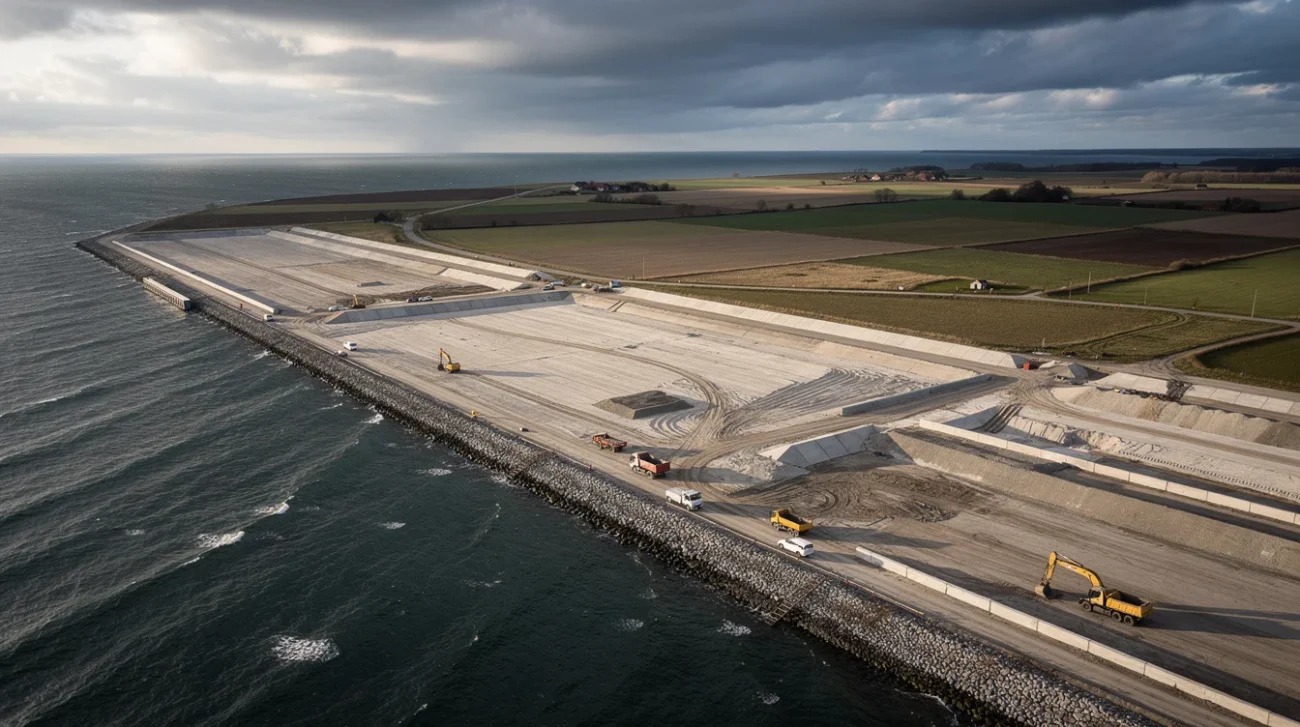
Europe likes to draw its future as a network: faster trains, shorter journeys, borders reduced to lines on a timetable. On Denmark’s southern coast, that diagram has acquired a much heavier expression. According to Dezeen’s September 2026 report, land reclamation associated with the Fehmarnbelt Tunnel has added approximately 300,000 square metres to the coastline—an area described as equivalent to 42 football pitches.
The 18-kilometre road-and-rail tunnel will connect Denmark and Germany beneath the Baltic Sea. Its promise is continental; its construction is intensely local. Before passengers can experience a shorter route, marine environments must accommodate a remade shore. The architectural question is therefore not whether infrastructure changes landscapes. It always does. It is whether the public value of that change exceeds its ecological and material bill—and who gets to define value.
PRO: A Connection That Makes the Map More Useful
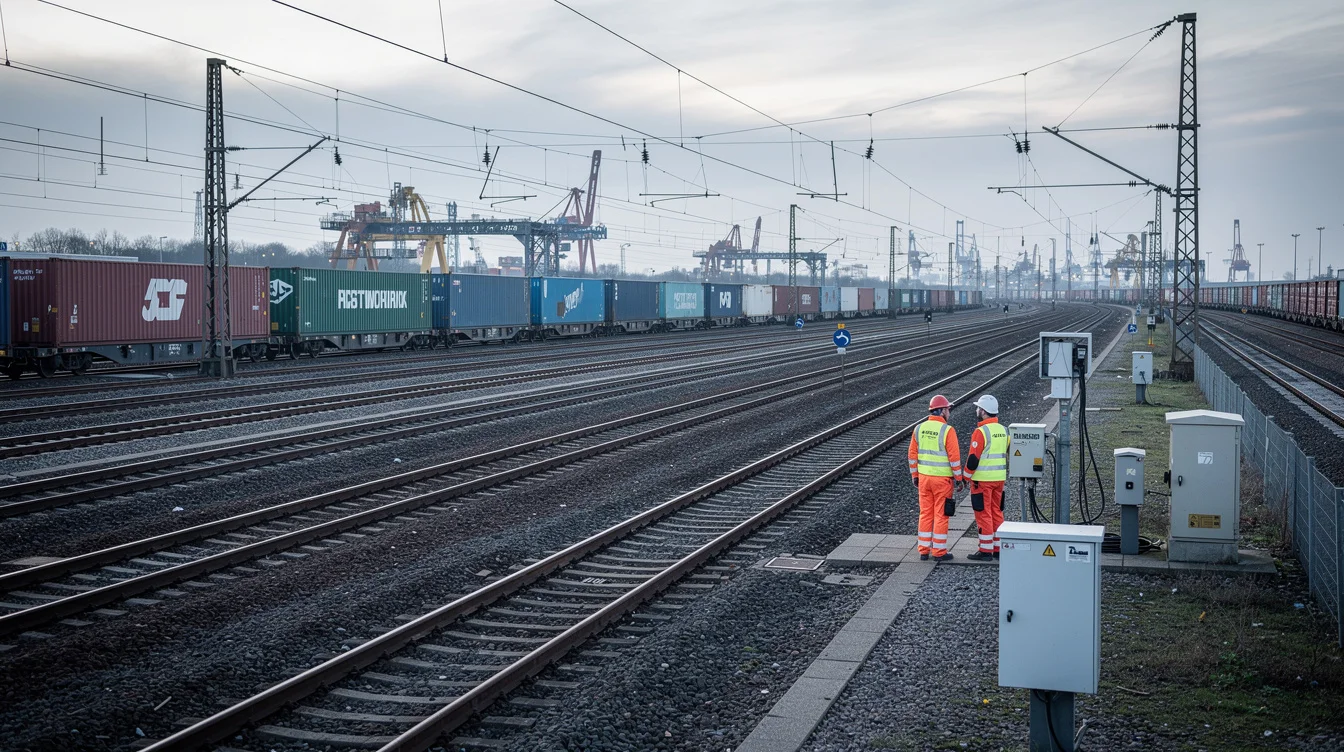
The strongest argument for the Fehmarnbelt Tunnel is not national prestige. It is the possibility of making European rail substantially more useful. A fixed link between Lolland and the German island of Fehmarn removes a ferry crossing from the direct road route and creates a more direct railway connection between eastern Denmark and Germany. Passenger services and freight could benefit from a route that avoids the longer journey through Jutland.
That matters because transport choices are shaped by friction. A missed connection, an awkward transfer or an unreliable freight slot can outweigh an operator’s sustainability campaign. A tunnel cannot guarantee better services, but it can provide the physical conditions for them. Connectivity becomes a public good when it improves everyday access, not merely maximum speed.
The Øresund fixed link offers a useful comparison. Since opening in 2000, its combination of motorway and railway has supported cross-border travel between Copenhagen and Malmö. It demonstrates how infrastructure can make neighbouring labour markets and institutions more accessible, although fares, border controls and housing costs still determine who benefits.
Fehmarnbelt deserves the same practical test. Will regional passengers gain usable connections? Will freight operators obtain competitive train paths? An impressive tunnel paired with inconvenient services would be a monument to incomplete thinking.
PRO: Construction Can Leave More Than a Transport Corridor
Reclamation also deserves a more serious defence than the claim that Denmark has become bigger. For an immersed tunnel, seabed excavation is integral to the construction method: prefabricated tunnel elements are placed in a prepared trench. Where excavated material is suitable and environmentally acceptable, incorporating it into planned coastal areas can reduce the need to send it elsewhere and import replacement fill. This is a potential material-reuse strategy, not automatic proof of sustainability.
The relevant design precedent is the Netherlands’ Sand Motor, a large sand nourishment project introduced in 2011. Rather than treating the coast as a rigid boundary, it uses waves, wind and currents to redistribute sand along the shoreline. It is not an ecological equivalent of tunnel-related reclamation. Its relevance is methodological: coastal engineering can be designed around processes, public access and long-term observation rather than a finished outline on a plan.
That approach could raise the ambition for infrastructure landscapes. New coastal ground can potentially accommodate accessible paths, varied habitats and flood-management functions, provided these are demonstrated rather than illustrated in seductive renderings. Landscape architects should enter before engineering decisions become irreversible, not afterwards to disguise them.
The pro case is therefore substantial: build a more useful railway connection, handle excavated material intelligently and make the resulting coast publicly valuable. Dismissing those possibilities would be as lazy as celebrating them without evidence.
CONTRA: The Sea Is Not Vacant Development Land
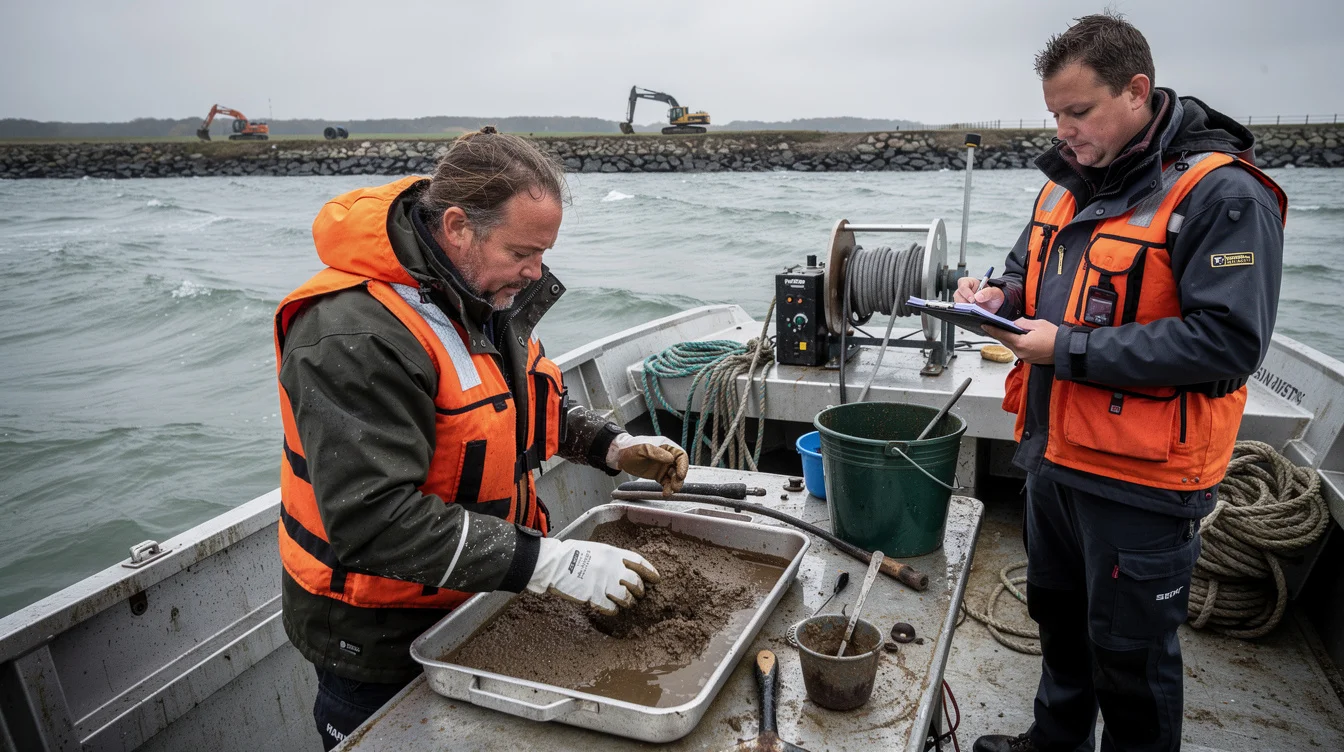
The phrase “Denmark grows” turns a marine transformation into a property announcement. Yet water is not an absence awaiting improvement. Seabeds support organisms, shallow coastal areas can provide nursery habitat, and currents transport sediment through systems that do not respect construction boundaries. A new shoreline is also the replacement of an existing environment.
Dredging can suspend sediment, reduce light penetration and affect bottom-dwelling communities. Reclamation can alter local water movement and sediment deposition. These are impact pathways that require site-specific measurement; they are not, by themselves, proof of a particular level of damage at Fehmarnbelt. Equally, an attractive aerial photograph of new land provides no evidence that these risks have been resolved.
The Baltic makes complacency especially indefensible. Its restricted exchange with the North Sea and longstanding pressures from nutrient pollution and oxygen depletion mean that additional disturbance enters an already stressed system. Assessment must examine cumulative pressures, not isolate each construction operation until its effects appear administratively manageable.
Copenhagen’s Lynetteholm, a separate reclamation project, illustrates the wider political fault line: arguments about land creation and coastal protection collide with scrutiny of marine effects. The lesson is not that every reclamation is identical. It is that a land-based benefits ledger is structurally incapable of judging what happens underwater. Independent monitoring must have consequences, including changes to construction practices when thresholds are exceeded.
CONTRA: A Railway Does Not Cancel the Concrete
The second objection is embedded in the tunnel itself. An 18-kilometre immersed crossing requires substantial concrete, reinforcement, energy and marine construction activity. Carbon emissions occur before the first train runs. Calling the project sustainable because it contains railway tracks skips the hardest calculation: whether its lifetime transport benefits justify that upfront investment.
Nor is this a railway-only proposition. The road connection can make driving and trucking more attractive, potentially generating additional journeys as well as redistributing existing traffic. Some users may switch from ferries; others may travel more often. The climate outcome depends on those changes, the energy used by competing transport modes, and the services actually operated—not simply the distance removed from a map.
The Channel Tunnel provides a useful warning against evaluating a crossing in isolation. Its transport role depends on connecting railways, terminals, operating arrangements and pricing. Fehmarnbelt likewise needs functioning onward capacity in Denmark and Germany. A railway bottleneck beyond the portal can undermine the benefits of an exceptionally engineered passage beneath the sea.
The proper comparison is not tunnel versus nothing. It should include credible alternatives involving existing rail capacity, service improvements, ferry decarbonisation and demand management. Reclaimed land counts as progress only if independently scrutinised carbon, habitat and mobility accounts support that claim. Otherwise, Europe has shortened a route by exporting part of its cost into the Baltic—and called the result connection.
FAQ: What Should Determine the Verdict?
What is the Fehmarnbelt Tunnel, and where does it run?
It is an 18-kilometre road-and-rail tunnel being built beneath the Baltic Sea between Lolland in Denmark and Fehmarn in Germany. Its immersed construction method involves placing prefabricated tunnel elements in a prepared seabed trench.
How much land has the reclamation added to Denmark?
Dezeen’s September 2026 report describes approximately 300,000 square metres, or 30 hectares, added to Denmark’s southern coast. That reported area should not be confused with the project’s entire construction footprint or the full extent of its environmental effects.
Does reusing dredged material make reclamation sustainable?
It can reduce some transport and virgin-material requirements, depending on material suitability and handling. It does not erase seabed disturbance, habitat replacement or changes to coastal processes. Resource efficiency and ecological acceptability require separate evidence.
What evidence would justify calling the project progress?
A credible verdict needs transparent whole-life carbon accounting, independently assessed marine impacts, enforceable environmental thresholds and demonstrated transport benefits. Rail service quality, freight capacity, affordability and changes in road traffic matter as much as the completion of the structure.
If Europe’s connections become faster while its seas absorb the disruption, what would make this new coastline a genuine public gain rather than an ecological debt?
Get the Mainifesto weekly — curated design debates, speculative ideas and the week's best articles every Saturday.
Editorial Perspectives
Questions and counterpoints developed by the Mainifesto editorial desk to extend the discussion.
Perspective 1
I’m for the tunnel: shorter, more reliable journeys are a real public benefit, not just a transport-sector talking point. But the reclaimed coast needs to work for residents—easy access, useful amenities, and a maintenance budget—not simply look good in the destination campaign.
Perspective 2
I’m against treating a faster crossing as permission to remake a living coast. Working in restoration teaches you that what looks replaceable on a plan often holds generations of use and knowledge; a new waterfront cannot simply compensate for disrupted marine habitats or price out the people whose livelihoods depend on them.
Perspective 3
Show us the comparison with doing less: projected shifts from road to rail, whole-life material emissions, and marine impacts measured against a credible baseline. Public access to the new coastline matters, but calling it a gain requires enforceable ecological targets and funding to intervene if monitoring shows damage.
Perspective 4
There is something very nineteenth-century about presenting the conquest of a coastline as an inevitable public good. Lefebvre would at least ask who gets to shape this new space; a landscaped edge is a rather thin answer if the route serves continental commerce while coastal communities inherit the disturbance.