When Contested Land Becomes Collectible Furniture
When Contested Land Becomes Collectible Furniture
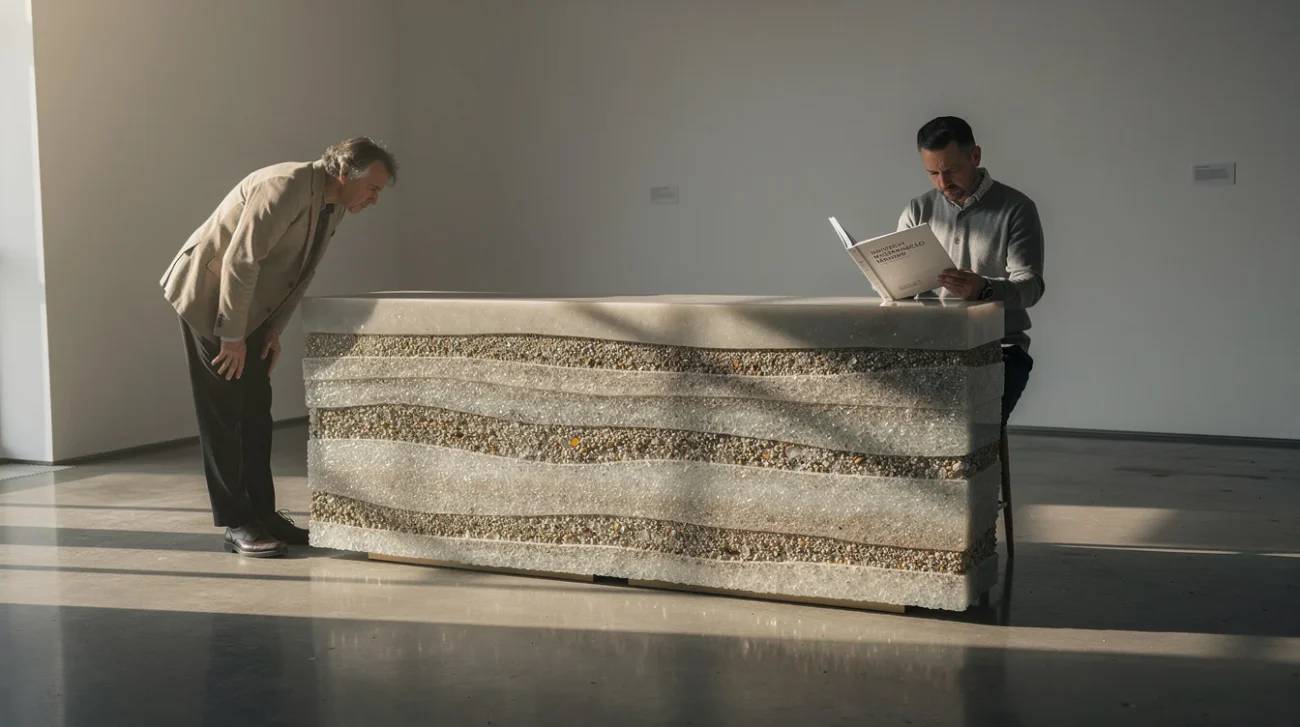
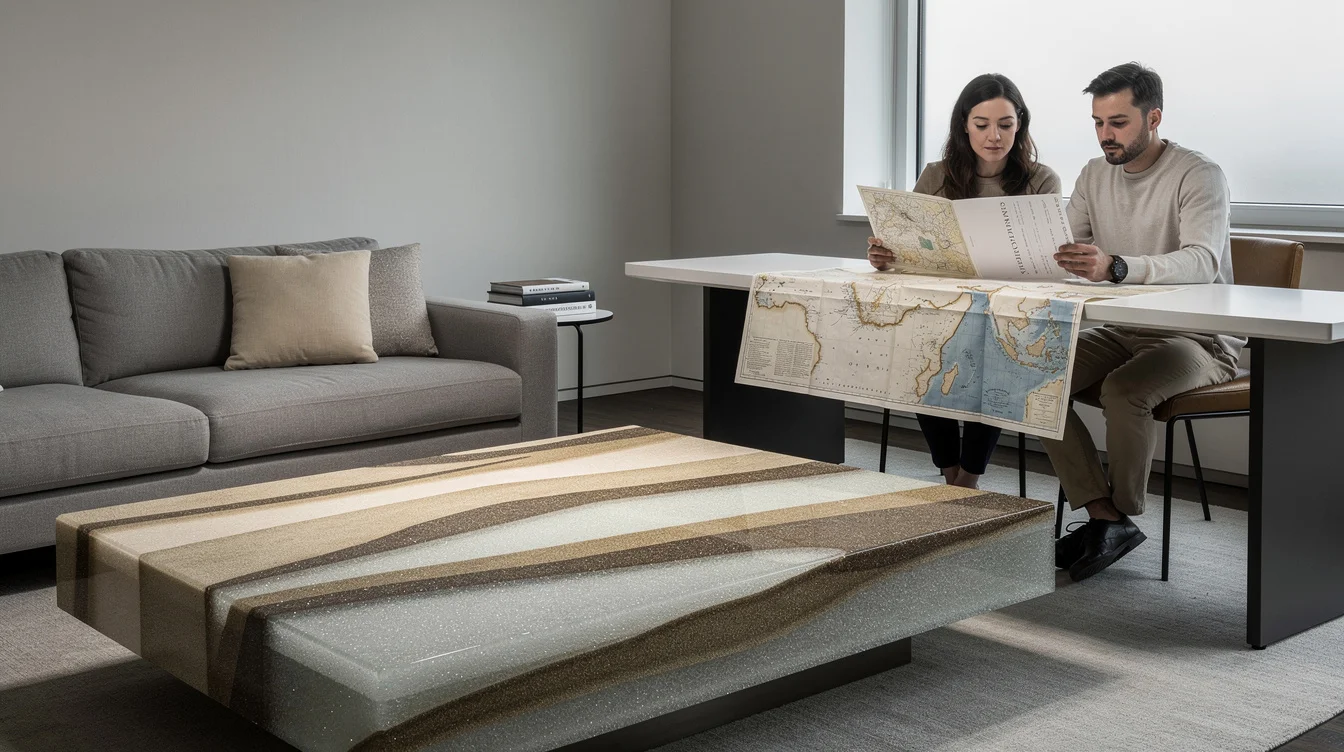
A landscape can become a border, a homeland, a military objective—or a desirable object in somebody else’s living room. Fernando Mastrangelo’s landscape-inspired furnishings sit at that uncomfortable intersection. As described by Wallpaper, intricate bands of sand and powdered glass evoke the majesty of contested landscapes. The material proposition is compelling: geography becomes colour, depth and a surface close enough to touch. The political proposition is less settled. Can furniture carry the competing histories of a place, or does collectibility reward the moment those histories disappear into an exquisite finish?
This is not an argument against beauty. It is an argument about what beauty must be made to answer for. The strongest defence and the sharpest criticism of this work begin with the same observation: a domestic object changes how a landscape is encountered.
PRO: Beauty Can Open a Door That Information Cannot
Political complexity does not become accessible simply because somebody prints a longer wall label. Attention has to be secured before it can be challenged. Mastrangelo’s bands of sand and powdered glass offer precisely that opening. Their granular depth can make a viewer pause over an object that refuses the visual smoothness of conventional luxury. Landscape is not merely pictured on the furniture; its stratified appearance helps organise the encounter.
That distinction matters. A photograph of disputed territory usually arrives through a recognisable frame: news, documentary, campaign or travel. A furnishing enters through use and desire. It can reach someone who would never seek out an exhibition about territorial claims. Its continued presence in a room also creates the possibility of repeated engagement rather than a single encounter with an image.
Formafantasma’s Ore Streams offers a useful comparison, not because electronic waste and territorial conflict are equivalent, but because the project makes furniture a point of entry into a larger material system. Its office furniture belongs to a research-led investigation of electronic waste and recycling. The objects do not have to contain every argument physically; they operate alongside other forms of explanation. The question of what counts as waste when unworn trainers become furniture similarly turns attention from the finished object to the system behind it.
On this reading, Mastrangelo’s work need not become a three-dimensional geopolitical textbook. Beauty can be the invitation. The requirement is that the invitation actually leads somewhere: to named places, attributable histories and accounts that do not stop at the designer’s inspiration.
PRO: Collectibility Could Finance More Than an Object

Collectible design has another potential advantage: it can support research and interpretive infrastructure that mass-market furniture rarely accommodates. A limited-edition object can be accompanied by substantial documentation, public programming and commissioned contributions. None of these follows automatically from a high price. But the market’s appetite for provenance provides an opening to make provenance mean more than authorship, edition number and ownership history.
Formafantasma’s Cambio, an investigation into the timber industry, demonstrates how design discourse can connect material appearance to extraction, regulation and ecological knowledge. Its relevance here is methodological. A beautiful material need not remain a mute material if the project follows the systems that make it available.
For contested landscape furniture, that approach could include paid contributions from historians, geographers and people whose lives are shaped by the territory being evoked. Documentation could distinguish geological description from political borders, and explain why different communities name or understand the same place differently. Where evidence supports an account of displacement or dispossession, interpretation should say so rather than retreat into a vague vocabulary of tension.
These are proposed standards, not claims about what Mastrangelo’s furnishings currently include. They establish the strongest affirmative case: collectible furniture can become a durable access point to political knowledge when its supporting research is public, specific and inseparable from its presentation. The collector would acquire an object, not exclusive possession of the story. Desirability could subsidise understanding instead of replacing it.
CONTRA: A Beautiful Surface Can Make People Disappear
The objection is not that furniture communicates too little information. Every medium selects. The deeper problem is what this particular translation privileges. Sand and powdered glass are exceptionally persuasive at suggesting geological time. Territorial conflict, however, is made through laws, expulsions, settlement, military force, property regimes and competing claims to sovereignty. A stratified surface can make those actions look like another natural layer.
Geology has no landlord; territory does. When the landscape becomes the protagonist, inhabitants risk becoming optional context. The buyer can admire a place while remaining incurious about who can enter it, cultivate it, return to it or determine its future. The word “contested” can itself become a luxurious blur, implying balanced disagreement where particular facts may reveal profound inequalities of power.
Compare this with Forensic Architecture’s investigations, which use spatial models, images and other evidence to reconstruct events and scrutinise responsibility. Their relevance is not a shared aesthetic but an opposing discipline: visual decisions must serve an argument that can be examined. In collectible design, visual decisions can succeed commercially without the political account ever becoming legible.
That difference cannot be repaired by symbolism alone. A fissure might evoke division, and a coloured band might suggest a boundary, but neither identifies who drew that boundary or what it does. Unless the place and its histories remain accessible, political complexity becomes an atmosphere. The work can look serious while allowing every difficult question to remain outside the room. A related tension emerges when data becomes a decorative pattern: visual appeal can outlast the evidence it is meant to convey.
CONTRA: The Market May Prefer the Politics Removable
Collectible design sells distinction as well as objects. A reference to contested geography can add intellectual intensity to a purchase: the furnishing appears worldly, thoughtful and culturally consequential. Yet the same market may reward work whose difficult subject can be switched off. It must remain attractive at dinner, photograph cleanly for resale and coexist with an interior whose primary promise is comfort.
This is the structural risk in Mastrangelo’s proposition, rather than evidence of a particular intention. The landscape reference may produce value precisely because it stops short of demanding anything from the owner. Conflict becomes a narrative premium attached to material virtuosity. The people implicated in the subject need not share in that premium.
Ai Weiwei’s Sunflower Seeds provides a revealing comparison. Its vast field of porcelain seeds draws attention to the relationship between an apparently uniform mass and individual labour, including the skilled production associated with Jingdezhen. The lesson is not that political art escapes commodification. It is that the conditions of making can be central to what an audience is asked to recognise, rather than incidental information behind a seductive surface.
Landscape furniture therefore faces a demanding test: what survives when the object leaves its exhibition? Does interpretation travel with it? Can non-buyers access the research? Are contributors credited and paid? Is the political account available at resale? If those connections dissolve while the object’s value persists, the market has preserved the beauty and discarded the obligation. Political ambition then becomes a launch narrative, not an enduring property of the design.
FAQ: What Should Politically Engaged Furniture Be Asked to Do?
What materials give Mastrangelo’s furnishings their landscape-like appearance?
The Wallpaper source describes intricate bands of sand and powdered glass. Their colour and layering evoke landscapes, but appearance alone does not establish where the materials were sourced or what political history an object communicates.
Does depicting a contested landscape automatically make furniture political?
It gives the furniture a political subject, not necessarily a substantive political argument. That depends on how the work identifies the place, addresses evidence and power, and represents people whose lives are affected.
Can collectible design communicate complexity without becoming didactic?
Yes. The object can remain formally compelling while accompanying publications, accessible research and credited contributions carry more detailed accounts. The essential condition is that these resources remain connected to the work beyond its initial exhibition.
What should a collector ask before buying?
Ask which landscape is referenced, whose accounts inform the project, whether contributors are compensated, and what documentation accompanies ownership and resale. Also distinguish a landscape-inspired appearance from any verified claim about material origin.
If a collectible object’s beauty survives the removal of its political context, has design opened a conversation—or made the conflict easier to own?
Get the Mainifesto weekly — curated design debates, speculative ideas and the week's best articles every Saturday.
Editorial Perspectives
Questions and counterpoints developed by the Mainifesto editorial desk to extend the discussion.
Perspective 1
I’m for using collectible furniture to bring contested landscapes into rooms where wealth and influence gather; beauty is an entry point, not automatically an alibi. But the politics need infrastructure—documented sourcing, named territories, affected voices—not a wall label the buyer can quietly discard.
Perspective 2
The cabinet of curiosities already taught us how possession can masquerade as understanding. If the conflict can be removed while the object retains all its appeal, I’d call that aesthetic extraction, not political engagement: the collector gets the landscape without the inconvenience of its claims.
Perspective 3
In restoration, a beautiful surface can preserve evidence or cover an eviction; appearance alone tells you very little. I’d ask whose account of the land survives in the object, who benefits from its sale, and whether those people can challenge the designer’s version—not just lend it authenticity.