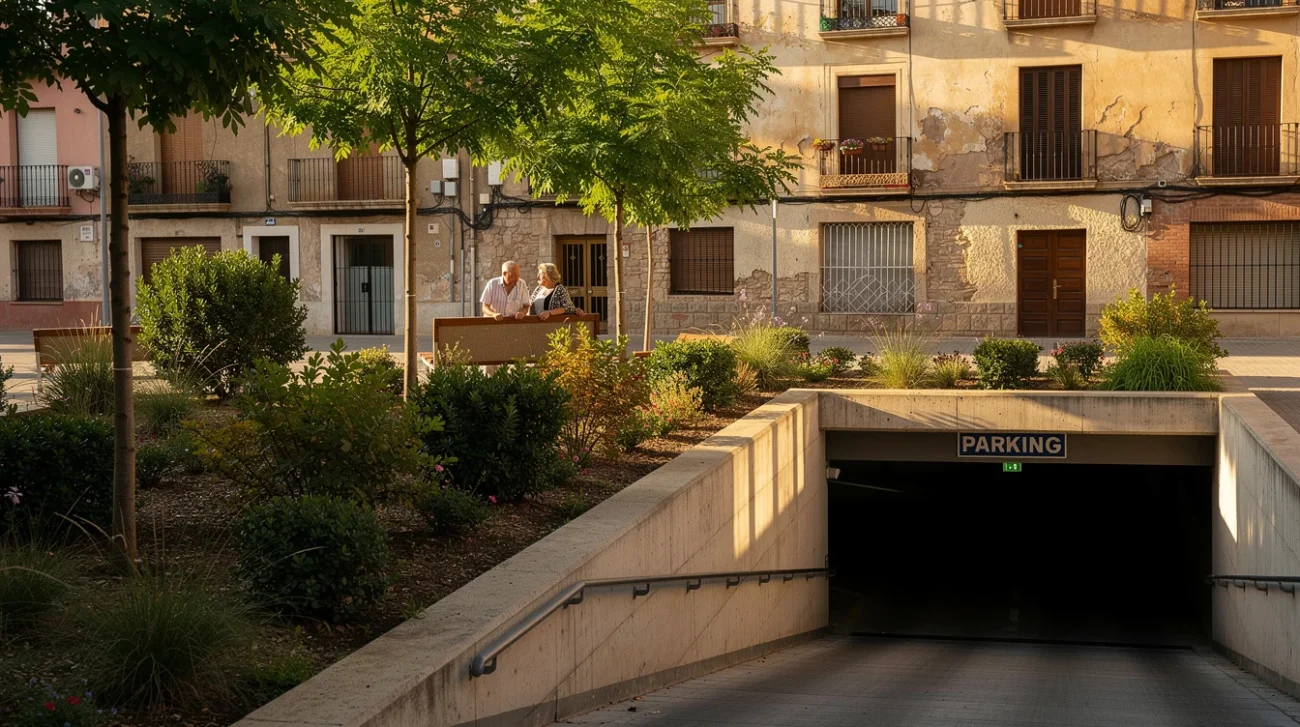

Big-Box Retail Becomes Civic Infrastructure
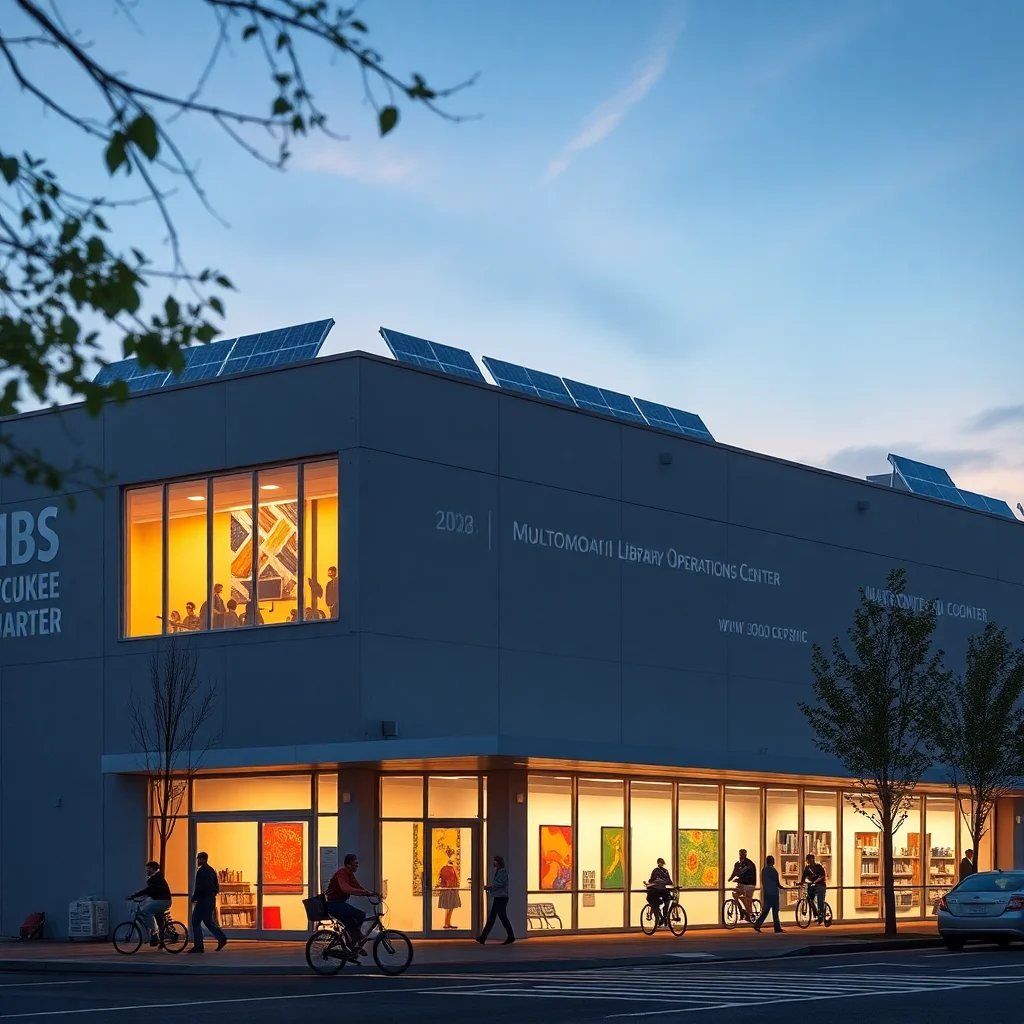
The supermarket is not dead. It has been reassigned.
For decades, the big-box building was treated as the architectural equivalent of disposable packaging: arrive with the car, load up on bargain promises, leave the shell behind when the retail cycle turns. That logic is collapsing. In Portland, a vacant supermarket on the east side has been converted into the Multnomah County Library Operations Center by Hennebery Eddy Architects, complete with solar panels, a net-zero agenda, and colorful artwork that refuses the sterile grammar of warehouse reuse. The building is no longer a monument to consumption. It is a public utility.
This matters because the vacancy crisis in retail is not a temporary glitch. It is a structural aftershock of e-commerce, changing demographics, and too much asphalt built for too few futures. The easy reaction is demolition: erase the footprint, clear the lot, start again. But that is the cheapest kind of urban amnesia. When cities inherit these oversized shells, they are also inheriting already-paved land, existing utility connections, broad spans, and climate burdens that can be turned toward civic life instead of sent to landfill.
The Portland project is not a quirky one-off. It is evidence of a harder proposition: the big-box building may be the most politically useful building type of the 21st century, precisely because it was designed without much architectural romance. Its genericity is now an asset. The question is not whether these structures are beautiful. The question is whether they can be made civic.
That broader shift is part of a larger move toward renovation as the urban default, where existing buildings are treated less as obstacles than as resources with latent public value.
Why retrofit beats demolition, when the math is honest

Demolition is often sold as progress because it creates the fantasy of a clean slate. In reality, it is frequently just an environmental debt transfer. A warehouse-sized retail shell already contains embodied carbon, concrete, steel, roof area, and infrastructure hookups that represent a massive sunk cost. Destroying it means paying twice: once for the original construction, and again for removal, hauling, and replacement.
Adaptive reuse, by contrast, treats the existing frame as a civic resource. The Portland library operations center demonstrates how a former supermarket can be reorganized around daylight, energy production, staff workflows, and durable public service. A roof generous enough for photovoltaic arrays becomes a climate machine. Deep floor plates that once encouraged endless aisles can support storage, logistics, processing, and back-of-house functions with astonishing efficiency. The very qualities that made big-box retail so suited to mass consumption make it suitable for institutional reuse.
Architects have been making this argument for years. Lacaton & Vassal turned the logic of subtraction into an ethic of generosity in projects like the transformation of the Tour Bois-le-Prêtre and the Grand Parc housing renewal in Bordeaux. Their lesson is blunt: never demolish what can be made more spacious, more flexible, more humane. In the American context, that lesson resonates with the work of studios that treat existing structures as raw civic material rather than architectural failure. The Portland example belongs in that lineage, even if the source building was never designed to be cherished.
And this is the provocation: if we are serious about climate responsibility, then the big-box shell is not an embarrassment to be swept away. It is an infrastructural asset. Cities that demolish them reflexively are not reclaiming land; they are wasting carbon and time.
From consumer hangar to public backbone
The deeper shift is cultural. Big-box retail was once the cathedral of late consumer capitalism: oversized parking, fluorescent interiors, and a promise that every need could be solved by purchasing more stuff. A library operations center reverses that script. Instead of circulation of products, we get circulation of knowledge, labor, and public access. Instead of spectacle, we get maintenance. Instead of a building that extracts value from the surrounding city, we get one that supports it.
That transformation is not merely symbolic. Library operations are the hidden machinery of civic life: sorting materials, managing collections, coordinating deliveries, preserving books, supporting branches, and sustaining the daily life of a public institution that often appears only in its most visible front rooms. Housing those functions in a repurposed supermarket is a quietly radical act because it dignifies the logistical work that keeps culture distributed.
We have seen similar civic conversions elsewhere. The National Building Museum in Washington, D.C., occupies a former pension office and turns a bureaucratic shell into a space of public debate about architecture itself. In the Netherlands, projects by MVRDV and others have explored converting commercial leftovers into mixed-use urban fabric rather than erasing them. The point is not to fetishize reuse as inherently virtuous. It is to recognize that the infrastructure of everyday life is increasingly built from leftovers, and the most responsible architecture may be the one that can inherit without flinching.
In policy terms, that often means confronting the bureaucratic side of transformation as much as the design side; the fight for adaptive reuse code reform is increasingly central to making these conversions feasible at scale.
Portland’s conversion also exposes a civic truth too many cities ignore: the post-retail landscape already exists. Pretending it can be planned away is fantasy. The real choice is between intelligent inheritance and wasteful denial.
But inheritance can become laziness
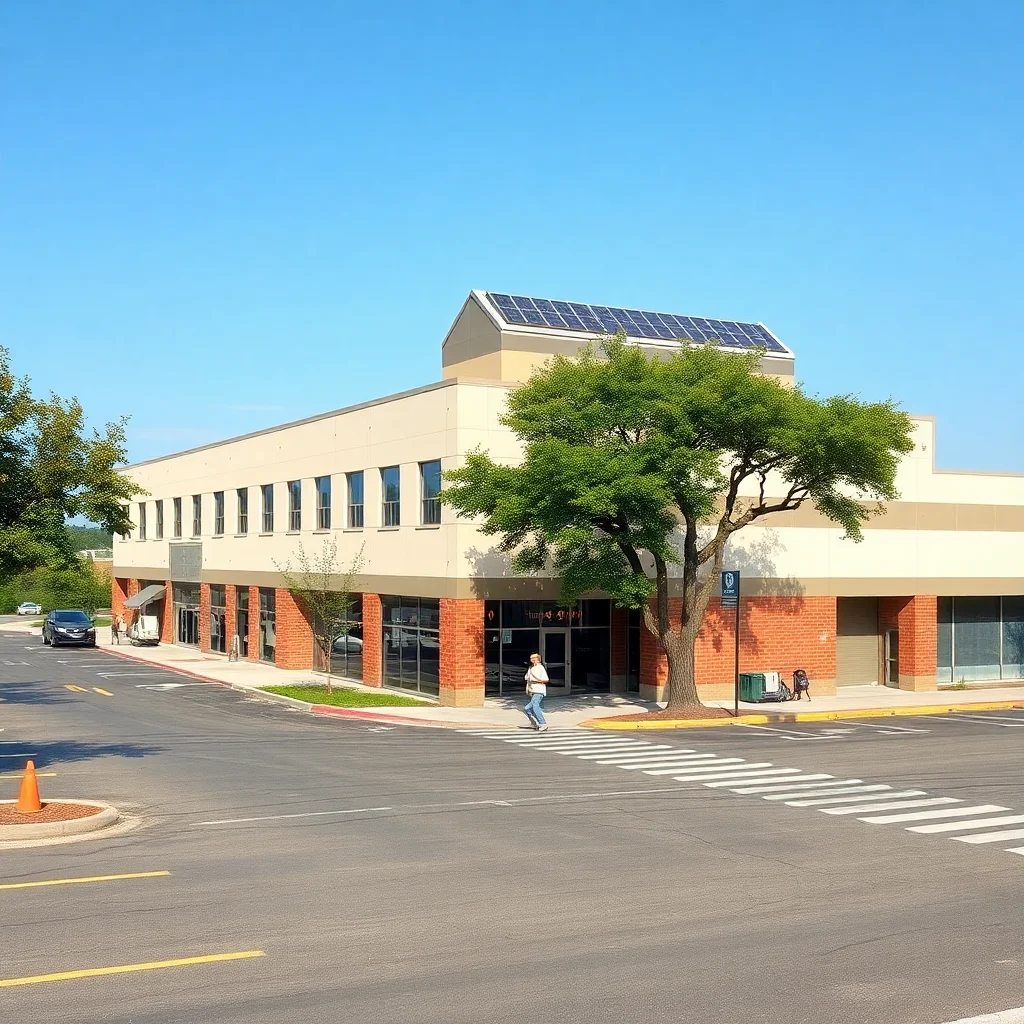
To praise retrofit is not to romanticize every empty big-box store as a future civic treasure. Some of these buildings are poisoned by location, design, or land use patterns so anti-urban that reuse becomes a polite fiction. A box stranded behind high-speed roads with no transit, no sidewalks, and no surrounding neighborhood may be a structurally efficient shell but a socially dead address. Cities should not mistake salvageability for inevitability.
This is where the pro-reuse argument has to become sharper, not softer. The issue is not whether a building can be repurposed. It is whether the repurposed building will actually produce public value. Hennebery Eddy’s project works because the new use is legible, institutional, and socially productive. It doesn’t just preserve volume; it reprograms that volume toward a public good. A former supermarket becomes a library operations hub because the city can use all that area for storage, sorting, and service. That is a serious use, not a cosmetic one.
By contrast, too many adaptive reuse projects are just retail aesthetics in a different font: food halls in old factories, coworking in disused offices, “activated” lobbies in ex-malls. These often preserve the shell while reproducing the same market logic that made the building disposable in the first place. Civic infrastructure should not be another branding exercise. If a big-box building is to survive, it must earn its keep by supporting housing, libraries, transit, education, health, or community care.
In that sense, the toughest architectural question is not how to save big-box buildings, but which ones deserve saving. Selective inheritance is not anti-architecture. It is architectural discipline.
The new civic type is not a monument — it is a retrofit
There is a seductive nostalgia in architecture for the singular public building: the library as temple, the museum as icon, the civic center as symbolic object. But the next generation of civic architecture may be less about iconic form than about adaptive capacity. A retrofitted supermarket with solar panels, artwork, storage, and service functions may be doing more public work than a gleaming new landmark with a thin social mandate.
This is where the Portland project feels especially timely. It suggests that civic value can be found in spatial excess once thought useless. The vastness of the big-box floor is not only a commercial relic; it is a potential commons of logistics. We should stop assuming that oversized means obsolete. In a city facing climate constraints, budget pressure, and the need for rapid public adaptation, large vacant shells may become some of the most useful structures around.
That does not mean cities should preserve every box at all costs. It means they should develop a more ruthless and more imaginative filter. Some structures should be demolished because they are badly sited, ecologically destructive, or impossible to integrate. Others should be transformed because their mass, roof area, and structure can support forms of civic life the market never intended. The important shift is philosophical: from seeing leftover retail as a problem of vacancy to seeing it as a reserve of civic capacity.
That perspective aligns with the broader argument that architecture can accept decay as design material, rather than treating wear, vacancy, and obsolescence as failures to be erased.
The Portland supermarket turned library operations center is not a nice story about reuse. It is a challenge to urban policy, real estate economics, and architectural ego. It says the post-consumer city will not be built from scratch. It will be assembled from the buildings we failed to value the first time.
FAQ
Why are big-box buildings being reconsidered now? Because retail vacancy, e-commerce, and climate pressure have made demolition less attractive and reuse more urgent. Their large footprints and existing infrastructure make them surprisingly adaptable to public uses.
What makes the Portland project significant? It shows that a vacant supermarket can become a serious civic asset, not just a temporary placeholder. As a net-zero library operations center, it combines sustainability with direct public service.
Are all big-box buildings good candidates for reuse? No. Buildings in isolated, car-dependent locations or with poor structural conditions may not justify retrofit. Reuse should be selective, based on public value and urban fit.
Does reuse solve the urban problems created by retail sprawl? Not by itself. But it can turn a liability into an asset, avoid unnecessary carbon emissions, and create space for institutions that strengthen civic life.
What cities inherit now may define what they become.
The big-box building was born in an era that believed scale and consumption could substitute for urbanism. That era is ending, but its leftovers are everywhere. The decisive question is whether cities will keep treating these shells as architectural failures, or start treating them as the rough material of a more resilient public realm. If a former supermarket can become a library operations center, then the category itself has changed. What other civic futures are hiding in plain sight?
Get the Mainifesto weekly — curated design debates, speculative ideas and the week's best articles every Saturday.
Editorial Perspectives
Questions and counterpoints developed by the Mainifesto editorial desk to extend the discussion.
Perspective 1
Yes, but only if cities are honest about what they’re preserving: floor plates, loading access, parking fields, and service cores are part of civic capacity, not just leftover retail junk. In a lot of places, especially where land is scarce or capital is weak, the fastest way to build public infrastructure is to hijack the logistics of the mall instead of pretending every site needs a fresh start.
Perspective 2
What interests me is not the supermarket-to-library story alone, but the spatial logic behind it: deep spans, flexible grids, and easy servicing make these shells unusually adaptable. The real question is whether cities can develop a reuse framework that measures embodied carbon, operational efficiency, and social access together instead of treating demolition as the default reset button.
Perspective 3
This is less a moral discovery than a belated correction to the modern city’s fetish for erasure. The big-box shell is banal, yes, but banality is often what survives long enough to become civic; the challenge is to civilize the leftover without turning it into a sentimental ruin.
Perspective 4
Cities should stop demolishing these shells so casually, but not because they are inherently noble. Reuse works when it keeps the building useful for the neighborhood and doesn’t just pave the way for a polished redevelopment that prices out the people who actually need the service.
Perspective 5
From a development standpoint, it makes little sense to knock down a structure with a large footprint, serviceable bones, and existing access if the new use can be made to work. The smarter move is to treat these buildings as infrastructure assets first and retail relics second, then spend the savings on making them genuinely civic rather than just cheap to occupy.