Ex Situ: Who Can Turn Archaeology Into Design?
When Ancient Evidence Becomes a Designer’s Raw Material
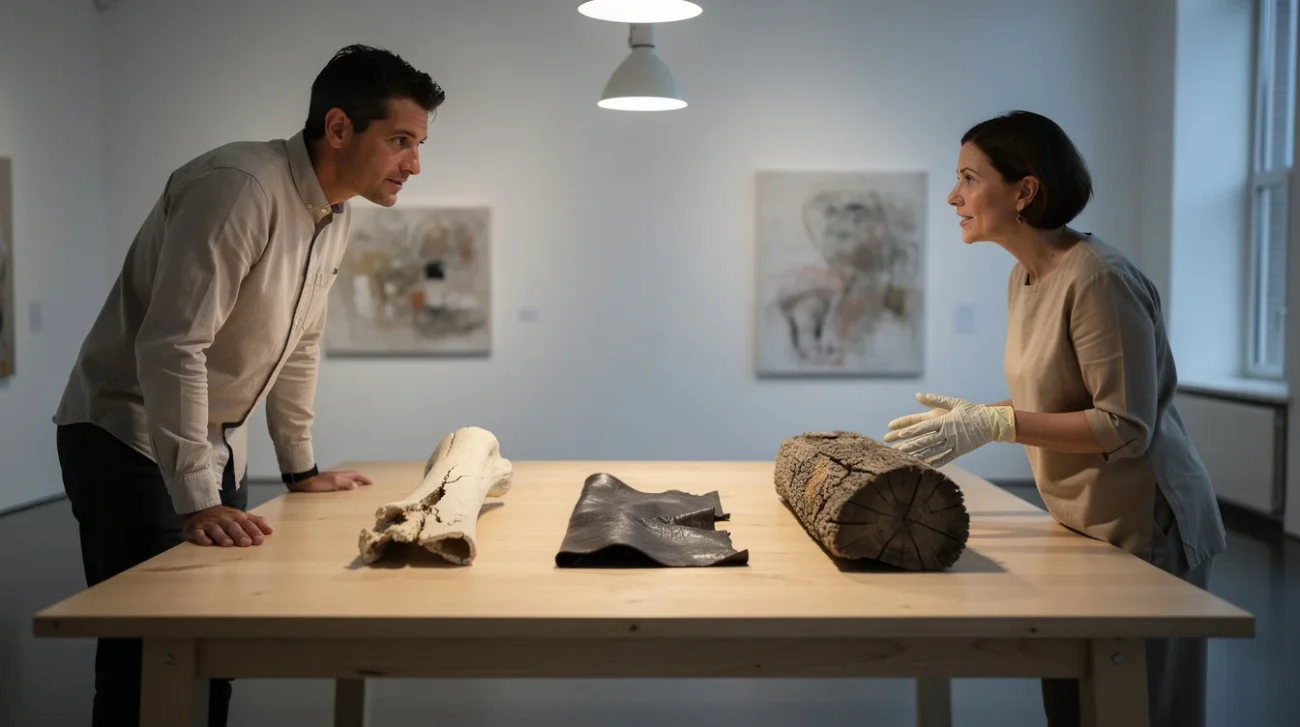
A mammoth bone is not simply an unusually old piece of workshop stock. Medieval leather is not distressed upholstery. Timber from a road built under Roman Emperor Hadrian carries more than a compelling grain. Yet these are among the materials being turned into new objects through Ex Situ, a project due to be exhibited in The Hague, according to Dezeen’s November 23 report. Its provocation is powerful: why should archaeology have exclusive rights over the afterlife of excavated things?
The equally powerful answer is that transformation can destroy questions nobody has yet thought to ask. Ex Situ therefore deserves more than either design-world applause or an automatic conservation veto. The issue is who has the authority to declare an ancient object available—and whose future that declaration spends.
PRO: Preservation Should Not Mean Permanent Invisibility
The strongest case for Ex Situ begins with a legitimate challenge to institutional habit. Storage is not the same as public value. An archaeological fragment can be catalogued, stabilised and carefully housed while remaining almost entirely absent from cultural life. Creative reinterpretation offers another form of encounter: not simply looking at the past through glass, but recognising it inside the material language of the present.
Consider the three material categories reported for Ex Situ. Mammoth bone brings deep time into the scale of an object. Medieval leather can connect animal bodies, skilled labour and everyday consumption. Stumps associated with Hadrian’s road turn imperial infrastructure into something materially immediate. These are possibilities for giving ancient objects new meanings, not claims about the exhibition’s individual designs. Their force lies in making archaeology legible beyond the specialist label.
There are precedents for giving neglected materials renewed cultural agency. Theaster Gates’s Dorchester Projects in Chicago connects architectural rehabilitation, salvaged materials and collections with new public uses. It is not a licence to remodel archaeological evidence; its relevance is the insistence that stewardship can involve activation rather than withdrawal.
On this side of the argument, the designer is not necessarily a vandal with an attractive exhibition budget. Design can create attention, and attention can support care. A transformed object might draw audiences towards the excavation history, material knowledge and conservation labour that a conventional display leaves obscure. But that benefit must be demonstrated, not merely asserted through the word “engagement”.
PRO: Authorise Transformation Through a Publicly Defensible Process
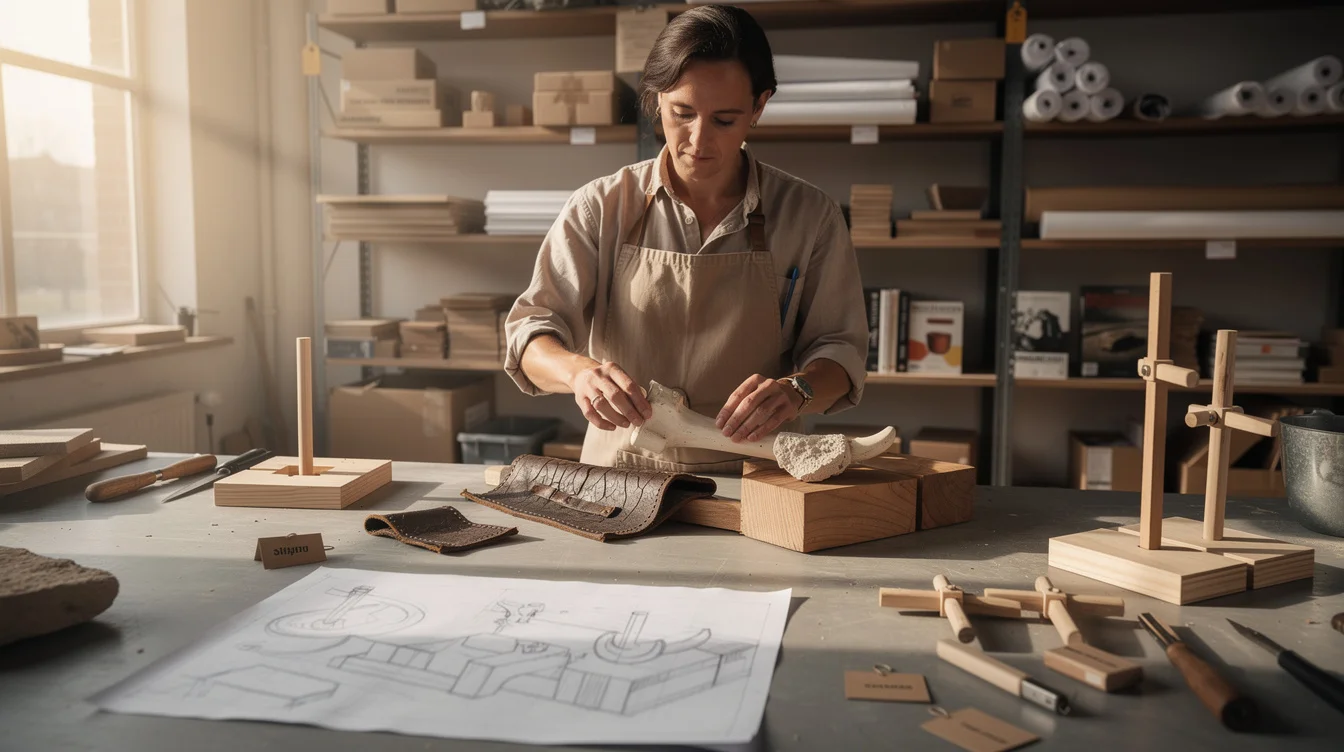
A credible defence of archaeological reuse cannot stop at the claim that museums have too much stuff. It needs a decision-making structure. Legal ownership is a starting point, not sufficient moral permission. The relevant collection authority should work with archaeological specialists and conservators, seek independent review where appropriate, and involve communities with a cultural or historical claim to the material. A designer’s enthusiasm should enter that process as a proposal, not a verdict.
Formafantasma’s Ore Streams, which investigates electronic waste and the systems governing its recovery, offers a useful methodological comparison. Its importance here is not that ancient finds resemble discarded electronics. They do not. Rather, Andrea Trimarchi and Simone Farresin show how design can address material governance instead of treating supply as an invisible preliminary to making.
For Ex Situ’s proposition to become persuasive policy, each proposed intervention would need a disclosed rationale: what is known about the find, what further study is plausible, why this material is necessary, and whether a replica or reversible assembly could achieve the same purpose. Where transformation is authorised, documentation, retained samples and a clear chain of custody should be conditions, not optional extras.
A fragmentary material with poor contextual information might, after assessment, be a more defensible candidate than a well-contextualised object with intact working surfaces. That is a comparative judgment, not a declaration of worthlessness. The pro position is strongest when it argues for narrow, accountable exceptions—not an archaeological version of the salvage yard.
CONTRA: “Redundant” Is a Verdict About Present Knowledge
The strongest objection is not that old things are sacred. It is that evidence acquires new value when methods and questions change. Calling an artefact redundant can confuse repetition in a catalogue with repetition in its scientific information. Two similar pieces of leather may preserve different species signatures, manufacturing traces or residues. Apparently repetitive timber can contribute to chronological or environmental study when its condition and context permit.
The Vindolanda writing tablets offer a cautionary reference. Thin wooden objects from Roman Britain became extraordinary sources for everyday life because their writing survived and could be recognised and studied. This does not mean every ancient stump conceals a letter. It means that outward modesty is a poor measure of evidential importance.
Advances in ancient DNA and protein analysis likewise demonstrate that research potential is not fixed at excavation. Whether any particular Ex Situ material is suitable for such work cannot be established from the source summary. That uncertainty is precisely the point: a designer should not get to treat the limits of current assessment as proof that nothing remains to discover.
Cutting, drilling, sanding, heating or applying adhesives can remove surfaces, introduce contaminants and disrupt relationships within a material. These are general risks, not a description of Ex Situ’s production methods, which the supplied context does not specify. A photograph or digital scan cannot preserve every chemical signature. Documentation records aspects of an intervention; it does not make destruction reversible.
CONTRA: Cultural Visibility Does Not Cancel the Power Imbalance
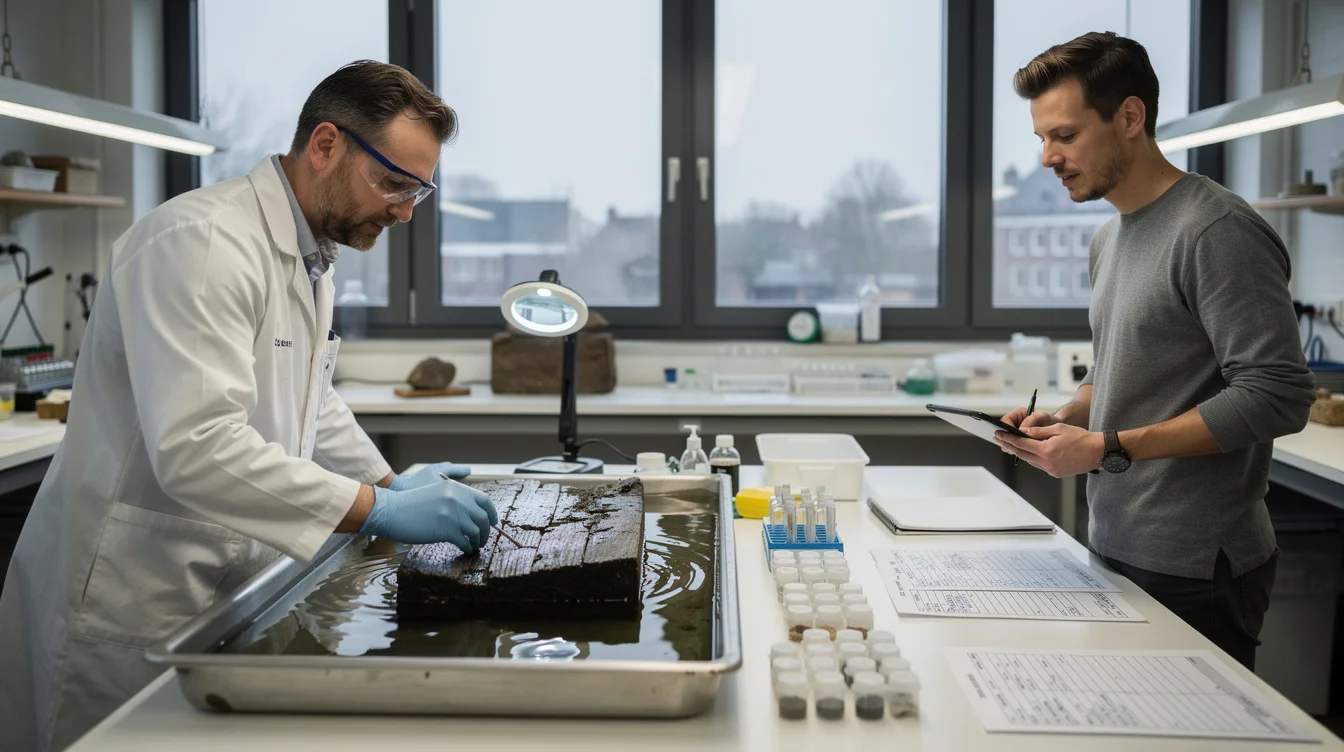
There is also a distribution problem. The benefits of transformation are immediate and attributable: a designer gains an object, an exhibition gains a story, a cultural institution gains attention. The losses are uncertain and dispersed across future researchers and publics. That asymmetry makes archaeological material especially vulnerable to confident claims that someone else has already decided it is surplus.
Scientific research sometimes consumes samples too. Radiocarbon dating and other analyses can require destructive intervention. But this is not a blanket defence of design-led alteration. Research sampling should itself face scrutiny over necessity, proportionality and the availability of less destructive alternatives. An exhibition should not borrow science’s authority while declining its burden of justification.
Nor does a retention sample solve everything. Keeping one section of timber may preserve some information while losing the spatial relationship between tool marks, growth patterns and altered surfaces elsewhere. A representative sample represents only the features selected for representation. Tomorrow’s question may concern the portion discarded today.
The contraindication is therefore structural, not sentimental: the people rewarded for transformation should not control permission to transform. Ex Situ’s upcoming presentation in The Hague would be stronger if it exposed the authorisation process as clearly as the resulting objects. Who assessed the finds? What alternatives were considered? What was retained? These remain questions, not allegations of procedural failure. Until such reasoning is visible, the claim that design has liberated an artefact from storage is incomplete. It may instead have transferred interpretive power from a shared archive to a named author.
FAQ: Archaeological Reuse and Its Limits
What is Ex Situ?
Ex Situ is a project turning archaeological materials into new objects, with an exhibition planned in The Hague. Dezeen reports materials including mammoth bone, medieval leather and stumps from a road built under Emperor Hadrian. The supplied summary does not establish the individual objects’ fabrication methods or approval procedures.
Who should authorise the transformation of archaeological finds?
The legally responsible authority should lead a documented process involving archaeological and conservation expertise, with relevant cultural communities included. Independent assessment is particularly important where an institution or designer stands to benefit from approval. Ownership alone does not settle the ethical question.
Does an artefact’s apparent redundancy justify changing it?
Not by itself. Similar-looking finds can preserve different evidence, and new analytical methods can alter their research value. Any intervention needs a case-specific assessment of significance, context, potential loss and alternatives—not simply a statement that comparable examples exist.
Can replicas offer the same creative opportunities?
Replicas, casts and digital models can support experimentation without consuming the original evidence, although they cannot reproduce every material property or the cultural charge of authenticity. Designers should explain why an original is indispensable before treating that difference as permission to alter it.
If an artefact’s most important question has not yet been invented, who should have the authority to turn it into something else?
Get the Mainifesto weekly — curated design debates, speculative ideas and the week's best articles every Saturday.
Editorial Perspectives
Questions and counterpoints developed by the Mainifesto editorial desk to extend the discussion.
Perspective 1
I’m for giving archaeological finds another working life, rather than assuming storage is always the better future. Let source communities and archaeologists authorise carefully selected transformations with designers at the table; uncertainty about tomorrow shouldn’t automatically veto making something meaningful today.
Perspective 2
I’m against turning original finds into design objects: recording their shape won’t preserve every residue or material trace that future researchers might need. Reuse isn’t automatically low-impact when the resource is irreplaceable—work with replicas or contemporary waste instead.
Perspective 3
Before I put one of these objects in a hotel, show me who authorised it, what was altered and how we’ll explain that to guests. If its appeal depends on an ancient origin but the permissions don’t stand up to scrutiny, that’s a reputation risk, not a premium experience.