Who Keeps the Know-How When an Artist Buys a Factory?
Who Keeps the Know-How When an Artist Buys a Factory?
A factory can survive as a trademark long after it has stopped surviving as a place of work. Its patterns remain available, its archive becomes an exhibition, its address acquires cultural prestige. Meanwhile, the person who knows why a particular finish fails on a humid afternoon retires without teaching anyone. This is the danger concealed inside the attractive phrase industrial heritage: we celebrate what can be displayed and neglect what must be practised.
As reported by Architectural Digest, Theaster Gates has purchased the historic Pickard china factory in Illinois, bringing his artistic practice into contact with an established manufacturing tradition. The acquisition creates a compelling possibility, not a proven outcome. The source context establishes the purchase and its creative ambition; it does not establish a long-term settlement for staffing, apprenticeships or everyday production. Those are precisely the questions that matter. Artist-led factory stewardship deserves neither automatic applause nor reflexive suspicion. It deserves a harder test: does the knowledge continue moving between people?
PRO: An Artist Can Recognise Value a Balance Sheet Misses
Gates is not simply a celebrity attaching a signature to tableware. His practice has long connected ceramics, buildings, material reuse and cultural infrastructure. Chicago’s Dorchester Projects and Stony Island Arts Bank demonstrate an interest in giving neglected places and collections renewed public purpose. These are not evidence that he will sustain a manufacturing workforce. They are evidence that his engagement with inherited material culture extends beyond designing a collectible object.
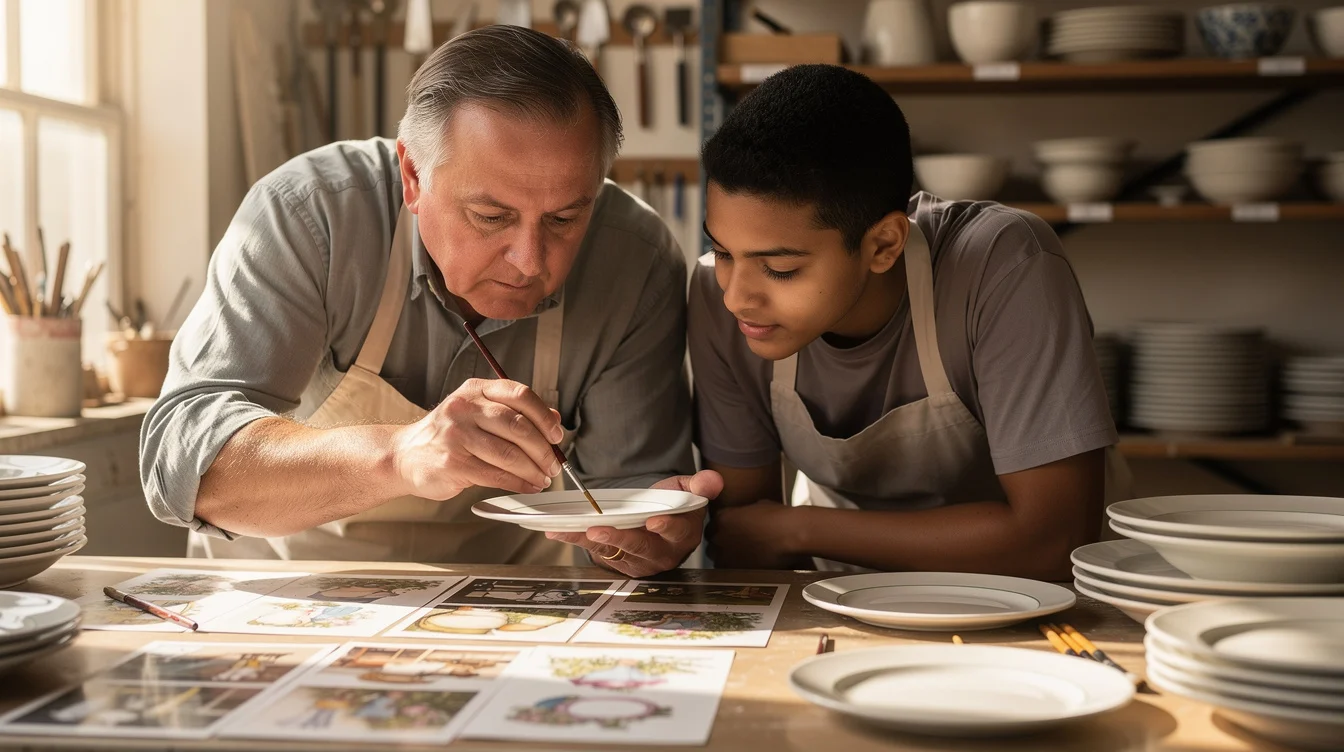
That distinction matters. An owner who sees only obsolete equipment and expensive labour may seek efficiency by removing the very processes that make a factory distinctive. An artist can instead recognise the productive intelligence in a decorating bench, a reference sample or an experienced worker’s judgment. What looks like redundancy in a spreadsheet can be the capacity to diagnose a problem before an entire batch is lost.
Gates’s 2022 Black Chapel for the Serpentine Pavilion offers a useful, limited comparison: architecture became a setting for gathering and performance rather than an isolated visual statement. Applied to Pickard, that attention to use could mean treating the factory as an active institution rather than a backdrop for new editions. The strongest argument for artistic ownership is not better taste. It is a broader definition of what deserves investment.
PRO: Artistic Demand Could Pay for Repetition
Manufacturing knowledge survives through repeated encounters with materials, deadlines and mistakes. A decorator does not learn consistency by completing one spectacular plate. They learn through sequences: preparing a surface, handling an edge, adjusting a gesture, inspecting the result and doing it again. A factory therefore needs more than conservation funding. It needs orders that make practice economically possible.
An artist’s audience could help create that demand. Exhibitions, commissions and collaborations can introduce buyers to work they would otherwise overlook. The model worth considering is not the total replacement of tableware by sculpture, but a portfolio in which higher-margin commissions help support recurring production and paid learning. That cross-subsidy is a possibility, not something the reported acquisition alone demonstrates.
Hella Jongerius’s work with Royal Tichelaar Makkum offers a relevant design reference: contemporary experimentation can draw attention to a manufacturer’s particular material and decorative intelligence rather than erase it. The lesson is not to copy a Dutch collaboration in Illinois. It is to make the producer’s expertise central to the design proposition.
At Pickard, credible stewardship could pair experimental commissions with repeatable services and replacement pieces, while protecting time for experienced staff to teach. A newcomer might first master a recurring production task, then participate in development work alongside a senior colleague. Artistic reinvention would then expand the workshop’s repertoire rather than merely consume its accumulated skill.
CONTRA: Cultural Rescue Can Conceal Industrial Retreat
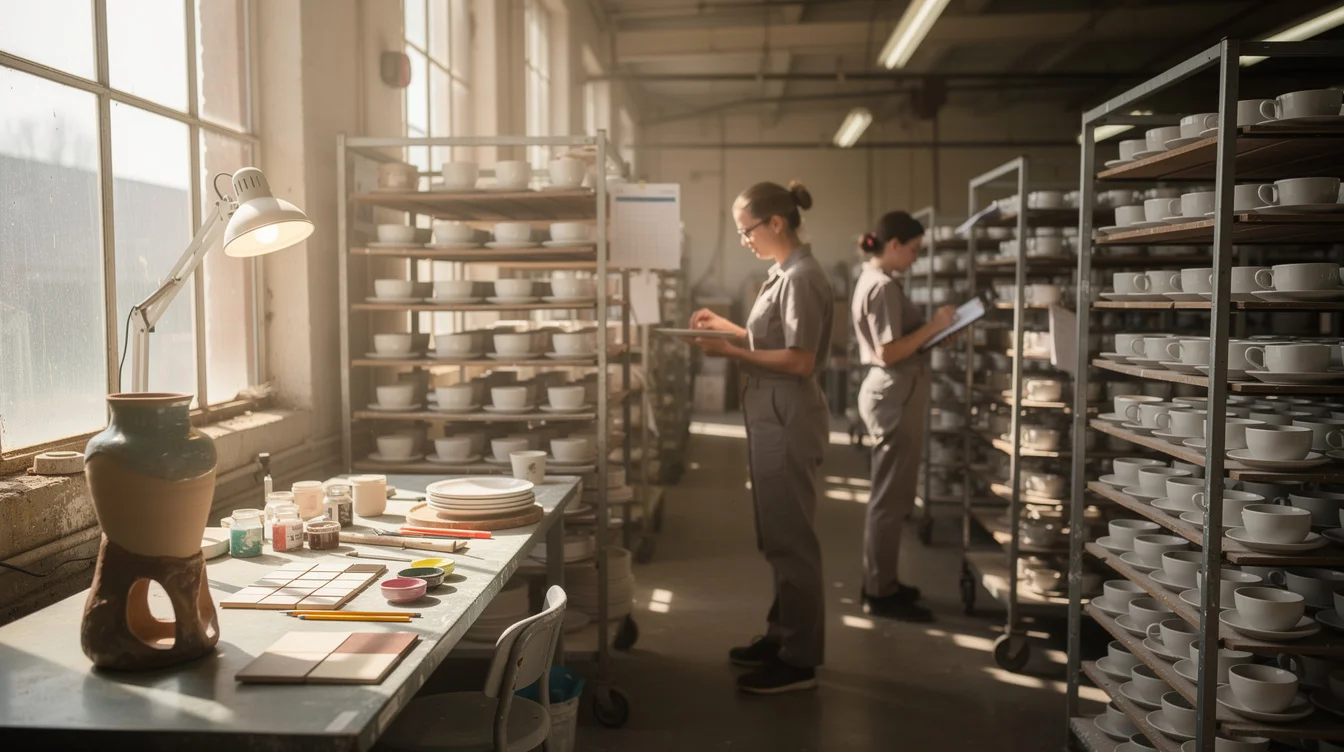
The opposing case starts with an uncomfortable distinction: cultural success and manufacturing continuity are different achievements. A beautifully restored factory can host acclaimed exhibitions while employing fewer production workers. A celebrated collection can elevate a historic name while making its ordinary products harder to obtain. Neither outcome is automatically illegitimate. Neither should be sold as the preservation of an industrial craft.
Artist-led ownership intensifies this risk because attention gravitates towards authorship. The acquisition becomes part of the artist’s biography; the workers become supporting characters. A decorator’s decades of judgment can disappear behind a label crediting a single creative vision. The factory survives in the story while the people who constitute its intelligence remain unnamed.
The Arts and Crafts movement provides a historical warning. William Morris challenged the degradation of labour, yet the labour-intensive goods associated with his enterprise were expensive. An ethical and aesthetic critique of industrial production did not automatically make its alternatives broadly affordable. Today, a similarly unresolved contradiction can emerge when the preservation of craft depends on increasingly exclusive objects.
For Pickard, the danger is not simply that prices might rise. Skilled labour should not be cheapened to satisfy nostalgia. The danger is that a smaller market for prestigious editions could be mistaken for a durable production system. Visibility can attract investment, but it cannot substitute for a reliable order book.
CONTRA: A Name Can Be Preserved Without Its Knowledge
Even a commercially successful reinvention could narrow the factory’s capabilities. If new commissions repeatedly use only one technique, other skills may fall out of practice. If senior workers spend every available hour resolving demanding one-off pieces, teaching becomes the task perpetually postponed. A full workshop is not necessarily a workshop reproducing its own expertise.
This is why archives, films and demonstrations are insufficient safeguards. They can record a sequence without transmitting the judgment required to intervene when that sequence goes wrong. The apprentice needs opportunities to make imperfect work, receive correction and repeat the task. Someone must budget for the slower pace, rejected pieces and supervisory attention that learning requires.
Walter Gropius’s ambition to connect the Bauhaus workshop with industry remains useful here, but not as a styling reference. The pertinent question is how education meets production. A contemporary factory cannot solve that problem with occasional public workshops, however valuable those may be for access. Training visitors and developing an employable production specialist are different commitments.
The burden of proof should therefore sit with ownership. Useful measures would include paid training hours, the number of experienced workers retained, progression into skilled roles and continuity of recurring orders. Workers should also have a meaningful voice in setting quality standards and deciding what can responsibly be promised to clients. Without those provisions, artistic stewardship risks turning collective competence into a finite resource: admired, extracted and eventually exhausted.
FAQ: What Would Genuine Stewardship Require?
What does Theaster Gates’s purchase of Pickard establish?
Architectural Digest reports that Gates purchased the historic Illinois china factory and is connecting it with his artistic practice. That establishes a change in ownership and creative direction, not proof of lasting job security, funded apprenticeships or continuous production.
Why does everyday production matter to craft knowledge?
Recurring orders give workers repeated opportunities to practise, diagnose faults and teach consistent methods. Experimental commissions can build skills too, but occasional exceptional objects do not necessarily sustain the full range of capabilities that routine manufacturing exercises.
Can collectible editions support an established factory?
Yes, if their margins genuinely help fund equipment, skilled employment and training. The risk is that exclusive commissions displace recurring work or concentrate expertise in too few people. Financial success should be assessed alongside the continuity and breadth of production.
How should artist-led factory stewardship be judged?
Look beyond exhibitions and product launches to worker retention, paid learning time, progression into skilled jobs and reliable orders. Ask whether employees help shape production decisions and whether more people can perform essential processes than could before the acquisition.
If Pickard’s name flourishes but fewer people can practise and teach its craft, should we call that preservation—or a different kind of loss?
Get the Mainifesto weekly — curated design debates, speculative ideas and the week's best articles every Saturday.
Editorial Perspectives
Questions and counterpoints developed by the Mainifesto editorial desk to extend the discussion.
Perspective 1
I’m in favour of Gates buying Pickard: keeping a factory operating takes capital, customers and someone willing to carry the overheads. If his profile brings orders that pay skilled wages, that’s a practical route to preservation—not just a branding exercise.
Perspective 2
I wouldn’t call a stronger Pickard name preservation if fewer people can actually make the work. Show me paid training hours, experienced workers retained and repeat production orders; an artist’s reputation can’t substitute for manufacturing capacity.
Perspective 3
I’d judge this over several years, not at the point of purchase: are skilled jobs staying, are apprentices progressing, and is the site still set up for production? A factory can remain a local landmark while losing the working relationships that made it matter.
Perspective 4
We can scan a finished piece and model its geometry, but that won’t capture how a worker spots a defect or adjusts a process by feel. Could ownership come with a commitment to paid apprenticeships, so the next generation inherits the ability to make—not just a collection to study?