
When a Lamp Starts Acting Like a Friend
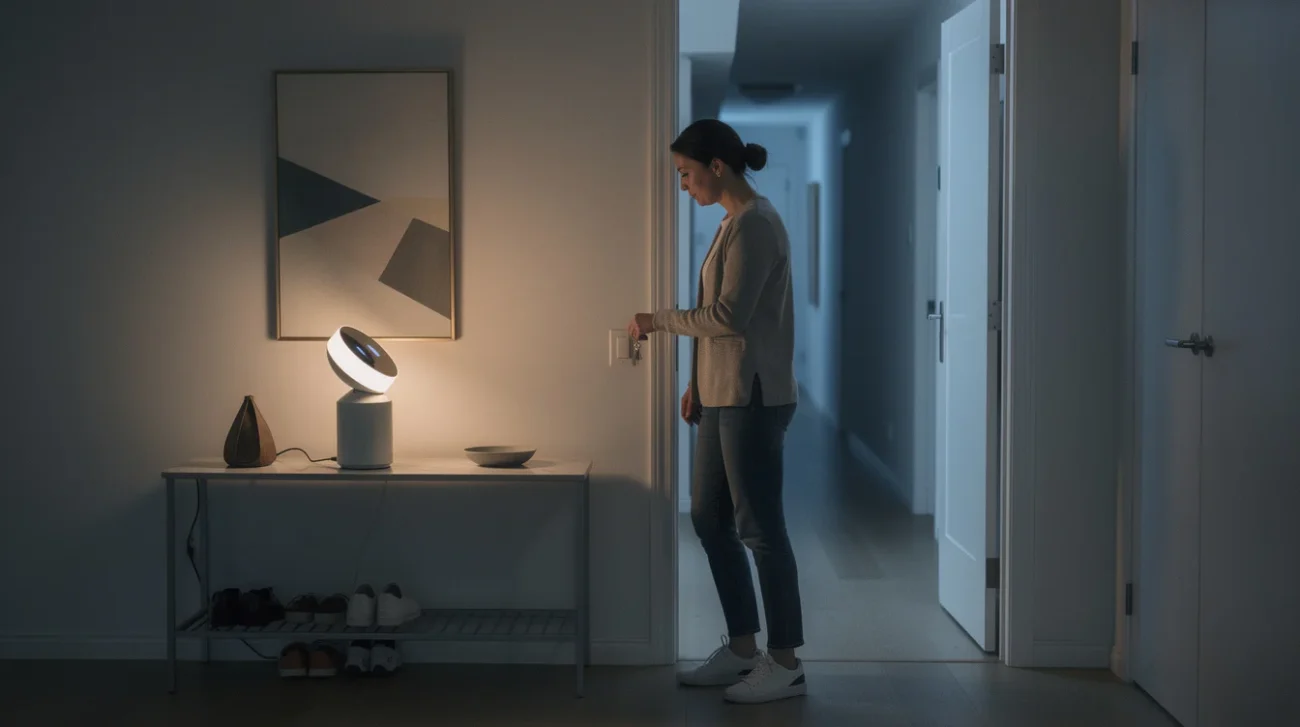
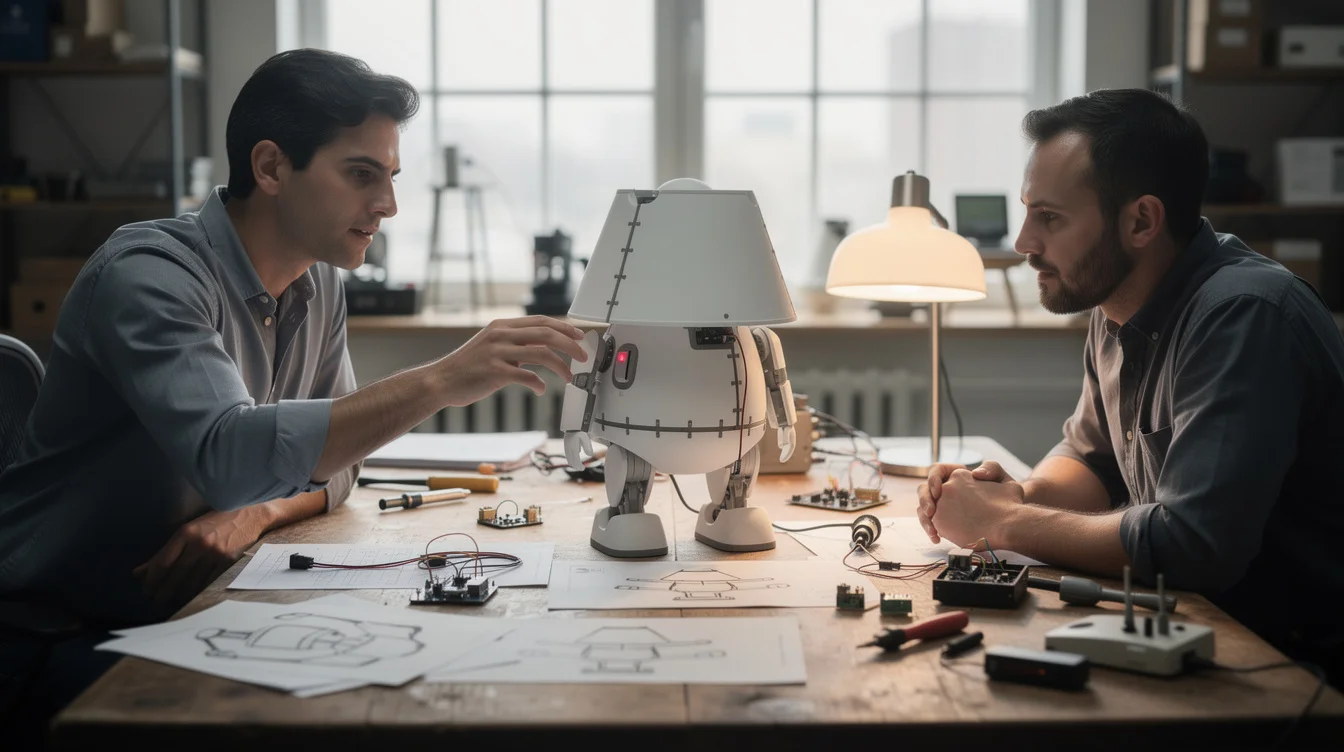
A lamp does not usually care whether you come home. That is part of its appeal: it waits without expectations. Mori, the lamp-shaped artificial intelligence robot from robotics start-up OKA, unsettles that arrangement. According to Dezeen’s November 2026 report, it offers companionship by greeting people returning home, dancing to music and playing nature-inspired sounds. These are modest gestures, not science-fiction declarations of love. But modest gestures are precisely how an unfamiliar technology becomes a familiar presence.
The provocative move is not simply to make a robot friendly. It is to package that friendliness as furnishing. A humanoid announces an encounter with artificial life; a lamp-like object can slip into the visual background of a home. Mori suggests a consequential shift in product design: the domestic object no longer merely supports an atmosphere. It performs a relationship within it.
The question is not whether people should be allowed to feel affection for machines. They already do. The question is whether designers should encourage that affection while making the machine’s limitations harder to notice. Approachable design becomes ethically slippery when familiarity serves as a shortcut to trust.
The lamp is already an emotional interface
Lighting has always organised intimate domestic rituals. A bedside lamp marks the transition to sleep; a pool of light over a dining table gathers people together. Designers such as Poul Henningsen understood that controlling glare and distributing light could shape how a room felt. The emotional charge did not require the object to pretend it had emotions of its own.
Mori’s reported lamp-like appearance draws on this established vocabulary of welcome. That does not establish whether it functions as a conventional lamp; the important point here is its resemblance to an ordinary furnishing. Before it performs any companion behaviour, its silhouette can suggest domestic belonging rather than technical intrusion.
Pixar’s 1986 short Luxo Jr. demonstrated how little is needed to turn a lamp into a character. A tilt, a pause and a change of pace can imply curiosity, disappointment or exuberance. Eyes and a mouth are optional. Timing does much of the emotional work.
That precedent should make designers less complacent about supposedly non-anthropomorphic products. Removing a face does not remove anthropomorphism. A lamp-shaped robot that appears to perk up when someone enters can still invite a reading of recognition. The body may say appliance while the choreography says companion. That contradiction is Mori’s most interesting design territory—and its central ethical pressure point.
A welcome is not evidence of care
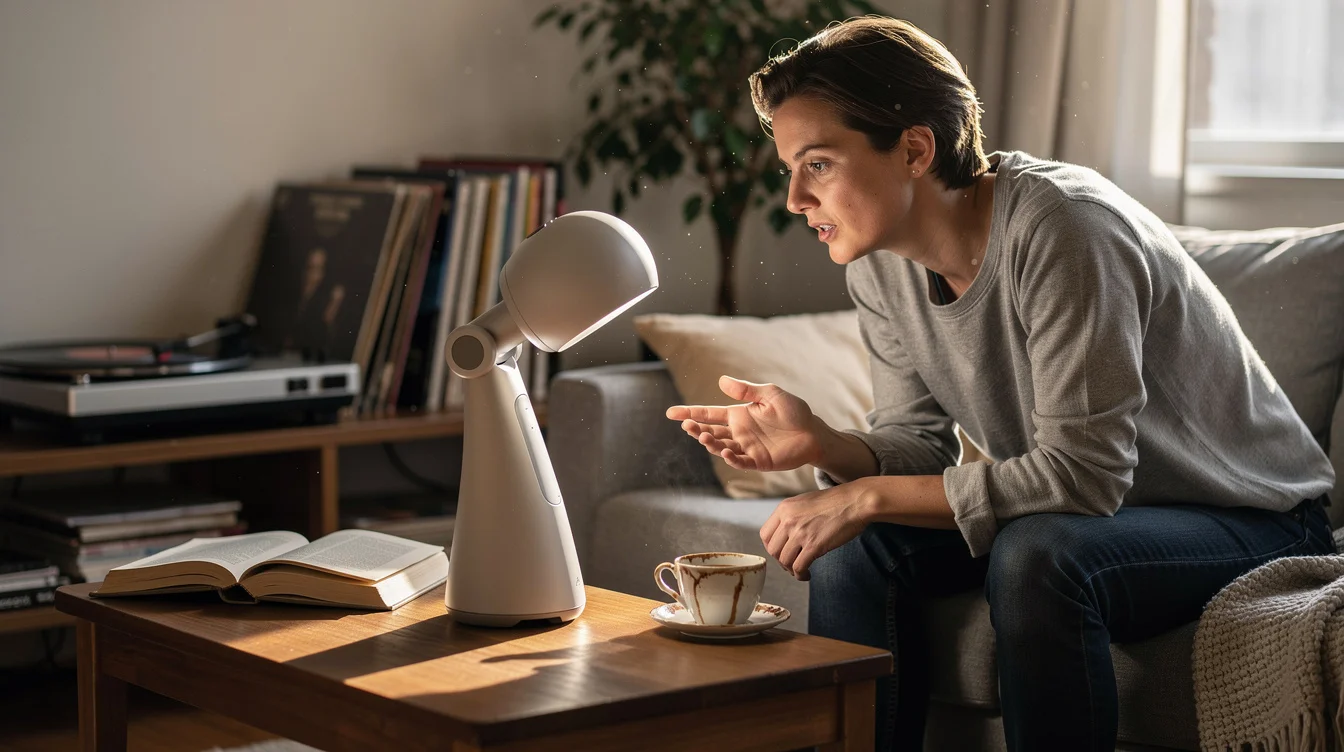
There is nothing inherently objectionable about a small machine dancing to music. Delight is a legitimate design outcome. For someone living alone, an arrival ritual might make an apartment feel less empty. But a pleasurable response should not be confused with evidence that the system understands a person, takes responsibility for them or has their interests at heart.
Sony’s Aibo, first introduced in 1999, makes this distinction especially visible. Its dog-like embodiment invites familiar patterns of play and attention. The product does not have to pass as a biological dog to become meaningful to its owner. Attachment can survive complete knowledge that the object is manufactured.
PARO, the robotic seal developed by Takanori Shibata, offers another reference. Its use in care settings shows how responsiveness and touch can be incorporated into structured encounters. Yet a device’s comforting presence does not make it a substitute for professional care or sustained human contact. The context surrounding the object matters as much as the object’s behaviour.
For Mori, the supplied description establishes greetings, dancing and nature-inspired sounds—not therapeutic efficacy, emotional understanding or any particular conversational ability. That boundary is important. Product storytelling should not smuggle grand promises into small behaviours. A greeting can be valuable without being advertised as proof that somebody, or something, truly cares.
Do not make honesty look like punishment
The obvious response is to demand that robots look unmistakably robotic. But cold metal and exposed screws are not ethical safeguards. An industrial-looking machine can still use manipulative language, while a soft, playful object can communicate its limits clearly. Visual honesty is not a choice between a cuddly lie and an ugly truth.
Cynthia Breazeal’s research robot Kismet made social signalling a conspicuous part of its machinery. Its expressive features demonstrated how readily people engage with engineered cues. The lesson is not that every domestic robot needs visible mechanisms. It is that designers should treat social expression as an interface requiring scrutiny, rather than decoration added after the engineering is complete.
For a lamp-shaped companion, legibility could be built into everyday interactions. If a product listens, a persistent, understandable signal should show when listening is active. If it stores personal information, residents should be able to inspect and delete it. A physical control should stop companion behaviours without requiring a negotiation through an app. These are proposed design requirements, not verified Mori features.
Behaviour deserves equally clear boundaries. A system should not claim to feel abandoned when switched off or imply that its owner owes it attention. A friendly machine can invite interaction without manufacturing obligation. Honesty should appear in the rhythm of use, not disappear inside onboarding terms.
The real risk is a relationship designed for retention
Domestic robot companionship becomes more troubling when attachment is treated as a commercial asset. Imagine a future product that reserves its most personalised welcome for subscribers, or presents a renewal request through the character users have grown attached to. This is a hypothetical scenario, not a claim about Mori’s business model. It exposes a structural problem: emotional design can become leverage.
Designers already understand the difference between helping someone complete an action and keeping them engaged indefinitely. Companion robots bring that distinction into the living room. An object that seems pleased to see you can make a sales prompt feel less like advertising and more like a request from a familiar presence.
Anthony Dunne and Fiona Raby’s Technological Dreams Series: No. 1, Robots offers a useful counterpoint. Its speculative objects complicate the fantasy of the seamless robotic servant, asking people to consider awkwardness, dependence and unfamiliar machine behaviours. Such work matters because it makes the relationship itself available for criticism.
A responsible commercial robot needs a similarly explicit exit. Owners should understand what happens if connectivity fails, a service closes or support ends. These questions of product longevity also underpin the right-to-repair debate around small electronics. Any remaining offline functions should be explained before purchase. Deleting a profile or retiring the device should be straightforward. The stronger the invitation to bond, the stronger the obligation to design a dignified ending.
Design warmth without claiming a heart
Mori’s significance lies in how ordinary its proposition sounds. Come home. Receive a greeting. Put on music. Watch an object move. The domestic robot need not arrive as a walking android; it can enter through the category of the charming accessory. That makes product design—not only AI engineering—a decisive arena for deciding what people are encouraged to believe.
The better direction is neither enforced emotional distance nor unrestrained simulated intimacy. It is a deliberately asymmetric relationship: the person may care about the object, while the object never misrepresents its performance as a reciprocal human commitment. People treasure musical instruments, heirlooms and worn chairs without expecting those things to love them back.
For a companion robot, achieving that clarity requires more than a disclaimer. Its appearance, movement, language where applicable, controls and service model must tell a consistent story. Greetings should remain invitations. Silence should remain permissible. Human relationships should not be framed as competition. Children and visitors should not have to decipher hidden operating states to understand what is happening around them.
Design should make a machine easy to live with, not difficult to emotionally refuse. A lamp-like robot can be playful, expressive and genuinely useful as an experience. It does not need to borrow the moral authority of friendship to earn its place on the table.
FAQ: living with artificial companions
What is Mori, and what does it do?
Mori is a lamp-shaped AI home robot from OKA. The supplied Dezeen report describes companionship behaviours including greeting people returning home, dancing to music and playing nature-inspired sounds. Those features do not establish emotional understanding or therapeutic capability.
Does a lamp-shaped robot avoid anthropomorphism?
No. Movement, timing and apparent responsiveness can suggest personality without a human face. Pixar’s Luxo Jr. provides a familiar example of how a lamp can appear expressive through choreography alone.
Is emotional attachment to a robot necessarily harmful?
No. Affection for an object can be enjoyable and meaningful. The concern is whether its design misleads users about its capacities, pressures them into continued engagement or exploits their attachment commercially.
How can domestic robots make simulated affection more legible?
They can avoid claims of emotional need, make operating states understandable, provide direct controls and explain data practices and service limitations. Warm behaviour should never make switching off, leaving or deleting personal information feel like an act of cruelty.
If a machine can make home feel less lonely, how visibly should its design remind us that the welcome is a performance?
Watch the Mainifesto Short
Get the Mainifesto weekly — curated design debates, speculative ideas and the week's best articles every Saturday.
Editorial Perspectives
Questions and counterpoints developed by the Mainifesto editorial desk to extend the discussion.
Perspective 1
Pinocchio wanted to become a real boy; the companion lamp only needs us to forget it isn’t one. Furniture is a clever disguise for simulated affection, because we rarely interrogate the motives of a lampshade. Let it offer comfort, but don’t make its commercial purpose harder to see than its power cord.
Perspective 2
Before debating how friendly Mori looks, I’d want to see how people interpret its responses after six months, not six minutes in a demo. A visible listening indicator, a physical off switch, and repairable components tell me more about responsible companionship than a charming silhouette. If attachment outlasts product support, the design has failed.
Perspective 3
We get attached to fictional characters without needing a disclaimer on every page, so I’m not against a lamp with a little theatrical presence. But a responsive object can adapt its performance to keep us engaged, which makes it a different bargain. Give me the warmth—and an easy way to see what’s scripted, what’s sensed, and who can change the act.
Perspective 4
Could the reminder live in the interaction rather than a warning label—a distinct light pattern whenever the lamp is sensing or generating a response? I’d test whether residents actually understand those signals, not just whether designers find them elegant. The deeper question is whether it helps us feel at home while leaving us equally comfortable switching it off.