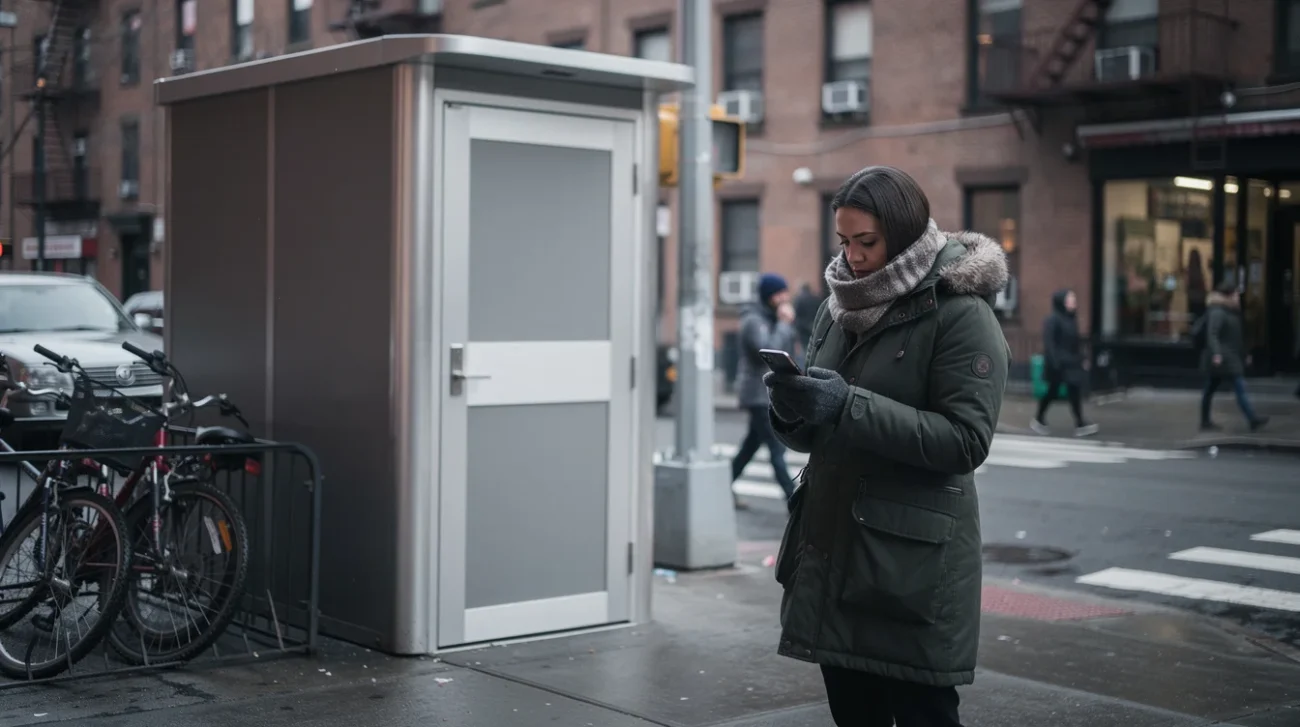

A Smarter Home Still Needs Someone to Run It
PRO: Make the Household’s Hidden Operating System Visible
A smarter home should not merely know when to dim the lights. It should make it harder for one person to become the household’s unpaid operating system. Architectural Digest frames Apple’s HomeView around an appealing promise: a sleek display that minimizes—or at least corrals—domestic chaos. That is a useful starting point, but the meaningful design question is not how elegantly information appears. It is who becomes responsible for acting on it.
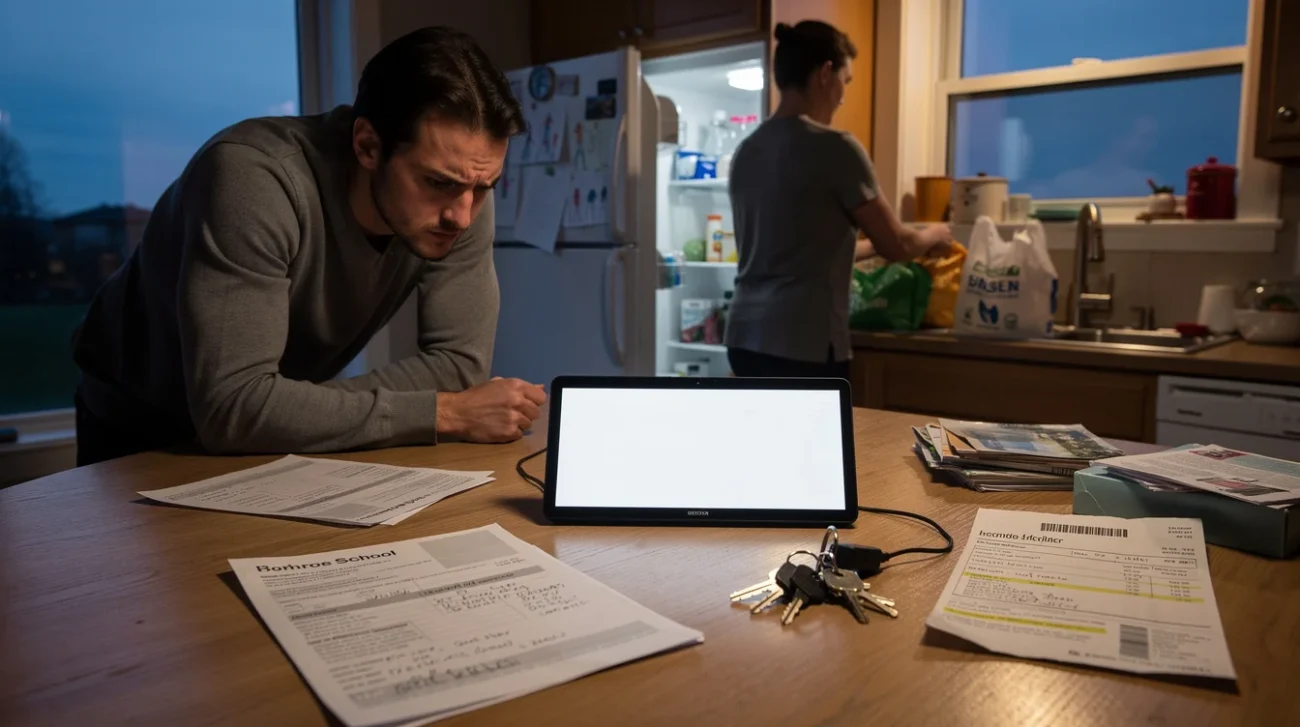
The strongest argument for a shared smart-home interface is that household knowledge often lives in the wrong place: inside one person’s head. Someone knows the boiler service is overdue, the school needs a permission form, and the supposedly automatic vacuum will choke on the rug fringe. Making those obligations visible could turn private vigilance into shared knowledge.
In her research on cognitive household labor, sociologist Allison Daminger distinguishes anticipation, identifying options, decision-making, and monitoring. A dashboard could expose more of that sequence than a conventional chore chart does. Instead of displaying only “buy groceries,” a genuinely useful interface would reveal who checks supplies, plans meals, places the order, and handles substitutions. Visibility matters when it reveals the work behind the task, not merely the task’s final checkbox.
PRO: Give Coordination an Address in the Home
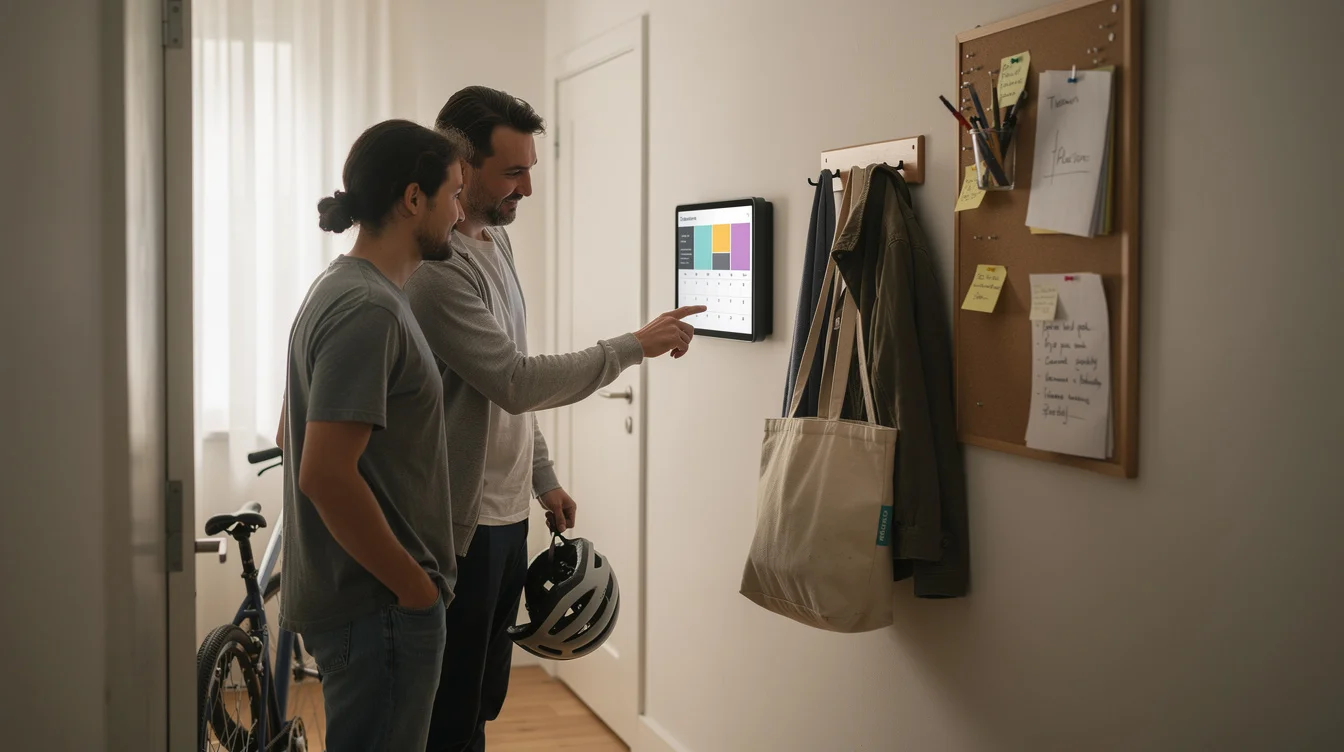
Architecture already distributes attention. The kitchen counter becomes a sorting office because everyone passes it; the refrigerator becomes a noticeboard because it occupies shared territory. A household display could improve on these improvised systems by giving coordination a stable address, rather than scattering it across private phones, messaging threads, and paper slips.
This is where the HomeView proposition becomes spatially interesting. Amazon’s Echo Show 15 and Google’s Nest Hub have already explored the shared-screen category. Their existence does not prove that domestic labor becomes fairer, but it demonstrates an alternative to relying on personal smartphone apps for essential functions in the connected home. A screen in common space can make “I never saw the message” a less structurally inevitable response.
Placement, however, should follow the household rather than the product photograph. A display beside the entrance could support handovers between caregivers. One in an accessible circulation space could serve seated and standing users. A screen banished to a utility room would reproduce the invisibility of the work it supposedly organizes.
Margarete Schütte-Lihotzky’s 1926 Frankfurt Kitchen treated movement and task sequences as design material. A shared interface deserves the same spatial seriousness: who encounters it, who can reach it, and whose routines define its location?
PRO: Design for Ownership, Not Just Reminders
The most persuasive version of HomeView would function less like a command center and more like a household agreement made usable. These are criteria for evaluating the proposition, not claims about verified HomeView features. The source framing establishes the promise of corralling chaos; it does not establish whether the product redistributes responsibility.
Consider a repair. A weak system announces that the dishwasher needs attention. A stronger system lets a household member own the whole process: diagnose the problem, compare repair options, book the visit, arrange access, and confirm completion. Another adult should be able to take over without interrogating the person who usually handles everything.
Existing tools such as Todoist and Trello illustrate the basic distinction between a visible task and an assigned task. Domestic design needs to go further, accounting for dependencies, changing capacity, and agreed standards of completion. Fairness is not necessarily identical workloads; disability, paid employment, and caring commitments can require different arrangements.
Mark Weiser and John Seely Brown’s work on calm technology offers a useful ambition: information should move between the periphery and the center of attention without demanding constant supervision. A successful household display would earn its place by reducing coordination work—including the work required to operate the display itself.
CONTRA: The Dashboard Can Become Another Dependent
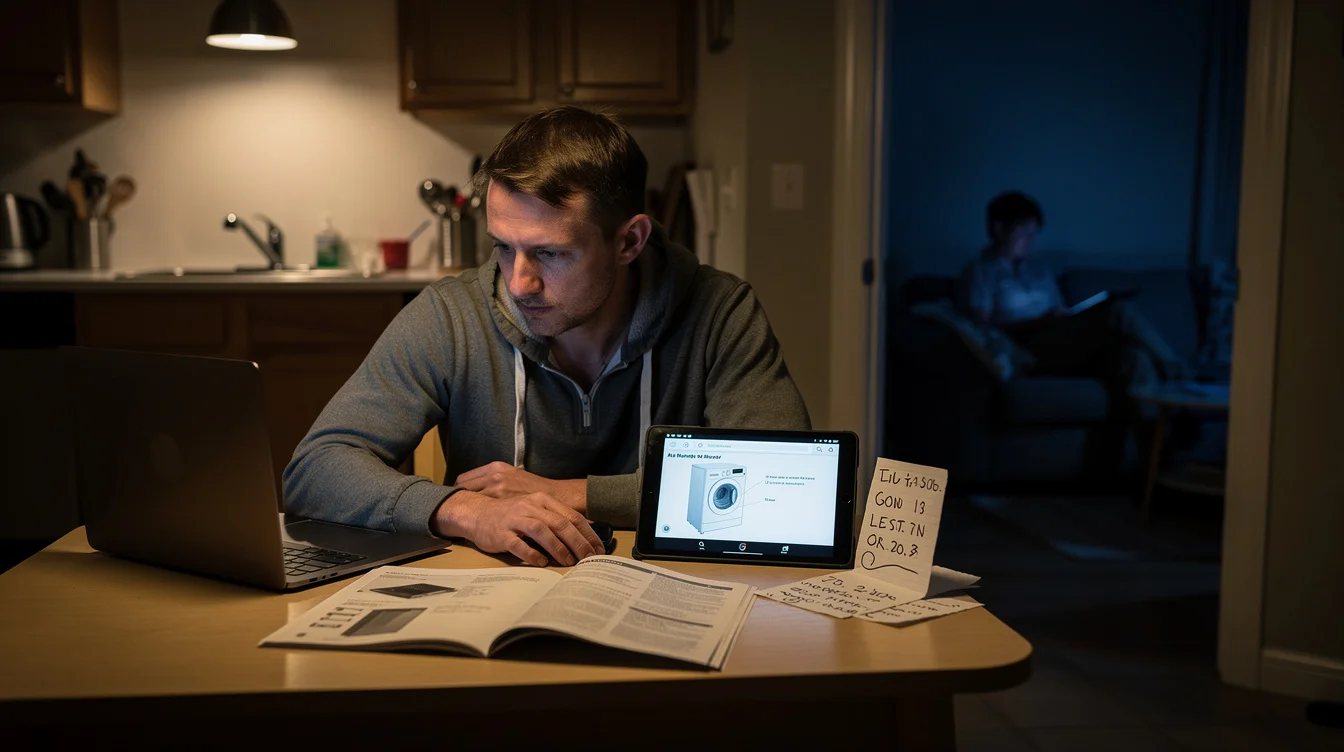
The counterargument is brutal: information does not organize itself. Someone must enter the appointment, correct the recurring reminder, reconnect the device, resolve the conflicting calendar, and explain why a task matters. A polished interface can conceal that maintenance as effectively as a closed cupboard conceals clutter.
Imagine a household in which one partner installs the display, creates accounts, structures the calendar, and assigns every chore. The other partner now completes more visible tasks. That is a practical improvement, but it leaves the first person responsible for anticipating needs and delegating action. Execution has been shared; management has not.
Arlie Hochschild and Anne Machung’s The Second Shift documented the persistence of domestic work alongside paid employment. Smart-home design risks adding a technical layer to that second shift: household systems administration. The person who remembers the dentist may also become the person who remembers which account controls the thermostat.
Even interoperability does not settle this. Matter, the smart-home connectivity standard, addresses device compatibility, not social accountability. Devices communicating more smoothly cannot make household members negotiate ownership. A home can be technically integrated and socially dependent on a single exhausted administrator. That is not a marginal usability problem. It is a failure of the product’s domestic premise.
CONTRA: What Fits the Screen Starts to Define the Work
Dashboards privilege things that can be counted, scheduled, and marked complete. Domestic care includes all three, but it also includes noticing that a child is unusually withdrawn, remembering which visitor needs a quiet room, or changing dinner plans because someone has had a punishing day. These are not defective tasks awaiting better data entry. They are forms of judgment.
Lucy Suchman’s Plans and Situated Actions offers a useful warning against confusing formal plans with the situated activity through which people actually get things done. A household calendar represents life; it does not contain it. The danger is that screen-visible contributions acquire authority while less legible care becomes even easier to dismiss.
A household might count ten completed chores for one person and six for another, overlooking the second person’s hours of planning and emotional support. Completion statistics could sharpen resentment rather than clarify responsibility. Turning a family into a miniature productivity platform is not emancipation.
The Frankfurt Kitchen carries a related ambiguity. Its rationalization of domestic movement was influential, but a more efficient workspace did not itself decide who would work there. HomeView faces the same limit in digital form: optimizing the station can leave the station’s operator exactly where society previously put them.
CONTRA: Shared Access Is Not Shared Power
A shared screen also raises a less photogenic question: who controls the controls? Connected-home systems can give different people different permissions. An account owner may decide which devices others can access, which information appears, and whether access can be withdrawn. A display that looks communal can sit on top of a distinctly hierarchical arrangement.
That matters in ordinary situations, such as adult housemates negotiating heating schedules, and in dangerous ones. The UK’s Refuge has documented technology-facilitated abuse, including the misuse of connected devices. Visibility is not automatically benign when one person can monitor or constrain another. Children, visitors, and paid carers also need boundaries rather than blanket inclusion in household data.
The design test should therefore include usable permissions, understandable records of consequential changes, appropriate privacy, and physical alternatives to app-mediated access for essential controls. Nobody should need an account holder’s goodwill to turn on a light or adjust a room’s temperature.
HomeView’s promise is worth taking seriously precisely because coordination is real work. But the verdict cannot rest on a tidier counter or a more attractive calendar. If one person must keep the system accurate so everyone else can remain casually informed, the smart home has not shared responsibility. It has given the household manager a better-looking desk.
FAQ: Smart Homes and Domestic Responsibility
Can a smart-home display reduce mental load?
It can reduce searching, repeated explanations, and forgotten handovers. But mental load only becomes more evenly distributed when other household members also anticipate needs, make decisions, and follow tasks through without continual prompting.
Does HomeView have the responsibility-sharing features discussed here?
The supplied source summary establishes a promise to corral household chaos, not a verified feature list. Task ownership, handovers, permissions, and workload visibility are proposed evaluation criteria, not confirmed HomeView capabilities.
What should households agree on before adopting a shared display?
Agree on who owns recurring responsibilities, what completion means, who maintains the system, and which information stays private. Include a fallback for outages and a way to revise arrangements when someone’s capacity changes.
How can you tell whether a smart-home interface is helping?
Look beyond completed tasks. Ask whether reminders, troubleshooting, and planning still fall to the same person—and whether that person can step away without preparing everyone else to cope.
If a smart home still needs one person to remember, assign, and check everything, has it reduced domestic chaos—or merely redesigned the job of managing it?
Get the Mainifesto weekly — curated design debates, speculative ideas and the week's best articles every Saturday.
Editorial Perspectives
Questions and counterpoints developed by the Mainifesto editorial desk to extend the discussion.
Perspective 1
I’m for a shared household dashboard: making tasks visible is a real improvement over keeping them in one person’s head. But shared infrastructure needs shared authority—and in homes with unreliable power or internet, it also needs a way to work when the network doesn’t.
Perspective 2
I don’t buy the promise that another screen will make domestic life less chaotic. HomeView risks turning one person into the household’s unpaid producer, cueing everyone else’s part while the interface gets credit for keeping things running.
Perspective 3
A task marked ‘done’ tells you nothing about who noticed it needed doing. Could the system distribute ownership from noticing through follow-up, rather than just distribute reminders? That seems like the harder—and more useful—design problem.
Perspective 4
Let’s make a smarter home mean fewer things to manage, including the technology itself. A repairable display that works with the devices you already own would be a promising start; another screen to update and eventually replace adds its own household chore.