
District Six: A Right to Return, Not Recreate the Past
A Right to Return, Not a Duty to Recreate the Past
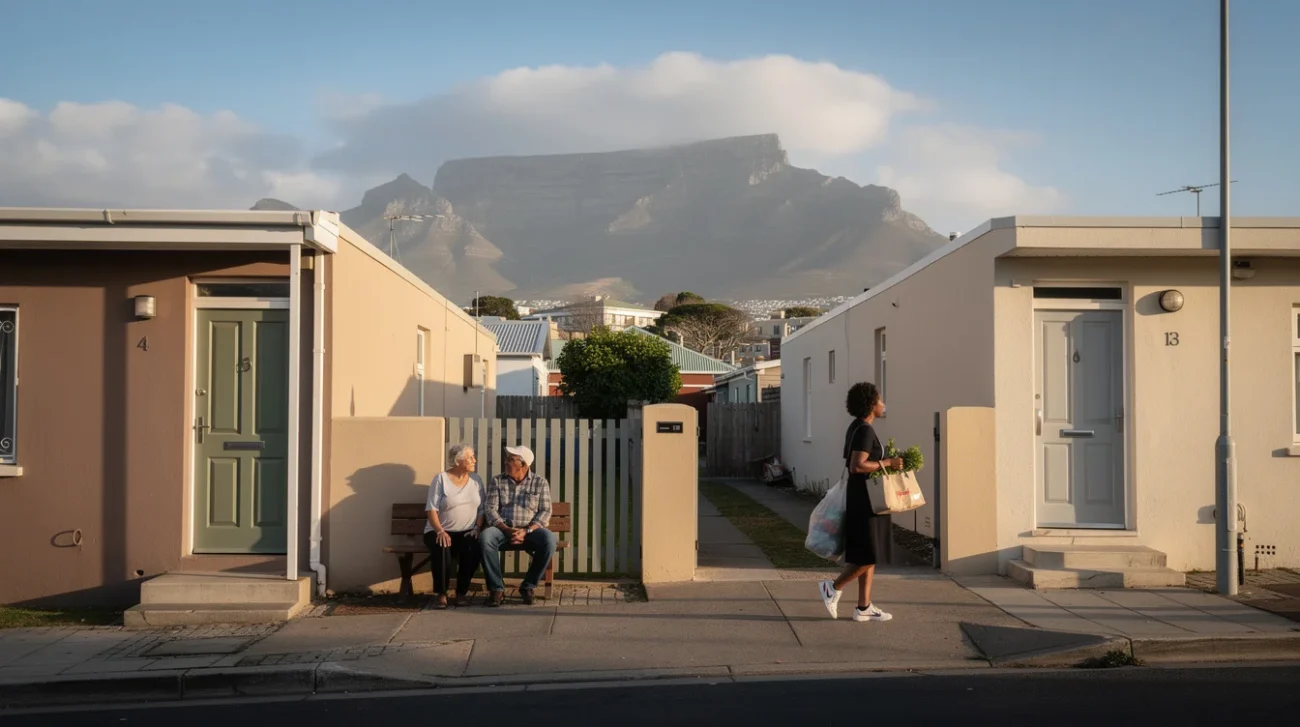
Restitution is not a commission to rebuild a postcard. In Cape Town, the District Six Restitution Housing Project by Jakupa Architects and Urban Designers provides 108 homes for returning land claimants. Its stated references—intimate streetscapes, vibrant public life and close-knit community ties—belong to a neighbourhood devastated by apartheid’s forced removals. District Six was declared a white area in 1966; the displacement and destruction that followed turned urban planning into an instrument of dispossession.
Drawing on that lost urban life is therefore more than an aesthetic choice. But it also creates a dangerous test: must successful restitution look like a recovered past? Architecture should make collective memory inhabitable without asking residents to perform it. There are two serious positions here, and neither can be dismissed as a matter of taste.
PRO: Rebuilding Urban Relationships Is Part of Repair
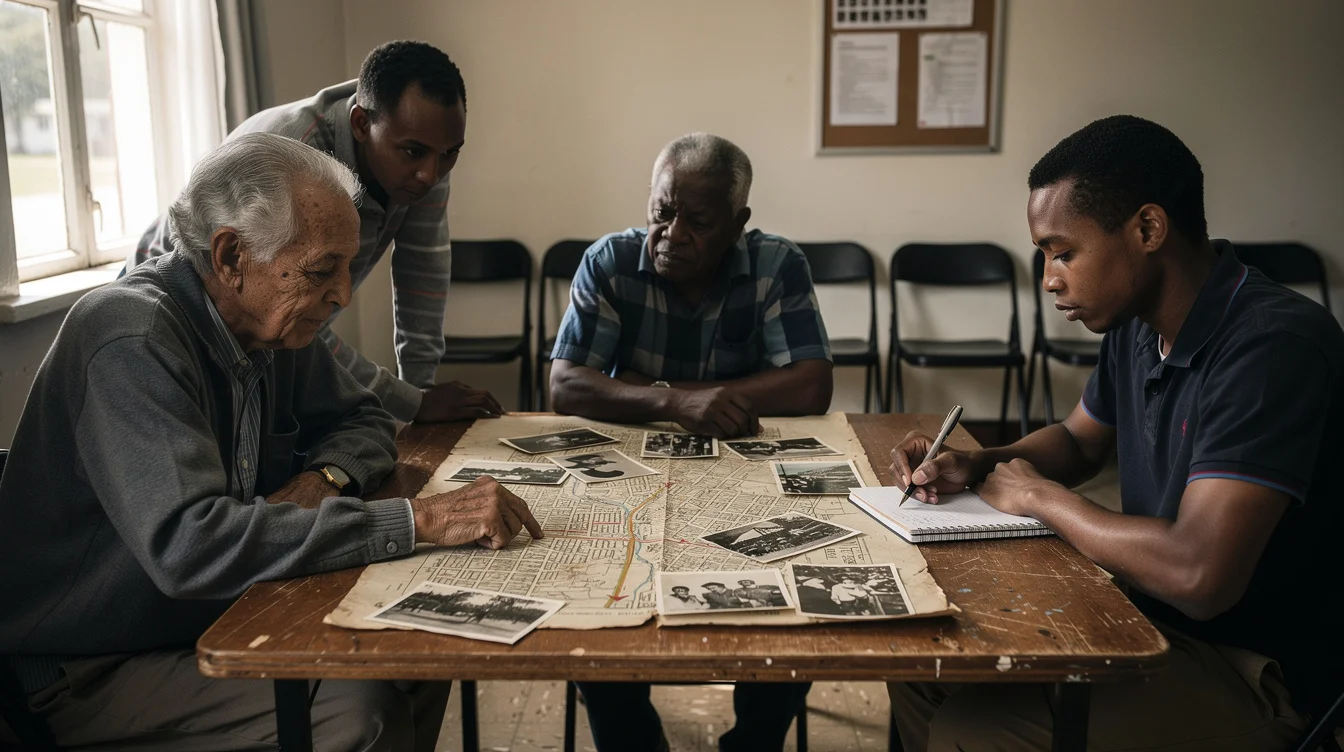
The strongest argument for historical continuity is that forced removal destroyed relationships as well as buildings. Neighbours, shops, places of worship and familiar walking routes formed a social infrastructure. Replacing a lost home with an isolated dwelling far from opportunity cannot restore those connections. Location and the spaces between homes are part of what was taken.
The District Six project’s reference to intimate streetscapes should therefore be understood as a potentially substantive urban strategy, not automatically as nostalgia. A front door close to a pavement can make an ordinary conversation possible. A sheltered threshold can give someone a place to sit without requiring them to enter a formally designated communal area. Short, legible routes can support everyday independence. These are design possibilities suggested by the project’s stated ambitions, not a verified inventory of its built details.
Álvaro Siza’s Bouça housing in Porto offers a useful comparison. Initiated within Portugal’s post-revolutionary SAAL housing programme and completed decades later, it uses collective access spaces and a carefully composed relationship between homes and shared ground. Its relevance is not that Cape Town should borrow Portuguese forms. It demonstrates that housing can organise proximity without reducing residents to identical lives. In District Six, recovering the possibility of encounter is a defensible architectural response to a state project that deliberately broke it.
PRO: Memory Can Resist the City’s Convenient Amnesia
Historical reference also has a political function. Cities are remarkably good at absorbing the land value created by displacement while forgetting the people displaced. An architecture of continuity can challenge that forgetting, especially when returning residents occupy central urban land rather than being offered symbolic recognition somewhere less valuable.
The District Six Museum shows why memory cannot be reduced to a stylistic vocabulary. Its floor map, former street signs and residents’ recollections locate history in names, routes and lived experience. The architectural equivalent is not necessarily a replica façade. It might be the preservation or recovery of a meaningful connection, a gathering place shaped through residents’ accounts, or an address that makes belonging publicly legible.
Dolores Hayden’s The Power of Place provides a valuable reference here: urban memory is inseparable from whose labour, identity and daily life are recognised in public space. Applied to restitution housing, that perspective asks architects to treat testimony as design knowledge rather than decorative content for a presentation board.
On this side of the argument, refusing historical reference altogether would be its own ideological act. A generic development could accommodate households while making the violence behind their return disappear. The strongest case for continuity is therefore not “make it look old.” It is “make the return spatially and politically unmistakable.” The 108 homes matter as homes, but also as an assertion that displacement did not extinguish the right to belong.
CONTRA: The Remembered Neighbourhood Is Not a Brief
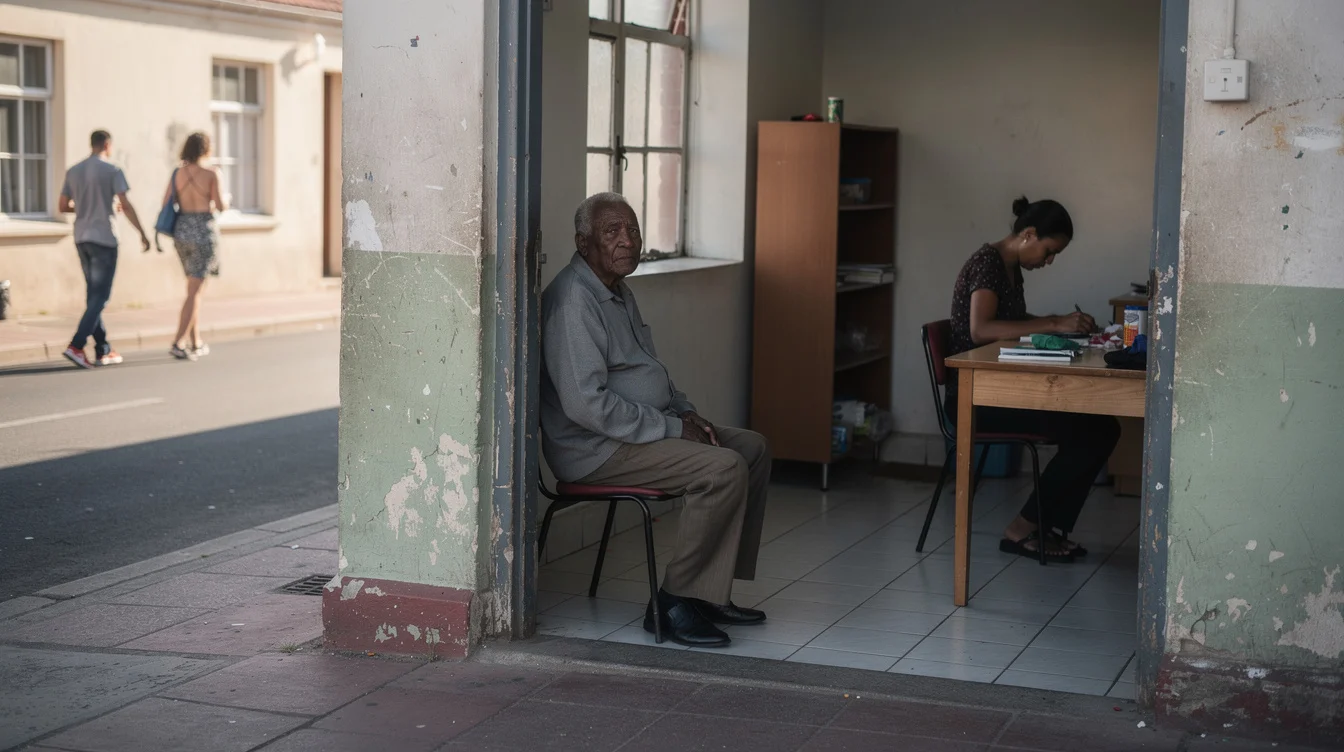
The opposing argument begins where architectural reverence becomes prescription. District Six before forced removal was not a frictionless community, and no neighbourhood’s history can be compressed into permanent sociability. To celebrate close-knit life without acknowledging hardship, disagreement or the need for retreat risks turning memory into a discipline imposed on those returning.
People return in the present, not in the year they or their families were displaced. Household sizes change. Some residents may need step-free access, space for care, or a bedroom that can accommodate mobility equipment. Others may need reliable connectivity, somewhere to work, or acoustic separation between generations. These are requirements to establish with residents, not assumptions about the particular occupants of the 108 homes.
Jane Jacobs’s account of lively pavements in The Death and Life of Great American Cities remains useful, but its popular shorthand—“eyes on the street”—can become an excuse to demand constant visibility. A sociable street is not successful if someone must surrender domestic privacy to inhabit it.
Alejandro Aravena and Elemental’s Quinta Monroy in Iquique offers a different reference: housing conceived to accommodate change through incremental expansion. Its lesson is not that returning claimants should finish inadequate homes themselves. It is that a dwelling’s future cannot be fully authored at handover. Restitution architecture must leave room for lives that exceed its founding narrative.
CONTRA: Rights Must Outrank the Image of Community
A beautiful streetscape can become a misleading measure of justice. Photographs capture recognisable urban character; they rarely establish whether a resident can afford ongoing costs, reach a clinic, obtain repairs or adapt a bathroom. If the historical image becomes the principal evidence of success, architecture risks substituting atmosphere for accountability.
John F. C. Turner’s writing on housing offers a sharp corrective: the value of housing depends on what it enables people to do, not simply on the object delivered. For District Six, that means evaluating the 108 homes through residents’ practical agency as well as their visual relationship to a disrupted neighbourhood.
The right to return must include the right to live differently. Someone should be able to decline communal activity, seek permission for a useful adaptation, or prefer a quiet threshold without being treated as a disappointing custodian of collective memory. Resident-led governance, clear maintenance responsibilities and workable procedures for alteration matter as much as the architect’s account of belonging.
This is the limit that the continuity argument must accept. Historical knowledge should shape options, not dictate identities. A serious post-occupancy assessment would ask residents about accessibility, privacy, comfort, running costs and control over shared space, rather than merely checking whether public life resembles archival photographs. Architecture honours an interrupted community most convincingly when it gives that community the authority to become something else.
FAQ
What is the District Six Restitution Housing Project?
It is a 108-home project in central Cape Town by Jakupa Architects and Urban Designers for returning land claimants. The published project description identifies District Six’s historic streetscapes and community life as sources of inspiration.
Why does the history of forced removal matter to its design?
District Six’s designation as a white area in 1966 initiated a process of displacement that destroyed homes and neighbourhood connections. Restitution therefore concerns urban belonging, access and social relationships, not simply replacement floor area.
Does honouring history require reconstructing old buildings?
No. Memory can inform routes, thresholds, public spaces, naming and opportunities for gathering. Literal reconstruction is only one possible approach, and visual resemblance alone cannot demonstrate that residents’ present needs have been met.
How should restitution housing be evaluated after completion?
Through resident-led assessment of accessibility, privacy, comfort, maintenance, costs and the ability to adapt. Historical continuity matters, but it should be assessed alongside everyday usability rather than treated as the overriding standard.
When the desire to recover a neighbourhood conflicts with a returning resident’s desire to live differently, who should have the final say?
Get the Mainifesto weekly — curated design debates, speculative ideas and the week's best articles every Saturday.
Editorial Perspectives
Questions and counterpoints developed by the Mainifesto editorial desk to extend the discussion.
Perspective 1
Returning residents should have the final say over how they live; restitution is not a commission to perform the old neighbourhood. Protect collective memory through streets, public spaces and shared institutions, then give households layouts they can adapt rather than assumptions about the lives they left behind.
Perspective 2
I don’t think individual preference should always get the last word: people are returning to a neighbourhood, not just receiving a house. Residents collectively should set the rules where changes affect shared spaces or street life, because that everyday experience is part of what the investment needs to restore.
Perspective 3
With these 108 homes, I’d ask what it will cost a household to change a room, maintain the building or accommodate another generation. Keep shared rules where alterations affect neighbours, but make the homes practical to adapt; otherwise residents end up paying to undo someone else’s idea of belonging.