
When Heritage Has to Deliver Clean Water
When Heritage Has to Deliver Clean Water
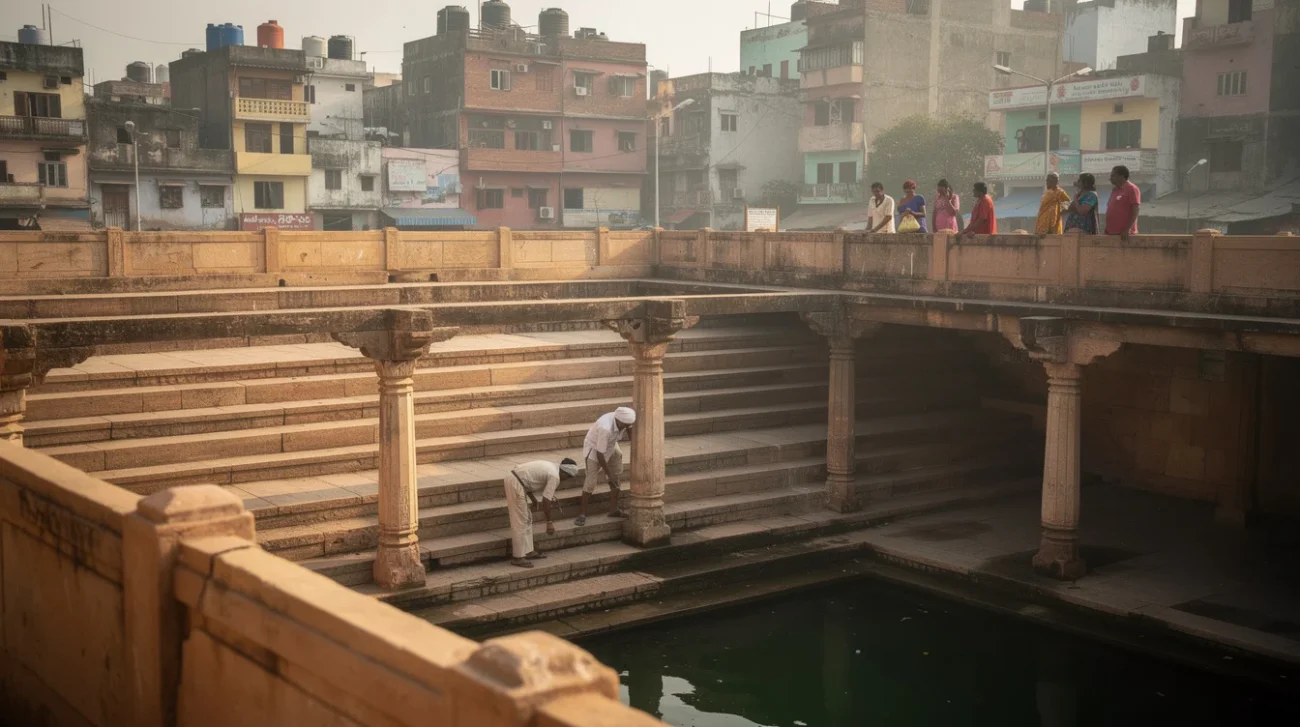
India’s stepwells are exceptionally good at making water scarcity look monumental. Descending stairs, shaded galleries and carved stone turn the search for water into architecture. Today, many are encountered as photographs, visitor attractions or protected remnants of a vanished hydraulic culture. Their visual survival can disguise the disappearance of their original purpose.
The question raised by ArchDaily’s examination of historic Indian water systems is therefore uncomfortable: can these structures work again? Not as metaphors for sustainability, but as assets with measurable responsibilities. Once residents depend on a restored stepwell, conservation enters the territory of water testing, operating budgets and public liability. A monument can survive an interruption. A water service must plan for one. The argument has two serious sides: restoration should recover public usefulness; restoration must not promise a reliability that historic fabric cannot safely deliver.
PRO: Restore the Water System, Not Just Its Image
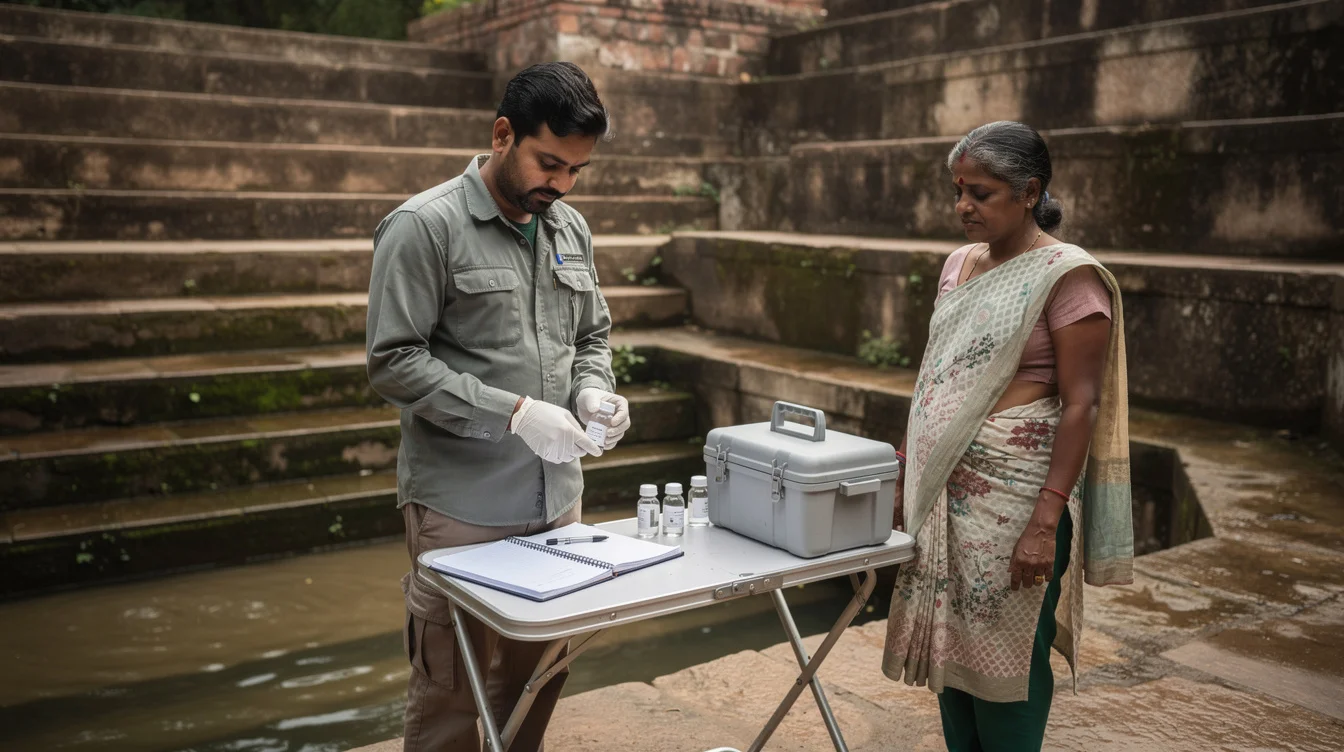
The strongest case for reactivation begins with a criticism of conventional heritage practice: preserving the container while abandoning its function can be its own form of destruction. A stepwell was not conceived as an isolated stone object. It belonged to a relationship between rainfall, groundwater, drainage, maintenance and collective access. Repairing carved surfaces while allowing sewage or rubbish into its catchment protects the image and neglects the architecture.
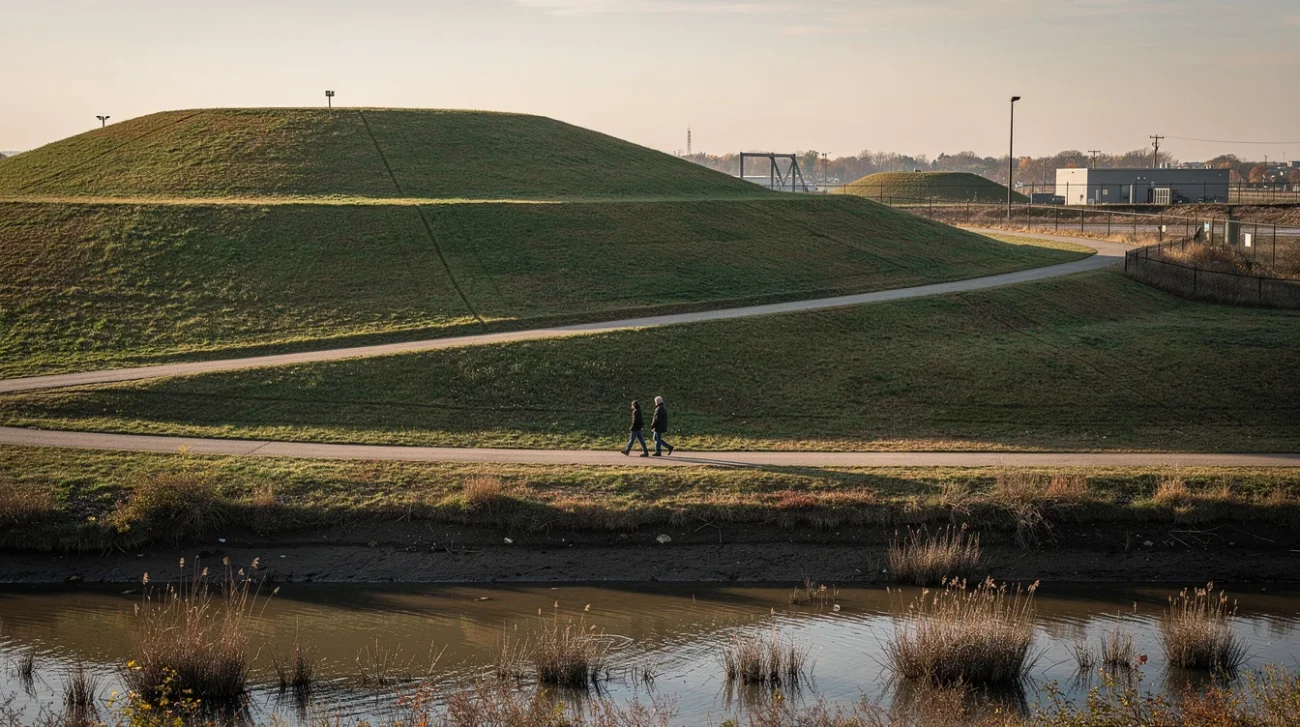
Bansilalpet Stepwell in Secunderabad offers a useful reference. Its restoration, associated with Kalpana Ramesh and The Rainwater Project, involved recovering a structure buried under accumulated waste. The achievement was not simply the return of an attractive subterranean space. It demonstrated that neglected water architecture can become a focus for environmental repair and renewed neighbourhood attention. That does not, by itself, establish the water as potable. As with projects that turn waste into landscape, visible recovery leaves a further question: who accepts responsibility for the site’s continuing environmental safety?
Toorji ka Jhalra in Jodhpur, restored through the wider JDH urban regeneration initiative, similarly shows how recovering a stepwell can reorganise the public life around it. The caution is that a revived destination and a reliable water source are different accomplishments. Nevertheless, these projects challenge the assumption that the only respectful future for old infrastructure is retirement. Use can give conservation a constituency beyond tourists and specialists.
PRO: Let Residents Define What Delivery Means
Reactivation becomes more persuasive when its ambitions become more precise. A restored stepwell need not supply drinking water to be useful. Depending on hydrogeology, contamination and local demand, it might support recharge, irrigation or another explicitly non-potable use. These options are not interchangeable: polluted runoff can contaminate groundwater, while abstraction can undermine the very reserve a recharge project claims to replenish.
The design brief should therefore begin with residents’ needs and a catchment assessment, not a rendering of clear water beneath freshly cleaned steps. If the priority is irrigation for nearby public space, an appropriately assessed non-potable system may be enough. If drinking water is the aim, treatment, verified quality, safe storage and dependable distribution become unavoidable. Clear-looking water proves almost nothing.
Adaptation need not mean turning carved masonry into a machine room. A plausible design could locate treatment equipment on adjacent land, use removable service routes and provide an accessible collection point at street level. Those are proposals, not features to assume at every restored site. Each requires permission and structural review.
The principle is nevertheless forceful: historic authenticity should not automatically outrank safe public access. Requiring elderly residents or people with disabilities to negotiate steep stairs would preserve a historic movement pattern at the expense of present-day equality. Living infrastructure must be allowed to change how it serves.
CONTRA: A Stepwell Is Not a Certified Water Supply
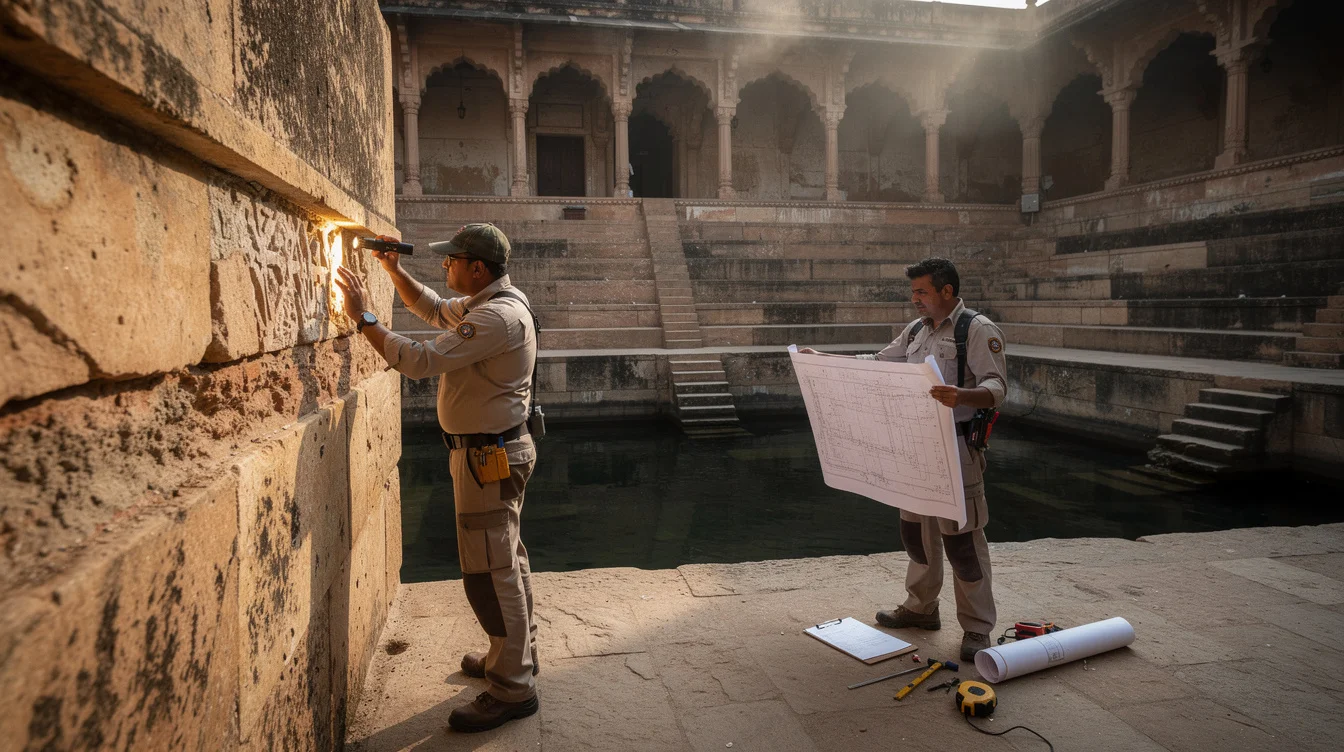
The strongest objection is not nostalgic. It is technical. Stepwells developed within environmental conditions that may no longer exist. Their surroundings can now include paved catchments, leaking sewers, deeper borewells and contaminated groundwater. Reopening a historic void does not restore the hydrological system that once sustained it. Nor can a dramatic monsoon photograph establish how much water will remain during the late dry season.
Rani ki Vav at Patan, inscribed on UNESCO’s World Heritage List in 2014, exposes the limits of treating all stepwells as available infrastructure. Its exceptional sculptural and architectural fabric creates obligations that cannot be answered with a generic call for reuse. Adalaj Stepwell near Ahmedabad likewise demands attention to carved surfaces, structural condition and visitor movement before anyone introduces new operational loads or equipment.
These monuments are not arguments against restoring less celebrated neighbourhood wells. They are arguments against a single restoration doctrine. The acceptable intervention at a heavily altered local structure may be unacceptable at an exceptionally intact monument.
Even reversible additions can have irreversible consequences if their operation changes moisture conditions, introduces unsuitable chemicals or destabilises vulnerable masonry. The water utility’s preferred solution may be the conservator’s foreseeable damage mechanism. That conflict requires evidence, not the comforting claim that traditional systems are inherently sustainable.
CONTRA: Maintenance Is the Architecture Nobody Photographs
A restored stepwell can fail without a stone falling. A pump stops. A sampling contract expires. Runoff carries sewage into the water after heavy rain. The facility remains beautiful while its promised service becomes unsafe or unavailable. Infrastructure failure is often administrative before it becomes visible.
That is why capital funding is an inadequate measure of success. Every proposed water use needs an identified operator, a maintenance budget, a testing programme appropriate to the use, and a rule for suspending service. Drinking-water provision also needs compliance with applicable requirements and a dependable alternative when the source fails. An inauguration ceremony cannot substitute for these arrangements. The same tension explains why a better public building can be harder to manage: greater public usefulness brings continuing operational obligations.
Nor should community stewardship become a polite phrase for transferring municipal obligations to unpaid residents. Historic water access was not automatically equitable; caste and gender have shaped who could collect water and under what conditions. A restoration committee that reproduces local power hierarchies can make a public asset selectively public.
The conservation objection therefore reaches beyond stone. If a municipality can deliver safer, more reliable water through another system, residents should not be asked to accept an experimental heritage supply because it photographs better. Sometimes the responsible restoration preserves the stepwell while placing working infrastructure elsewhere. Refusing a water-service role can be an informed design decision, not a failure of imagination.
Who Gets to Set the Terms?
Neither the heritage expert nor the infrastructure engineer should receive unilateral control. Residents should help define the service required; conservation authorities should establish the significance and vulnerability of the fabric; hydrogeologists and water-quality specialists should determine what the source can safely support. The utility or another accountable operator must accept responsibility for performance. Where statutory protections apply, participation cannot simply vote them away.
The result should be a published operating agreement, not a vague promise of revival. It should distinguish drinking water from other uses, identify permitted interventions, allocate recurring costs and state what happens when water levels or quality fall outside agreed limits. Access arrangements should include tenants, nearby informal communities and people who cannot use the stairs—not merely property owners around a beautified precinct.
The right to halt unsafe supply and the authority to refuse damaging alterations must both be explicit. Where those limits cannot be reconciled, separate the systems: conserve the historic structure and provide water through infrastructure designed for that obligation. Heritage deserves more than cosmetic survival. Residents deserve more than a conservation project presented as a utility.
FAQ
Can restored stepwells provide safe drinking water?
Potentially, but restoration alone does not make water potable. The source requires assessment, appropriate treatment, regular testing, safe distribution and an accountable operator. Suitability depends on local conditions, not the age or appearance of the structure.
Does a stepwell have to supply drinking water to be useful?
No. It may support groundwater recharge, irrigation or public space, depending on site conditions. Each role needs its own assessment; allowing contaminated runoff to infiltrate is not responsible recharge.
Who should decide whether historic fabric can be altered?
Relevant conservation authorities should assess proposed changes alongside structural and water specialists, with residents shaping the service brief. Decisions must respect applicable protections and clearly assign responsibility for safety, access and maintenance.
What should be secured before a restoration opens?
A defined use, evidence of suitability, an operating budget, maintenance responsibilities and monitoring arrangements. If residents will depend on the water, the project also needs clear shutdown procedures and an alternative supply.
If protecting a stepwell’s historic fabric conflicts with delivering reliable water, who should have the final say—and who should carry the cost of that decision?
Get the Mainifesto weekly — curated design debates, speculative ideas and the week's best articles every Saturday.
Editorial Perspectives
Questions and counterpoints developed by the Mainifesto editorial desk to extend the discussion.
Perspective 1
I’m for restoring stepwells as working infrastructure: their water function is part of the heritage, not an inconvenience to it. Residents should have the deciding voice on changes, within public-health safeguards, with conservation expertise helping find the least destructive solution. If preservation makes safe water more expensive, public heritage budgets—not households facing displacement—should cover that premium.
Perspective 2
I’m against making stepwell restoration the water-delivery strategy when a separate system would be safer and more reliable. A beautifully conserved well that residents can’t depend on is a failed service, whatever the visitor numbers. The water authority should have final say on safety and reliability, and anyone demanding a costlier heritage solution should bring funding rather than pass the bill to users.
Perspective 3
Before choosing between old stone and reliable water, price the alternatives over their full operating life—including treatment, testing and maintenance. Residents should choose among options that clear both safety and conservation requirements; any genuine conflict needs an accountable public decision, not a donor’s preference. The basic water service belongs in the utility budget, while extra conservation costs need a named funder before work starts.