
Can IKEA Sell Second-Hand Without Selling More?
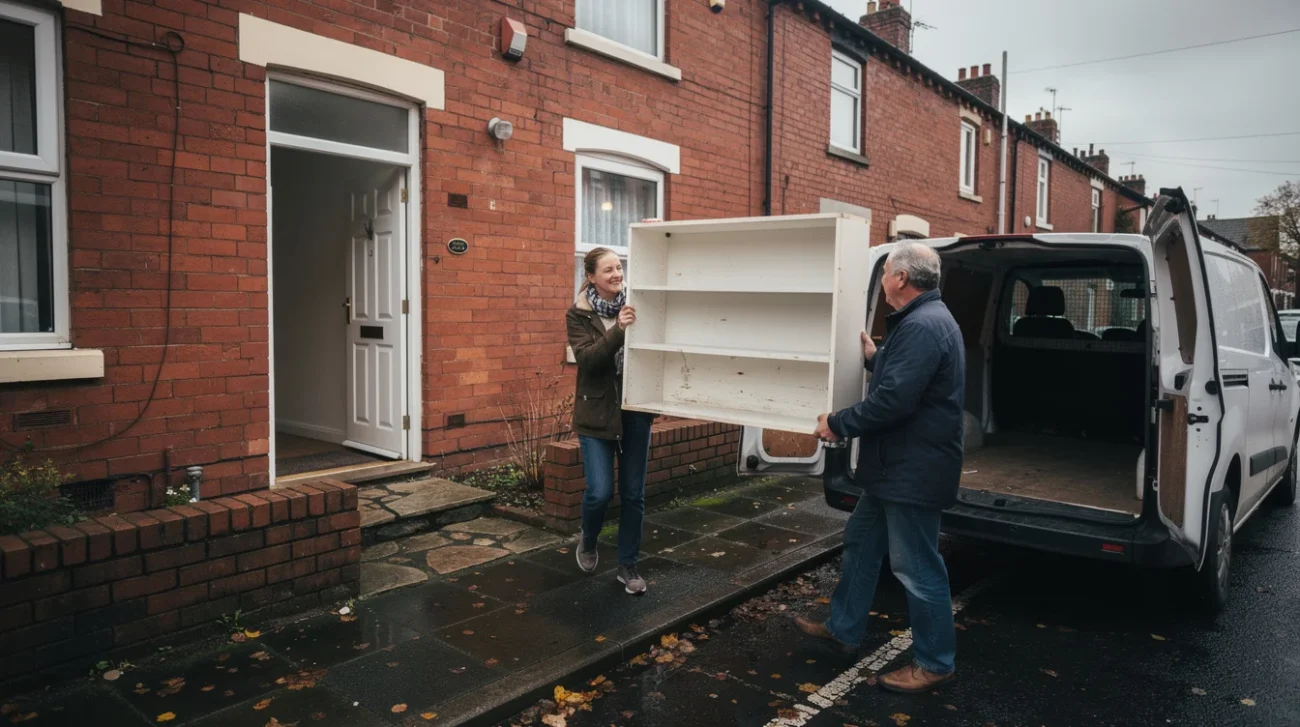
A bookcase changes hands. Its first owner gains space and money; its next owner avoids buying new. On paper, this is circularity at its most persuasive. But widen the frame: what fills the newly empty wall? If another freshly manufactured bookcase arrives, the transaction becomes harder to celebrate. Resale can extend an object’s useful life while shortening the time each person wants to keep it.
According to Dezeen’s 7 October 2026 report, IKEA has launched an online marketplace in the UK and Ireland where people can sell pre-owned IKEA furniture and products, excluding mattresses, appliances and food. The report describes prices around 60 per cent below comparable new items. That is meaningful access, not marginal discounting. It also brings the second-hand transaction inside the original manufacturer’s commercial ecosystem. The question is not whether reuse is good. It is whether IKEA can make reuse successful without making replacement irresistible.
PRO: Making Second-Hand the Obvious First Choice
The strongest argument for IKEA’s marketplace is brutally practical: buying used furniture is often unnecessarily difficult. Listings omit dimensions, product names disappear, and a photograph rarely tells you whether a shelving unit will fit an awkward alcove. A marketplace organised around one manufacturer has a structural advantage. Familiar product families make comparison easier, even when condition, age and discontinued variants still require checking.
Consider a renter choosing between a new BILLY bookcase and a used example nearby. Knowing the product family gives them a starting point for checking dimensions, shelf arrangements and suitability. It does not guarantee quality, but it reduces the detective work. At the reported price difference, second-hand becomes a serious furnishing strategy rather than a compromise reserved for people with spare weekends and access to a van.
This matters because celebrated models of furniture longevity often begin at prices many households cannot afford. Dieter Rams’s 606 Universal Shelving System for Vitsœ demonstrates the value of adaptable components and long-term continuity. IKEA operates in a different economic register. Making ordinary, mass-produced storage circulate can bring the principle of continued use to a much wider public.
The environmental opportunity is substitution: a used bookcase meeting a need that would otherwise have triggered a new purchase. If the marketplace makes that choice easier and cheaper, it performs useful work. Circular design cannot remain an expensive aesthetic of beautifully ageing hardwood.
PRO: A Second Owner Can Give an Object a Longer Life
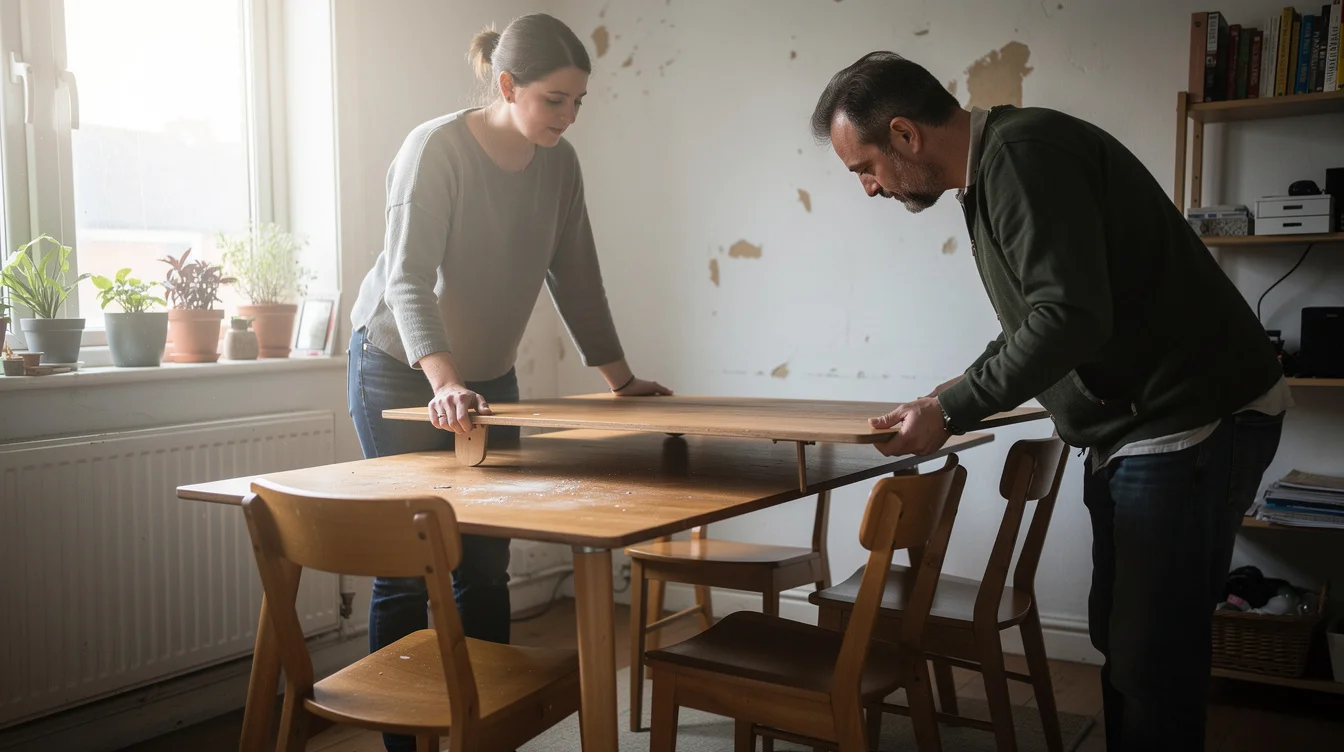
Long ownership and long product life are not the same thing. A dining table can remain useful for decades without belonging to one household for decades. People separate, combine homes, move for work or discover that a growing family no longer fits around four chairs. Treating every sale as moral failure confuses attachment with resource efficiency.
Imagine a Dublin household downsizing from a large dining table while a nearby shared house needs precisely that size. A successful exchange prevents usable furniture from becoming an obstruction awaiting disposal. It also lets the buyer furnish a home without ordering another table into existence. The crucial benefit is not the sale itself but the additional years of service that follow.
Design history offers a useful standard. The USM Haller modular furniture system, developed by Paul Schärer and Fritz Haller, allows configurations to change as requirements change. Its lesson is that furniture should outlast its first arrangement. A resale platform can support that ambition socially, matching an existing object with a new situation, even when the object itself is not highly adaptable.
Brand involvement could also make repair knowledge and component identification easier to connect to resale. Those are opportunities, not established features of this launch. But the potential is substantial: the original manufacturer knows more about its products than a generic classifieds platform does. Used furniture deserves infrastructure as competent as the machinery built to sell it new.
CONTRA: The Convenient Exit Can Become a Purchase Incentive
The same convenience has a less comfortable interpretation. Make furniture easy to sell and you make buying its replacement feel less consequential. The imagined future resale price becomes a discount applied mentally at checkout: this table is not really costing the full amount because someone else will eventually buy it.
That logic can encourage more frequent replacement. A customer who previously tolerated a scratched coffee table might now sell it after a room makeover. The object continues circulating, but its first owner orders a new one sooner. A second-hand sale has occurred; a reduction in manufacturing demand has not necessarily followed. The eventual result depends on what the buyer and seller would otherwise have done.
This is why the reported discount cannot stand in for environmental evidence. Lower prices may divert buyers from new furniture. They may also enable extra purchases: another side table, storage for possessions that did not need acquiring, a temporary arrangement replaced at the next move. Affordability has real social value, but it does not automatically reduce material consumption.
Victor Papanek’s critique in Design for the Real World remains relevant: design should answer actual needs rather than manufacture dissatisfaction. A resale marketplace can serve either agenda. The decisive distinction is whether the brand helps someone solve a furnishing problem or helps them rationalise another aesthetic reset. A convenient exit route is not inherently wasteful, but neither is it proof of restraint.
CONTRA: Circular Transactions Are Not the Same as Less Production
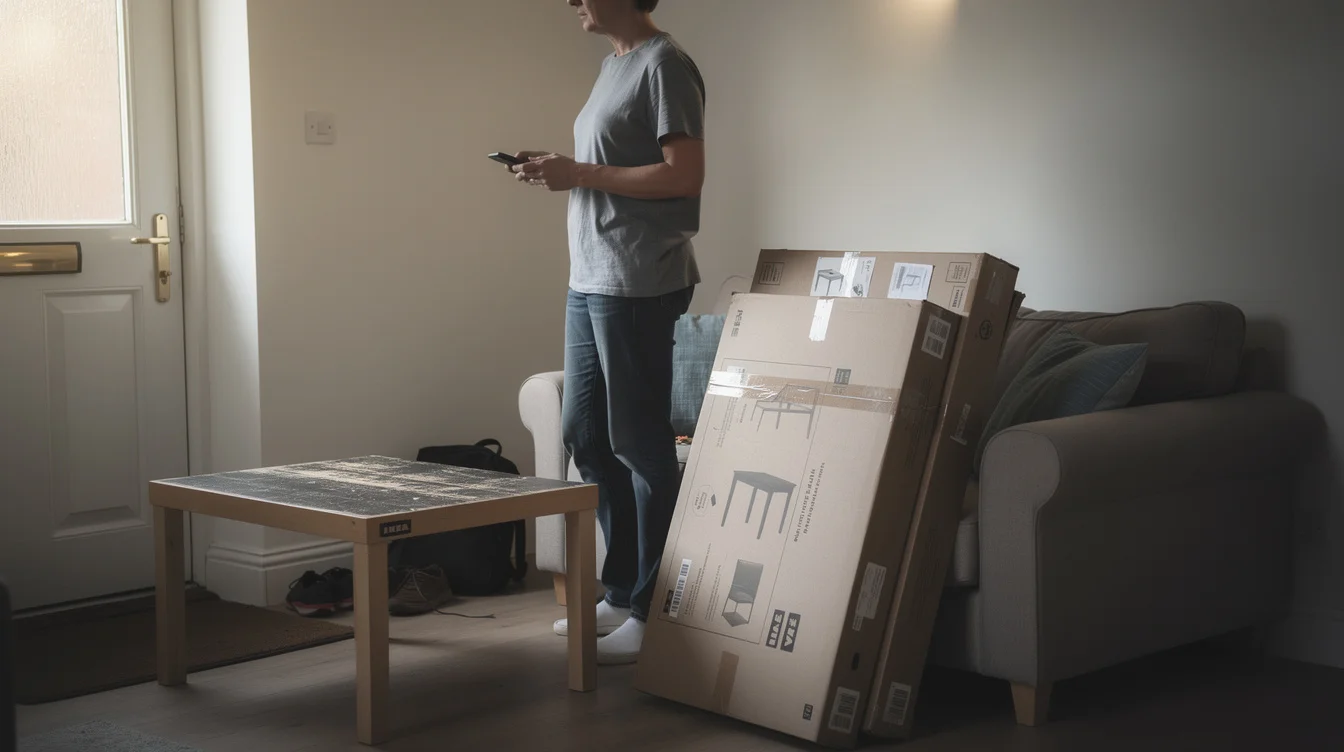
There is also a question of who owns the relationship. Independent second-hand markets let products escape their manufacturers’ commercial orbit. An IKEA-only marketplace draws attention back towards IKEA whenever an object changes hands. Even without assuming particular fees, incentives or payment arrangements, that concentration has commercial value: the brand remains relevant after the original checkout.
The danger is not that a business benefits from reuse. Sustainable systems need workable economics. The danger is judging success through measures that flatter the platform while avoiding the harder question. Listing numbers, completed sales and the estimated value of recirculated furniture describe activity. They do not establish how many new products were never manufactured or purchased.
A credible assessment would examine what buyers would otherwise have bought, whether sellers purchase replacements, how long transferred products remain useful, and what transport or repair those transfers require. A nearby collection of a durable table differs from a long van journey for a damaged low-value unit. An object advertised as reusable also needs to survive its next move; weakened joints and missing fixings do not disappear because a listing looks professional.
IKEA should therefore connect resale to a design obligation: products that withstand disassembly, repair and repeated ownership. It should also evaluate displacement of new purchases, not simply celebrate marketplace growth. The demanding version of circularity makes existing furniture sufficient. The convenient version makes continued consumption feel absolved. This launch creates an opening for the former, but its existence alone proves neither.
FAQ: What IKEA’s Resale Marketplace Actually Changes
What can people sell through IKEA’s UK and Ireland marketplace?
According to the launch report, people can list pre-owned IKEA furniture and products, with mattresses, appliances and food excluded. Sellers should check the marketplace’s current eligibility rules before listing; the reported exclusions are not a substitute for its full terms.
How much cheaper are second-hand IKEA products?
Dezeen reports prices around 60 per cent below comparable new items. That is a reported comparison, not a guaranteed discount on every listing. Condition, local availability and collection costs all affect whether an individual purchase represents good value.
Does buying used furniture always reduce environmental impact?
No. The strongest case is a usable second-hand item replacing a purchase that would otherwise have been new. Transport, repairs, remaining lifespan and additional purchases influence the outcome. A resale transaction alone cannot demonstrate a specific carbon saving.
What would show that brand-run resale is genuinely reducing consumption?
Evidence that buyers choose used instead of new, products stay useful longer, and sellers do not simply accelerate replacement. Reporting should distinguish growth in resale transactions from reductions in demand for newly manufactured furniture.
If IKEA’s second-hand marketplace thrives while its new-furniture sales keep growing, would you call that circular progress—or a more efficient way to keep us replacing things?
Get the Mainifesto weekly — curated design debates, speculative ideas and the week's best articles every Saturday.
Editorial Perspectives
Questions and counterpoints developed by the Mainifesto editorial desk to extend the discussion.
Perspective 1
I’d call it progress, even if new sales keep growing: a table moving into another home is better than one left out in the rain. In installations, I often find that a few worn edges give a room the ease that everything-new lacks. Making those pieces easier to find is worth doing.
Perspective 2
A slick resale platform isn’t circular progress if it just gives us permission to replace furniture faster. Show me longer use, repairable joints and fewer virgin materials going into production—not just more transactions. IKEA has the scale to make keeping furniture exciting; that’s the design challenge.
Perspective 3
For a hotel team, cheaper used furniture only works if dimensions, condition and delivery are dependable. Make those basics reliable and we could furnish without defaulting to new; leave us chasing individual sellers and the saving disappears in staff time. I’d judge the marketplace by how many new purchases it actually replaces.
Perspective 4
If I can fit out a rental with sound second-hand pieces for less, I’ll use it. But collection, assembly and missing fittings can swallow the discount quickly. Growing new sales wouldn’t settle the question for me; I’d want to know whether the furniture is lasting through more tenancies.