
A Street Can Thrive Even When Shopping Doesn’t
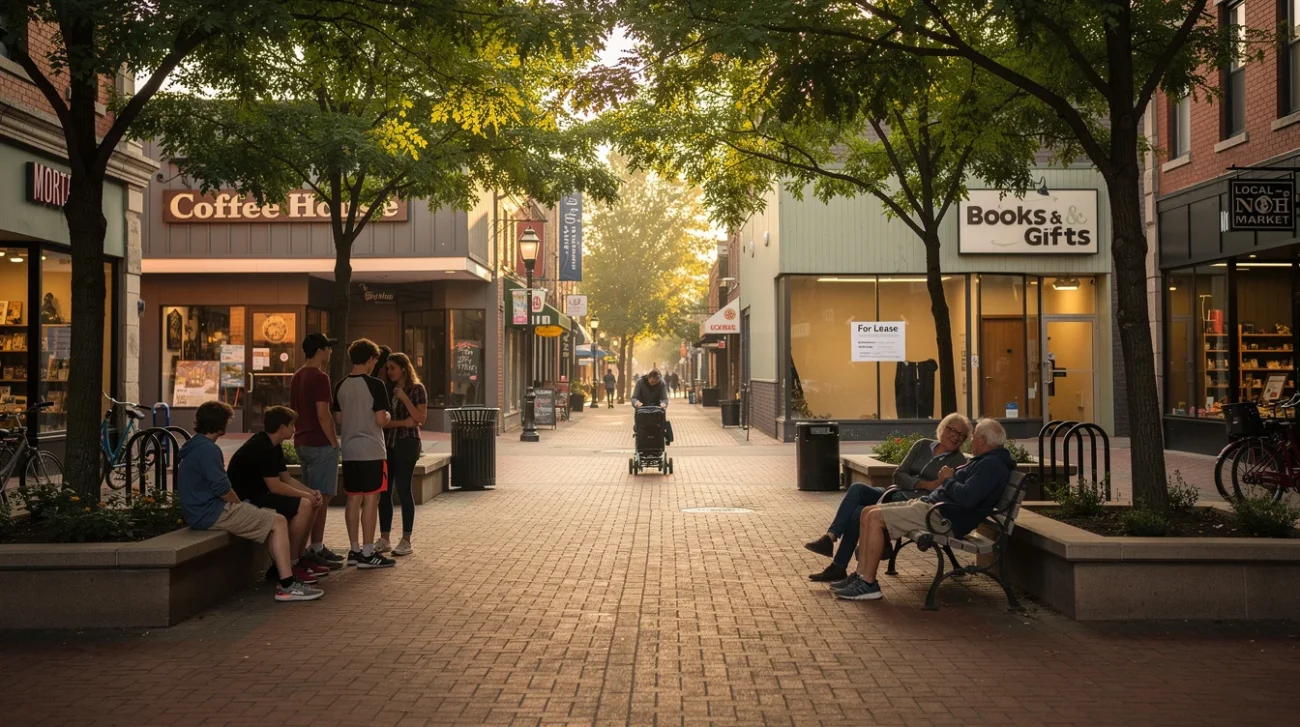
A street full of people can still look like a failure on a retail spreadsheet. Teenagers occupy benches without buying lunch. Older residents gather outside a pharmacy. Children turn a patch of paving into a playground. These activities produce little directly measurable revenue, yet they constitute something cities routinely claim to want: public life.
Monocle’s account of North America’s pedestrian-mall revival frames a revealing shift. Pedestrianisation, once deployed as emergency treatment for struggling shopping districts, is being reconsidered as infrastructure for community. But changing the justification requires changing the test. If sales remain the decisive measure, the supposedly revived pedestrian mall is still trapped inside its original brief. The argument deserves two equally serious hearings: one for streets liberated from commercial expectations, another against declaring victory while their supporting economies unravel.
PRO: Public Life Is an Outcome, Not a Sales Strategy
North America’s pedestrian malls emerged partly from an attempt to compete with suburban shopping centres. Kalamazoo, Michigan, opened its pioneering downtown pedestrian mall in 1959, following planning work by Victor Gruen. The ambition was commercial as well as civic: make downtown attractive to shoppers who increasingly had other destinations. Too often, subsequent schemes inherited a simplistic equation—remove cars, install paving, recover spending.
That equation misunderstood both retail decline and street life. Pedestrianisation could not, by itself, reverse metropolitan decentralisation, changing household geography or the advantages of suburban development. Nor should the presence of people who were not shopping have counted as evidence of malfunction. A public library is not judged by the purchases made after a visit. A street deserves an equally serious account of its non-commercial value.
Charlottesville’s Downtown Mall, designed by Lawrence Halprin and opened in 1976, suggests a richer spatial proposition. Its brick pedestrian landscape offers a setting for movement, meeting and lingering, rather than merely a corridor between shop doors. Its lesson is not that attractive paving guarantees prosperity. It is that a street can become a civic room, whose usefulness exceeds the transactions around its edges.
Social success can stand independently of sales. That does not mean ignoring empty premises. It means refusing to classify a well-used public place as worthless because landlords expected a more lucrative tenant mix.
PRO: Design for Tuesday, Not Just the Festival
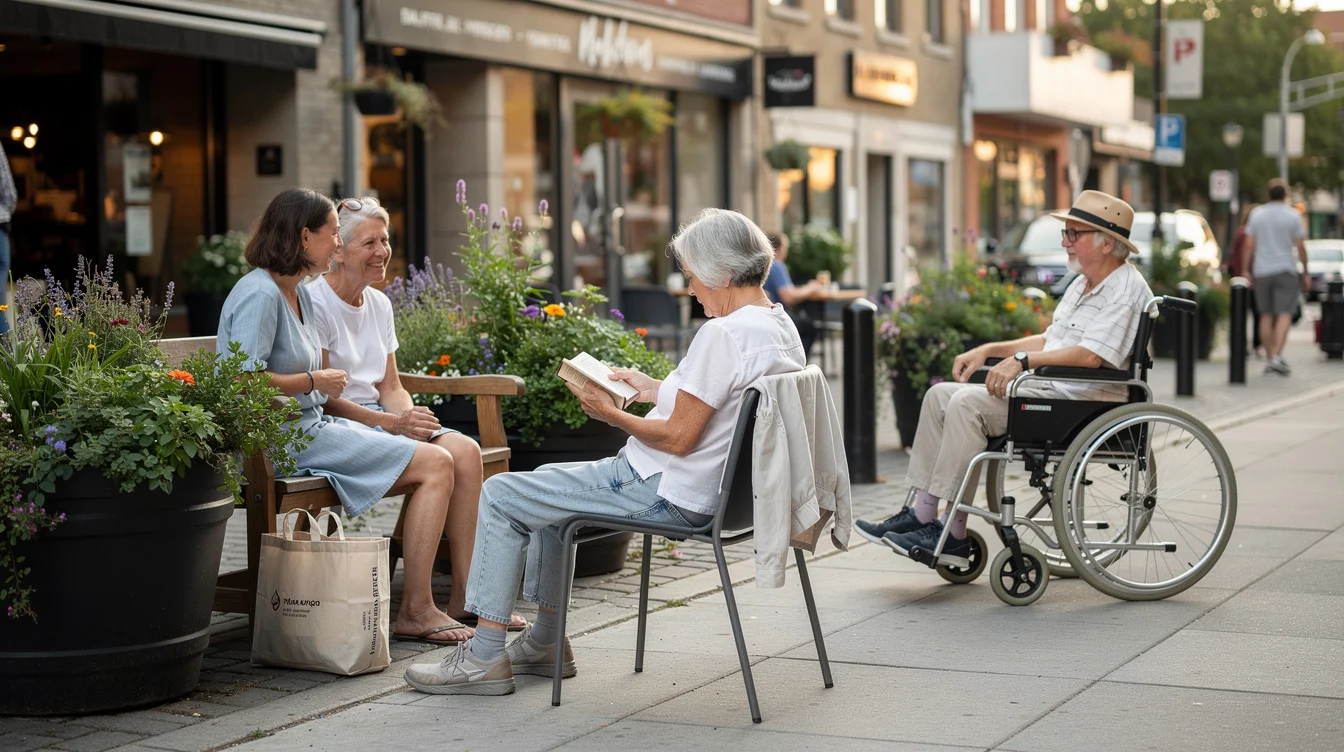
The strongest defence of pedestrian streets begins with ordinary needs. William H. Whyte’s observations of public space made sitting, food, sunlight and the presence of other people central to understanding urban sociability. Jan Gehl’s work similarly directs attention towards life at walking speed. Neither perspective supports treating a pedestrian mall as a decorative retail aisle.
Burlington’s Church Street Marketplace, opened in 1981, combines its pedestrian setting with businesses, outdoor dining and events. But replication should start with the conditions for occupation, not the appearance of commercial animation. Can someone sit without ordering? Is there shade during a heatwave? Can a wheelchair user reach a public toilet? Are there reasons to visit before restaurants open?
Everyday services can create those reasons. A library entrance, health clinic, grocery shop, childcare facility or repair business brings a different rhythm from a district dominated by discretionary purchases. These are not interchangeable tenants: their opening hours, affordability and accessibility determine whom the street actually serves. Housing above shops adds another constituency with a stake in its daily condition.
Programming should reinforce this everyday foundation. Montréal’s seasonal pedestrian streets show that cities can test arrangements rather than pretend every intervention must arrive as a finished monument. Reading sessions, neighbourhood meals and small performances can help establish habits of use. Yet the most convincing success is an uneventful weekday when people still choose to stay. Festivals should amplify public life, not conceal its absence.
CONTRA: A Street Cannot Live on Symbolic Success
The opposing case begins with an uncomfortable distinction: social value may be independent of sales, but maintaining a public place is not independent of resources. Trees need care. Toilets need cleaning. Furniture breaks. Snow requires removal. If pedestrianisation weakens a district’s businesses without establishing another durable funding model, the civic-room argument can become an elegant excuse for deferred maintenance.
Fresno’s Fulton Mall, designed by landscape architect Garrett Eckbo and opened in 1964, was returned to vehicle traffic in 2017. Its history should not be reduced to proof that pedestrian streets fail; downtown economic conditions were larger than its circulation plan. Nevertheless, the reversal demonstrates that design distinction and cultural attachment do not guarantee lasting political support. A place must survive the arguments made about it at budget meetings.
Santa Monica’s Third Street Promenade offers another caution. Its reputation as a pedestrian destination has not insulated it from retail vacancies and changing shopping patterns. Crowds alone do not establish that leases are sustainable, that independent businesses can remain, or that activity extends across the day. An event may deliver visitors while leaving the underlying operating model unresolved.
A bench is public infrastructure, but somebody still pays for it. Advocates should therefore specify maintenance budgets, stewardship responsibilities and realistic expectations for ground-floor space. Otherwise, “success beyond retail” risks becoming an unfalsifiable slogan: every disappointing commercial result reclassified as a civic achievement, regardless of what residents actually experience.
CONTRA: Community Can Become Another Branding Device
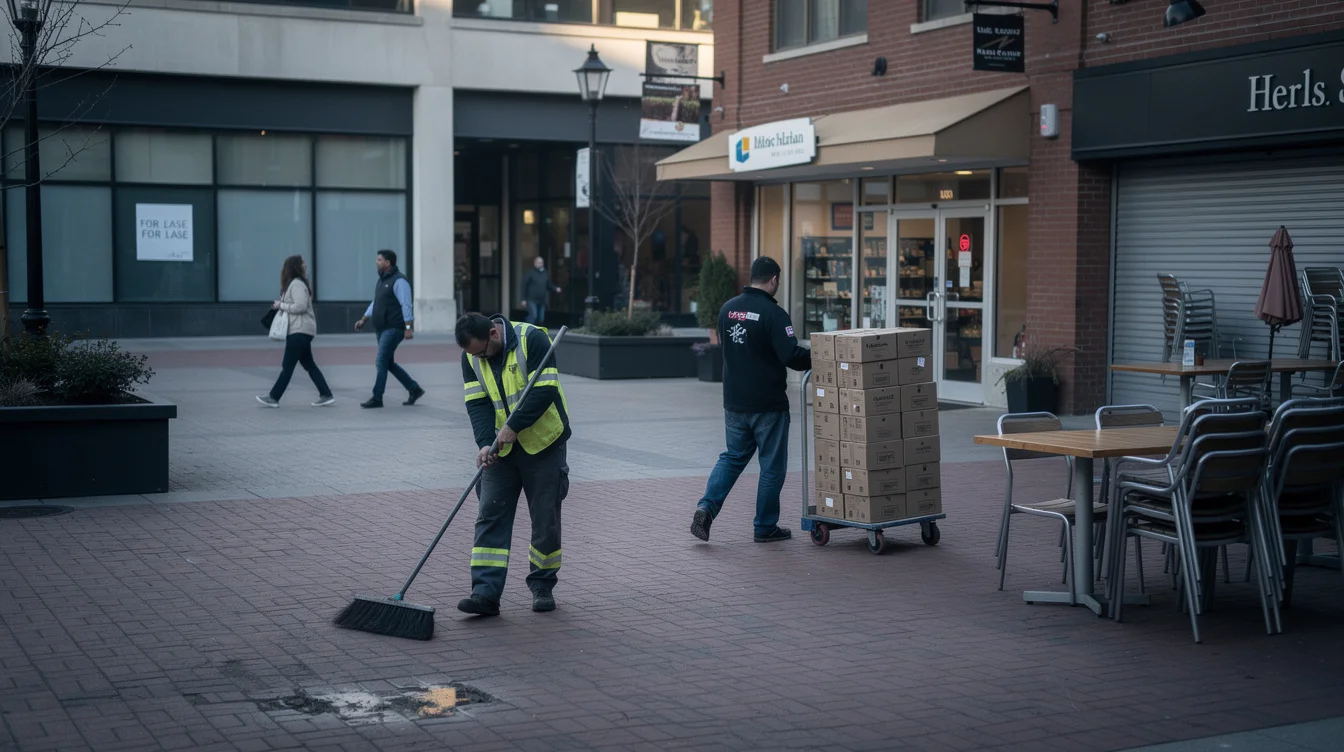
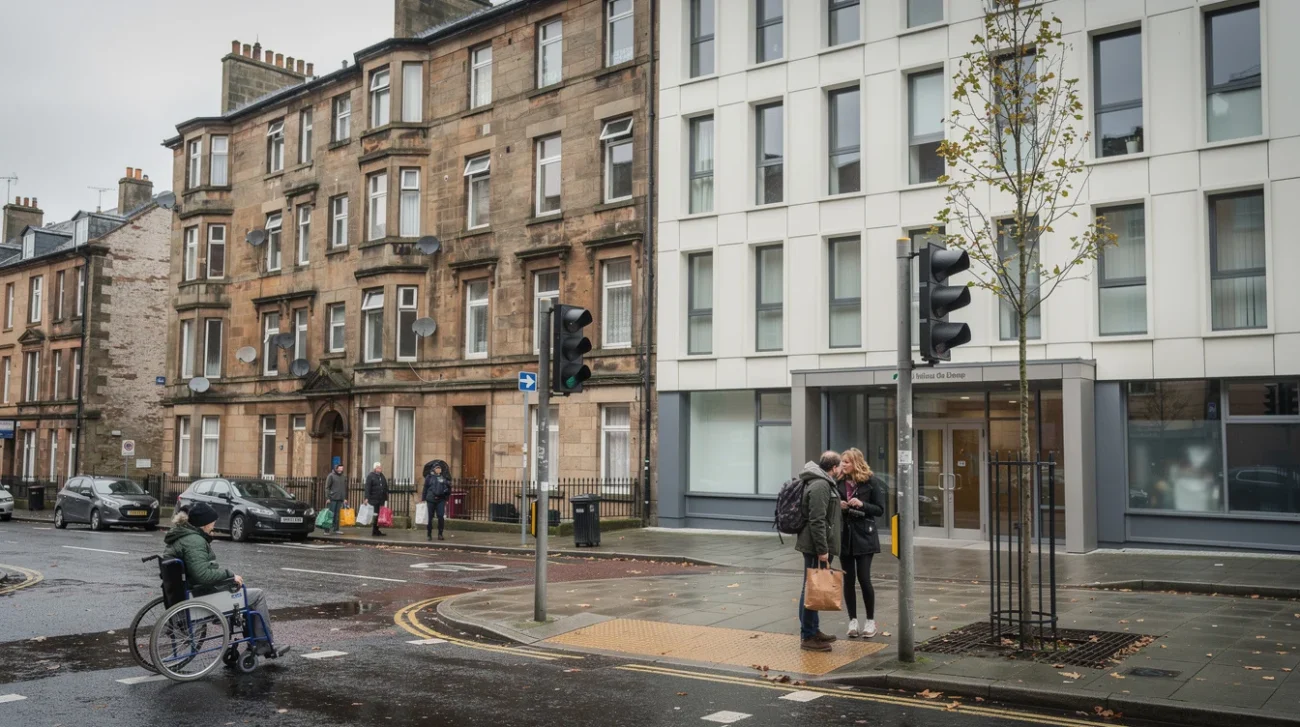
The neighbourhood argument also needs scrutiny because “community” is not a single client. A café owner may want more tables; a wheelchair user needs an unobstructed route. Families may welcome evening performances; nearby residents may need quiet. Delivery workers need practical access, while some visitors need accessible drop-off points close to their destination. Removing general traffic does not remove competing claims.
Ottawa’s Sparks Street illustrates the importance of the surrounding urban system. Its location beside a major concentration of federal offices makes working patterns consequential to street activity. No arrangement of planters can substitute fully for missing daily users. Pedestrian design must be coordinated with housing, transit, institutional uses and the actual geography of demand.
There is also a darker version of revival: a street becomes busier but less public. Commercial terraces consume the best sitting areas. Management favours ticketed attractions. Security discourages people whose presence does not fit the district’s desired image. The apparent triumph of sociability can then mask a shopping-centre logic imposed outdoors.
A credible evaluation needs two ledgers, neither allowed to erase the other. One should track vacancies, business turnover, maintenance costs and servicing problems. The other should record dwell time, freely available seating, accessibility, varied hours of use and whether different groups feel welcome. Resident interviews matter alongside pedestrian counts. The case against retail supremacy is strongest when it accepts accountability, not when it abandons measurement. A thriving street need not maximise spending, but it must demonstrate that its public benefits are real, inclusive and supportable.
FAQ: What Should a Successful Pedestrian Street Deliver?
Can a pedestrian mall succeed if its shops are struggling?
Yes, if it provides substantial, sustained public benefits such as accessible gathering space and useful everyday connections. However, persistent vacancies still warrant action. Social value should justify public investment, not become an excuse to ignore deteriorating buildings or an unsustainable maintenance model.
What design features encourage people to stay without spending?
Free seating, shade, shelter, drinking water, accessible toilets and clear walking routes establish a practical foundation. Whyte’s public-space research remains useful here: opportunities to sit and observe other people often matter more than expensive signature objects.
Does pedestrianisation mean banning every vehicle?
No. Schemes can accommodate emergency access, timed deliveries and carefully located accessible drop-off points. Denver’s downtown transit mall also demonstrates an important distinction: prioritising pedestrians and public transport is not the same as creating a street without any vehicles.
How much programming does a pedestrian street need?
Enough to support local routines, not so much that every visit depends on an organised attraction. Start with nearby residents and institutions, then test modest recurring activities. A full events calendar cannot compensate for missing shade, poor access or nowhere to sit freely.
If a street brings neighbours together but never restores its former retail sales, would your city call it a success—and fund it accordingly?
Get the Mainifesto weekly — curated design debates, speculative ideas and the week's best articles every Saturday.
Editorial Perspectives
Questions and counterpoints developed by the Mainifesto editorial desk to extend the discussion.
Perspective 1
Yes—streets have always held more than commerce, and a place where neighbours linger deserves public funding even if sales never recover. But calling it a success means keeping those neighbours there: a beautifully restored pedestrian street that displaces its residents has preserved the scenery, not the city.
Perspective 2
I wouldn’t call it a success on sociability alone: persistent vacancies can mean lost livelihoods and a street that goes dark after six. Before committing permanent funding, I’d want evidence on who uses it, when they come, and whether the pedestrian layout helps or hinders viable everyday businesses.
Perspective 3
Retail sales are a poor standalone measure when rents, credit and supply chains can sink a shop regardless of how the street is designed. Count public use, but cost the whole system—shade, cleaning, accessible routes, deliveries—and name the agency responsible for keeping it running. Otherwise the city is celebrating a space it hasn’t agreed to maintain.