
Is a Cool City Still a Public City?
Is a Cool City Still a Public City?
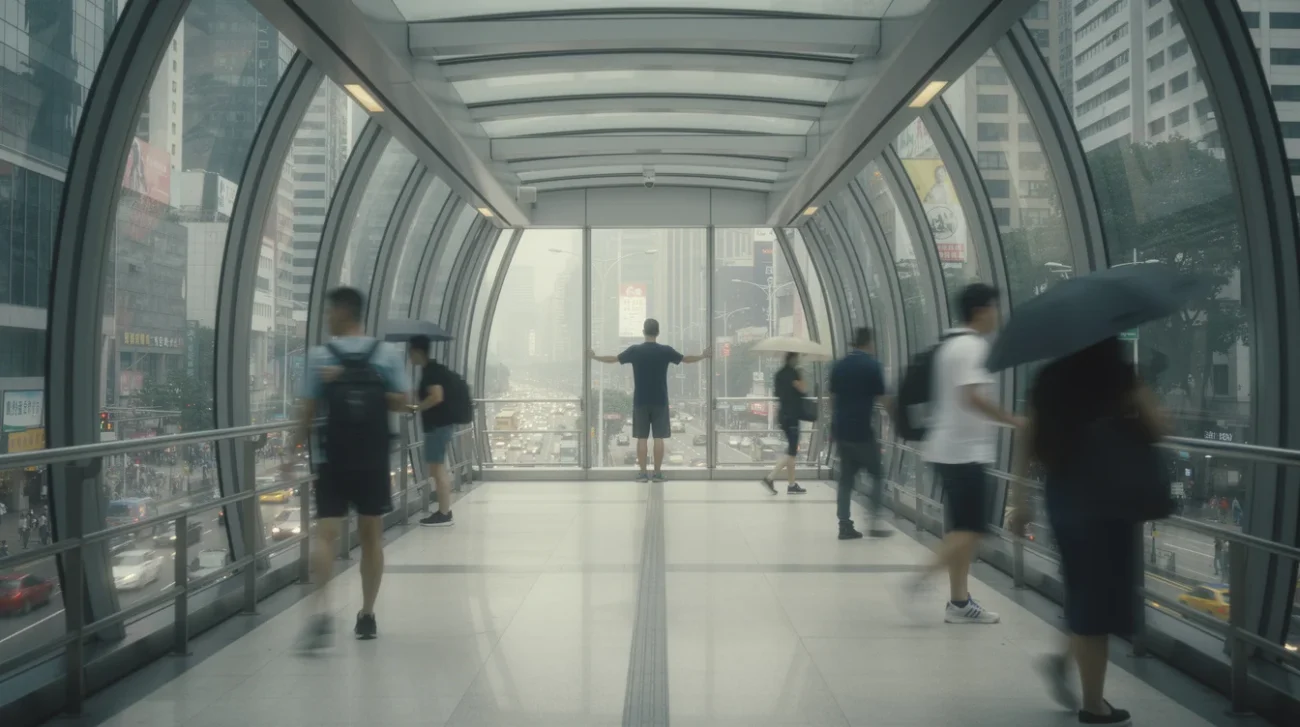
In Hong Kong, a journey can begin in an apartment tower, descend into a podium mall, enter the Mass Transit Railway, and emerge inside another commercial complex. Enclosed bridges and underground passages carry the pedestrian onward. Outside, humidity clings to clothing and rain lashes the pavement. Inside, the atmosphere barely changes.
As the ArchDaily account of air conditioning and the Asian city describes, this is more than a collection of comfortable buildings. It is an alternative urban geography: one in which weather becomes something encountered through glass. The architectural achievement is undeniable. So is the political question. If the most habitable route belongs to someone else, what exactly does the pedestrian possess: a public right or a revocable invitation?
PRO: Thermal Comfort Is Civic Infrastructure
The first argument for the conditioned city is brutally simple: a street that people cannot safely tolerate is not meaningfully accessible. Extreme heat does not distribute its burdens equally. Older people, young children, pregnant people, and people with certain health conditions can face greater risks. For someone making an essential journey, the distinction between a shaded pavement and a reliably cooled passage is not an aesthetic preference.
Hong Kong’s integrated rail-and-property development offers a powerful, if imperfect, response. At Hong Kong Station, the IFC development combines transport and commercial uses within a connected pedestrian environment. Pacific Place similarly links a major shopping complex with Admiralty station. These arrangements turn cooling into part of a journey rather than a reward available only at its destination.
Singapore’s CityLink Mall makes the proposition explicit: an underground shopping passage is also a pedestrian connector between City Hall MRT and the Marina Centre area. Commerce helps support a route that offers shelter from tropical rain and heat.
To dismiss these networks as artificial is to romanticise exposure. Cities already manufacture habitable conditions through drainage, lighting, sanitation, and shelter. Cooling deserves to be judged as infrastructure, not condemned as a failure of urban authenticity.
PRO: The Interior Can Become a Shared Urban Room
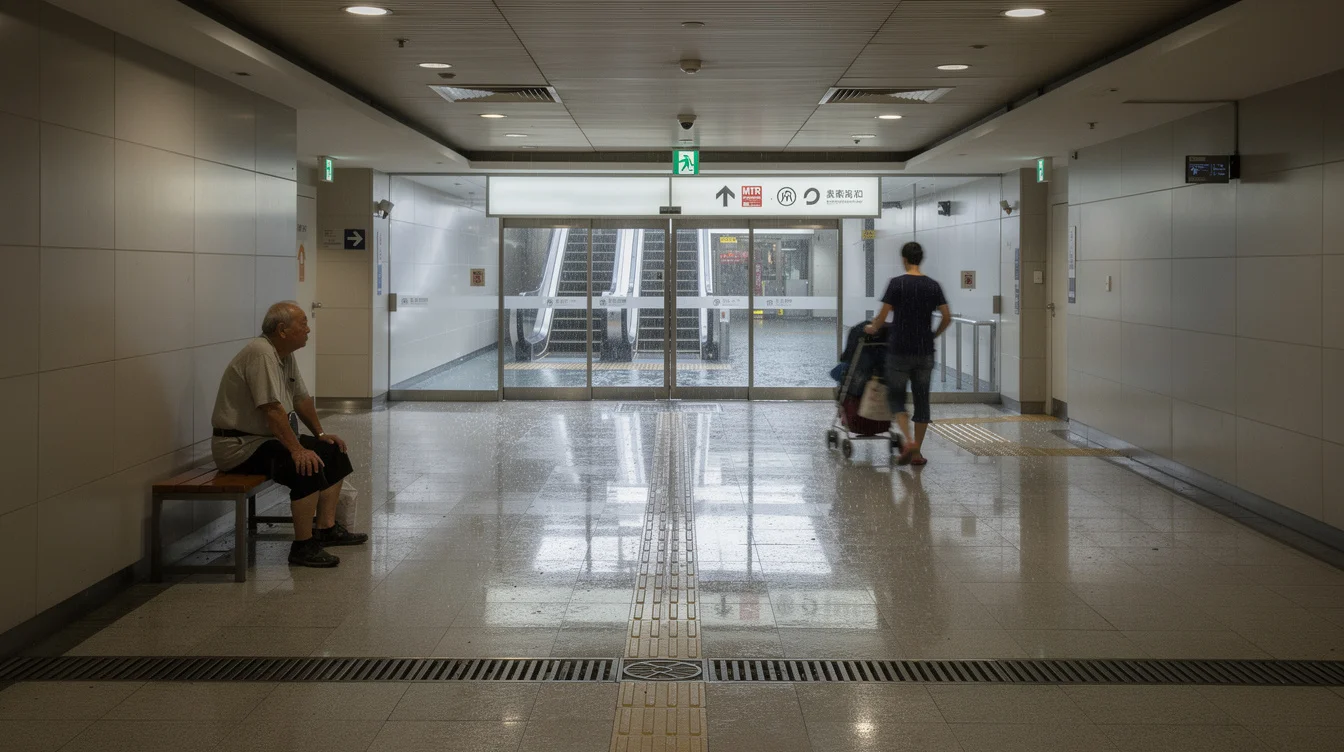
Commercial interiors are not automatically empty of public life. Friends arrange meetings near station entrances. Retirees pause on whatever seating is available. Teenagers use food courts as informal social territory. These activities do not become culturally worthless because they take place beneath a landlord’s ceiling. The relevant question is whether design and governance allow them to happen without requiring a purchase.
Hong Kong’s elevated pedestrian network around Central demonstrates the spatial potential of a city organised across several levels. Bridges connect buildings and separate some pedestrian journeys from vehicle traffic. Not all these routes are enclosed or air-conditioned; that distinction matters. Their larger lesson is that civic movement need not be confined to the ground plane.
Architecture can also resist the false choice between a sealed mall and an exposed street. WOHA’s Kampung Admiralty in Singapore combines housing, healthcare, shops, and a sheltered community plaza. Its public ground level illustrates a different ambition: protection from tropical conditions without turning every gathering place into a mechanically chilled retail corridor.
The strongest defence of the cool city therefore demands more than efficient air conditioning. It calls for connected routes, generous seating, accessible lifts, and places to linger. Commercial investment can help deliver public comfort—provided public access is secured rather than merely advertised.
CONTRA: A Comfortable Route Is Not a Public Right
The opposing case begins where architectural photography usually stops: at the rules. A passage may look like a street while operating as managed property. Depending on its legal status and local agreements, its operator may regulate photography, solicitation, demonstrations, opening hours, or conduct. Ownership alone does not settle these questions, but polished flooring and unrestricted entry at midday certainly do not settle them either.
Consider the pedestrian arriving after a mall closes. If a connected route shuts with the shops, the alternative may involve a longer outdoor walk, additional crossings, or an inaccessible level change. The network’s apparent continuity disappears precisely when it is needed. This is not an accusation that every Hong Kong footbridge closes at night; it is the governance test every such connection should face.
Hong Kong’s framework for Public Open Space in Private Developments acknowledges the underlying problem: privately delivered space can carry public obligations. Yet users need to know what those obligations actually are. A bench beneath a corporate atrium is not self-evidently a place where one may remain without shopping.
The danger is conditional citizenship. A commuter moving efficiently toward a train is welcome. A person sleeping, distributing leaflets, or gathering with others may encounter a different definition of acceptable presence.
CONTRA: Cooling Can Hollow Out the Street
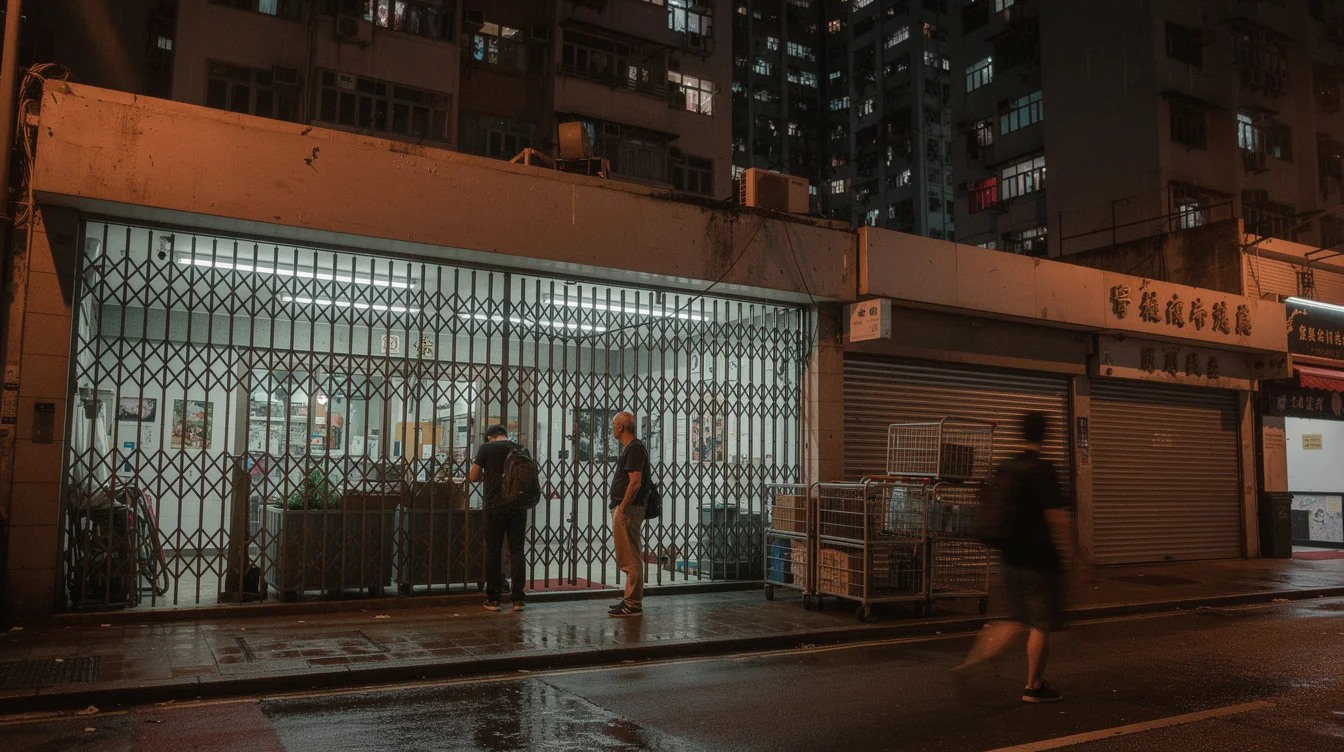
The second objection operates at the scale of the district. When the easiest journeys run through retail interiors, pedestrian attention becomes commercially channelled. Routes past shopfronts are valuable to landlords; direct routes to a small street business, a public square, or a waterfront may be less so. What appears to be seamless connectivity can also be a carefully designed capture of footfall.
There is an environmental contradiction too. Air conditioning consumes electricity and rejects heat outdoors. Its emissions depend on energy sources, equipment, refrigerants, and operating practices; no serious critique should pretend every system performs identically. Nevertheless, expanding conditioned floor area while neglecting outdoor shade risks creating a city that adapts to heat by deepening its dependence on cooling.
Jane Jacobs’s defence of active sidewalks remains relevant here, not as nostalgia for a temperate street but as an argument for overlapping uses and everyday observation. Jan Gehl’s attention to sitting, stopping, and human-scale edges poses an equally awkward question: does the network support staying, or only circulation?
The answer is not to switch off the refuge. It is to prevent refuge becoming the only viable city. Require clearly defined access rights, protect essential connections beyond retail hours, and invest in shaded streets, drinking water, public toilets, and non-commercial cooling spaces. Comfort should expand urban choice, not enclose it.
FAQ: Who Gets to Be Comfortable?
What makes an air-conditioned space genuinely public?
Cooling and free entry are insufficient. Meaningful publicness depends on reliable access, disability inclusion, permission to remain without buying, transparent rules, and accountable management. The legal rights attached to a route matter more than its resemblance to a street.
Are privately owned pedestrian routes always less accessible?
No. They can provide excellent lifts, weather protection, and transport connections. Problems arise when access depends on discretionary decisions, retail schedules, or poorly communicated restrictions. Public access obligations should specify operating hours, maintenance responsibilities, and what happens when a connection closes.
Can shaded outdoor spaces replace air conditioning?
Sometimes, but not universally. Trees, covered walkways, reduced solar exposure, and air movement can improve comfort. During dangerous heat, especially in humid conditions, people may still need cooled refuges. A resilient city provides both outdoor protection and accessible indoor relief.
What should architects and planners prioritise?
Design the whole journey, not just the attractive interior. Map closures, accessible alternatives, seating, and connections to civic destinations. Pair passive cooling with efficient mechanical systems, and negotiate access protections before a privately managed passage becomes an indispensable public route.
If a city’s safest summer route runs through private property, should access remain an invitation—or become an enforceable public right?
Get the Mainifesto weekly — curated design debates, speculative ideas and the week's best articles every Saturday.
Editorial Perspectives
Questions and counterpoints developed by the Mainifesto editorial desk to extend the discussion.
Perspective 1
If a development becomes the safest summer route, access should be a public right, not something security can withdraw. Put the hours, maintenance costs and cooling obligations into a funded agreement from the outset; developers can price a clear obligation.
Perspective 2
I’m against turning mall access into a public right as the answer to urban heat—it entrenches the mall as our civic centre. In Mexico City, I’d rather see investment in shaded streets, planted courtyards and existing public buildings, with protections for the residents and vendors those improvements can otherwise displace.
Perspective 3
We optimise routes for distance, but summer routing should account for heat exposure, walking speed and whether someone needs to rest. If the safest path disappears when a shop closes or a guard turns you away, can we honestly call the network connected?
Perspective 4
A right to enter means little if the cooling fails or security still decides who looks like a customer. From Beirut to Dubai, electricity reliability and the capacity to enforce rules differ sharply; any access mandate needs operating funds, backup plans and a ban on purchase requirements.