
Can a Drone Show Become Public Architecture?
When the skyline becomes a stage
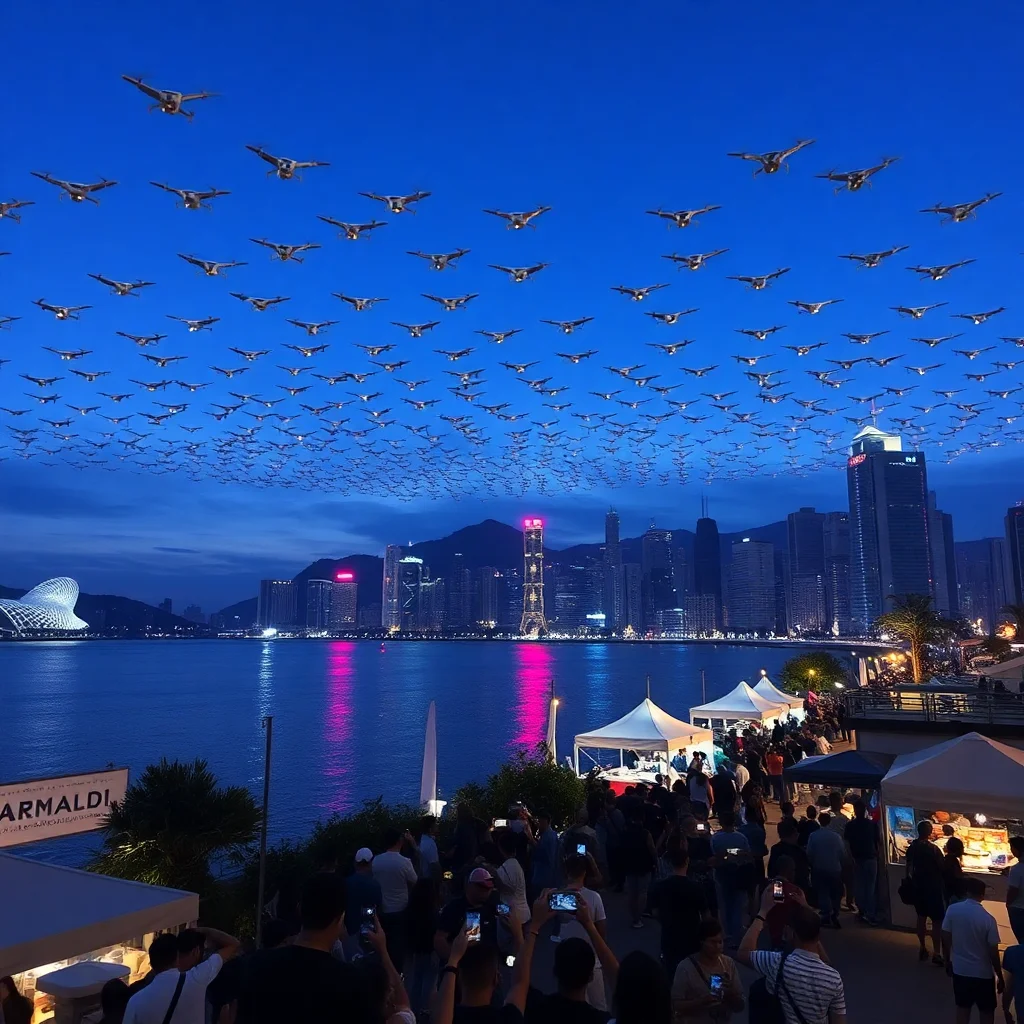
Taipei’s recent aerial exhibition, staged around the momentum of COMPUTEX and InnoVEX, does not simply add entertainment to the city. It weaponizes the skyline as a temporary civic surface, a live screen written with hundreds of drones instead of concrete, steel, or stone. That shift matters. Architecture has long claimed authority by occupying ground, organizing movement, and defining permanence. But a drone show does something more radical and more slippery: it occupies air, the least permanent medium of all, and converts it into public image.
The spectacle is seductive because it resembles architecture without carrying any of its obligations. It frames a city, marks a date, and gathers a crowd, yet leaves almost no material residue. In that sense, the drone show behaves like a manifesto for the post-building city. It proposes that civic identity can be projected rather than constructed. That proposition should excite designers and alarm planners in equal measure.
There is precedent in the way cities have used temporary media to rewrite themselves. Neri Oxman and the mediated environments of digitally choreographed space, United Visual Artists’ immersive light works, and even the urban projection events that turn facades into animated civic billboards all point toward an expanded field where the city is no longer just built form but also image management. Taipei’s drone show pushes that tendency into the open air, where the air itself becomes contested public territory. It also echoes debates about immersion without the gimmick in exhibition design, where atmosphere can be powerful without becoming mere spectacle.
The question is not whether drone shows are beautiful. They are. The question is whether beauty alone can stand in for public space.
Public wonder or programmed attention?
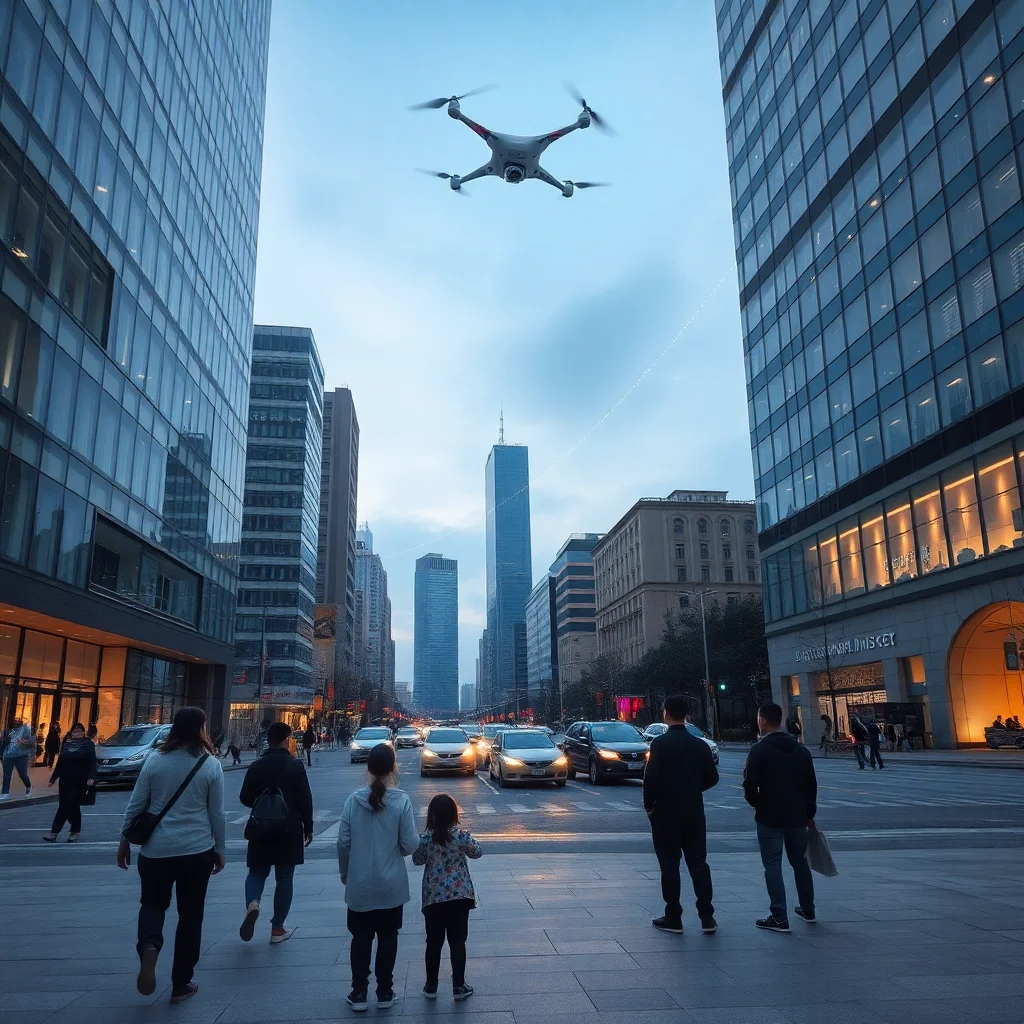
Every great civic spectacle has always lived between two impulses: collective wonder and directed messaging. Renaissance pageants, fireworks over imperial capitals, Olympic opening ceremonies, and contemporary projection festivals all promise shared astonishment while quietly advancing a political or commercial script. Taipei’s drone exhibition belongs to this lineage, but it intensifies the dilemma because the medium is now so close to urban design. It is not a poster on a wall; it is an event in the atmosphere.
That makes the show feel public in one sense and private in another. The crowd can stand beneath it, look up, and experience a shared horizon. Yet the content, timing, and sponsorship are likely to be tied to exhibition branding, tourism, technology marketing, or municipal image-making. In other words, the sky becomes a premium interface. Who gets to program it? Who gets refused? And when does the language of civic celebration become indistinguishable from sponsored attention capture?
Design history is full of moments when temporary media attempted to substitute for permanent urban generosity. Cedric Price’s radical thinking around flexibility, constant adaptation, and infrastructural lightness never argued for emptiness for its own sake; it argued against the tyranny of fixed form. A drone show can borrow that freedom, but without Price’s democratic rigor it risks becoming a floating ad package. The city may gain a memorable evening and lose the harder task of building everyday public life. Similar questions surface in how Olympic identity keeps changing, where spectacle must continually balance civic meaning with branding pressure.
Public architecture should distribute access. A drone show can distribute awe, but awe is not access.
Airspace is the new contested ground
The most important architectural fact here is invisible: the air above a city is not neutral. It is regulated, militarized, commercialized, and increasingly monetized. Drones, delivery systems, surveillance tools, and aerial displays all compete for the same altitude of perception. To ask whether a drone show can become public architecture is therefore to ask whether the commons can extend upward, or whether the sky is destined to become just another leased surface.
Taipei gives this question unusual intensity because the city already understands verticality as civic identity. Dense blocks, elevated infrastructure, and fast technological culture make the skyline feel both symbolic and pragmatic. A drone show does not decorate that condition; it exposes it. It reveals how much of urban life now depends on managing systems that are above eye level and outside everyday perception. If architecture traditionally anchored the ground, aerial performance now exploits the gap between buildings as its own urban canvas.
There is a seductive efficiency in that shift. No site clearing, no foundations, no steel procurement, no long permitting cycles for a permanent structure. But efficiency is not neutrality. An air-based spectacle can be deployed instantly, but it can also be withdrawn instantly. That means its public memory may be weaker than a plaza, a bridge, or a pavilion. Compare it with the legacy of Expo pavilions that linger in collective imagination precisely because they once had form, surface, and inhabitable consequence. A drone show leaves a ghost, not a room. That tension is also visible in Venice Biennale pavilions as political stages, where exhibition architecture carries meaning far beyond display.
Airspace may be the last urban frontier, but if it is programmed only for spectacle, it becomes a frontier without citizenship.
What remains after the lights go dark
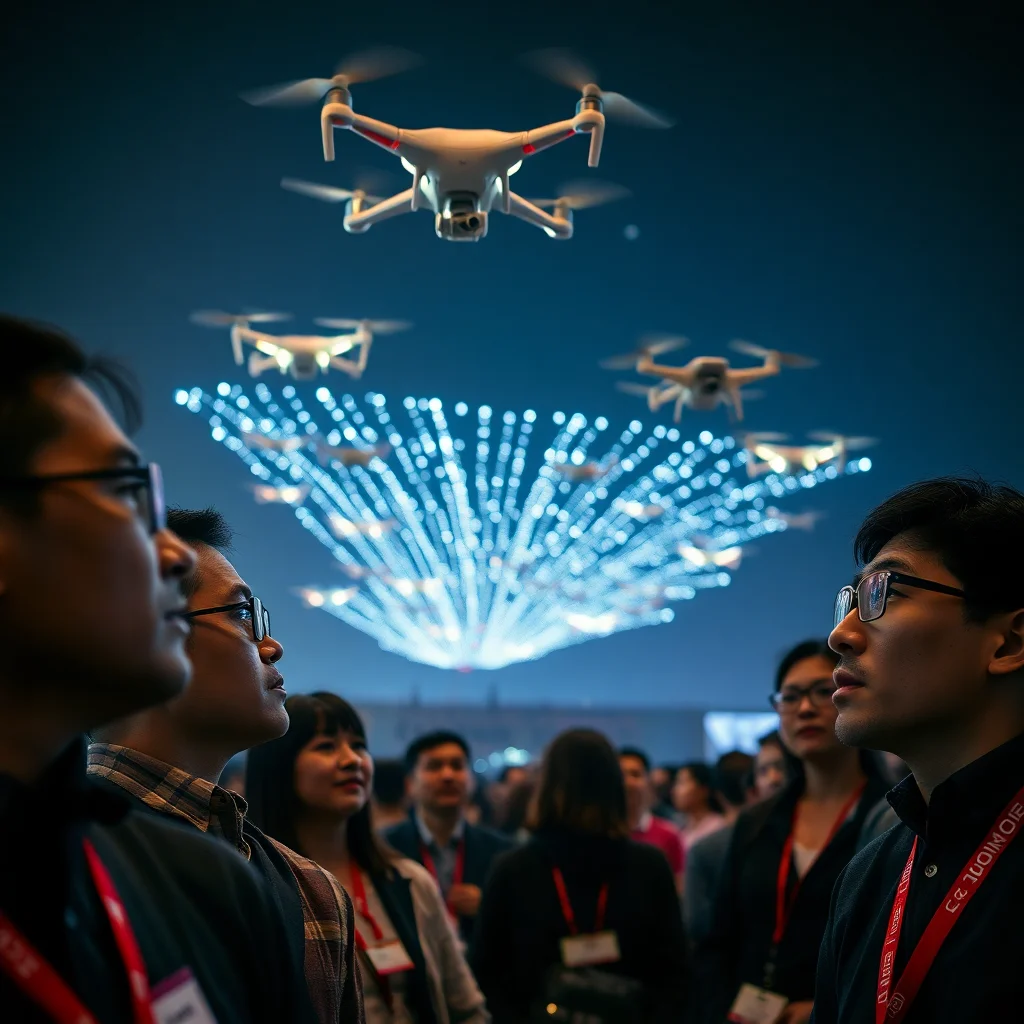
The defenders of drone shows will argue that architecture is not only about objects; it is about effects. A temporary aerial performance can animate a city, produce shared memory, and widen the audience for design culture beyond the usual museum-goers and fair visitors. In that reading, Taipei’s skyline becomes a living exhibition canvas, and the city itself becomes the host rather than the container. That is not trivial. Cities are judged as much by how they stage collective experience as by how they build it.
But memory is not automatically civic. A spectacle can linger as a postcard, a social media clip, or a brand impression without ever becoming spatial knowledge. Public architecture, at its best, changes how people move, gather, wait, and imagine themselves together. Think of how Shigeru Ban’s temporary structures have been valued not merely for ingenuity but for offering real use under real conditions; or how Patrick Blanc’s vertical gardens, when deployed well, alter the perception of a facade in daily life rather than for a single evening. These works absorb time. A drone show consumes it.
That distinction matters because urban memory is built through repetition and encounter, not only through novelty. A one-night aerial composition may be unforgettable, but if it does not accumulate into a broader civic infrastructure of access, it remains a consumable event. The city has been seen, but not necessarily transformed. This is the trap of all spectacular urbanism: it can make a place feel alive while leaving its deeper inequalities untouched.
So can a drone show become public architecture? Only if it stops behaving like a standalone performance and starts acting like a civic instrument. That would mean open programming, transparent governance of airspace, shared cultural authorship, and a willingness to connect the spectacle to durable public benefits. Otherwise, it is not architecture in the public sense. It is a luxurious weather event.
- Public art in the sky must still answer to public rules on the ground.
- Temporary media can expand urban imagination, but it cannot replace civic space.
- The real challenge is not making the skyline visible; it is making its use democratic.
That broader recalibration is part of the design industry’s great recalibration, where spectacle, value, and public responsibility are being renegotiated in real time.
FAQ
Is a drone show considered architecture? Not in the traditional sense, because it does not build permanent spatial structure. But it can behave like architecture when it organizes collective perception, movement, and urban meaning across a public site.
Why does Taipei matter in this debate? Taipei’s dense skyline, tech culture, and exhibition context make it an ideal test case for aerial spectacle as a civic medium. The event ties international technology programming to the city itself, turning the skyline into an exhibition surface.
What is the main criticism of drone shows as public culture? They can be visually democratic while remaining commercially controlled. If the sky is programmed primarily for branding or tourism, the spectacle may generate attention without producing genuine public space.
Can temporary events leave real urban memory? Yes, but only when they are tied to broader civic purpose and repeated public use. Otherwise, they risk becoming memorable images rather than durable urban experiences.