
When the Courtyard Returns: Housing for Density
The courtyard is not a relic. It is a rebuttal.
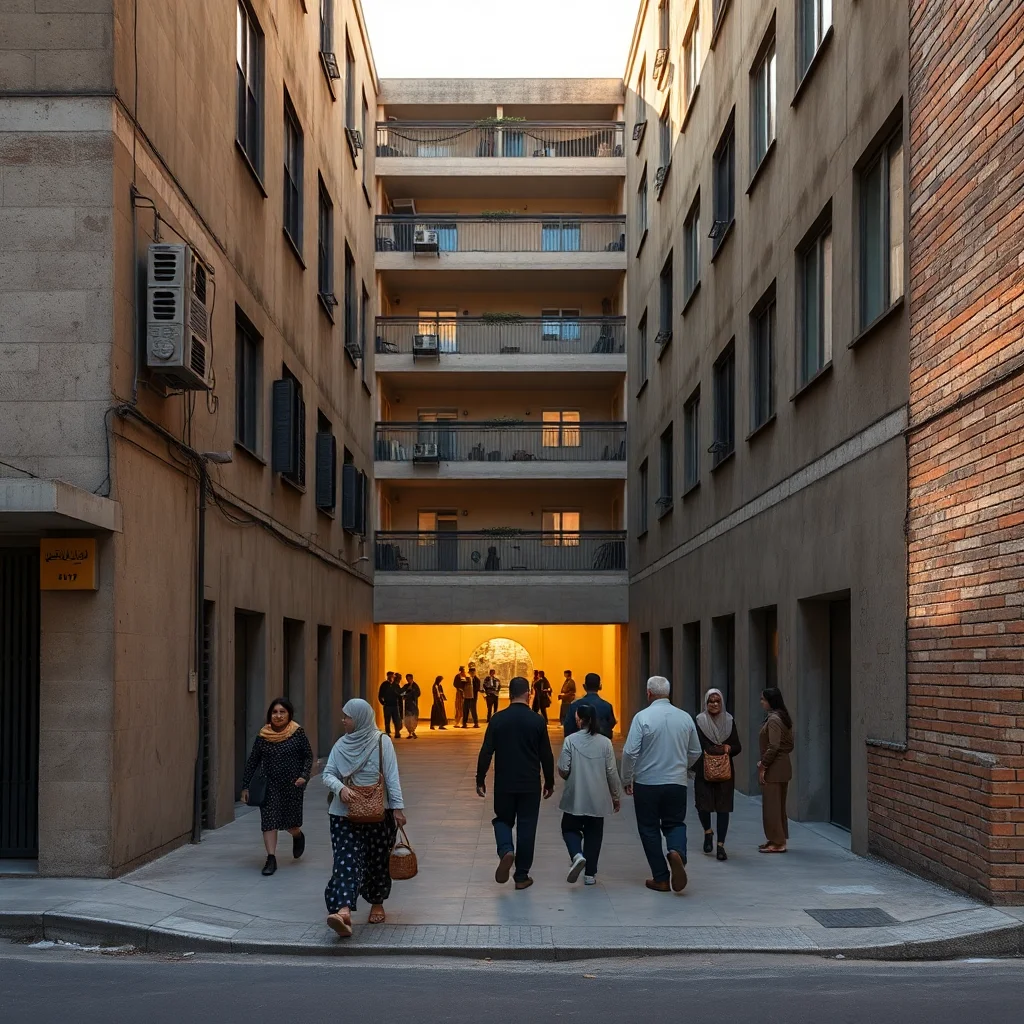
For decades, contemporary apartment housing has been trapped inside a false choice: either dense and profitable, or humane and spatially generous. The result is familiar everywhere from Mashhad to Madrid—stacked units, thin corridors, sealed foyers, and a public realm reduced to the lobby as transactional checkpoint. Bahār, a mid-rise infill project in Mashhad by DIM Architecture Studio, argues that this is not an architectural law but a market habit. On a 550-sqm site inside a dense urban fabric, the project reintroduces the courtyard and the Hashti—the transitional threshold found in historical Iranian houses—not as nostalgia, but as operating system. That distinction matters. The courtyard here is not decorative atmosphere. It is a device for daylight, ventilation, privacy gradients, neighborly encounter, and spatial legibility.
This is precisely why Bahār matters beyond Mashhad. Across the globe, housing is being asked to do more with less: absorb density, reduce energy loads, support multigenerational living, and repair a social fabric frayed by isolation. Yet much of contemporary apartment design still imagines circulation as dead space and communal life as an amenity package. The courtyard typology refuses that shrinkage. It insists that shared space can be the project’s structural intelligence rather than its leftover. If modern housing has become a machine for distributing units, courtyard housing is a machine for producing urban life. In that sense, it shares a broader architectural instinct with projects that rethink how domestic space meets the city, such as Can Homes Absorb Climate Chaos?
Bahār shows how old spatial hierarchies can be modern again.
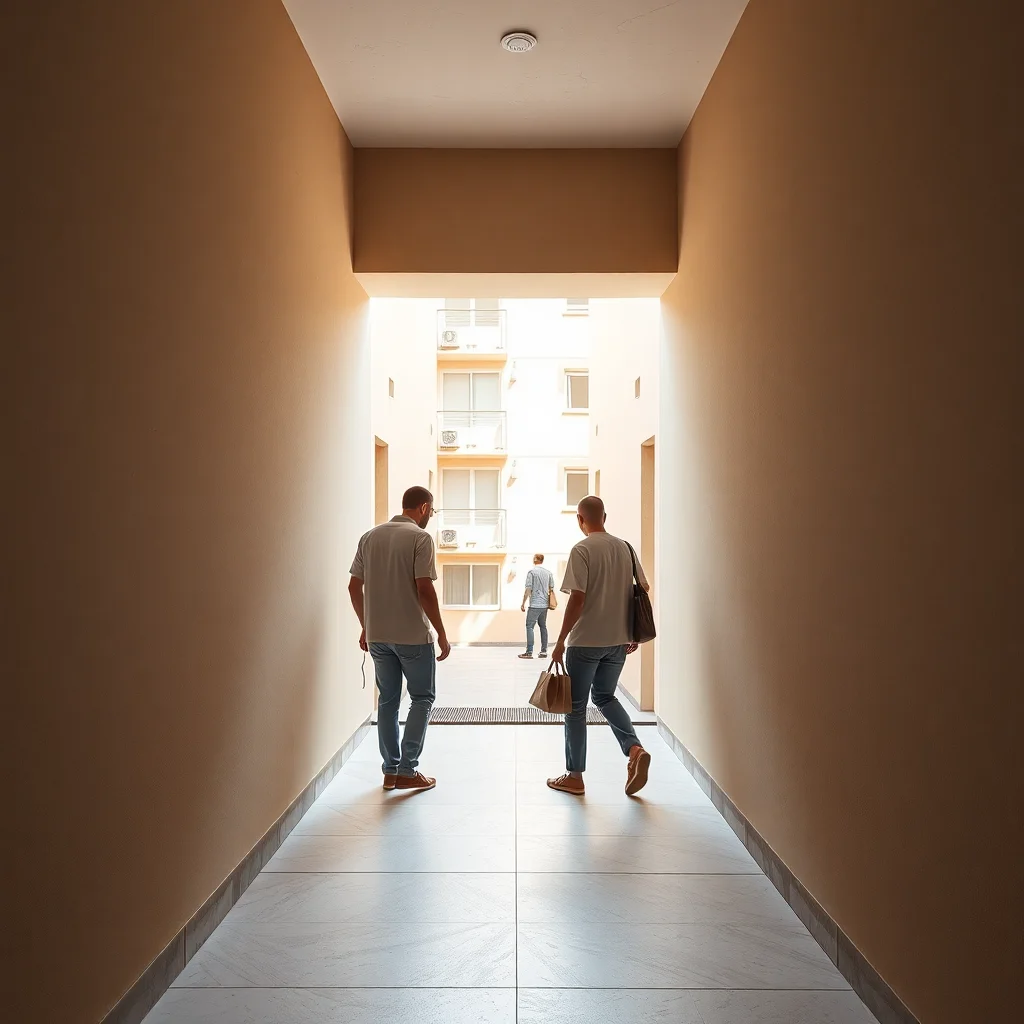
What is striking in Bahār is not a literal reconstruction of historic domestic architecture, but the translation of its logic into a contemporary building. Iranian houses traditionally organized experience through sequence: street to threshold, threshold to court, court to room, room to privacy. The Hashti mediated this choreography, softening the abruptness of entry and preserving dignity by controlling visibility. In Bahār, that same principle becomes a social and climatic tool. The apartment building does not force the inhabitant immediately into a corridor of sameness. Instead, it reintroduces depth, pause, and orientation.
This is a direct challenge to the generic slab and the sealed tower, which frequently treat circulation as a cost to be minimized rather than an opportunity to intensify domestic life. Architects such as Nader Tehrani, Tatiana Bilbao, and Xaveer De Geyter have each, in different ways, resisted that flattening by designing shared zones, layered edges, and ambiguous thresholds that encourage encounter without sacrificing autonomy. The courtyard participates in that same insurgency. Its political value is subtle but real: by creating a commons that is neither fully public nor fully private, it gives residents a place to recognize one another without forcing intimacy. In a culture of overexposure and surveillance, that is a rare form of social repair.
Density does not have to mean compression. It can mean hierarchy.
The anti-courtyard argument is predictable: land is expensive, unit efficiency matters, and shared space can become underused dead volume. On paper, the corridor-and-core model seems unbeatable because it maximizes sellable area. But this is the ideology of minimum responsibility masquerading as rational planning. Bahār suggests another reading of efficiency. A building can be efficient not only in net-to-gross calculations but in how many functions it concentrates: ventilation, orientation, community, climatic moderation, and visual relief. The courtyard is an engine of multiplicity. It reduces dependence on artificial light during the day, creates a more breathable internal microclimate, and introduces a central civic interior that can absorb the informal rhythms of family life.
History is full of precedent. The collective housing of the Narkomfin Building in Moscow tried to reframe domestic life through shared space, while the Unité d’Habitation in Marseille elevated the corridor into a social street. More recently, projects by Alejandro Aravena and ELEMENTAL have explored how partial frameworks can support adaptable occupation without abandoning density. Courtyard housing belongs to the same conversation but with a different emphasis: less heroic monument, more urban metabolism. It is not asking every resident to be social all the time. It is asking architecture to provide the conditions under which sociality becomes possible when needed, rather than impossible by default.
The threshold is where architecture earns its ethics.
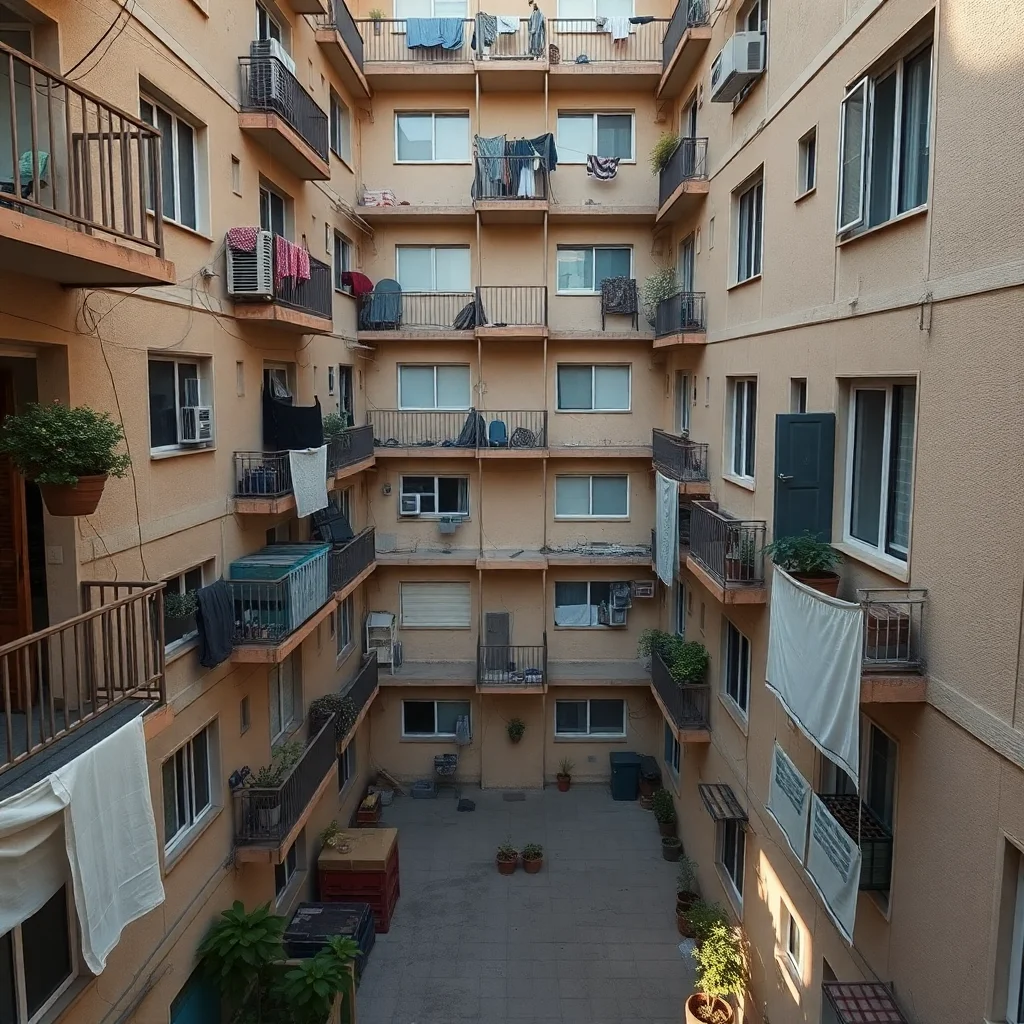
The Hashti is especially important because it restores something contemporary housing has largely lost: the ethics of transition. In many modern apartment buildings, the jump from street to unit is brutally short and acoustically exposed, producing a kind of social amnesia. You arrive, ascend, and disappear. Traditional spatial systems understood that entry is a psychological event, not just a functional one. The threshold slows the body down. It edits sightlines. It prepares the inhabitant for the shift from collective city to personal interior.
That idea is gaining traction across contemporary practice. In the social housing work of Lacaton & Vassal, generous winter gardens and balconies become transitional chambers between inside and outside, refusing the hard edge of conventional façade thinking. In the apartment buildings of Studio Gang and Office KGDVS, shared terraces and layered envelopes likewise create a sequence of occupation rather than a binary wall. The point is not to romanticize old forms. It is to recognize that the best residential architecture has always been interested in mediation. Bahār makes that mediation explicit by treating threshold as a design priority, not an afterthought.
And that has consequences for urban life. Buildings that provide intermediate zones generate softer forms of coexistence. Children can hover at the edge of the court. Adults can pause without committing to conversation. Elderly residents can observe rather than isolate. These are not sentimental gestures. They are spatial conditions that reduce alienation by making presence optional, visible, and ordinary. That same emphasis on cultivated transition also appears in projects that treat the exterior as a meaningful buffer, including When House Design Becomes a Landscape Event
The next housing model will be judged by what it allows, not just what it fits.
The speculative question is no longer whether the courtyard can survive the apartment age. It is whether apartment buildings can be judged by a broader standard than unit count and façade efficiency. A future housing typology built for density, light, and social repair would likely combine several lessons now visible across practice: the porous ground floor, the central void, the transitional threshold, the shared edge, and the adaptable perimeter. It would not reject the market; it would outwit the market by proving that spatial quality can also be a form of value creation.
That value is not only social but architectural. Courtyard housing improves wayfinding, daylight access, cross-ventilation, and the perception of safety through visibility. It gives architects a richer section to work with and residents a more legible sense of belonging. In a time when loneliness, heat stress, and urban congestion are converging crises, these are not secondary benefits. They are primary forms of resilience.
Bahār should therefore be read as a proposition rather than an isolated project. It suggests that old spatial systems were never merely historical artifacts to be preserved in museums of regional identity. They were prototypes refined by use. If the future of housing is to avoid becoming an endless repetition of efficient loneliness, it will need to recover the intelligence of the courtyard and the dignity of the threshold. Not as picturesque returns. As hard-headed tools for living together.
FAQ
What makes courtyard housing relevant today? It addresses several current pressures at once: density, daylight, ventilation, privacy, and social interaction. Unlike sealed corridor housing, the courtyard creates a shared interior that supports climate performance and everyday community without reducing livability.
Isn’t the courtyard typology inefficient in high-cost urban markets? Only if efficiency is defined narrowly as maximum sellable area. In practice, a courtyard can improve unit quality, reduce reliance on artificial lighting, and increase long-term desirability by offering a more attractive and adaptable living environment.
What is the architectural role of the Hashti? The Hashti is a transitional space that mediates between public and private realms. It controls visibility, slows entry, and helps residents move psychologically from street life into domestic life, making the building more legible and respectful.
Can historical spatial systems really be adapted for contemporary housing? Yes, if they are translated as logic rather than copied as style. Projects like Bahār show that the core principles—sequence, hierarchy, mediation, and shared centrality—can be redesigned for current urban, economic, and environmental demands.
Open question
If the courtyard can make density livable, climate-conscious, and socially richer, why do we still design so much housing as if privacy and community were enemies?
Get the Mainifesto weekly — curated design debates, speculative ideas and the week's best articles every Saturday.
Editorial Perspectives
Questions and counterpoints developed by the Mainifesto editorial desk to extend the discussion.
Perspective 1
What Bahār gets right is that the courtyard is not a nostalgic decorative device; it’s an old piece of urban intelligence that manages light, air, and social friction at once. The danger, of course, is when developers package that “community” as a lifestyle amenity and forget the tenants who actually make it work.
Perspective 2
I’m sympathetic to the courtyard argument because it can improve circulation, daylight, and even reduce cooling loads without turning every square meter into a corridor. The problem is that most housing clients still see privacy and shared space as a trade-off, when well-planned thresholds can give you both at a cost that pencils.
Perspective 3
We keep designing housing as if the modern subject were a sealed unit, which is rather quaint and not especially humane. The courtyard reminds us that domestic life has always been negotiated at the edge, in the threshold, not behind the fetish of absolute privacy.