Can Museums Become Public Landscapes?
From Object Building to Cultural Terrain
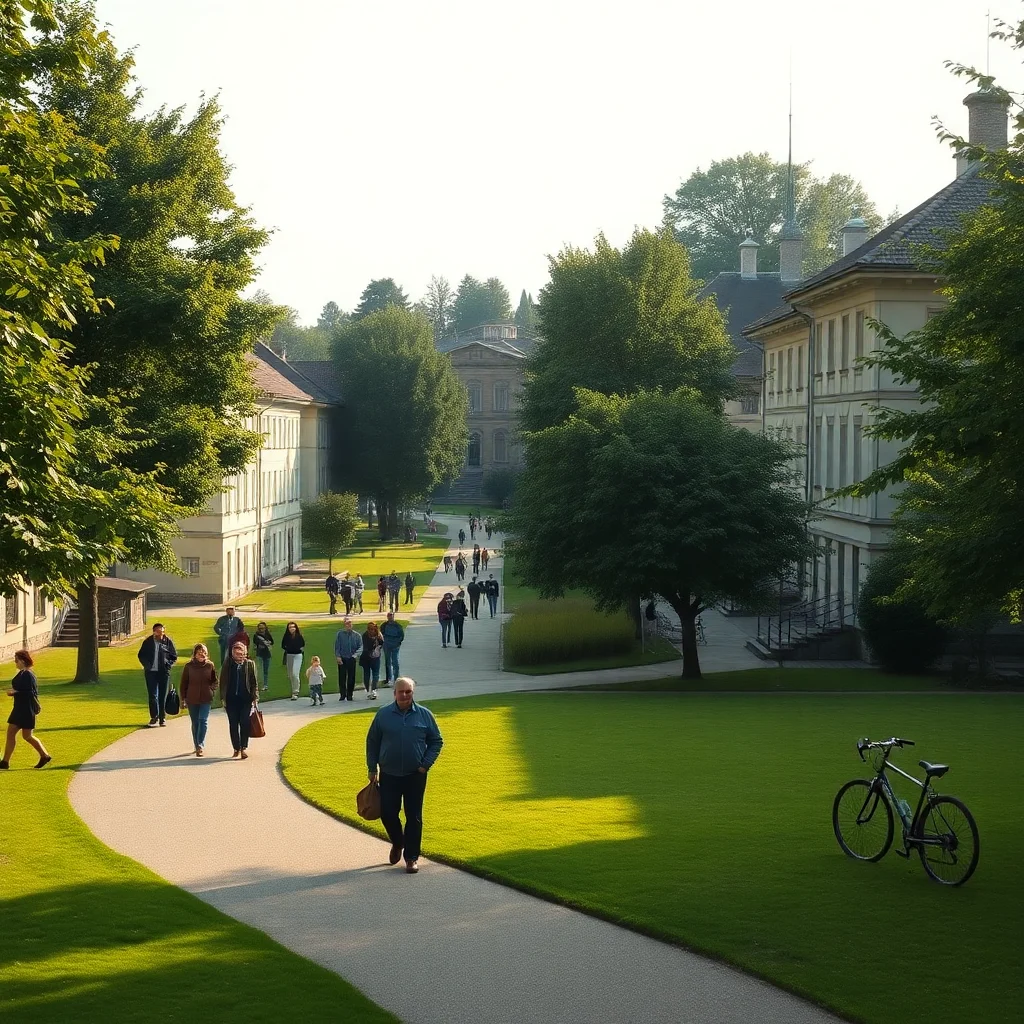
The most radical thing about Peter Zumthor’s Fondation Beyeler extension is not that it expands a museum. It is that it refuses the old museum fantasy of a single, triumphant object. Instead, the project in Riehen points toward a cultural territory: a museum that unfolds through parkland, restored historic buildings, and slower sequences of arrival. This is not a stylistic gesture. It is a political one. A museum that disperses itself across a landscape is making a claim about public life: culture should not be sealed inside a monument, but braided into everyday movement, leisure, and local geography.
That idea lands with force because the museum as icon has already become a trap. For decades, cities and institutions have been seduced by the promise of the landmark form: the building that performs instantly in photographs, attracts tourists, and announces ambition in a single silhouette. Yet the most persuasive cultural projects today are often doing the opposite. They are making room, not spectacle. They are extending walks, not compressing them. They are converting a visit into a sequence of thresholds, pauses, and encounters. In that sense, Zumthor’s extension is less a one-off addition than a prototype for a different cultural economy.
The Fondation Beyeler setting is crucial. The institution already sits in a landscape where art, park, and domestic scale overlap. The newly public park and restored historic structures extend that condition outward instead of overwriting it. This matters because architecture’s real challenge in the next decade may not be how to produce another unforgettable image, but how to absorb civic life without flattening it. The best museum extension may be the one that looks less like an annex and more like a shared landscape with cultural intensity built into it.
The Arrival Sequence Becomes the Architecture
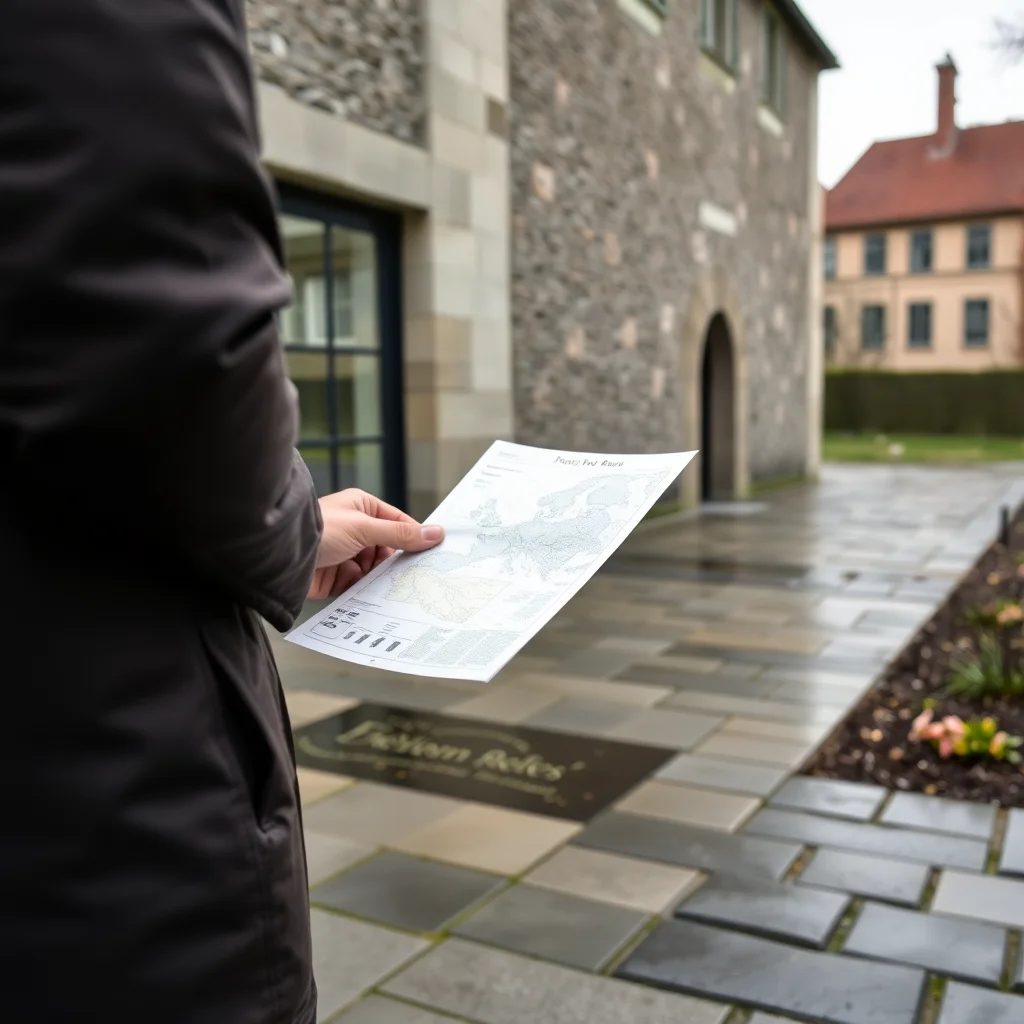
Zumthor has long treated arrival as a form of composition. His work at Therme Vals, the Kolumba museum in Cologne, and the Bruder Klaus Chapel all depend on the body moving through density, darkness, compression, and release. The Fondation Beyeler extension translates that sensibility into a public realm condition. Instead of arriving at a façade and decoding a signature, visitors move through a broader terrain where the museum is encountered gradually, almost reluctantly. The sequence itself becomes the architecture.
That is a profound shift. Most museum icons prioritize instant legibility: a dramatic shell, a crystalline volume, a glossy skin. Even when they are beautiful, they tend to deliver their meaning too quickly. By contrast, a landscape-based extension asks visitors to work for proximity. It lets art be approached through weather, trees, old walls, and paths. The historic buildings in the Beyeler expansion are not decorative leftovers; they are devices for slowing the body down. Their presence implies a richer institution, one that values memory and duration over immediate branding.
This logic has precedents, but few are as convincing. SANAA’s Louvre-Lens used a low, horizontal dispersion to dissolve monumentality into a park-like field. David Chipperfield’s Neues Museum restoration in Berlin made repair itself a public ethic, treating continuity as a cultural argument. Even Lina Bo Bardi’s SESC Pompéia transformed industrial ruins into a democratic landscape of movement and gathering. What Zumthor adds to this lineage is a more sensual, more restrained understanding of the museum as terrain: not a campus in the administrative sense, but a crafted civic mood.
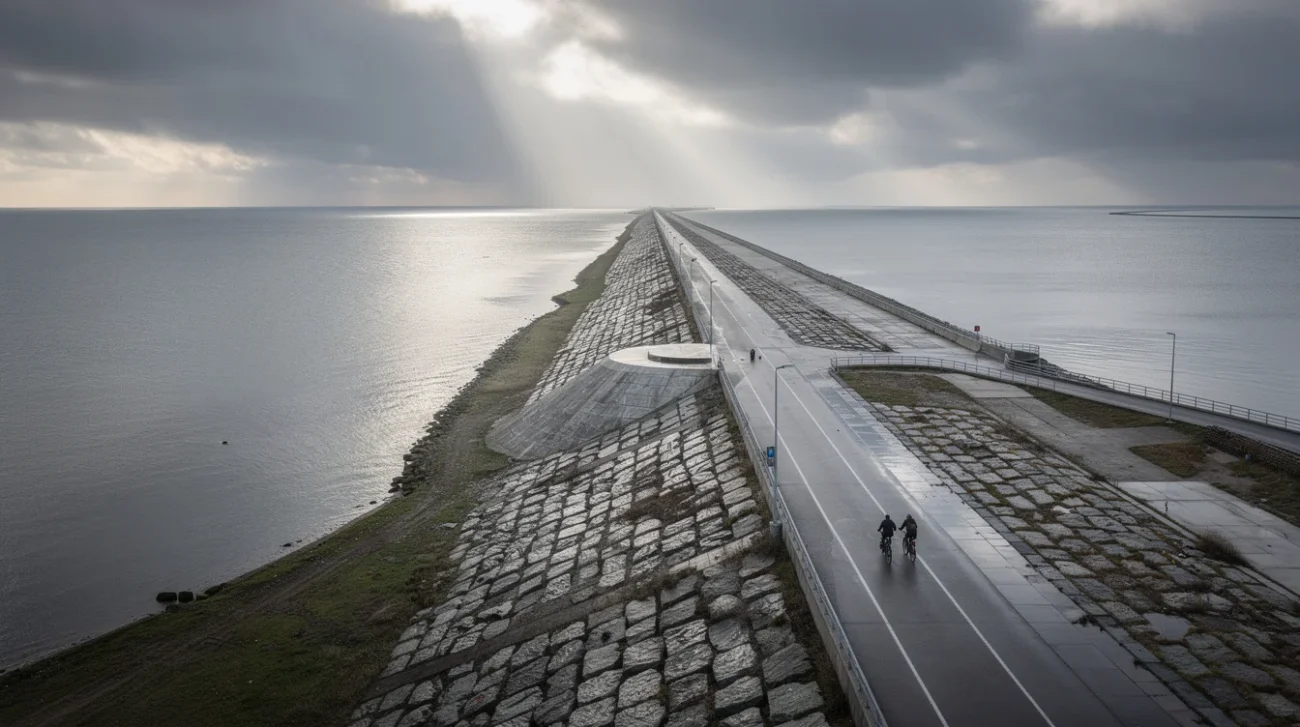
That same sensitivity to atmosphere helps explain why projects centered on reuse and partial repair can feel so persuasive today. Can Architecture Accept Decay as Design? frames decay not as failure but as a material condition that can sharpen a project’s cultural presence. In the Beyeler context, the restored buildings work similarly: they do not erase time, but make it legible as part of the experience.
Why the Monument Keeps Failing the Public
The monument still has seduction on its side, but it increasingly struggles to justify itself in civic terms. A monument is designed to be seen; a landscape is designed to be used. That difference is decisive. In an era of climate pressure, social fragmentation, and shrinking attention spans, the building that merely dazzles begins to look wasteful. It consumes attention without necessarily returning public value. A museum extension that spreads outward through parkland, gardens, paths, and restored fabric can produce a very different form of legitimacy: not the prestige of the object, but the generosity of the field.
This is also why the question of program matters. If a cultural project includes public routes, shaded pauses, educational spaces, informal gathering zones, and historical continuity, it becomes more than an envelope for exhibitions. It becomes infrastructure for civic time. That is a more demanding standard than icon-making, because it cannot be satisfied by form alone. The project has to earn its place through use, repetition, and ordinary return visits. In this respect, Zumthor’s extension is aligned with a broader architectural shift visible in projects like OMA’s Rotterdam Depot, where public access and operational life are entangled, or MVRDV’s transforming of rooftop and ground-level zones into accessible urban surfaces.
Critically, this does not mean renouncing beauty. It means refusing the shallow equation between beauty and singularity. The public landscape model can still be intense, even unforgettable, but its force comes from accumulation: the light on a path, the frame of a doorway, the old brick beside new planting, the moment art appears after a walk through trees. Such architecture is harder to sell in renderings because it is temporal rather than instantaneous. Yet that is precisely why it may be more durable. Civic life is not a logo. It is a sequence of habits.
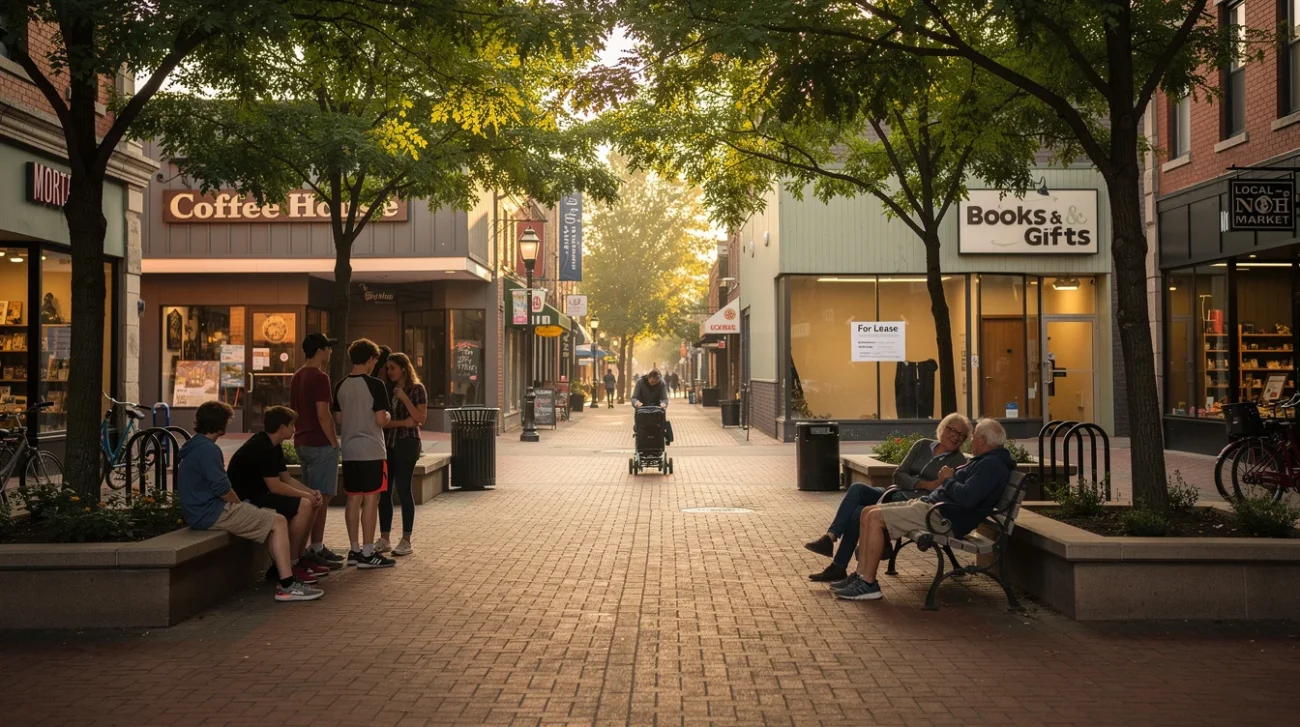
That preference for atmosphere over spectacle also connects to how climate-responsive architecture is being recast as public value. Shade as Urban Infrastructure in Bangkok shows how a seemingly modest environmental device can become a civic framework, not just a comfort strategy. The same principle appears here: trees, paths, and sheltered pauses are not decorative extras, but the architecture of use.
The Museum as Expanded Ground
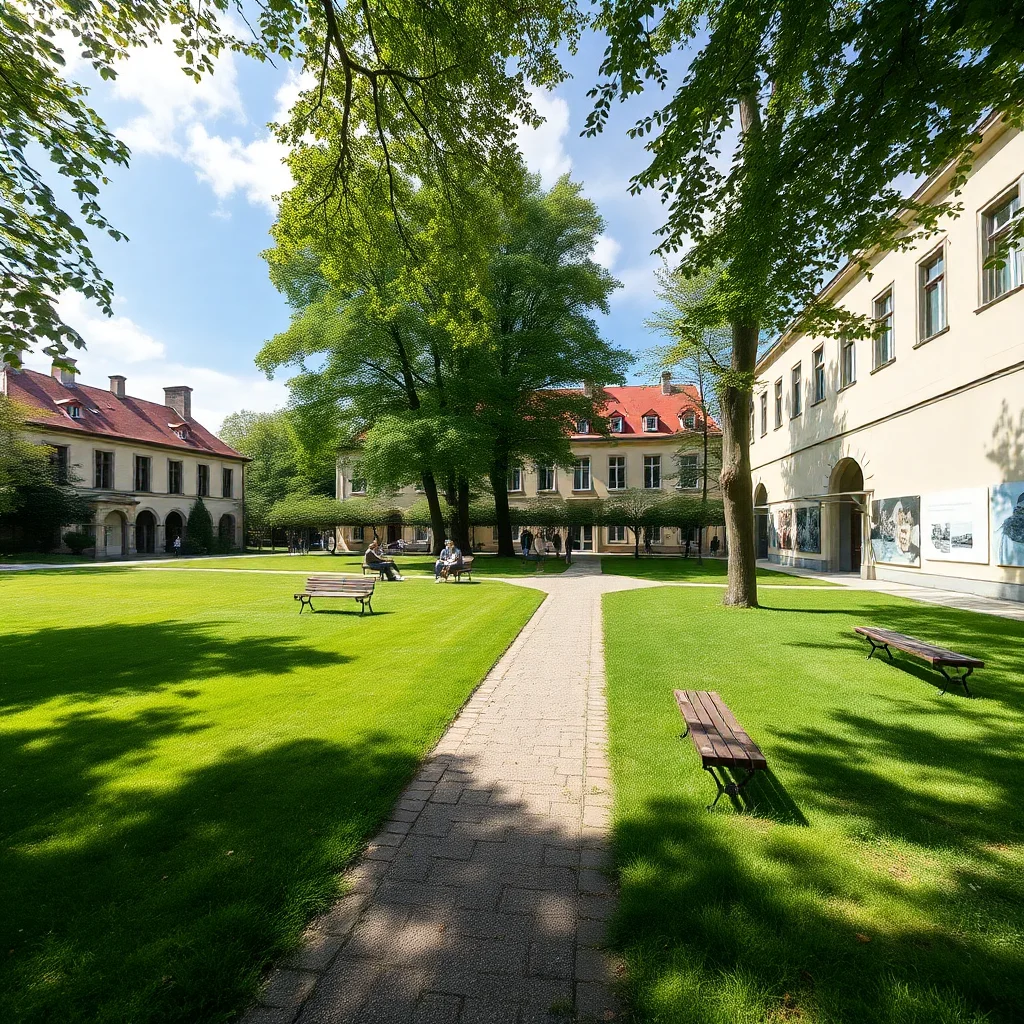
What the Fondation Beyeler extension points toward is a museum that behaves like a ground condition rather than an isolated building. This is not a retreat into placelessness. On the contrary, it produces stronger place identity by intensifying what already exists: landscape, historic structures, and local continuity. The museum no longer arrives as a foreign body imposed on site. It grows out of the site’s own layers. That is a more intelligent form of cultural authority, because it acknowledges that institutions do not exist above their context; they are made meaningful by it.
The best contemporary examples of this expanded-ground thinking treat access as a design material. Think of James Turrell’s Roden Crater as an inhabitable landscape of perception, or The High Line’s transformation of infrastructure into a civic promenade, even if its success has been uneven. Think of Heatherwick Studio’s Coal Drops Yard, where circulation and public lingering are as important as retail program. These projects reveal a hard truth: people do not only need objects to admire. They need territories to inhabit. When architecture offers a rich field of movement, it produces social value that a singular monument cannot.
For museums, the implication is sharp. The future institution may need to spend less energy proving itself through form and more energy expanding what it hosts: walking, resting, learning, socializing, returning. A museum extension that becomes public landscape could be more culturally relevant than a sculptural landmark because it makes itself available as a piece of city. It does not just represent culture. It metabolizes it.
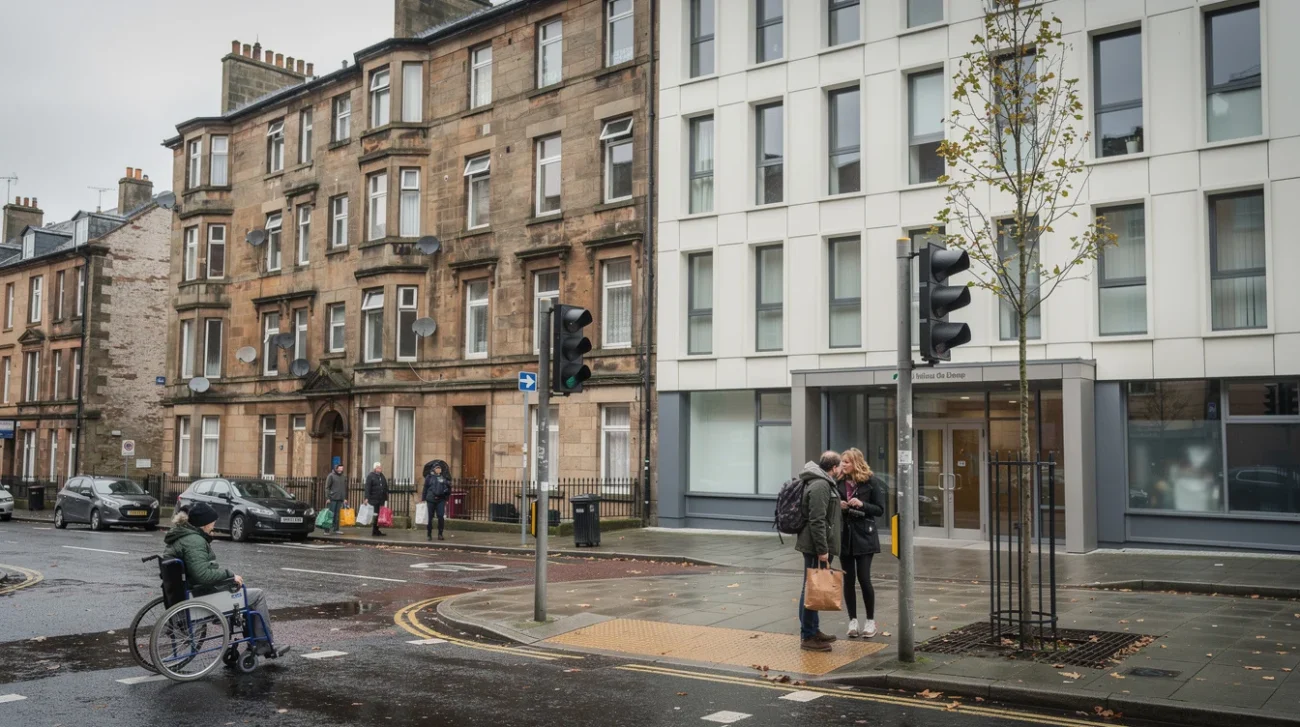
That broader argument about architectural territory also appears in discussions of domestic and civic form. When House Design Becomes a Landscape Event explores how buildings can be shaped by movement across ground rather than by isolated objecthood, a logic that resonates strongly with the Beyeler extension’s emphasis on approach, sequence, and environmental continuity.
PRO: Why Landscape is the Stronger Cultural Model
The case for the public landscape museum is straightforward and increasingly persuasive. First, it is more democratic. A landscape invites multiple forms of use—shortcuts, idle walks, family visits, school outings, solitary reflection—without demanding a single correct behavior. Second, it is more resilient. Gardens, historic buildings, shaded paths, and adaptable open spaces age differently than iconic envelopes, often gaining character rather than losing relevance.
Third, it is more ecologically credible. In a period when architecture is being asked to justify land use, material intensity, and maintenance, a museum that works with existing structures and expanded green space is easier to defend than a monument built primarily for image. Fourth, it broadens the institution’s social contract. When the edge of the museum becomes park, and the park becomes part of the museum’s identity, the institution gives something back to the city beyond admission tickets.
Finally, landscape allows for a richer notion of cultural time. It supports slow encounters, repeated visits, seasonal change, and the possibility that the museum is not always centered on the exhibition object. Projects by Zumthor, Chipperfield, Bo Bardi, and SANAA all suggest that architecture’s future may lie in composing conditions rather than symbols. The strongest museum of the next decade may be the one that feels least like a building and most like an inhabited civic ground.
CONTRA: Why Monuments Still Matter
But the argument should not be romanticized. Not every museum can dissolve into landscape without losing clarity, funding power, or cultural presence. Monuments still matter because they concentrate identity. They give institutions a legible face, and in a crowded visual economy, that face can be essential. A museum that disperses too much risks becoming vague, underpowered, or overly dependent on a privileged site. Landscape can drift into atmosphere, and atmosphere alone is not enough.
There is also a danger that the public-landscape model becomes a luxury of already-privileged institutions. A museum with a historic estate, ample parkland, and strong funding can afford to soften its edges. Smaller institutions often cannot. For them, a compact, assertive building may still be the most effective way to declare cultural seriousness. Monumentality, in other words, is not obsolete; it is context-dependent. A tight urban museum in a dense district may need a recognizable form far more than a suburban institution with abundant ground.
And there is an aesthetic cost to endless dispersion. The icon can still produce civic charge, memory, and collective orientation in ways that a landscape sometimes cannot. People gather around monuments because they are unmistakable. They remember them because they resist ambiguity. The challenge, then, is not to abolish monumentality, but to make it accountable. If an iconic form is to survive, it must justify itself through public use, not just visual dominance.
What the Beyeler Extension Really Signals
The Fondation Beyeler extension is important because it refuses a false choice. It does not simply add a sculpture to the park, nor does it bury architecture into invisibility. Instead, it proposes a hybrid condition: a museum that extends, edits, and collaborates with its site. This is perhaps the more realistic model for cultural architecture now. Institutions need visibility, but they also need depth. They need memorable form, but they also need public ground. The future may belong to projects that can hold both tensions without collapsing into cliché.
That is the central provocation. We may be entering an era in which the decisive measure of cultural architecture is not how iconic it looks in aerial view, but how much civic life it can absorb, host, and return. Can it lengthen a walk? Can it keep a park open to multiple constituencies? Can it make historic fabric active rather than frozen? Can it convert arrival into anticipation rather than consumption? These are not secondary questions. They may be the main ones.
If the answer is yes, then the museum extension becomes something larger than an expansion. It becomes a public landscape with institutional intelligence—a place where culture is not only displayed, but lived.
FAQ
What makes Peter Zumthor’s Fondation Beyeler extension different from a typical museum addition?
It does not center on a single iconic gesture. Instead, it expands the museum into parkland and historic structures, making circulation, landscape, and memory part of the visitor experience.
Why is the idea of a “public landscape” important for museums?
Because it turns the museum into civic infrastructure rather than a closed monument. People can use it in more ways, over more time, and with less pressure to consume culture in one fixed mode.
Are iconic museum buildings still relevant?
Yes, but only if they deliver more than visual novelty. An iconic building must earn its presence through public usefulness, spatial generosity, and long-term cultural value.
Which architects or projects support this landscape-based museum thinking?
Relevant references include SANAA’s Louvre-Lens, David Chipperfield’s Neues Museum restoration, Lina Bo Bardi’s SESC Pompéia, and the public-space strategies seen in projects by OMA and Heatherwick Studio.
- Public landscape: the future cultural site may be judged by civic absorption, not image alone.
- Sequence over spectacle: arrival, walking, and threshold become architectural material.
- Adaptive heritage: restored buildings and parkland can extend institutional meaning.
- Beyond the icon: monumentality survives only when it serves public life.
Get the Mainifesto weekly — curated design debates, speculative ideas and the week's best articles every Saturday.
Editorial Perspectives
Questions and counterpoints developed by the Mainifesto editorial desk to extend the discussion.
Perspective 1
A museum can borrow the language of a public landscape, but it still has to carry memory, authority, and care in a way a park does not. The danger is that “openness” becomes a polished civic gesture that quietly drives up land values and pushes out the very public it claims to welcome.
Perspective 2
I don’t think the question is icon versus landscape so much as what kind of performance the building enables over time. If the envelope, section, and circulation are designed as adaptable systems, the museum can host civic life without freezing into a single image.
Perspective 3
The article points to a real shift, but I’d be careful with the idea that a museum can simply absorb civic life and solve the public realm. Good urbanism depends on access, maintenance, transit, and programming; without those, the “landscape” is just an expensive forecourt.
Perspective 4
Icons are cheap when cities are competing for attention and capital, which is exactly why I’m suspicious of the old museum-as-object model. If a cultural building can act as shared infrastructure, connected to heat, shade, mobility, and everyday use, that’s more resilient than another sculpture for the skyline.
Perspective 5
I’m fine with museums being less iconic if they deliver a better experience and keep people coming back. What doesn’t work is a vague “public landscape” concept that looks generous in renderings but is confusing to navigate, hard to activate, and impossible to monetize or maintain.