
Venice Biennale Pavilions as Political Stages
Pro: The Pavilion as a Civic Machine
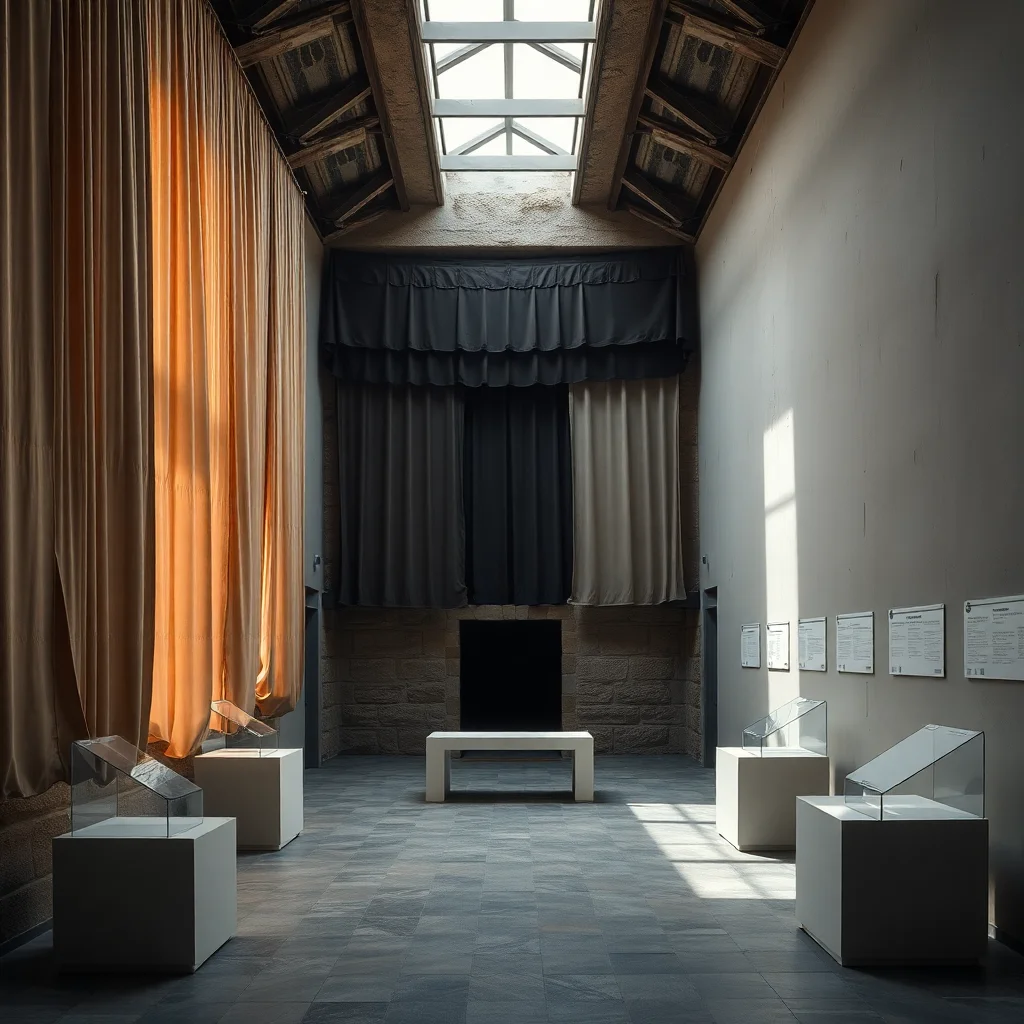
For decades, the Venice Biennale pavilion functioned as a reassuring fiction: a national container for art, a diplomatic shell for cultural exchange, a place where countries could display themselves through architecture without openly admitting that representation is always political. That fiction is now collapsing in public. The recent protests around the Biennale have made one thing impossible to ignore: a pavilion is never just a backdrop. It is a civic machine that distributes visibility, authority, and omission. Once audiences accept that, the pavilion stops being neutral and starts reading as an instrument of statecraft, curatorial ambition, and ideological pressure.
This matters because Venice has long sold itself as a laboratory of exchange. Visitors drift from the Nordic pavilion to the Dutch one, then into the Giardini or across to the Arsenale, consuming national difference as though it were an elegant architectural menu. Yet this choreography depends on a fantasy that architecture can separate culture from power. In reality, the pavilion system was born from exactly the opposite condition: nations staging themselves through permanent envelopes, each one a claim to presence. The protests simply made the claim visible again. They exposed the pavilion as a structure that does not merely host art; it frames who gets to speak, who is funded, and which conflicts are rendered tasteful.
The most telling examples at Venice are rarely the loudest. Consider how some editions have turned architecture itself into the message: the Iceland Pavilion’s temporary relocations and the repeated reinvention of the Nordic Pavilion have shown that even “stable” forms are subject to historical rewrite. The Swiss, Belgian, and German pavilions have each become sites where curatorial decisions are inseparable from national image management. Meanwhile, projects in the Arsenale often use modular construction, scaffolding, mirrors, and screens to dramatize instability, as if to confess that every exhibition is already a negotiation with power. The recent protests simply accelerate what those gestures have implied all along.
Pro: Protest Does Not Corrupt the Pavilion; It Reveals It
Those who lament the arrival of protest inside an art event usually speak as if politics were an intrusion. But Venice has never been outside politics. The Biennale’s pavilion system is a highly specific inheritance of 19th-century nationalism, colonial competition, and cultural diplomacy. To treat it as a sanctified zone for “open exchange” is to erase the conditions that made the event possible. Protests do not contaminate the pavilion; they strip away the branding layer and force the architecture to answer for itself. In that sense, the recent demonstrations are not an embarrassment to the Biennale. They are its most honest curatorial annotation.
Architecture is central to this shift because pavilions are not abstract platforms. They are built arguments. The Adolf Loos Pavilion for the Austrian context, the many lightweight systems of postwar modernist exhibition design, and the contemporary preference for adaptable interiors all point to a belief that form can stay politically ambiguous. It cannot. A blank wall can be exclusionary. A grand entry sequence can be nationalist. A fragile temporary façade can imply precarity for some and luxury for others. The pavilion’s material grammar carries the politics of representation whether curators acknowledge it or not.
That is why some of the most resonant contemporary practices at Venice are those that make the frame unstable. Office KGDVS, Lacaton & Vassal, and other architects associated with reuse and transformation have helped shift attention from monumentality toward contingent space. Yet even these approaches are not innocent. Reuse can become a moral alibi if it avoids asking who benefits from the reuse, whose labor sustains it, and what histories are left intact. At Venice, the stakes are higher because the pavilion is not a private building experiment but a public stage where every formal choice can be read as a geopolitical statement.
Contra: The Risk of Turning Every Pavilion into a Tribunal
And yet there is a danger in this new visibility. If every pavilion is treated only as a political battlefield, the Biennale risks becoming a tribunal that leaves no room for ambiguity, contradiction, or aesthetic autonomy. The strongest defense of the pavilion system is that it allows different publics to encounter one another through art rather than through policy papers and diplomatic communiqués. Venice has historically offered a rare chance for formal experimentation to travel across languages and borders. If that possibility disappears beneath a permanent atmosphere of accusation, the event becomes narrower, not wider.
There is still value in the pavilion as a site of speculative openness. Some national presentations have used the format to test environmental questions, indigenous knowledge systems, or alternative urban futures without reducing them to a single geopolitical headline. The Finland Pavilion, for instance, has repeatedly used architectural narrative to explore identity, materiality, and landscape rather than propaganda. The Czech and Slovak entries have often turned to memory, domestic space, and social transitions as a way of speaking beyond official state rhetoric. These are not escapes from politics. They are attempts to keep art from being entirely swallowed by the language of crisis.
Critics of the protest-driven reading will argue that a total politicization of the pavilion flattens difference. Not every installation is a manifesto. Not every architectural gesture is a proxy war. Sometimes a room is just a room, and a material experiment is exactly that: an experiment. If the Biennale becomes overdetermined by moral legibility, it could punish nuance and reward only the most easily circulated positions. That would be a failure for art, and a gift to the very regimes of simplification that protest seeks to oppose.
Contra: Open Cultural Exchange Still Matters, But Only If It Is Real

The strongest objection to the current climate is not that protest exists, but that it can be instrumentalized into a new orthodoxy. In Venice, the rhetoric of solidarity can become another form of branding. Curators and institutions may adopt the language of resistance while leaving the underlying pavilion system intact: the same national partitions, the same prestige economy, the same uneven access to resources, the same dependence on sponsorship and soft power. In that scenario, the event performs political consciousness without redistributing anything. It signals virtue while preserving hierarchy.
That is the deeper tension Mainifesto must insist on: open cultural exchange is still worth defending, but only if it is more than a ceremonial ideal. Exchange must mean shared risk, contested authorship, and the willingness to expose the institutional frame itself. The most compelling pavilions now are those that treat architecture as a question rather than a conclusion. They ask what a pavilion owes its public, what a nation can no longer credibly claim, and whether representation can ever be separated from extraction, migration, war, or climate displacement.
For readers interested in how temporary structures can shape experience beyond the Biennale, ambient labyrinth festivals and ephemeral structures offer a useful parallel: they show how architecture can guide movement, perception, and collective behavior without relying on national symbolism. Venice’s genius has always been that it condenses the contradictions of the global art world into one walkable terrain. Its pavilions are beautiful because they are unstable. They are obsolete because they are still powerful. They are democratic in appearance and hierarchical in structure. The current protests do not destroy that contradiction; they make it legible. And once legible, the old comfort of neutrality is gone for good. The question is not whether the pavilion should be political. It already is. The question is whether institutions will finally stop pretending otherwise.
If that debate extends into design language more broadly, the history of form is equally revealing; see reimagined Bauhaus silhouettes with digital twists for another example of how old modernist vocabularies are reworked to carry new cultural meanings.
FAQ
Why have Venice Biennale pavilions become politically charged? Because they were always tied to national representation, but current conflicts have made the link between architecture, funding, and geopolitics impossible to ignore. Protests expose what the pavilion system has long concealed.
Are protests at art events destructive to artistic freedom? Not necessarily. They can reveal the institutional and political conditions under which art is shown. The risk is not protest itself, but when institutions use it as branding while changing nothing structural.
What makes a pavilion political beyond its theme? The building’s form, location, material choices, access, and national sponsorship all shape its meaning. Even “neutral” design can encode power by deciding who is visible and who is framed as peripheral.
Can the pavilion still support open cultural exchange? Yes, but only if exchange is understood as contested and unequal rather than harmonious. Real exchange requires transparency about power, not the performance of neutrality.
Get the Mainifesto weekly — curated design debates, speculative ideas and the week's best articles every Saturday.
Editorial Perspectives
Questions and counterpoints developed by the Mainifesto editorial desk to extend the discussion.
Perspective 1
The national pavilion is an anachronism that keeps pretending to be a neutral container, which is precisely why it works so well as a political weapon. Tear it down, or at least stop worshipping it—there’s more honesty in admitting the Biennale is a theater of competing flags than in preserving the fiction of universal culture.
Perspective 2
I don’t buy the idea that scrapping national framing automatically improves anything. The pavilion system is already there, and if it’s now where conflict plays out, then use it properly instead of adding another layer of expensive symbolism with no practical payoff.
Perspective 3
The bigger issue is whether any of this helps the visitor understand the work, or just forces everyone through a geopolitical lecture. If national pavilions are going to stay, they need sharper curation and less ceremonial baggage—otherwise the whole thing becomes noise, not experience.