
Can Fast Food Become an Open-Source Design System?
Fast Food Has Always Been a System. Bao Is Just Saying It Out Loud.
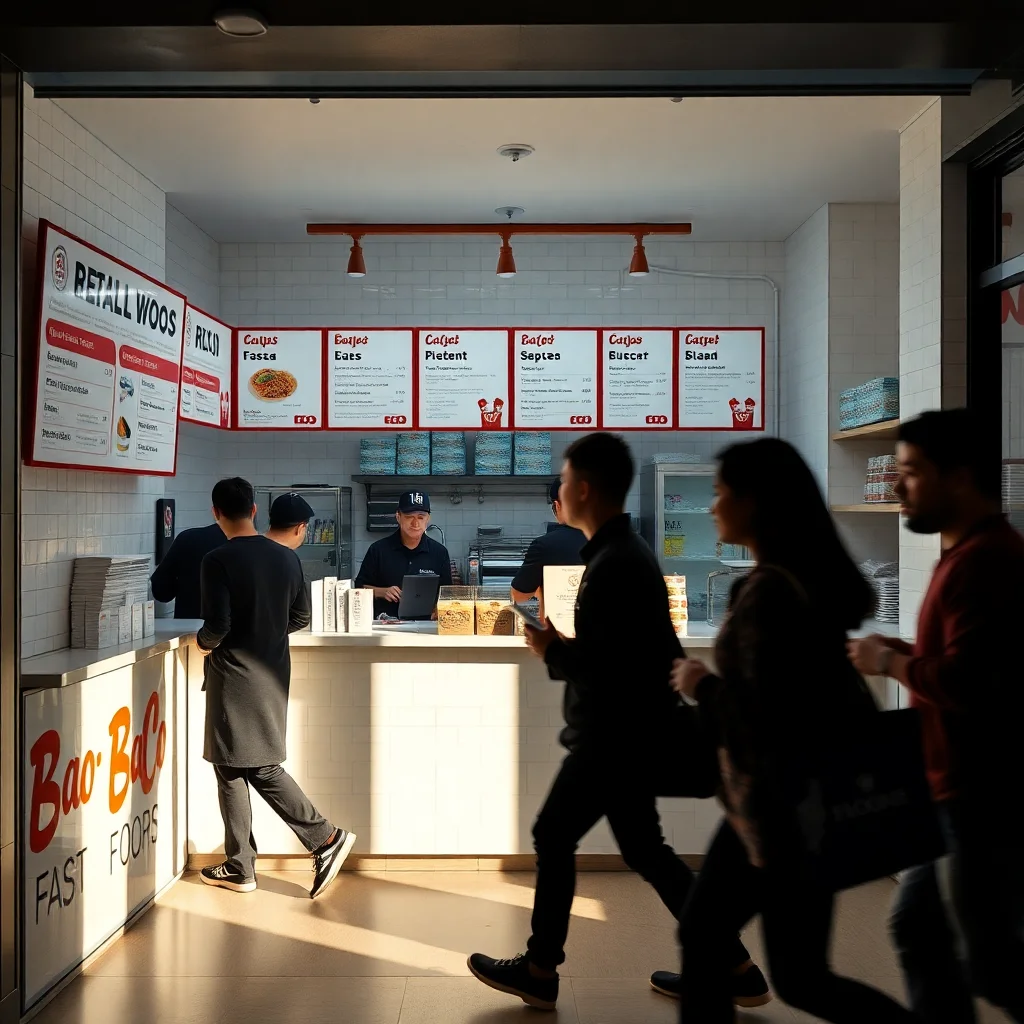
Fast food is often treated as a cuisine problem, when it is really a systems problem. Supply chains, assembly logic, service scripts, signage, packaging, and spatial standards all determine whether a restaurant scales or stalls. Bao Fast Foods, the new venture from the east London-born Bao group, understands this better than most: it is not merely opening another venue, but testing whether a brand can behave like software—versioned, distributed, and adaptable—without collapsing into generic sameness.
That ambition matters because Bao’s story already contains the ingredients of a design-system mindset. The brand began more than a decade ago in a car park with a cool box and a gazebo, then grew into a multi-site London group. Growth forced decisions that every design-led restaurant eventually faces: what stays fixed, what gets localized, and what can be repeated without becoming dead. Bao Fast Foods, inspired by Taiwanese convenience-store culture, appears to be formalizing those decisions into a deliberately modular identity.
This is not the usual restaurant-brand facelift. It is a provocative proposition: what if a chain’s visual language, menu architecture, and interior cues were treated as components rather than a finished composition? In product design terms, the question is not whether Bao can make a prettier system. It is whether a fast-food brand can turn consistency into a platform and still allow place, pace, and personality to survive the process.
The Open-Source Branding Fantasy
Open-source software thrives because its code is shared, forked, and improved by many hands. Applied to branding, that idea becomes dangerous and productive at once. A restaurant identity built like open source would not be a rigid logo package but a set of rules, modules, and behavioral constraints that can be reused across sites and formats. Think less “brand guidelines PDF,” more living repository.
Design history gives us precedents, though few are as explicit as Bao Fast Foods’ stated ambition. OMA’s famous wayfinding systems, Experimental Jetset’s typographic discipline, or the evolving identity logic of institutions like Tate show how a strong framework can absorb variation without dissolving. In hospitality, however, the bar is higher because the system must operate under pressure: the menu shifts, staff turnover is high, service is immediate, and the customer reads everything at speed. A design system that fails under these conditions is decorative, not operational.
That is why the Bao move is interesting. Taiwanese convenience-store culture is itself a masterclass in standardized flexibility: familiar product zones, fast replenishment, clear categories, and local specificity operating inside a recognizable format. The brand promise is not novelty at every turn, but a controlled kind of repeatability that leaves room for surprises. If executed well, that could become a template for how restaurant branding works in the 2020s.
Why Modularity Is More Than a Visual Style
Modularity is often mistaken for aesthetic minimalism: a grid, a neutral palette, a few interchangeable parts. But in serious product design, modularity is organizational power. The best modular systems do not simply look coherent; they enable iteration, reduce friction, and make complexity manageable. Lego is not just a toy brand; it is a distribution method for form. Muji is not just “simple”; it is a retail grammar that can extend from pens to shelving to groceries without losing its voice.
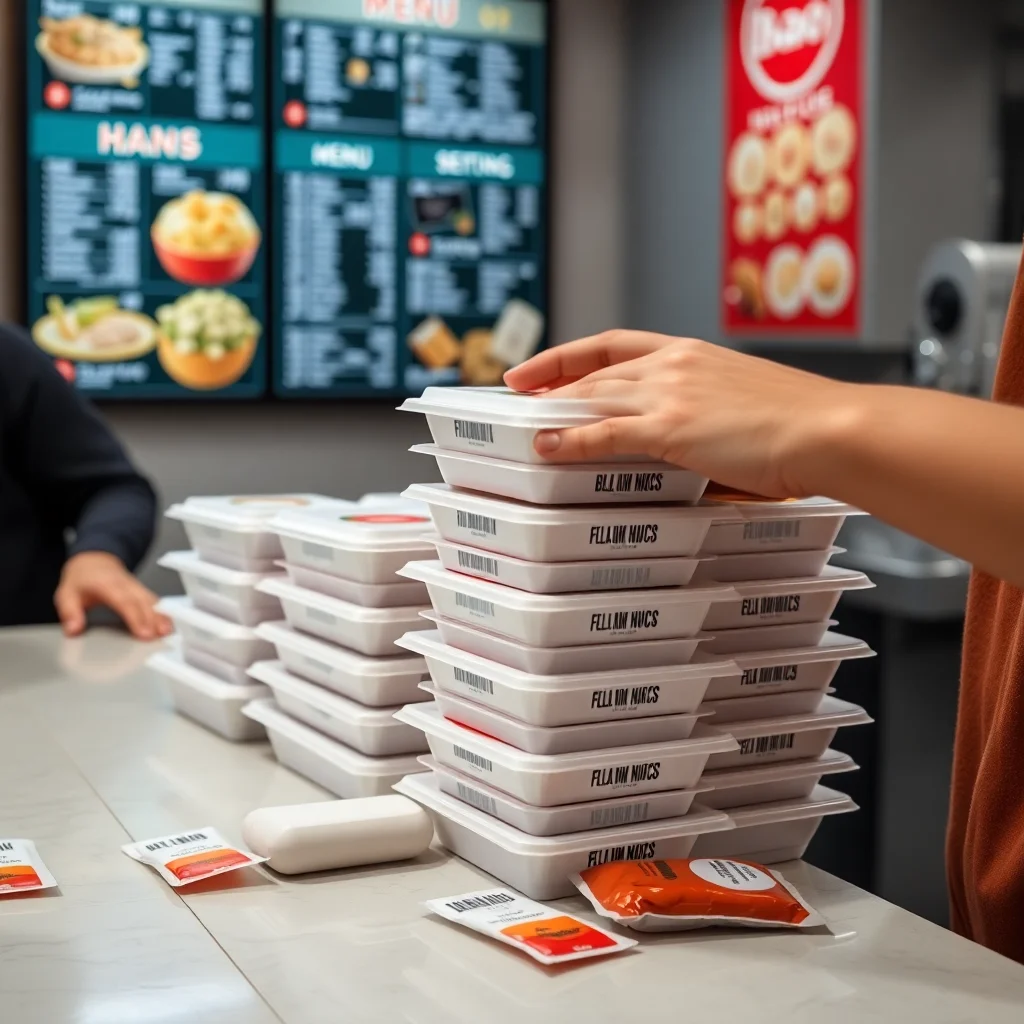
For a restaurant group, the equivalent challenge is brutal. The menu has to travel across locations, procurement must remain disciplined, kitchens need to be standardized, and the customer experience must be legible in seconds. A modular brand system can help by separating layers: core identity, local adaptations, product naming, packaging variants, and spatial elements. This is how a brand avoids the twin traps of over-design and chaos. Too much rigidity and the chain becomes sterile. Too much freedom and it becomes incoherent.
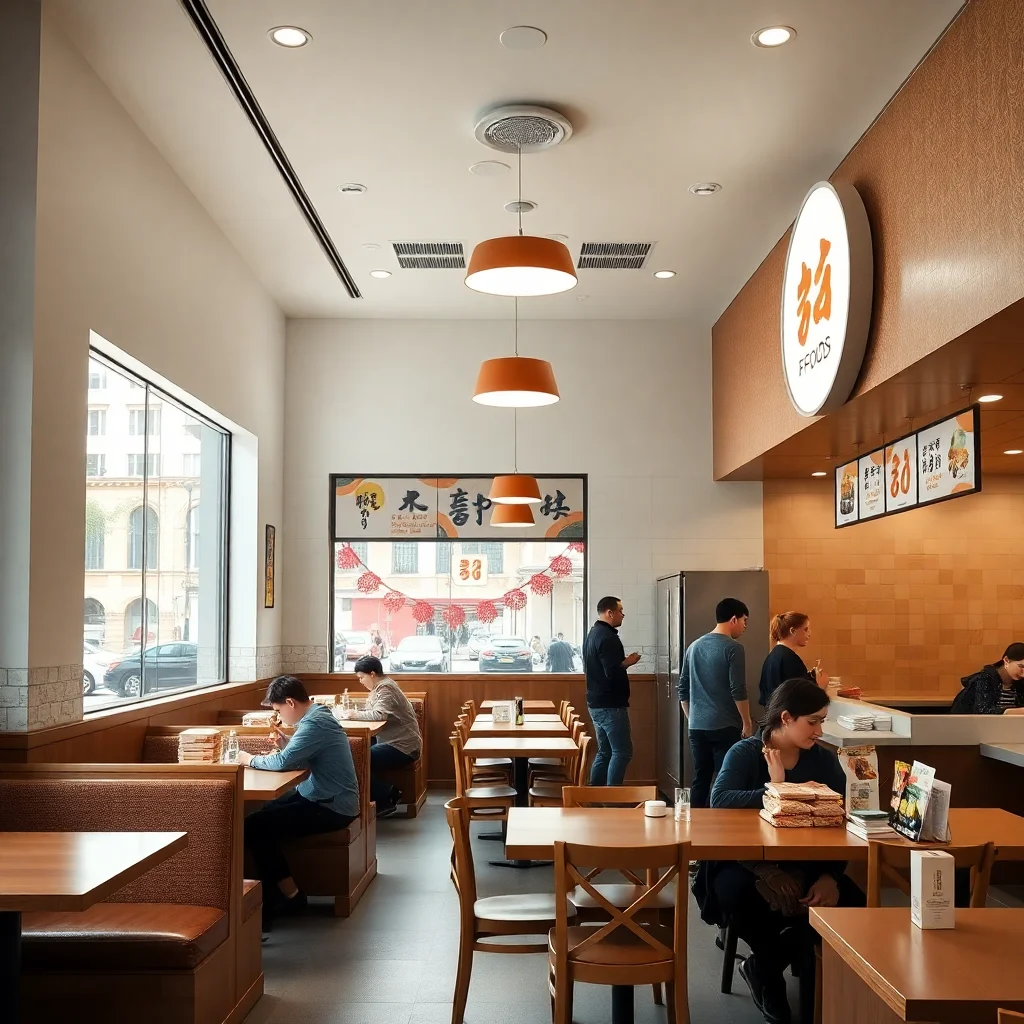
Bao Fast Foods suggests that identity can be architected like a toolkit. The logo may remain stable, but the expression can shift across touchpoints; the menu architecture can maintain a shared logic while permitting seasonal or site-specific changes; interiors can borrow a common set of materials and fixtures while responding to the character of a neighborhood. In the language of product design, this is less about decoration than interoperability.
The Risk: A Brand That Adapts Itself Into Nothing
But every systems argument has a shadow. The more modular a brand becomes, the easier it is to strip away the very friction that gives it character. Once the identity is reduced to component parts, it risks becoming a polite corporate framework that can be deployed anywhere and therefore belongs nowhere. This is the fate of many “flexible” brands: they become culturally efficient and emotionally forgettable.
The restaurant sector already suffers from this flattening. The same exposed materials, the same sans serif typography, the same pseudo-urban lighting, the same “authentic” but highly managed imperfection. What began as a language of confidence has become a style of safe differentiation. If Bao Fast Foods only proves that branding can be modular, it will have achieved nothing radical. Modular systems are everywhere. The challenge is to make a system that still carries authorship, attitude, and a point of view.
That is especially hard for a brand rooted in a specific cultural context. Taiwanese convenience-store culture is not a neutral design reference; it is a social and retail ecology with rituals, expectations, and textures. If those are abstracted too aggressively into a “look,” the result may be cultural wallpaper: legible, attractive, and empty. The strongest brands borrow structures, not just motifs. They translate behaviors, not just surfaces.
What Bao Gets Right: Speed, Consistency, Locality
The best argument for Bao Fast Foods is that it refuses to choose between three values that are usually treated as mutually exclusive: speed, consistency, and local adaptability. Most chains optimize for speed and consistency, then smuggle in local tweaks as afterthoughts. Independent operators, by contrast, tend to prize locality and personality, but struggle to scale. A design system built with intention can bridge that gap.
Consider how the most successful contemporary identity systems work in adjacent fields. Google’s Material Design created a language for interface coherence while leaving room for platform-specific behavior. The design systems used by major museums, publishers, and tech companies increasingly separate tokens, components, and rules so that variation does not mean disorder. If a restaurant group can think similarly—treating packaging, naming, service cues, and interiors as a set of linked decisions—it can scale with less loss of identity.
For Bao, that may be the real innovation: not “fast food with good branding,” but a restaurant format that is designed to travel. A site in one part of London may need different counters, different queueing behavior, or a different menu emphasis than another, yet still read as part of the same family. That requires discipline. It also requires the courage to let the system do the heavy lifting while reserving enough authored moments—color, copy, ritual, texture—to keep the brand alive.
What Designers Should Watch Next
As a concept, Bao Fast Foods asks designers to stop treating hospitality identity as a final render and start treating it as infrastructure. The most interesting question is no longer “What does the brand look like?” but “What does the brand permit?” Can it support different site sizes, service models, and neighborhood expectations without every new location becoming a bespoke reinvention? Can it absorb operational change without becoming visually timid?
That shift has implications far beyond restaurants. Retail, cultural institutions, and consumer brands are all moving toward systems that can be recombined across channels and contexts. The winners will not be those with the prettiest logos, but those with the clearest logic and the most resilient rules. In that sense, Bao Fast Foods is less a restaurant launch than a test case for the future of product design applied to brands.
If the project succeeds, it could mark a decisive break from the old idea that personality comes from fixed visual distinctiveness. Instead, personality may emerge from the quality of a system’s behavior: how it flexes, how it repeats, how it stays recognizable while changing shape. That is a harder task than making a graphic identity. It is also a far more contemporary one.
FAQ
What does it mean for a restaurant to be a design system? It means the brand is built from reusable rules and components—visual, spatial, operational, and verbal—rather than a single fixed identity. The system can be deployed consistently while still allowing controlled variation.
Why is Bao Fast Foods relevant to this idea? Bao Fast Foods explicitly draws from Taiwanese convenience-store culture and proposes a more modular approach to fast-food branding. That makes it a useful test case for whether a chain can scale without becoming visually and culturally bland.
Is modular branding always a good thing? No. Modularity improves speed and consistency, but it can also produce generic, soulless identities if the system is too stripped down. The challenge is preserving authorship and cultural specificity inside the framework.
How is this different from traditional franchise branding? Traditional franchise branding often freezes a concept and replicates it with minimal variation. A true design system is more dynamic: it defines relationships and permissions, allowing the brand to adapt to different contexts without losing coherence.
List of tensions the project puts on the table
- Standardization vs. personality: The more a restaurant brand is optimized for repeatability, the more it risks losing the quirks that make people care. Bao’s challenge is to design repeatable systems that still feel authored.
- Local adaptation vs. visual purity: A scalable brand cannot be sealed off from neighborhood context, but too much adaptation can erode recognition. The smartest systems treat localization as a rule-based layer, not a one-off exception.
- Operational speed vs. cultural depth: Fast food depends on efficiency, yet Bao’s reference point is a cultural ecology with texture and ritual. The brand will be judged on whether it can carry that depth through service, packaging, and space.
- Open-source logic vs. brand control: Sharing a system invites variation, even misuse. The question is whether Bao can embrace flexibility without letting the brand fragment into inconsistency.
- Design language vs. design behavior: A good restaurant identity is not just a graphic style. It is how menus are organized, how queues move, how packaging opens, and how the interior guides attention.
- Expansion vs. authenticity: Growth is usually where restaurant brands lose their edge. If Bao Fast Foods can scale while keeping its point of view sharp, it may redefine what authenticity means in chain culture.
Get the Mainifesto weekly — curated design debates, speculative ideas and the week's best articles every Saturday.
Editorial Perspectives
Questions and counterpoints developed by the Mainifesto editorial desk to extend the discussion.
Perspective 1
Open-source sounds generous, but food is not software and a brand is not just a file set. If every location can remix the system too freely, you end up with the shallow novelty of a trend, not the depth of a practice.
Perspective 2
The interesting part is not the logo or the menu grid, it's whether the materials, surfaces, and details still carry a consistent touch. Once the tactile cues are too generic, the chain may stay recognizable, but it stops feeling built and starts feeling copied.
Perspective 3
A brand can share a system, but it cannot share away its own judgment. The line is crossed when the local adaptation becomes decoration instead of meaning, because then identity is only style with no center.
Perspective 4
I like the systems thinking here, but open-source branding can easily become a corporate way of outsourcing risk while keeping control. Local adaptation should change the product and the operations, not just the graphics, or it is just centralized consistency wearing a friendly mask.
Perspective 5
This reminds me of adaptive reuse gone wrong, where the historic shell stays and the interior becomes a theme park. A fast-food chain can borrow structure and still remain itself, but if every city gets the same sanitized flexibility, the brand becomes a template for gentrification rather than a living identity.